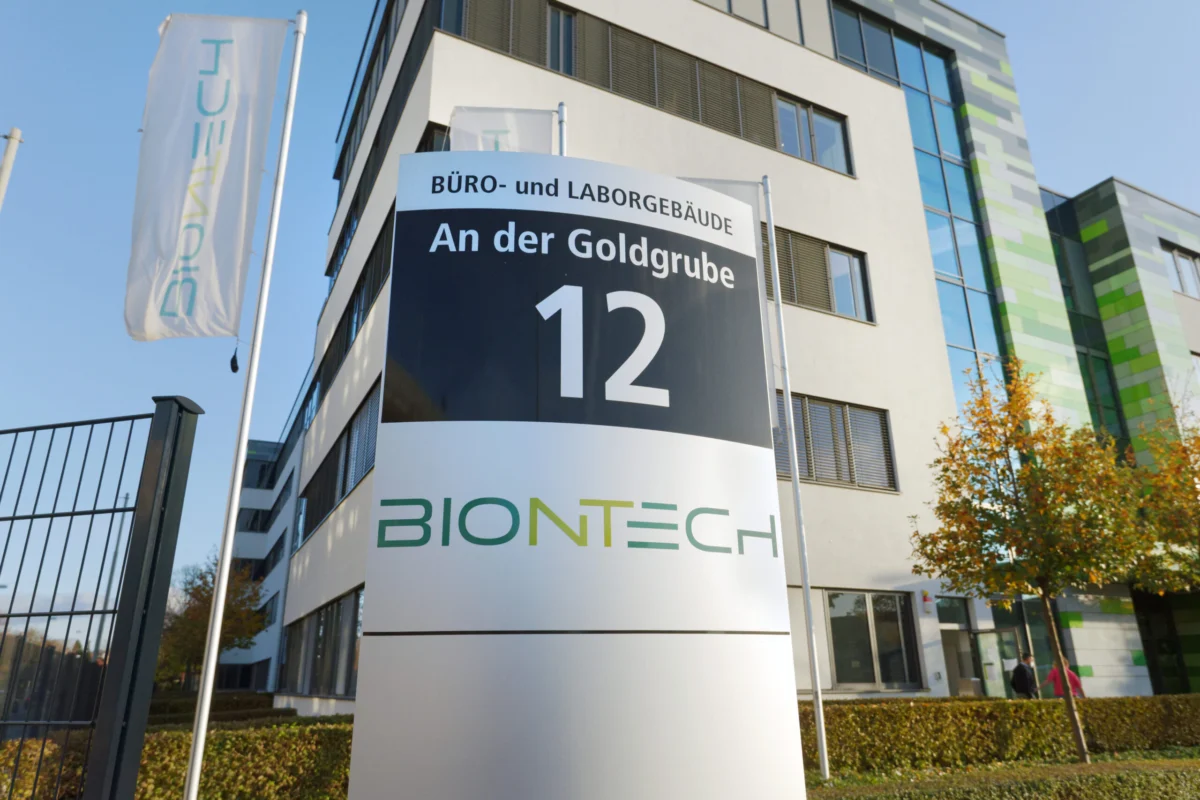
The German biotechnology firm BioNTech, a name synonymous with the rapid development of the world’s first widely authorized mRNA COVID-19 vaccine, is undergoing a dramatic strategic transformation. Once a titan of the pandemic era, reporting a staggering €19 billion in revenue in 2021, the company saw its quarterly earnings plummet to just €118 million in the first quarter of 2026. This precipitous decline, driven by waning demand for COVID-19 vaccines and a shifting political landscape around mRNA technology, has prompted BioNTech to embark on a significant restructuring, including the elimination of 1,860 jobs and a decisive pivot back to its foundational roots in oncology, backed by a formidable €16.8 billion cash reserve. This move represents a high-stakes gamble on its extensive oncology pipeline, with plans for 15 new Phase 3 trials by year-end and seven late-stage data readouts anticipated in 2026.
The Meteoric Rise and Precipitous Fall of Comirnaty
BioNTech’s ascent to global prominence began in January 2020, mere days after the genetic sequence of SARS-CoV-2 was made public. Recognizing the imminent threat, the company swiftly launched "Project Lightspeed," an ambitious initiative to develop an mRNA-based vaccine. This pioneering effort received crucial early support, including €375 million in funding from the German government to accelerate its research and manufacturing capabilities. A pivotal alliance with U.S. pharmaceutical giant Pfizer cemented its path forward. While Pfizer notably declined direct research and development funding from the U.S. government’s Operation Warp Speed, a strategic decision aimed at preserving scientific independence, the U.S. government’s commitment was nonetheless instrumental. In July 2020, it placed a substantial $2 billion advance-purchase order for 100 million doses, a commitment that foreshadowed hundreds of millions more.
The emergency use authorization granted in December 2020 for the vaccine, branded Comirnaty, unleashed an unprecedented wave of demand. Comirnaty quickly became one of the best-selling pharmaceutical products in history, generating approximately €36 billion in revenue for BioNTech across 2021 and 2022. This financial windfall not only transformed BioNTech from a relatively obscure oncology startup into a global powerhouse but also validated the mRNA platform as a rapid-response technology for infectious diseases. At its peak, BioNTech’s market capitalization soared, reflecting investor confidence in its innovative platform and global impact. The company’s success also spurred significant investment and interest across the broader biotechnology sector in mRNA technology.
However, the pandemic’s intensity waned, and with it, the insatiable demand for COVID-19 vaccines. By late 2023 and throughout 2024, vaccine orders dwindled dramatically as global immunity increased and governments shifted focus from mass vaccination campaigns to managing endemic COVID-19. This downturn led to a severe financial contraction for BioNTech, with revenues plummeting from its 2021 peak to a mere €118 million in the first quarter of 2026. This stark decline underscored the unique and transient nature of the pandemic-driven vaccine market.
A Shifting Political and Scientific Landscape for mRNA
Compounding the commercial challenges was a significant shift in the political and regulatory environment surrounding mRNA technology, particularly in the United States. In August 2025, HHS Secretary Robert F. Kennedy Jr. announced a controversial decision to terminate 22 BARDA (Biomedical Advanced Research and Development Authority) investments in mRNA vaccine development. Kennedy explicitly rejected the platform, stating that data showed mRNA vaccines "fail to protect effectively against upper respiratory infections like COVID and flu." This policy reversal had immediate repercussions across the sector, leading to contract terminations for institutions like Emory University and Tiba Biotech, and the de-scoping of mRNA work with partners such as Luminary Labs, ModeX, and Seqirus. Pre-award proposals from major pharmaceutical players including Pfizer, Sanofi Pasteur, CSL Seqirus, and Gritstone were also rejected.
This decision was met with strong disagreement from leading scientific and public health institutions. Researchers at Johns Hopkins, Harvard, and the National Academy of Medicine publicly challenged Kennedy’s conclusions, citing extensive real-world data demonstrating the efficacy of mRNA vaccines in preventing severe disease, hospitalization, and death from COVID-19, as well as their rapid adaptability to emerging variants. They warned of the risks associated with cuts to mRNA vaccine development, emphasizing the platform’s potential for future pandemic preparedness and other therapeutic applications. Nevertheless, the policy signaled a clear shift in federal funding priorities under what was widely perceived as the Trump 2.0 administration, actively redirecting federal dollars away from a technology that the prior administration had significantly supported through Operation Warp Speed. This political headwind created an additional layer of uncertainty for companies heavily invested in mRNA infectious disease programs.
Strategic Consolidation and Subsequent Reorganization
Against this challenging backdrop, BioNTech initiated a strategic consolidation phase. In June 2025, it announced the acquisition of CureVac, another German mRNA company, in an all-stock deal valued at $1.25 billion. CureVac had its own unique pandemic trajectory. Its first-generation COVID-19 vaccine candidate showed a disappointing 48% efficacy in a Phase 3 trial in 2021, leading the company and its partner Bayer to abandon COVID-19 development as more efficacious rivals, including BioNTech’s Comirnaty, flooded the market. CureVac subsequently refocused on next-generation mRNA platforms and forged a partnership with GSK. BioNTech lauded CureVac’s research and manufacturing site in Tübingen as a "major prize," as reported by Fierce Biotech, envisioning it as a key asset for future mRNA innovations.
However, just five months after the CureVac deal closed, BioNTech announced a significant operational overhaul, signaling a decisive shift away from large-scale infectious disease manufacturing. The company declared its intention to shutter the Tübingen site, along with facilities in Idar-Oberstein, Marburg, and Singapore. This restructuring will result in the elimination of approximately 1,860 jobs across its global operations. Furthermore, BioNTech is exiting in-house COVID vaccine manufacturing entirely, handing over all remaining production responsibilities to its partner, Pfizer. The company projects that these closures and the streamlining of operations will yield annual savings of €500 million by 2029, a critical step in optimizing its financial structure for its new strategic direction.
The Oncology Pivot: A Return to Roots and a Bet-the-Company Strategy
At the heart of BioNTech’s dramatic pivot is a return to its original mission. Founded in 2008, BioNTech began as a cancer immunotherapy company, leveraging its expertise in mRNA and immunology to develop novel treatments for cancer. The pandemic-driven success merely accelerated its financial capacity to pursue this long-term vision. Today, with a substantial €16.8 billion in cash reserves, the company is making a "bet-the-company" commitment to oncology.

The ambitious plan includes initiating 15 new Phase 3 oncology trials by the end of the current year, alongside anticipating seven late-stage data readouts in 2026. While the company expects zero oncology revenue this year, reflecting the long development cycles inherent in cancer drug discovery, the investment underscores its conviction. In the same earnings call that announced the layoffs, BioNTech’s board also approved a $1 billion share buyback program, a move often interpreted as a signal of confidence in the company’s future value and a way to return capital to shareholders during a transitional period.
BioNTech’s oncology pipeline has undergone a significant expansion and re-prioritization. As recently as March 2025, its clinical pipeline included nine infectious disease programs beyond Comirnaty, such as a next-generation COVID vaccine, a COVID-influenza combination with Pfizer, a standalone influenza vaccine, an HSV vaccine with the University of Pennsylvania, a tuberculosis vaccine funded by the Gates Foundation, a malaria vaccine, an mpox vaccine funded by CEPI, and a shingles vaccine in collaboration with Pfizer. A tenth program, a protein-based therapeutic for bacterial vaginosis, rounded out its non-oncology portfolio.
Today, the company’s public pipeline page starkly reflects its new focus, listing only a single infectious disease program: an mpox vaccine, which is externally funded by the Coalition for Epidemic Preparedness Innovations (CEPI). This dramatic pruning highlights the depth of its commitment to oncology.
By contrast, the oncology pipeline has flourished, featuring more than 25 Phase 2 and Phase 3 clinical trials and over 10 novel-novel combination studies. The centerpiece of this expansive portfolio is Pumitamig (BNT327), a bispecific PD-L1/VEGF-A immunomodulator developed in partnership with Bristol Myers Squibb. Pumitamig is currently being evaluated in active trials across a wide range of challenging cancers, including lung cancer, triple-negative breast cancer, colorectal cancer, gastric cancer, hepatocellular carcinoma, and glioblastoma. This broad therapeutic approach reflects an aggressive strategy to capture significant market share in multiple oncology indications. BioNTech’s commitment to this endeavor is further evidenced by its substantial investment of €2.1 billion in R&D in 2025 alone.
Leadership Transition and Future Vision
The strategic reorientation was a central theme during BioNTech’s Q1 2026 earnings call. Analyst questions predominantly revolved around oncology, probing topics such as trial endpoint changes, previews of ASCO (American Society of Clinical Oncology) data, antibody-drug conjugate (ADC) combination strategies, and the ongoing CEO succession search. Notably, COVID-19, once the company’s singular focus, was not raised as a significant topic of discussion.
CFO Ramón Zapata articulated the company’s forward-looking vision, describing BioNTech as being in "an investment phase as we are building BioNTech into a commercial stage, multi-product oncology company by 2030." This statement clearly defines the company’s long-term ambition and timeline for market entry with its oncology portfolio. To support this transition, the supervisory board is actively searching for a new CEO with extensive experience in late-stage development and the commercialization of pharmaceutical products at scale, a crucial leadership requirement for a company transitioning from a research-focused entity to a global commercial oncology player.
Broader Implications and Industry Context
BioNTech’s journey from a niche oncology startup to a pandemic vaccine leader and back to an oncology powerhouse offers a compelling case study in pharmaceutical adaptability and market dynamics. Its post-pandemic trajectory underscores several critical implications for the broader biotech industry. Firstly, it highlights the inherent volatility of infectious disease markets, particularly those driven by public health emergencies. While such crises can lead to unprecedented growth, they are often transient, requiring companies to have diversified pipelines or robust long-term strategies.
Secondly, the political headwinds faced by mRNA technology, despite its scientific validation, illustrate the complex interplay between science, policy, and public perception. The termination of BARDA investments, irrespective of scientific consensus, could have broader chilling effects on funding for novel platform technologies, emphasizing the need for robust advocacy and clear communication from the scientific community.
Finally, BioNTech’s substantial cash reserves provide a unique advantage as it re-enters the highly competitive oncology market. While the "bet-the-company" strategy is aggressive, the financial firepower allows for extensive clinical development, strategic partnerships, and potential acquisitions. However, the oncology landscape is crowded, with numerous established players and emerging biotechs vying for market share. Success will hinge not only on the efficacy of its pipeline candidates but also on its ability to navigate complex regulatory pathways, secure market access, and effectively commercialize its products. The shift also signals a maturity in the mRNA platform, moving beyond its initial vaccine triumph to explore its therapeutic potential in chronic diseases like cancer, potentially paving the way for a new generation of cancer immunotherapies. BioNTech’s evolution will undoubtedly be closely watched as a bellwether for the future of mRNA technology and the strategic pivots of post-pandemic pharmaceutical giants.