For decades, the paleontological community has operated under the assumption that the extinct North American feline Miracinonyx trumani was a close evolutionary cousin to the modern African cheetah (Acinonyx jubatus). This classification was largely based on morphology; both animals possess slender, long-limbed frames, non-retractable claws, and specialized nasal passages that suggest an adaptation for high-speed pursuit of agile prey across open landscapes. However, a landmark study utilizing ancient DNA sequencing has fundamentally altered this narrative, revealing that the "American cheetah" is genetically distinct from its African namesake, finding instead that its closest living relative is the puma (Puma concolor).
The Morphological Misconception
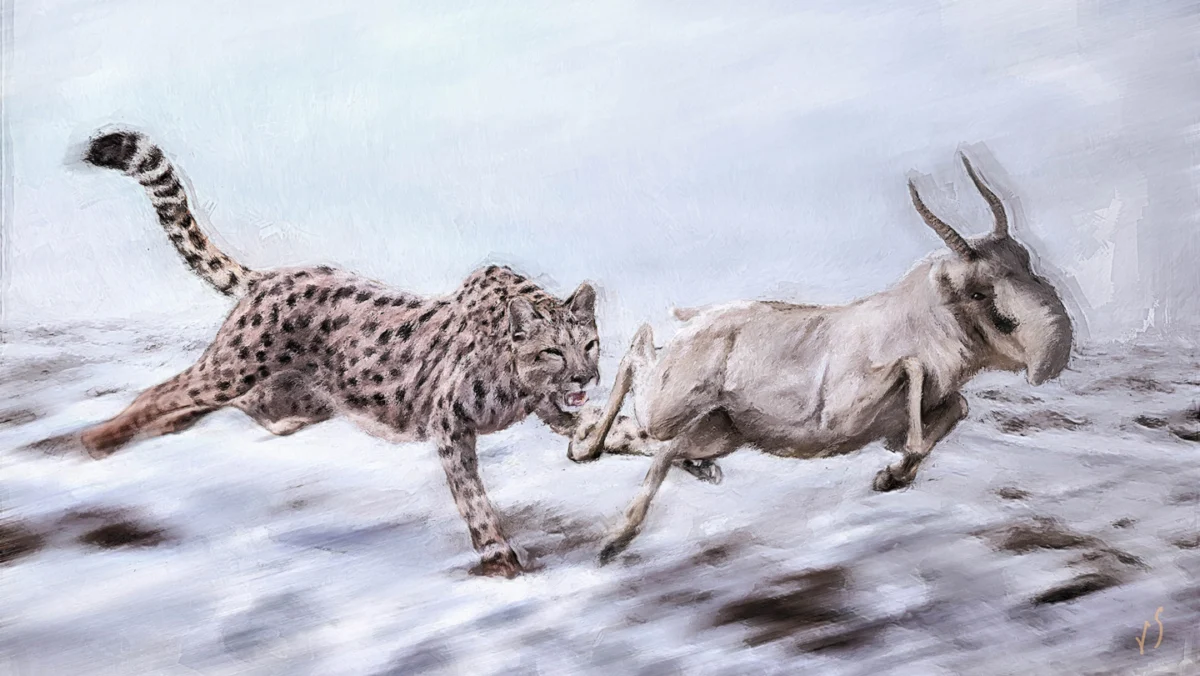
The classification of Miracinonyx as a cheetah-like predator was rooted in convergent evolution. In evolutionary biology, this phenomenon occurs when unrelated species develop similar traits due to the necessity of adapting to comparable ecological niches. Both the African cheetah and the North American Miracinonyx occupied roles as apex sprinters in grassland or scrubland environments. Because both predators relied on bursts of extreme speed to capture prey like the pronghorn or the extinct saiga antelope, they evolved long limbs, lightweight skeletal structures, and large, deep nasal cavities to facilitate rapid oxygen intake.
For much of the 20th century, scientists looked at these shared physical characteristics and concluded that they were evidence of a shared lineage. The name "American cheetah" became so embedded in the scientific lexicon that it effectively obscured the genetic reality of the animal. The new genetic evidence, however, provides a clear demarcation: while the two cats shared a similar "job" in their respective ecosystems, they arrived at that biological solution through entirely different evolutionary paths.
Chronology of the North American Predator
The existence of Miracinonyx trumani dates back to the Pleistocene epoch, a period characterized by dramatic climatic fluctuations and the rise of megafauna. Miracinonyx thrived during the late Pleistocene, roughly 2.5 million to 10,000 years ago. Throughout this era, North America was home to a diverse array of predators, including the saber-toothed cat (Smilodon fatalis) and the American lion (Panthera atrox).
The decline of the American cheetah coincided with the mass extinction event that claimed much of the continent’s megafauna at the end of the last Ice Age. Fossil records indicate that as the climate shifted and the availability of their specialized prey dwindled, these cats were unable to adapt, leading to their eventual disappearance from the fossil record approximately 10,000 years ago. By contrast, the puma—the genetic relative identified in this new research—proved to be an incredibly resilient generalist, surviving the same extinction pressures that claimed Miracinonyx and continuing to thrive across the Americas today.
Genetic Analysis and Modern Methodology
The breakthrough in this study was made possible by advancements in paleogenetics. Extracting high-quality DNA from fossils that are tens of thousands of years old is a notoriously difficult task, as the material is often degraded by heat, moisture, and microbial contamination. By employing high-throughput sequencing technologies, researchers were able to recover small, fragmented segments of nuclear DNA from preserved bone samples.
When these genetic sequences were mapped against the genomes of modern feline species, the results were definitive. The DNA showed that Miracinonyx shares a significantly higher percentage of its genomic architecture with the Puma lineage than with the Acinonyx lineage. This suggests that the ancestor of Miracinonyx branched off from the puma family tree in North America and underwent a rapid process of morphological change to fill the niche of a high-speed pursuit predator. This discovery validates the theory that the "cheetah" form is a highly efficient design for terrestrial predation that can be independently evolved by different lineages within the Felidae family.
Dietary Flexibility and Adaptability
One of the most intriguing findings accompanying the genetic data is the discovery of dietary diversity within the species. While the traditional view of Miracinonyx was that of a specialized sprinter, isotopic analysis of tooth enamel from several specimens has revealed a surprising trend: some individuals consumed a diet consisting largely of aquatic resources, including fish.
This suggests that Miracinonyx was not solely dependent on the high-speed chases that defined its appearance. The ability to pivot to aquatic food sources indicates a level of ecological flexibility that was previously uncredited to this species. This new data forces a re-evaluation of the selective pressures that shaped the evolution of the cat. If a predator has the capacity to consume a variety of prey, why would it evolve such extreme anatomical specializations for sprinting? This question is now at the forefront of paleontological debate, with some researchers suggesting that the sprinting anatomy may have been an ancestral trait or a response to competition with other North American carnivores, rather than a strictly necessary adaptation for survival.
Scientific Implications and Official Perspectives
The reclassification of Miracinonyx has broad implications for how evolutionary biologists approach the study of extinct species. It serves as a cautionary tale regarding the reliance on phenotype over genotype. In the absence of genetic data, scientists must rely on comparative anatomy, but as this study demonstrates, anatomical features can be deceivingly similar due to environmental pressures.
While no official statement has been issued by the governing bodies of the International Union for Conservation of Nature (IUCN) regarding the nomenclature of the fossil species, the academic community has widely acknowledged the findings. Paleontologists involved in the study suggest that this research necessitates a revision of evolutionary charts for the Felidae family. The "American cheetah" will likely remain its popular nickname, but in professional circles, the focus has shifted toward understanding the cat as a divergent, specialized form of the puma lineage.
Broader Impact on Evolutionary Biology
This study contributes to a larger, ongoing effort to map the complex history of the cat family. By understanding how species like Miracinonyx adapted—and eventually failed—to survive the environmental shifts of the Pleistocene, researchers gain better insight into the mechanisms of evolutionary success and failure.
The revelation that the puma is the closest living relative to the American cheetah also provides a new lens through which to view the puma’s own evolutionary history. The puma is known for its remarkable success across diverse climates, from the Canadian Rockies to the Amazon rainforest. Knowing that its closest extinct relative was an ultra-specialized, cheetah-like predator highlights the genetic plasticity of the puma lineage. While the specialized Miracinonyx perished, its generalist relative endured, showcasing the evolutionary trade-offs between specialization and broad-spectrum adaptability.
As the scientific community continues to refine these genetic maps, the story of the American cheetah remains a powerful example of how modern technology can rewrite the history of the natural world. It underscores that even the most well-established "facts" in paleontology are subject to change as the precision of our investigative tools improves, ensuring that our understanding of Earth’s biological heritage remains a dynamic and evolving field of study.