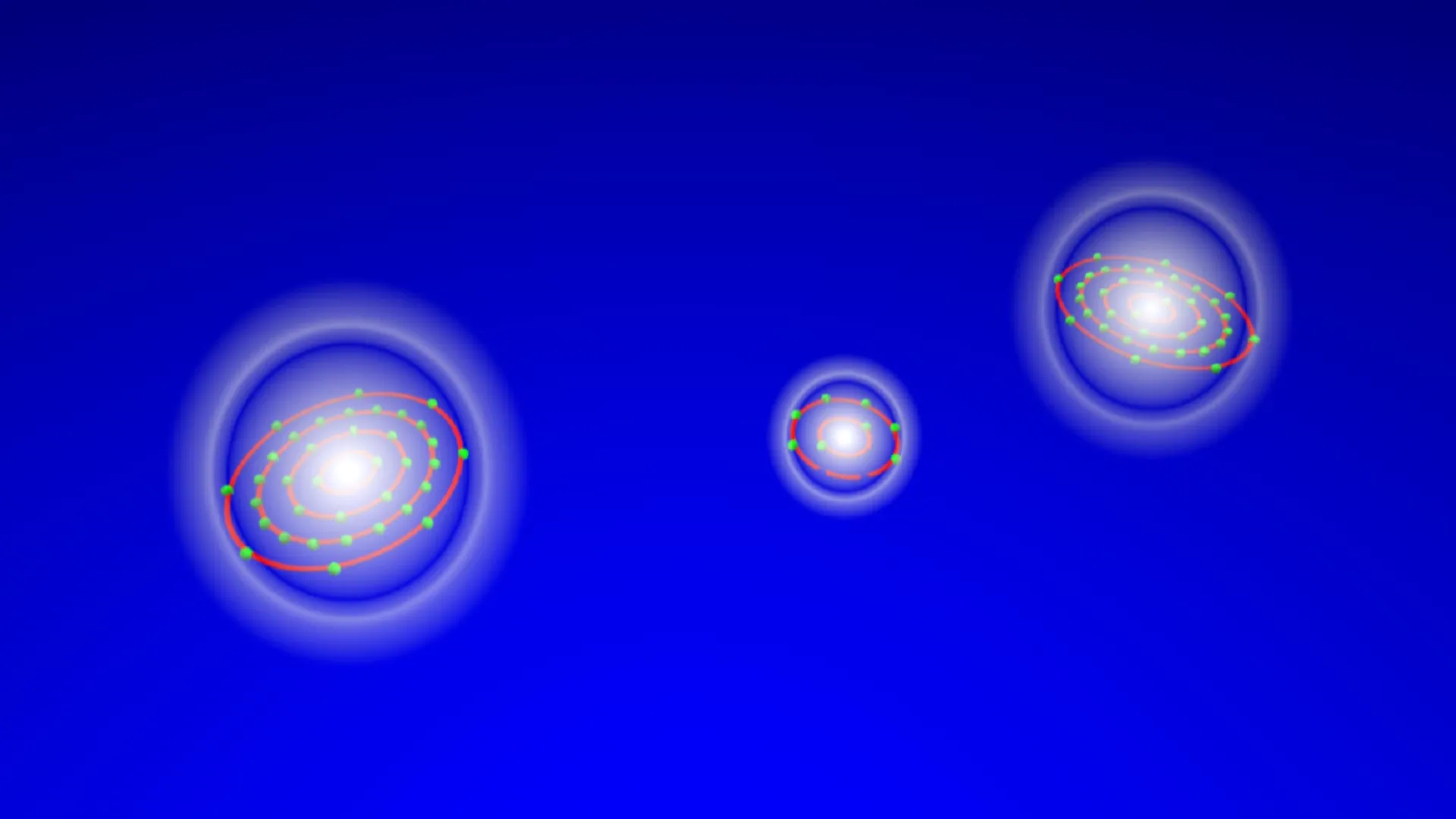
In a landmark achievement for the field of molecular physics, an international team of researchers has successfully captured the real-time "roaming" of atoms during the critical moments preceding a radiation-induced explosion. This discovery, centered on a process known as electron-transfer-mediated decay (ETMD), provides a foundational understanding of how high-energy radiation interacts with biological matter at the most fundamental level. By utilizing advanced imaging techniques and high-performance simulations, the team has revealed that the damage caused by radiation is not merely a result of instantaneous electronic shifts, but is fundamentally governed by the physical movement of atomic nuclei.
For decades, the scientific community has understood that high-energy radiation, such as X-rays used in medical imaging and cancer treatments, damages living tissue by ionizing atoms. This process strips electrons from molecules, creating unstable ions that can trigger destructive chemical reactions within a cell’s DNA. However, the exact mechanics of how this energy is redistributed among neighboring atoms—a process that ultimately determines the extent of biological damage—has remained largely obscured by the extreme speeds and microscopic scales involved. The new study, led by researchers from the Molecular Physics Department in collaboration with various international institutions, brings these hidden dynamics into sharp focus.
The Mechanics of Electron-Transfer-Mediated Decay
To understand the significance of this discovery, one must first look at the specific mechanism under investigation: electron-transfer-mediated decay (ETMD). While many are familiar with simple ionization—where a single photon knocks an electron out of a single atom—ETMD is a more complex, "non-local" process involving multiple participants.
In the ETMD sequence, high-energy radiation strikes an atom, exciting it or removing an inner-shell electron. To regain stability, this excited atom "borrows" an electron from a neighboring atom. This transfer of charge releases a specific amount of energy, which is then used to eject a third electron from yet another neighboring atom. This third electron, typically a low-energy electron, is particularly dangerous in biological settings. Unlike high-energy particles that might pass through a cell, low-energy electrons are easily absorbed by water and DNA, where they can cause "double-strand breaks"—the most lethal form of damage to a cell’s genetic blueprint.
The research team focused on a simplified model system to observe this phenomenon: a trimer consisting of one neon (Ne) atom and two krypton (Kr) atoms (NeKr2). These atoms are held together by weak van der Waals forces, which are the same forces that allow molecules to interact in a liquid environment like the human body. This three-atom system provided the perfect laboratory to witness how the energy from an initial X-ray strike on the neon atom cascaded through its krypton neighbors.
A Chronology of Atomic Motion
The experiment was conducted at two of the world’s most advanced synchrotron radiation facilities: BESSY II in Berlin and PETRA III in Hamburg. These facilities produce intense, "soft" X-rays capable of targeting specific electronic shells within an atom. The chronology of the experiment followed a precise, multi-step sequence that allowed the team to reconstruct a "movie" of the atomic motion.
First, the researchers hit the neon-krypton trimer with a pulse of soft X-rays. This pulse was tuned to knock an electron out of the inner shell of the neon atom, creating a highly unstable "vacancy." At this point, the system entered a state of flux. On a human scale, the events that followed would be instantaneous, but on the atomic scale, there was a measurable delay.
For a duration of up to one picosecond—one-trillionth of a second—the atoms began to move. In the world of molecular physics, a picosecond is an eternity, allowing the atoms to shift their positions significantly before the final decay occurred. During this window, the neon atom and the two krypton atoms did not remain in their initial triangular formation. Instead, they "roamed," swinging toward and away from each other in a chaotic, fluid dance.
The final stage of the process occurred when the electronic decay finally triggered. An electron jumped from a krypton atom to the neon atom, and a second electron was fired off from the remaining krypton atom. The resulting repulsion between the now-positively charged ions caused the entire trimer to explode. By capturing the fragments of this explosion, the scientists were able to work backward to determine exactly where every atom was at the moment of the decay.
Advanced Instrumentation and Simulation Data
The primary tool used to capture this data was the COLTRIMS (Cold Target Recoil Ion Momentum Spectroscopy) reaction microscope. This sophisticated device acts as a "bubble chamber" for atoms, detecting the momentum and trajectory of every ion and electron produced in a single molecular breakup. By measuring these particles in "coincidence"—meaning the detector knows they all came from the same event—researchers can reconstruct the 3D geometry of the molecule with sub-angstrom precision.
However, the experimental data alone was not enough to explain the "roaming" phenomenon. The team paired their findings with extensive ab initio simulations. These are "from scratch" calculations based on the laws of quantum mechanics, requiring massive computing power to track thousands of potential pathways the atoms might take.
The simulations revealed that the rate of decay was highly sensitive to the distance between the atoms. When the roaming atoms swung closer together, the probability of electron transfer increased exponentially. Conversely, when they moved apart, the decay process stalled. This means that the "roaming" wasn’t just a side effect; it was the primary driver that determined when and how the radiation damage manifested. The data showed that the atoms explored a vast "configuration space," essentially trying out different shapes until they hit a geometry that favored the release of energy.
Official Reactions and Expert Analysis
The implications of these findings have resonated throughout the physics community. Florian Trinter, one of the lead authors of the study, emphasized that the discovery shifts the paradigm of how we view radiation chemistry. "We can literally watch how the atoms move before the decay happens," Trinter stated. "The decay is not just an electronic process—it is steered by nuclear motion in a very direct and intuitive way."
This sentiment was echoed by senior author Till Jahnke, who noted the fundamental shift in understanding. "The atoms explore large regions of configuration space before the decay finally takes place," Jahnke explained. "This shows that nuclear motion is not a minor correction—it fundamentally controls the efficiency of non-local electronic decay."
Outside experts suggest that this research provides the "missing link" in radiation models. Previously, many models assumed that atoms stayed relatively still during the extremely fast process of electronic decay. By proving that "roaming" occurs and significantly alters the outcome, this study suggests that current models of radiation damage in biological tissue may need to be revised to include nuclear dynamics.
Broader Implications for Medicine and Science
The discovery of atomic roaming in the ETMD process has far-reaching consequences, particularly in the fields of oncology and environmental safety.
-
Refining Cancer Radiotherapy: In cancer treatment, the goal is to maximize damage to tumor cells while sparing healthy tissue. Much of this damage is caused by the very low-energy electrons produced via processes like ETMD. By understanding the "roaming" dynamics that produce these electrons, medical physicists could potentially develop more accurate simulations of how radiation doses interact with cellular environments, leading to more precise and effective treatments.
-
Understanding Water Chemistry: Most biological radiation damage occurs in an aqueous environment—essentially, in water. ETMD is a major pathway for energy decay in water and aqueous solutions. This study’s success in a three-atom system provides a benchmark for scientists to scale up their research to liquid water, where millions of atoms interact. Understanding how water molecules "roam" after being hit by radiation is key to understanding how toxic free radicals are formed in the body.
-
Interpreting Ultrafast X-ray Experiments: With the advent of X-ray Free-Electron Lasers (XFELs), scientists are now able to take "snapshots" of chemical reactions in real-time. However, interpreting these snapshots requires a deep understanding of the underlying physics. This study provides a vital reference point for researchers using X-rays to study complex molecules, ensuring that the "roaming" of atoms is accounted for in their data analysis.
-
Theoretical Physics and Modeling: The study provides a "gold standard" for theoretical physicists. The ability to match experimental results with ab initio simulations in a three-atom system proves that current quantum mechanical models are on the right track. This gives scientists the confidence to apply these models to even more complex systems, such as proteins and DNA strands, where direct observation is currently impossible.
Conclusion and Future Outlook
The observation of "roaming" atoms marks a significant milestone in our ability to visualize the invisible. It bridges the gap between pure physics and biological chemistry, showing that the physical movement of atoms is inextricably linked to the chemical changes caused by radiation.
As the research moves forward, the team aims to expand their investigations to more complex clusters and eventually to the liquid phase. The ultimate goal is to create a comprehensive map of energy flow at the atomic level, providing a complete picture of how radiation travels from a single X-ray photon to a broken strand of DNA.
By demonstrating that non-local electronic decay can be used as a powerful probe of molecular motion, this work opens a new door in the study of weakly bound matter. It suggests a future where we can not only predict the damage caused by radiation but perhaps even find ways to manipulate atomic motion to mitigate its harmful effects. In the world of the very small, the "roaming" of atoms has revealed itself to be a giant leap in our understanding of the fundamental forces of nature.