

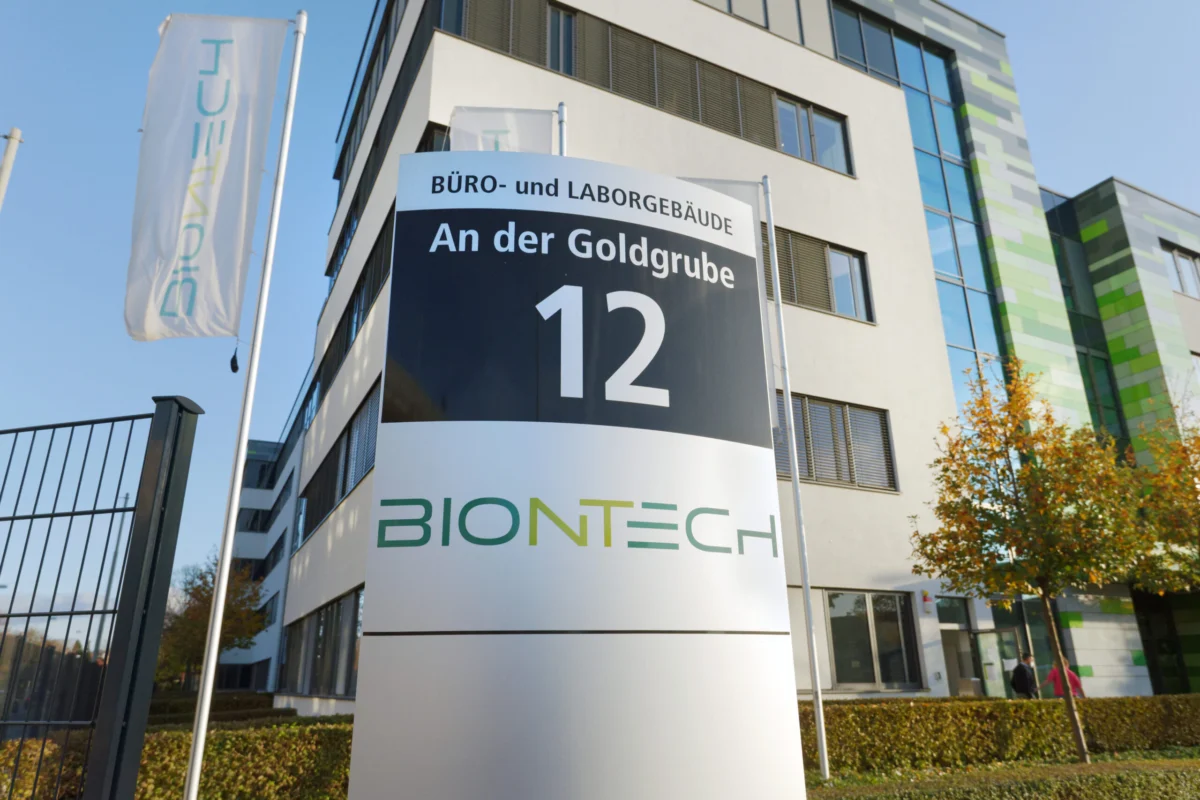
The German biotechnology powerhouse BioNTech, once synonymous with its groundbreaking COVID-19 vaccine Comirnaty, is undergoing a profound strategic transformation, shedding 1,860 jobs and divesting almost entirely from infectious disease research to channel its formidable cash reserves – an estimated €16.8 billion – into a high-stakes return to its foundational oncology roots. This dramatic shift comes in the wake of a precipitous decline in revenue, from a peak of €19 billion in 2021 to a mere €118 million in the first quarter of 2026, exacerbated by waning global demand for COVID-19 vaccines and a challenging political climate for mRNA technology in key markets.
The Meteoric Rise: A Pandemic-Era Pharmaceutical Phenomenon
BioNTech’s ascent to global prominence was nothing short of extraordinary, catalyzed by the urgent demands of the COVID-19 pandemic. Founded in 2008 by Uğur Şahin and Özlem Türeci with a primary focus on cancer immunotherapy, the company pivoted sharply in January 2020, mere days after the genetic sequence of SARS-CoV-2 was made public. This decisive action initiated "Project Lightspeed," an ambitious endeavor to develop an mRNA-based vaccine at unprecedented speed. The German government provided crucial early support, injecting €375 million to accelerate development and manufacturing capabilities.
The partnership with American pharmaceutical giant Pfizer proved to be a masterstroke. While Pfizer notably declined direct research and development funding from the U.S. government’s Operation Warp Speed to maintain scientific independence, the U.S. government’s commitment was nonetheless instrumental. A substantial $2 billion advance-purchase order for 100 million doses in July 2020, followed by subsequent large-scale procurements, provided the financial bedrock for mass production. The emergency use authorization granted in December 2020 cleared the path for Comirnaty (BNT162b2) to become one of the most commercially successful pharmaceutical products in history. In 2021 alone, BioNTech’s revenue soared to €19 billion, and combined with 2022 figures, Comirnaty generated approximately €36 billion in revenue for the German specialist, cementing its status as an mRNA pioneer and a critical player in global public health.
The Post-Pandemic Reality: A Steep Decline and Shifting Sands
The peak of vaccine demand, however, proved unsustainable. As the acute phase of the pandemic receded and global vaccination rates plateaued, demand for COVID-19 vaccines entered a steep freefall. This downturn is starkly reflected in BioNTech’s financial reports: revenue plummeted from its €19 billion zenith in 2021 to a mere €118 million in the first quarter of 2026. This precipitous drop underscores the inherent volatility of a business model heavily reliant on a single, pandemic-driven product.
Compounding the commercial challenges was a significant shift in the political and regulatory landscape, particularly within the United States. In August 2025, the U.S. Department of Health and Human Services (HHS) Secretary Robert F. Kennedy Jr. announced a controversial decision to terminate 22 investments in mRNA vaccine development under the Biomedical Advanced Research and Development Authority (BARDA). Kennedy Jr. justified this move by asserting that available data indicated mRNA vaccines "fail to protect effectively against upper respiratory infections like COVID and flu," a conclusion that sparked considerable debate within the scientific community. Prominent researchers at institutions such as Johns Hopkins University, Harvard University, and the National Academy of Medicine publicly disagreed with these findings, highlighting the platform’s demonstrated efficacy in preventing severe disease and death. Nevertheless, the directive signaled a clear policy shift under what was then perceived as a "Trump 2.0" administration, actively redirecting federal funding away from mRNA vaccine technology, despite the previous administration’s pivotal role in supporting its initial development through Operation Warp Speed purchase commitments. This policy reversal sent ripples of uncertainty throughout the mRNA sector, impacting companies and academic institutions alike through contract terminations and de-scoping of ongoing projects.
Strategic Consolidation and Divestment: The CureVac Chapter
In response to these formidable headwinds, BioNTech initiated a phase of strategic consolidation, albeit one that would ultimately lead to further restructuring. In June 2025, the company announced the acquisition of fellow German mRNA firm CureVac in an all-stock deal valued at $1.25 billion. CureVac, like BioNTech, had experienced its own pandemic-era journey, though with less success. Its first-generation COVID-19 vaccine candidate demonstrated only 48% efficacy in a Phase 3 trial in 2021, prompting the company and its partner Bayer to abandon COVID-19 development as more effective rival vaccines saturated the market. CureVac subsequently refocused on next-generation mRNA platforms, forging a partnership with GSK. BioNTech’s interest in CureVac was reportedly centered on its research capabilities and manufacturing site in Tübingen, which BioNTech described as a "major prize," as reported by Fierce Biotech. The acquisition was framed as a move to bolster BioNTech’s mRNA pipeline and manufacturing footprint.
However, the strategic calculus shifted rapidly. Just five months after the CureVac deal closed, BioNTech unveiled a drastic plan: the complete shuttering of the Tübingen site, alongside facilities in Idar-Oberstein, Marburg, and Singapore. This decision directly contradicted the earlier stated rationale for the CureVac acquisition, signaling a more aggressive and immediate cost-cutting and strategic re-evaluation than initially anticipated.

Major Restructuring: Job Cuts and an Exit from Infectious Disease Manufacturing
The operational consolidation announced in late 2025 and early 2026 represents a significant scaling back of BioNTech’s infectious disease footprint. The company will eliminate approximately 1,860 jobs across these facilities. Furthermore, BioNTech is entirely exiting in-house COVID-19 vaccine manufacturing, a domain it pioneered, and will hand over all future production responsibilities to its long-standing partner, Pfizer. This move is projected to generate substantial annual savings, estimated at €500 million by 2029.
This comprehensive divestment from infectious disease research is strikingly evident in BioNTech’s evolving clinical pipeline. As recently as March 2025, the company’s pipeline listed nine infectious disease programs: the original Comirnaty, a next-generation COVID vaccine, a COVID-influenza combination with Pfizer, a standalone influenza vaccine (out-licensed to Pfizer), an HSV vaccine with the University of Pennsylvania, a tuberculosis vaccine funded by the Gates Foundation, a malaria vaccine, an mpox vaccine funded by CEPI, and a shingles vaccine in collaboration with Pfizer. A protein-based therapeutic for bacterial vaginosis completed its non-oncology portfolio. Today, BioNTech’s public pipeline page lists only a single infectious disease program remaining: an mpox vaccine, which is externally funded by the Coalition for Epidemic Preparedness Innovations (CEPI). This near-complete strategic withdrawal underscores the company’s laser-like focus on its new direction.
The Oncology Re-Focus: A €16.8 Billion Bet on the Future
Despite the significant restructuring and revenue downturn, BioNTech maintains a robust financial position, boasting €16.8 billion in cash reserves. This substantial capital is now being entirely re-directed towards a "bet-the-company" oncology pivot. The company has ambitious plans, targeting 15 Phase 3 oncology trials by the end of the current year, with seven late-stage data readouts anticipated in 2026. This aggressive clinical development strategy highlights the urgency and scale of its new commitment. While the company projects zero oncology revenue for the current year, reflecting the long development cycles inherent in cancer therapeutics, its investment in this area is considerable, with €2.1 billion allocated to R&D in 2025 alone.
The burgeoning oncology pipeline, in stark contrast to the shrinking infectious disease portfolio, now lists over 25 Phase 2 and Phase 3 clinical trials, alongside more than 10 novel-novel combination studies. A central pillar of this renewed focus is Pumitamig (BNT327), a bispecific PD-L1/VEGF-A immunomodulator developed in collaboration with Bristol Myers Squibb. This promising candidate is undergoing active trials across a wide spectrum of cancers, including lung cancer, triple-negative breast cancer, colorectal cancer, gastric cancer, hepatocellular carcinoma, and glioblastoma. This broad therapeutic approach demonstrates BioNTech’s intent to become a multi-product oncology company.
During the Q1 2026 earnings call, the strategic pivot was front and center. Analyst questions, once dominated by vaccine logistics and pandemic projections, now exclusively revolved around oncology: discussions on trial endpoint changes, previews of data for upcoming ASCO conferences, advanced antibody-drug conjugate (ADC) combination strategies, and even the ongoing search for a new CEO. The topic of COVID-19, once BioNTech’s defining feature, was conspicuously absent from the discourse. CFO Ramón Zapata encapsulated the company’s current strategic phase, describing BioNTech as being in "an investment phase as we are building BioNTech into a commercial stage, multi-product oncology company by 2030." The supervisory board’s active search for a new CEO with extensive experience in late-stage development and the commercialization of pharmaceutical products at scale further reinforces this long-term vision and commitment.
A Full Circle: BioNTech’s Return to its Roots
In a profound sense, BioNTech has come full circle. The company was founded in 2008 with a clear mission: to pioneer personalized cancer immunotherapies. Its journey through the pandemic, while incredibly impactful and financially transformative, was a temporary, albeit necessary, diversion from its original purpose. The current strategic pivot is not merely a reaction to declining vaccine revenues but a deliberate return to its core scientific and business identity.
The decision to execute a $1 billion share buyback program, announced concurrently with the significant layoffs and strategic overhaul, signals BioNTech’s confidence in its long-term oncology strategy and its commitment to returning value to shareholders, even amidst a period of intense transition. This move, while common for financially robust companies, also underscores the company’s perception of its current valuation relative to its future potential in the oncology market.
BioNTech’s transformation represents a compelling case study in corporate agility and strategic resilience within the volatile biotechnology sector. From a little-known oncology startup to a global pandemic savior, and now back to a dedicated cancer immunotherapy developer, its trajectory underscores the dynamic nature of drug discovery and the profound impact of global health crises and evolving market demands on even the most successful enterprises. The €16.8 billion bet on oncology is not just a financial allocation; it is a reassertion of BioNTech’s foundational scientific ambition and a clear declaration of its intended legacy in the post-pandemic era. The success of this ambitious pivot will ultimately determine whether BioNTech can replicate its pandemic-era triumph in the complex and highly competitive field of cancer treatment.











Leave a Reply