The quest to revolutionize global energy infrastructure, computing, and transportation has taken a significant step forward following a breakthrough discovery by an international collaboration of physicists from Utrecht University, Leiden University, and the Technical University of Munich. Published in the prestigious academic journal Science, the new study addresses one of the most enduring and complex puzzles in modern condensed-matter physics: the realization of superconductivity at ambient temperatures. While the holy grail of zero-resistance electrical conductivity at room temperature remains officially unrealized, this latest research demonstrates that one of the two fundamental prerequisites for such a breakthrough is entirely achievable under everyday thermal conditions.
For more than a century, the technological promise of superconductivity has captured the imaginations of engineers and scientists alike. In a true superconducting state, electrical current flows through a material with absolute zero resistance, meaning not a single fraction of a watt is lost as heat. If successfully harnessed for widespread commercial applications, this phenomenon could fundamentally alter how humanity generates, transmits, and consumes power. The implications stretch across numerous high-tech sectors, promising magnetic levitation trains that glide frictionlessly above tracks at unprecedented velocities, power grids capable of transmitting electricity over thousands of miles without a single kilowatt of resistive loss, highly efficient energy storage systems, and quantum computers operating with astonishing energy efficiency.
Despite these revolutionary possibilities, a persistent obstacle has relegated superconductivity to highly specialized, cryogenic laboratory environments: the requirement for extreme cooling. Ever since Dutch physicist Heike Kamerlingh Onnes first discovered superconductivity in solid mercury in 1911—a feat that earned him the Nobel Prize in Physics in 1913—scientists have known that most conventional superconducting materials only exhibit their zero-resistance properties when chilled to near absolute zero. Achieving these conditions has historically required liquid helium, which boils at approximately -269 degrees Celsius, or about 4 Kelvin. The logistical complexity and staggering financial costs associated with maintaining such extreme thermal environments have severely restricted the commercial and industrial scalability of superconducting technologies, confining them to particle accelerators, nuclear magnetic resonance (NMR) scanners, and advanced research facilities.
The Historical Context and the High-Temperature Mystery
The landscape of superconductivity research shifted dramatically in the mid-1980s, specifically in 1986, when physicists Johannes Georg Bednorz and Karl Alexander Müller discovered a new class of complex copper-oxide materials, known as cuprates, that could become superconducting at significantly warmer temperatures. While "warm" in this context still meant approximately -173 degrees Celsius (100 Kelvin)—temperatures that could be achieved using relatively inexpensive liquid nitrogen rather than liquid helium—the discovery shattered long-held theoretical limits and earned Bednorz and Müller the Nobel Prize just one year later in 1987.
Yet, this monumental advancement introduced a deep scientific enigma that has confounded researchers for nearly four decades. The conventional Bardeen-Cooper-Schrieffer (BCS) theory, which successfully explained how low-temperature metallic superconductors operate through lattice-vibration-mediated electron pairing, utterly failed to account for the behavior of these high-temperature cuprate materials. The underlying quantum mechanical mechanisms driving high-temperature superconductivity remained stubbornly opaque, leaving theoretical and experimental physicists divided over how these materials actually function.
"We don’t understand superconductivity at these higher temperatures at all," explains Ingmar Swart, a leading physicist involved in the recent research effort at Utrecht University. "And if you don’t understand it, you can’t systematically search for materials that become superconducting at room temperature, which is ultimately our goal." Without a predictive theoretical framework or a clear roadmap of the microscopic processes at play, the pursuit of a room-temperature superconductor has largely resembled a game of trial and error, dominated by empirical synthesis rather than targeted design.
Unlocking the Microscopic Dance of Electrons
To understand the magnitude of the recent findings by the Utrecht, Leiden, and Munich research teams, one must examine the precise physical conditions required for a material to transition into a superconducting state. Superconductivity is fundamentally a cooperative quantum phenomenon governed by two distinct milestones. First, individual electrons—which normally repel one another due to their identical negative electrical charges—must overcome this mutual electrostatic repulsion and bind together into composite entities known as Cooper pairs. This pairing process is typically mediated by an exchange of energy packets within the material’s atomic lattice.
However, the mere formation of Cooper pairs is insufficient to induce superconductivity. The second critical requirement is phase coherence. For electrical current to flow without encountering any resistance, these Cooper pairs must coordinate their movements on a macroscopic scale, effectively acting in unison within a shared quantum mechanical state.
Using a helpful analogy, imagine a grand ballroom filled with ten dancing couples. Having each couple partner up and dance independently represents the first step, akin to the formation of Cooper pairs. However, for the entire room to move in a synchronized, harmonious fashion where every couple matches the rhythm and trajectory of all the others, a higher level of collective coordination is required. That collective synchronization represents phase coherence. In conventional low-temperature superconductors, electron pairing and phase coherence emerge simultaneously at the exact same critical temperature. Once the material is cooled below that threshold, the electrons both pair up and synchronize instantly.
The new study demonstrates that high-temperature superconductors operate under an entirely different set of rules. Through meticulous experimentation and advanced measurement techniques, the research team discovered that electron pairing and phase coherence decouple in these advanced materials. Most remarkably, the "glue" holding the Cooper pairs together is sufficiently robust to allow these pairs to form and remain entirely intact at room temperature—far above the temperatures at which the material actually exhibits macroscopic superconductivity.
"This is really good news," notes Swart. "We show that one of the two key conditions for superconductivity can be met at room temperature. If that weren’t possible, room-temperature superconductivity would be out of reach altogether."
Pinpointing the Bottleneck: The Role of Phase Coherence
By proving that electron pairs can stably exist at ambient temperatures within these materials, the research team has fundamentally redirected the focus of the scientific community. The obstacle preventing room-temperature superconductivity is not the inability of electrons to form Cooper pairs at higher thermal thresholds. Instead, the true bottleneck is phase coherence—the challenge of compelling those pre-existing pairs to establish collective quantum coordination without the assistance of extreme cold.
This revelation shifts the theoretical paradigm. Rather than expending exhaustive resources trying to discover or engineer mechanisms that simply enable electrons to bind together at higher temperatures, material scientists can now concentrate their efforts on understanding and manipulating phase coherence. If researchers can determine how to induce collective synchronization among these room-temperature electron pairs, a viable, predictable pathway toward ambient-temperature superconductivity could finally emerge.
"If we understand phase coherence, it may point to a path toward superconductivity at higher temperatures," Swart adds, outlining the primary objective for his laboratory’s future investigative agenda. The team plans to systematically explore the dynamics of phase coherence across various material compositions, striving to decode the precise physical variables that dictate whether paired electrons can achieve macroscopic synchronization at increasingly warmer temperatures.
Cutting-Edge Instrumentation and Experimental Rigor
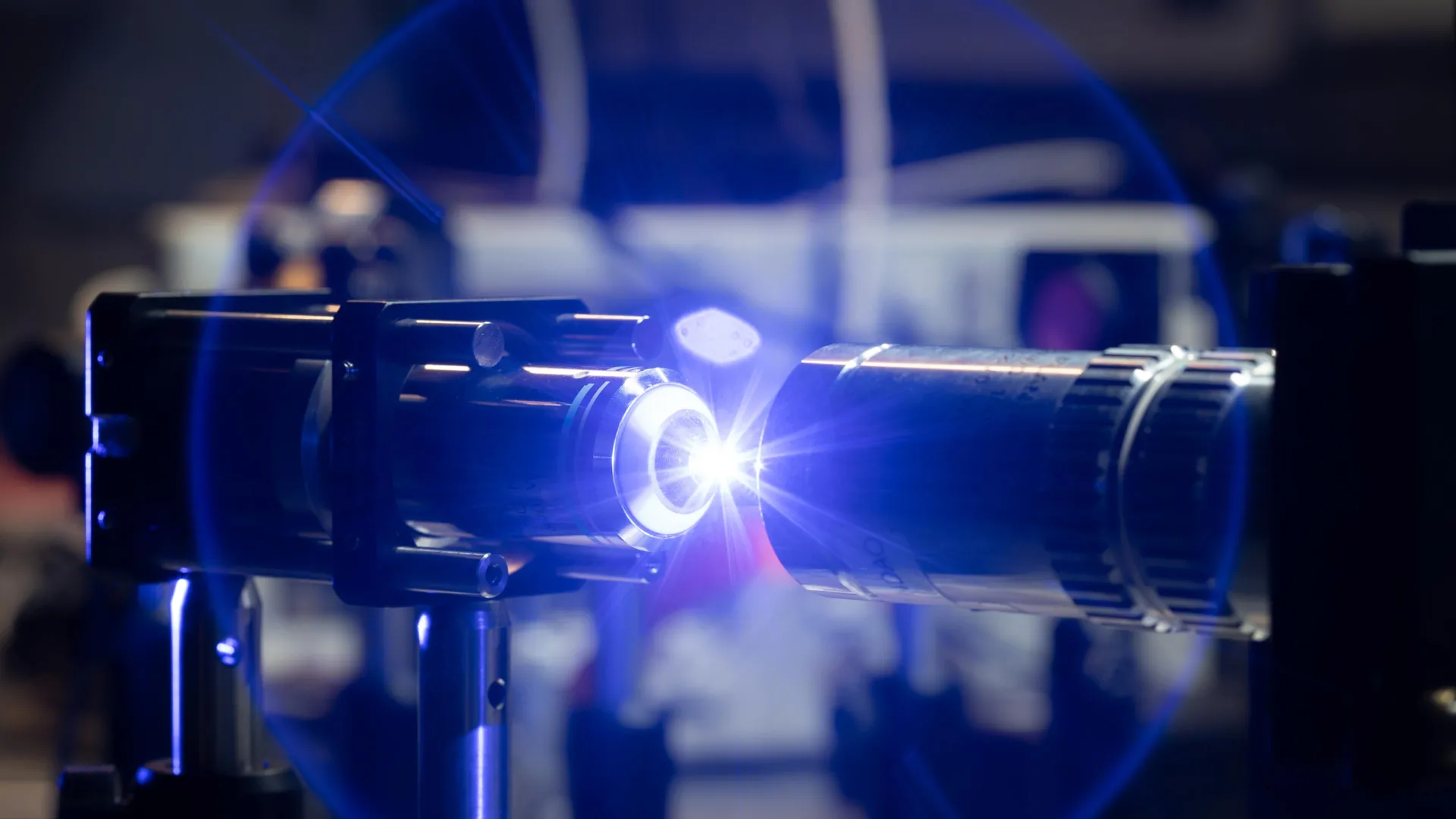
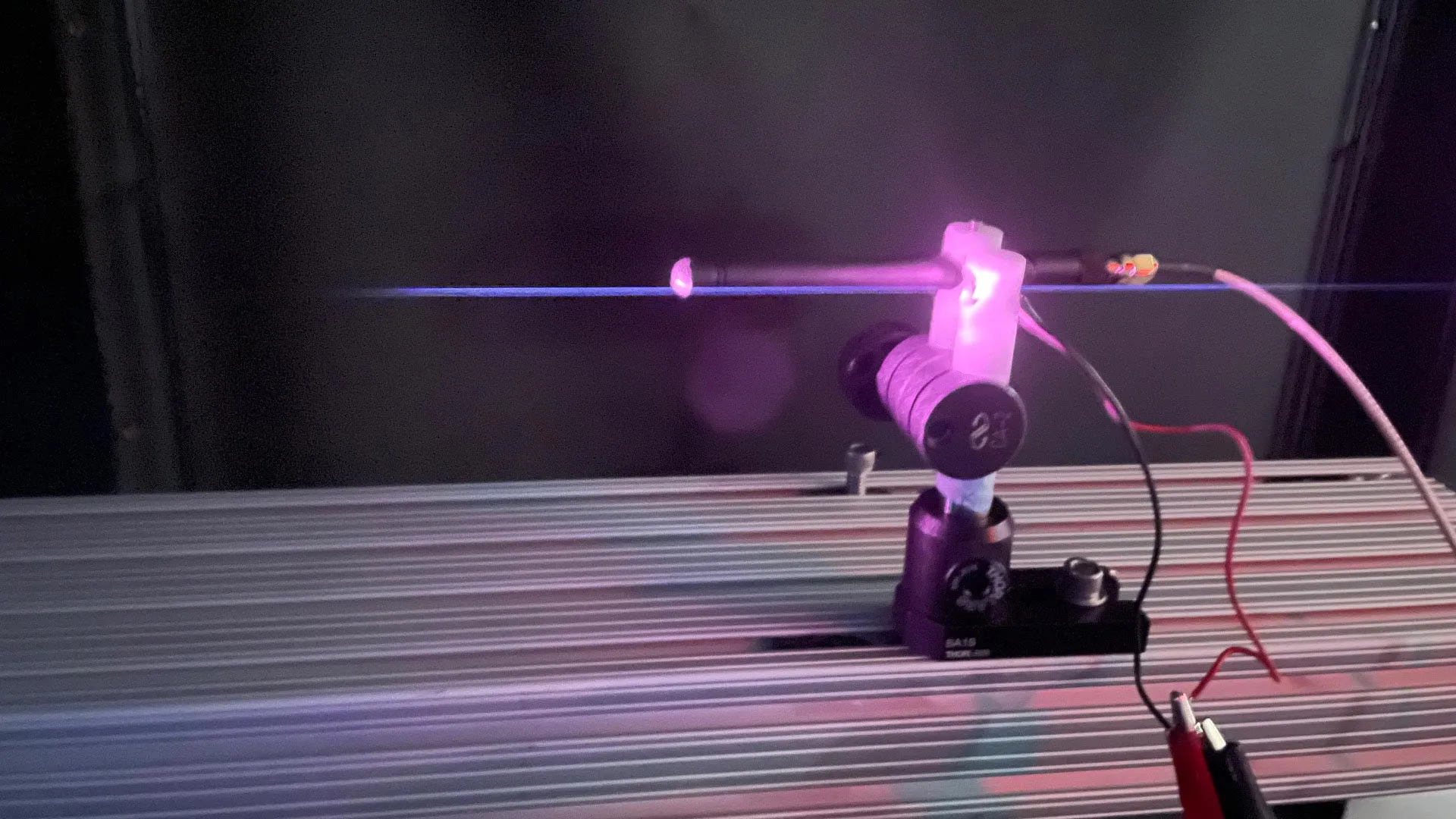
The success of this recent study relied heavily on the development of bespoke measurement equipment designed, constructed, and calibrated specifically by the research collaboration. Traditional experimental apparatuses often struggle to isolate the complex electronic interactions occurring at the atomic scale within high-temperature superconducting materials.
To overcome these limitations, the research team engineered specialized instruments capable of differentiating between electrical currents carried by single, unpaired electrons and currents mediated by paired Cooper pairs. This high-resolution sensitivity enabled the physicists to observe, with unprecedented clarity, the precise thermal thresholds at which electron pairs form, persist, or dissociate within the material matrix. By successfully decoupling these distinct electrical contributions, the investigators obtained an unobstructed view of the microscopic landscape, illuminating the exact mechanical hurdles that have baffled condensed-matter physicists for decades.
Broader Implications for Technology, Industry, and Economics
While the findings do not claim that a working room-temperature superconductor has been synthesized in a laboratory beaker, the discovery represents a foundational stepping stone with profound implications for applied physics and industrial engineering.
The global economic stakes of achieving ambient superconductivity are virtually incalculable. Modern electrical grids suffer from substantial transmission losses, with roughly 5 percent to 10 percent of all generated electricity dissipated as waste heat before ever reaching an end consumer. Implementing room-temperature superconducting power lines would instantly eliminate these resistive losses, resulting in massive reductions in global energy consumption and carbon emissions without requiring any modifications to power generation capacity.
Furthermore, the electronics industry stands on the precipice of a radical transformation. As silicon-based microprocessors approach physical thermal limits and face severe challenges related to heat dissipation and energy consumption, superconducting electronics could enable ultra-dense computing architectures operating at blistering speeds with negligible thermal output. In the realm of renewable energy, high-efficiency superconducting magnetic energy storage (SMES) systems could capture and retain wind and solar power with near-zero degradation over time, solving the intermittency problems that currently hinder complete grid decarbonization.
As researchers in Utrecht, Leiden, Munich, and laboratories worldwide digest these findings, the theoretical roadmap toward room-temperature superconductivity has become significantly sharper. By narrowing the search parameters and isolating phase coherence as the central scientific frontier, this international collaboration has illuminated a clear path forward, bringing humanity one step closer to mastering zero-resistance electricity at everyday temperatures.