Researchers at the Department of Energy’s Oak Ridge National Laboratory (ORNL), in a collaborative effort with The Ohio State University and Amphenol Corporation, have announced a transformative discovery in the field of condensed matter physics: a method to manipulate the movement of heat through solid materials using external electric fields. This development, published recently in the journal PRX Energy, represents a paradigm shift in thermal management, offering a level of control over heat transport that was previously thought to be impossible. By applying an electric field to a specific class of ceramic materials, the team achieved a nearly 300% increase in thermal conductivity along a designated path, a feat that dwarfs previous attempts which typically yielded improvements of only 5% to 10%.
The ability to govern how heat moves at the atomic level has profound implications for a wide array of modern technologies, from the cooling of high-performance microprocessors to the efficiency of industrial power plants. For decades, heat transport in non-metallic solids was viewed as a largely passive process, governed by the inherent structure of the material and the random scattering of atomic vibrations. This new research demonstrates that heat flow can be actively "steered" and enhanced, effectively turning a solid-state material into a tunable thermal conductor.
The Science of Phonons and Thermal Transport
To understand the magnitude of this discovery, one must look at the fundamental nature of heat in solids. In non-metallic materials, heat is not carried by moving electrons, but rather by "phonons." Phonons are collective excitations in a periodic, elastic arrangement of atoms or molecules in condensed matter—essentially, they are the quantized units of atomic vibrations. When one side of a material is heated, the atoms vibrate more vigorously; these vibrations travel through the crystal lattice, carrying thermal energy with them.
In a perfect crystal at absolute zero, phonons would travel unimpeded. However, in real-world materials at functional temperatures, phonons frequently collide with one another, as well as with impurities, grain boundaries, and defects in the crystal structure. These collisions, known as scattering, create resistance to heat flow. Historically, researchers have struggled to reduce this scattering because it is a byproduct of the material’s intrinsic atomic chaos.
The ORNL-led study focused on "relaxor-based ferroelectrics," a specialized class of ceramics known for their unique electrical and mechanical properties. These materials contain tiny regions of aligned electric charges, or dipoles. The researchers discovered that by applying an external electric field—a process known as "poling"—they could align these internal charges. This alignment creates a more ordered environment for phonons to travel through, specifically along the direction of the electric field.
The Mechanism of the Threefold Increase
The most striking data point from the study is the nearly threefold (300%) increase in thermal conductivity. When the ceramic was poled, phonons vibrating in the same direction as the electric field persisted for significantly longer durations than those moving perpendicular to it.
"Being able to control both how fast and in what manner heat flows could lead to devices that manage thermal energy far more efficiently," noted Puspa Upreti, a postdoctoral research associate at ORNL and a key author of the study.
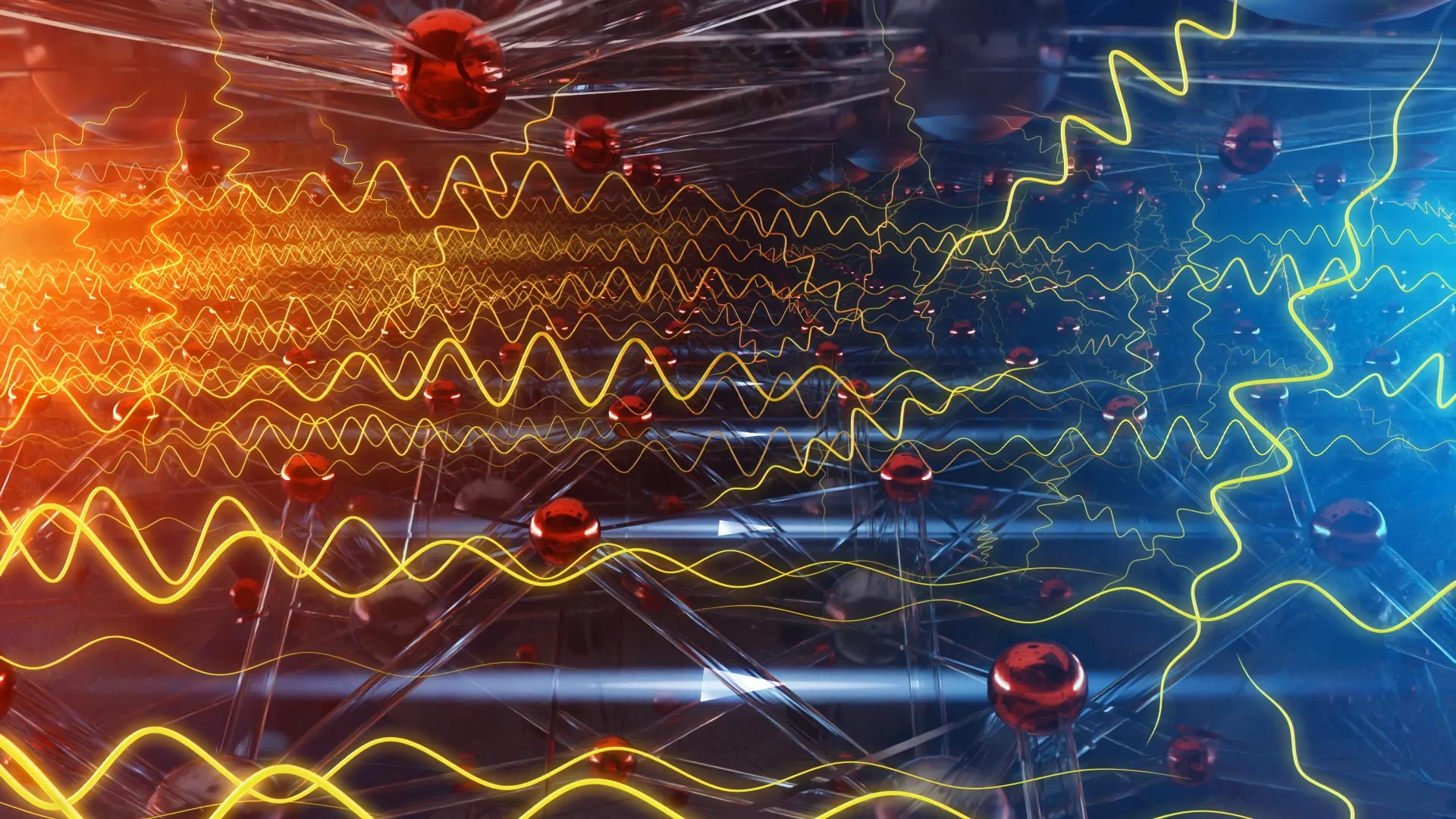
The team utilized the "highway analogy" to explain the phenomenon. In a standard material, phonons move like cars on a congested, multi-directional city grid, constantly stopping and starting due to "traffic" (scattering). Applying the electric field is akin to opening a high-speed, multi-lane expressway. By reducing the obstacles and "congestion" in the direction of the field, the phonons can travel much further before losing their energy. This extension of "phonon lifetime"—the duration a vibration survives before being scattered—is the primary driver behind the massive jump in heat-carrying efficiency.
Chronology of the Research and Institutional Collaboration
The breakthrough was the result of a multi-year, interdisciplinary collaboration that integrated advanced material synthesis, thermal measurement, and neutron science.
The timeline of the discovery began with the synthesis of the specialized ceramic crystals. These were grown and prepared by Raffi Sahul at Amphenol Corporation, a global leader in high-technology interconnect, antenna, and sensor solutions. Amphenol’s role was critical, as the purity and precise orientation of the ferroelectric crystals were necessary to observe the delicate interaction between electric fields and atomic vibrations.
Following the synthesis, the materials were sent to The Ohio State University. There, the late Professor Joseph Heremans, a pioneer in thermal and electronic transport, designed a series of rigorous thermal conductivity experiments. Under his guidance, doctoral candidate Delaram Rashadfar conducted the primary analysis of how the material responded to varying electric field strengths. It was during this phase that the team first noticed the anomalous 300% increase, a result so significant that it initially prompted a re-evaluation of the data to ensure accuracy.
The final and perhaps most crucial stage took place at Oak Ridge National Laboratory’s Spallation Neutron Source (SNS). To confirm why the heat was moving so efficiently, researchers needed to see the atoms in motion. Lead researcher Michael Manley and senior R&D staff member Raphaël Hermann utilized inelastic neutron scattering to observe the material at the atomic scale. By bombarding the ceramic with neutrons and measuring how the neutrons gained or lost energy, the team could map the speed and lifespan of the phonons in real-time.
The Role of Neutron Scattering and Historical Context
The use of neutrons was essential because, unlike X-rays which interact primarily with the electron cloud, neutrons interact with the atomic nuclei. This allows scientists to "see" the vibrations of the lattice itself. The techniques used at the SNS are direct descendants of the Nobel Prize-winning work of Clifford Shull and Bertram Brockhouse, who developed neutron diffraction and spectroscopy in the mid-20th century.
"Earlier work on bulk ferroelectric materials achieved modest improvements in thermal conductivity of 5 percent to 10 percent," Michael Manley explained. "The new measurements reveal an enhancement close to 300 percent—mainly because the phonons are able to travel much longer before they stop."
The SNS data provided the "smoking gun" for the theory: the electric field was not just speeding up the phonons, it was fundamentally changing their survival rate. The measurements confirmed that the phonons in the poled direction were surviving for a distance and duration that was previously unobserved in these types of ceramics.
Implications for Energy Efficiency and the Carnot Cycle
The ability to direct heat has immediate applications in improving the efficiency of heat engines and cooling systems. The researchers referenced the Carnot cycle, the theoretical limit of efficiency for any thermodynamic system. The Carnot cycle relies on the movement of heat between a hot reservoir and a cold reservoir. In many real-world systems, energy is lost because heat cannot be moved quickly or precisely enough between these states.
By using these poled ceramics, engineers could potentially create "thermal valves" or "thermal switches." These devices could be turned "on" (high conductivity) or "off" (low conductivity) simply by toggling an electric field. This would allow for the precise regulation of heat in systems like:
- Solid-State Electronic Cooling: Modern computer chips generate immense amounts of heat. Current cooling methods involve bulky fans or liquid cooling. A solid-state material that can "pump" heat away from a chip with no moving parts would revolutionize hardware design.
- Thermoelectric Generators: These devices convert waste heat directly into electricity. By controlling the direction of heat flow, the efficiency of these converters could be drastically improved, allowing industrial plants to capture energy that is currently vented into the atmosphere.
- Industrial Cogeneration: Many manufacturing processes produce excess heat as a byproduct. Improved thermal management would allow this heat to be harvested and reused in other parts of the facility, reducing overall energy consumption.
Analysis of Broader Impact and Future Research
The implications of this study extend beyond just cooling. The field of "phononics"—the use of phonons to process information, similar to how electronics use electrons—is a burgeoning area of research. The ability to control phonons with an electric field suggests that we might one day build "phonon transistors" or logic gates that operate using heat vibrations rather than electrical current.
Furthermore, this discovery challenges the conventional wisdom regarding the "thermal limit" of materials. For years, material scientists have operated under the assumption that a material’s thermal conductivity was a relatively static property, tied to its chemical composition. The ORNL study proves that symmetry and local order, manipulated by external fields, can override these perceived limits.
The scientific community has reacted with cautious optimism. While the 300% increase is a laboratory success, the next challenge lies in scaling these relaxor-based ferroelectrics for commercial use. The materials used in the study are specialized and can be expensive to produce. Future research will likely focus on finding more common or cost-effective materials that exhibit similar "tunable" thermal properties.
As the global demand for energy efficiency grows, the work of the ORNL, Ohio State, and Amphenol team provides a critical new tool in the fight against energy waste. By mastering the "atomic highway" of heat, researchers have opened the door to a new era of thermal engineering where heat is no longer an uncontrollable byproduct, but a manageable resource.
The research was supported by the DOE Office of Science, Basic Energy Sciences program, which continues to fund the exploration of materials that can assist in the global transition to more sustainable energy systems. With the groundwork laid by the late Professor Heremans and the technical capabilities of the SNS, the team’s findings stand as a testament to the power of collaborative, multi-institutional science.