


The landscape of computational science is standing on the precipice of a generational shift as quantum technology moves from theoretical physics departments into the realm of practical engineering. While classical computers rely on binary bits—0s and 1s—to process information, quantum systems leverage the principles of superposition and entanglement to handle data sets of unprecedented complexity. A significant hurdle in this transition has been the inherent instability of quantum states, which are often disrupted by environmental "noise." However, a recent study led by researchers at California Polytechnic State University (Cal Poly) has identified a promising new method for stabilizing and organizing quantum matter using time-dependent magnetic fields.
Led by Ian Powell, a lecturer in the Cal Poly Physics Department, and student researcher Louis Buchalter, the research explores the fundamentals of how matter behaves at the atomic and subatomic scales. Their findings, recently published in the prestigious journal Physical Review B under the title "Flux-Switching Floquet Engineering," suggest that by precisely manipulating magnetic fields over time, scientists can induce matter to exhibit properties that are impossible to achieve in static environments. This breakthrough offers a potential roadmap for creating more robust quantum devices, moving the industry closer to the widespread adoption of quantum simulation and computing.
The Science of Floquet Engineering and Quantum States
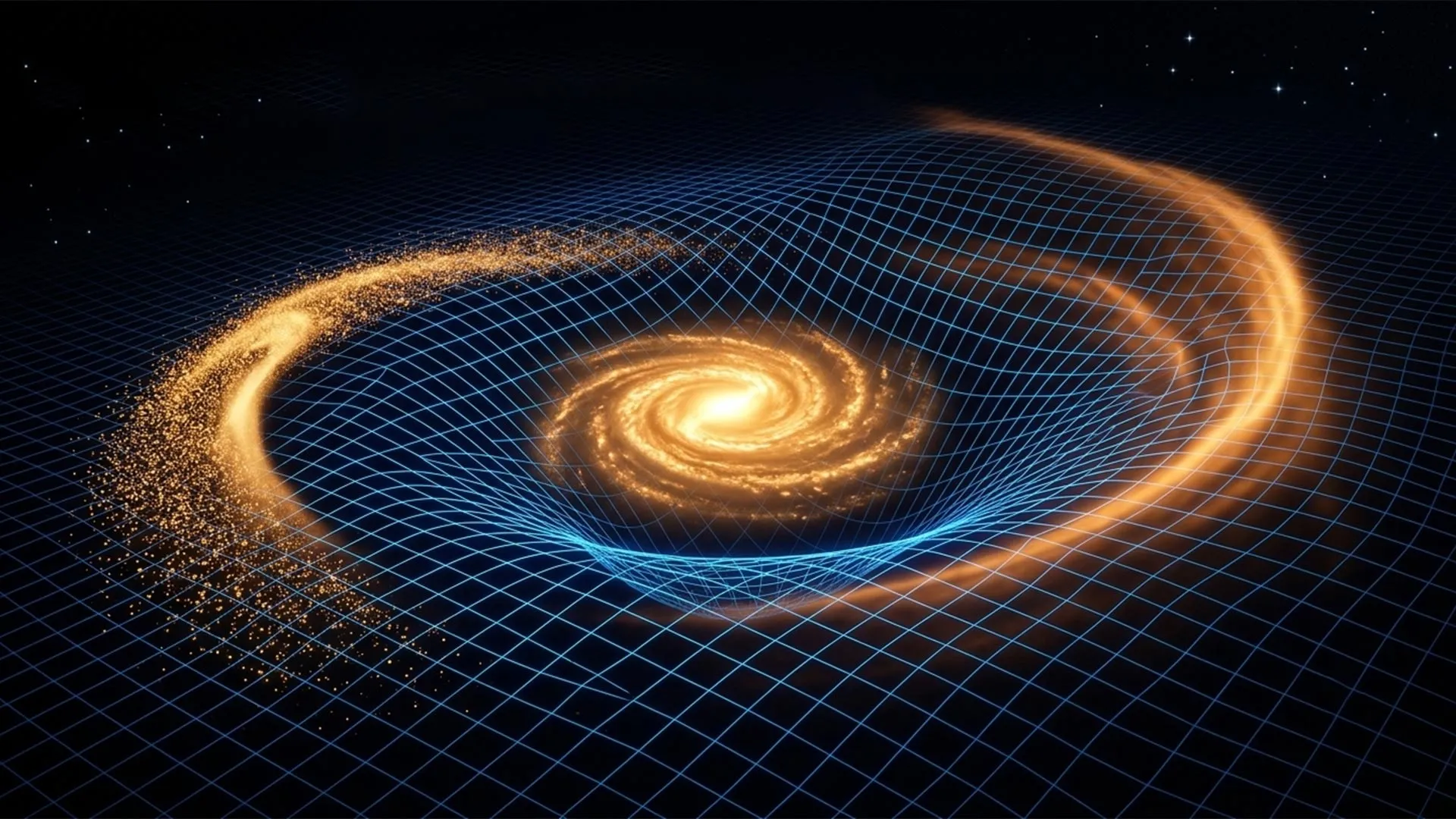
At the heart of the Cal Poly study is a concept known as Floquet engineering. In physics, Floquet theory refers to the study of differential equations with periodic coefficients. When applied to quantum systems, Floquet engineering involves "driving" a material—periodically changing its environment, such as through light or magnetic fields—to alter its fundamental Hamiltonian, or the total energy of the system.
The research conducted by Powell and Buchalter demonstrates that periodically changing a magnetic field can produce "driven quantum phases." These phases have no static counterpart, meaning they simply do not exist in materials that remain unchanged over time. By driving the system at specific frequencies and intensities, the researchers were able to synthesize new forms of quantum matter.
"On a big-picture level, I would describe this as an advance in our understanding of how time-dependent control can create and organize new forms of quantum matter," Powell stated during the dissemination of the findings. "The central idea is that useful quantum properties can depend not just on what a material is, but on how it is driven in time."
This "temporal" approach to material science allows researchers to bypass the limitations of natural elements. Instead of searching for a rare mineral with specific quantum properties, scientists can potentially "program" those properties into more common materials by manipulating their interaction with external forces.
Addressing the Challenge of Quantum Decoherence
One of the primary obstacles to the commercialization of quantum technology is decoherence—the loss of a quantum state due to interaction with the external environment. Qubits, the fundamental units of quantum information, are incredibly sensitive to temperature fluctuations, electromagnetic interference, and physical vibrations. These disruptions, often referred to as "noise," lead to high error rates in quantum calculations.
The Cal Poly study suggests that flux-switching Floquet engineering can create quantum systems that are inherently more stable. By carefully timing the application of magnetic fields, the researchers identified configurations that are less vulnerable to imperfections. These stable states are often "topological" in nature, meaning their properties are protected by the overall structure of the system rather than local conditions.
In practical terms, a more stable quantum state means fewer errors and less need for the massive, energy-intensive error-correction protocols that currently limit the scalability of quantum computers. If quantum bits can be made more resilient through the time-dependent control of magnetic fields, the hardware requirements for a functional quantum computer could be significantly reduced.
Mathematical Innovation and Topological Phase Diagrams
Beyond the immediate physical applications, the research also yielded significant mathematical insights. The team identified a mathematical organizing principle within their system that mirrors patterns typically found in higher-dimensional quantum systems.
In physics, exploring four-dimensional or five-dimensional systems is often a theoretical exercise due to the constraints of our three-dimensional reality. However, Powell and Buchalter found that a relatively simple system, when driven by changing conditions over time, can simulate the complexities of these higher dimensions. This provides a new laboratory tool for exploring "synthetic dimensions," where time acts as an additional coordinate to explore complex physics.
To visualize these findings, the researchers mapped out the system’s topological phase diagram. This diagram serves as a blueprint or visual guide to different stable quantum phases. Each phase is defined by fixed topological properties that remain constant even if the system is slightly disturbed. This mapping is crucial for future experimentalists who wish to replicate these states in a controlled setting, such as in ultracold-atom experiments where temperatures are lowered to near absolute zero to observe quantum phenomena without thermal interference.
Chronology of the Research and Academic Collaboration
The project represents a multi-year effort that highlights the integration of high-level research within undergraduate and graduate education at Cal Poly. Louis Buchalter, who earned his bachelor’s degree in physics from the university in 2025, began the project out of an interest in condensed matter physics.
The collaboration between Powell and Buchalter began with theoretical modeling and progressed into the complex simulations required to map the topological phase diagrams. Over the course of the project, the duo navigated the rigorous peer-review process of the American Physical Society, eventually securing publication in Physical Review B.
For Buchalter, the experience was transformative. "I learned that research is rarely a straightforward process, often requiring persistence and creative problem solving," he remarked. His journey from an undergraduate student to a published researcher in a major physics journal underscores the "Learn by Doing" philosophy of Cal Poly. Buchalter is slated to begin a Master of Science program in materials science and engineering at the University of Washington, with an eye toward a future career at a national laboratory.
Broader Industry Implications: From Finance to Pharmaceuticals
While the immediate impact of "Flux-Switching Floquet Engineering" is felt most strongly in the academic sectors of quantum computing and simulation, the long-term industrial implications are vast. Powell is careful to note that the current research is foundational, but its eventual "trickle-down" effect could redefine several major industries.
- Pharmaceuticals and Drug Discovery: Quantum simulators can model molecular interactions at an atomic level, a task that is currently impossible for even the world’s fastest supercomputers. By creating more stable quantum states, this research facilitates the development of simulators that can accurately predict how new drugs will interact with human proteins, potentially cutting years off the drug development timeline.
- Finance and Logistics: The financial sector relies heavily on optimization—finding the most efficient way to manage portfolios or route global supply chains. Quantum algorithms are uniquely suited for these "traveling salesman" problems. Enhanced stability in quantum hardware, driven by Floquet engineering, would make these tools more accessible to global markets.
- Materials Science and Aerospace: The ability to simulate and create new "driven" forms of matter could lead to the discovery of high-temperature superconductors or ultra-light, high-strength materials for use in aerospace engineering.
- National Security and Cryptography: Quantum computers have the potential to break most current encryption methods. Conversely, they also offer the possibility of "quantum key distribution," a perfectly secure method of communication. Research into stable quantum phases is a critical component of the global race for quantum supremacy.
Future Directions and Experimental Validation
The next logical step for this research is experimental validation. While the mathematical models and simulations are robust, the theoretical "driven quantum phases" must be observed in a physical laboratory setting. Powell points toward ultracold-atom experiments as the most likely venue for this testing. In these environments, lasers are used to trap atoms and cool them to billionths of a degree above absolute zero, creating a "clean" environment where the effects of flux-switching magnetic fields can be measured with high precision.
Furthermore, the research opens the door for "realistic quantum-device platforms." This involves moving from isolated atoms to solid-state systems, such as superconducting circuits or diamond nitrogen-vacancy centers, which are more compatible with existing microchip manufacturing processes.
The work of Powell and Buchalter arrives at a time when global investment in quantum technology is surging. Governments and private entities are pouring billions of dollars into quantum research, recognizing that the first nations or companies to master stable quantum control will hold a significant economic and strategic advantage.
Conclusion
The study "Flux-Switching Floquet Engineering" represents a significant contribution to the field of condensed matter physics. By demonstrating that the "how" of driving a system is just as important as the "what" of the material itself, Ian Powell and Louis Buchalter have provided a new lens through which to view quantum matter.
As the scientific community continues to grapple with the challenges of noise and decoherence, the principles of time-dependent control and topological protection offer a promising path forward. While the journey from a physics laboratory in San Luis Obispo to a consumer-ready quantum processor may still take years, the foundational blueprints are being drawn today. For the burgeoning quantum industry, these findings suggest that the key to the future of computing may lie not just in the matter we use, but in the rhythm with which we control it.













Leave a Reply