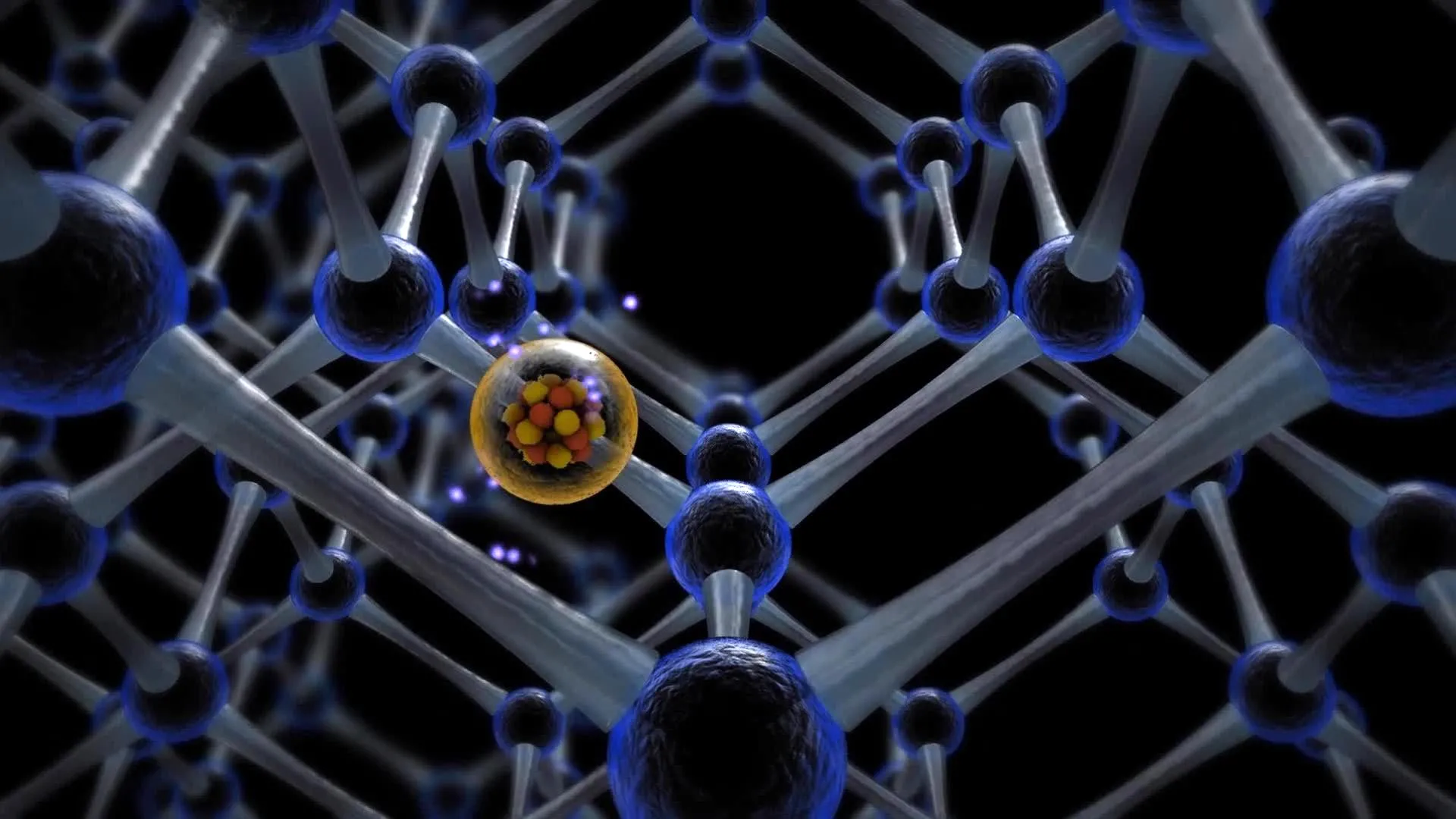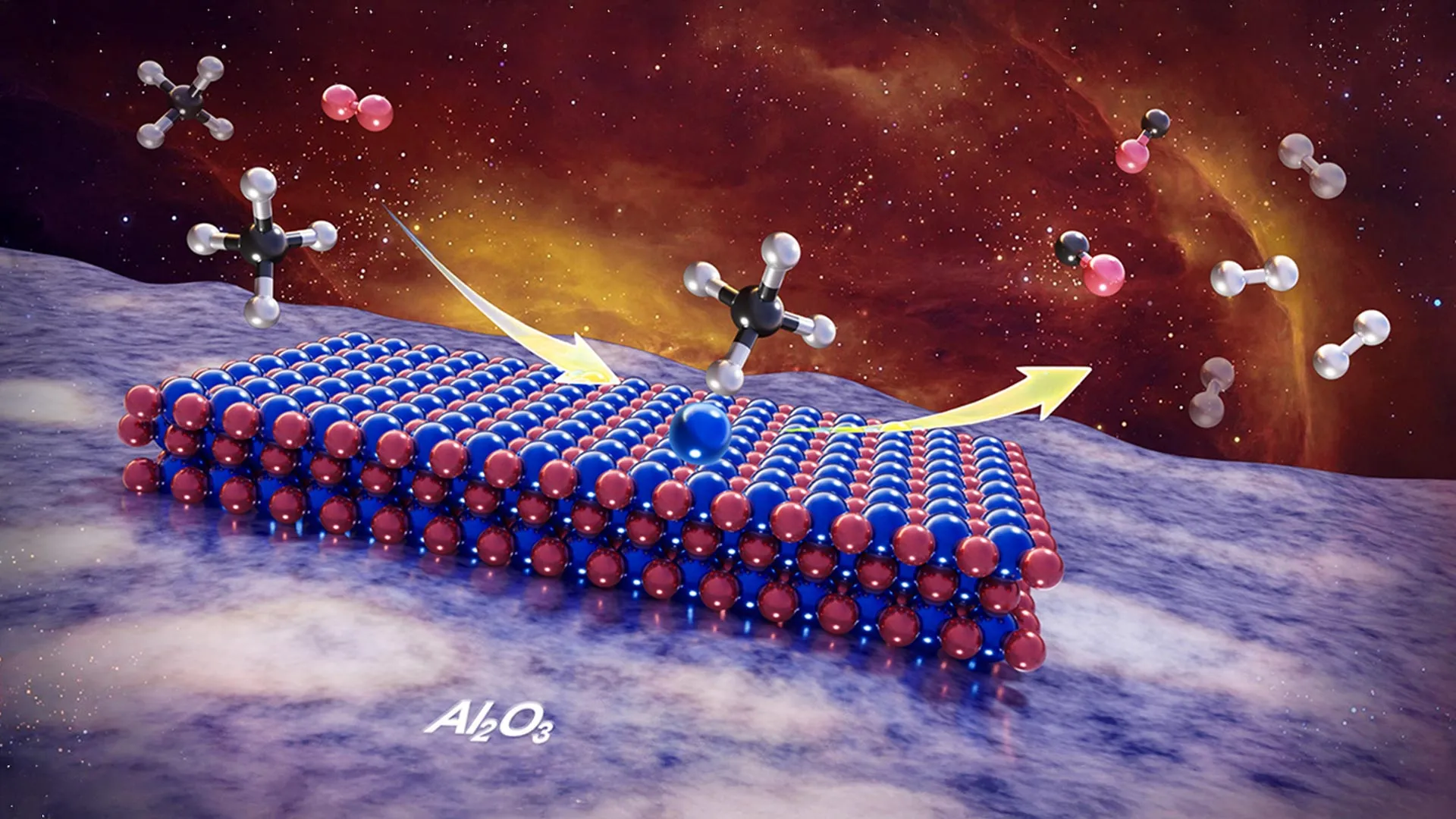
Physicists operating within the framework of the CERN Large Hadron Collider have successfully captured an unprecedented, high-resolution view of how gluons behave deep inside atomic nuclei. This breakthrough achievement, driven largely by researchers from the University of Kansas (KU) and the Czech Technical University in Prague, provides critical empirical evidence that challenges conventional theoretical frameworks regarding the strong nuclear force. Published in the prestigious academic journal Physical Review Letters, the findings center on the first multidimensional measurement of incoherent J/ψ (pronounced "JAY-sigh") photonuclear production, tracking both interaction energy and momentum transfer simultaneously to map the distribution of gluons at sub-femtometer scales.
The implications of this study extend to the fundamental origins of mass in the visible universe. While quarks are traditionally taught as the primary building blocks of protons and neutrons, they account for only a tiny fraction of total atomic mass. The vast majority of the mass found in ordinary matter—ranging from the stars in distant galaxies to the biological tissues of the human body—originates from the dynamic energy carried by gluons and the powerful strong interaction that binds quarks together. By peering into the intricate architecture of atomic nuclei with tools of extraordinary precision, the international research team has taken a monumental step toward answering how matter acquires its mass and structural integrity.
The Foundation of Subatomic Research and the ALICE Collaboration
To appreciate the significance of this latest discovery, one must examine the institutional and historical landscape of modern particle physics. The ALICE (A Large Ion Collider Experiment) collaboration is one of the four major detector experiments stationed at the Large Hadron Collider (LHC) located at CERN, the European Organization for Nuclear Research near Geneva, Switzerland. Designed primarily to study the physics of strongly interacting matter at extreme energy densities, ALICE focuses heavily on heavy-ion collisions, such as lead-lead collisions, which recreate conditions akin to those present fractions of a second after the Big Bang.
Within this massive international undertaking, University of Kansas physicist Daniel Tapia Takaki has emerged as a central figure, serving in a leadership role that bridges institutions across continents. Tapia Takaki worked closely with research counterparts at the Czech Technical University in Prague, reinforcing a robust institutional partnership that facilitates continuous academic exchanges for both graduate students and senior researchers. This collaborative network enabled the meticulous data collection and rigorous analysis required to extract subtle signals from millions of high-energy particle interactions recorded during previous operational runs of the LHC.
Turning the LHC Into an Ultrafine Gluon Microscope
The methodology employed in the study represents a masterclass in repurposing existing particle physics infrastructure. Rather than smashing lead nuclei directly into one another—the standard procedure for creating quark-gluon plasmas—the researchers utilized ultra-peripheral collisions. During Run 2 of the Large Hadron Collider, fast-moving lead nuclei passed in close spatial proximity without making direct physical contact.
In these near-miss encounters, the intense electromagnetic fields accompanying the relativistic lead nuclei behave essentially as concentrated beams of high-energy photons. When one of these virtual photons strikes an adjacent nucleus, it transiently produces a J/ψ particle. The subsequent production and decay characteristics of the J/ψ particle act as an exceptionally sensitive probe of the underlying gluon structure within the target nucleus.
Historically, many high-energy physics measurements have provided an averaged picture of gluon distributions across an entire nuclear volume, obscuring local variations. However, the detection of incoherent J/ψ production changes this dynamic entirely. By isolating these specific events, physicists can discern local fluctuations in gluon density, effectively unlocking structural details on scales vastly smaller than the diameter of a single proton.
"Our experiments using incoherent production is like switching from a blurry image to a high-resolution microscope," explained Daniel Tapia Takaki, professor of physics and astronomy at KU. "This process allows us to see how gluons fluctuate and organize themselves inside nuclei. By varying the momentum transfer, our experiment effectively changes the focus of our microscope. At resolutions of 0.6, 0.3, and 0.2 femtometers, ALICE progressively probed smaller regions inside the nucleus. The finest resolution corresponds to structures only about one-quarter the size of a proton."
To contextualize this extreme scale for a general audience, Tapia Takaki offered an imaginative analogy: if an atomic nucleus were somehow scaled up to the physical dimensions of a major football stadium, the highest resolution achieved by the ALICE experiment would be sharp enough to distinguish fine features measuring just a few yards wide across the turf.
Dissecting the Data: Energy Ranges and Momentum Transfer
The empirical success of the study relied on the analysis of a massive dataset spanning a wide kinematic range. The research team measured incoherent J/ψ production across photon-nucleus interaction energies stretching from 20 billion electron volts (GeV) up to 633 GeV. Concurrently, they examined how these production rates varied as a function of momentum transfer, a variable that directly dictates the spatial resolution or scale being interrogated within the target nucleus.
When the data were fully compiled and analyzed, a striking and unexpected pattern emerged. At the absolute smallest spatial scales probed during the experiment—regions measuring a fraction of a femtometer—the production rate of J/ψ particles exhibited a notable and statistically significant suppression. This suppression was measured at a statistical significance of approximately three standard deviations, providing a robust empirical signal that could not be dismissed as random statistical fluctuation.
This precise quantitative observation provides the crucial diagnostic tool needed by theorists to evaluate competing models of subatomic dynamics. For years, nuclear physicists have debated how dense agglomerations of gluons behave when subjected to extreme conditions. The new data directly challenge existing assumptions and compel a re-evaluation of long-standing theoretical frameworks.
Challenging Nuclear Shadowing and Pointing Toward Gluon Saturation
For decades, the standard paradigm used to explain particle production suppression in nuclear environments has been a concept known as "nuclear shadowing." Within this theoretical framework, gluons residing inside a complex atomic nucleus are envisioned as partially overlapping and obscuring one another—much like successive layers of storm clouds blocking direct sunlight. This overlapping effect naturally reduces the overall probability of certain particle production processes occurring. While nuclear shadowing has successfully accounted for a wide array of historical measurements across various accelerator facilities, it faces a formidable hurdle in light of the new ALICE findings.
The latest multidimensional measurements reveal that conventional nuclear shadowing, by itself, is insufficient to account for the pronounced suppression observed at the smallest spatial scales. Instead, the experimental results align remarkably well with a more radical physical phenomenon predicted by quantum chromodynamics (QCD)—the fundamental theory governing the strong force.
That phenomenon is known as "gluon saturation." Under this theoretical model, as one probes deeper into a nucleus and encounters increasingly dense concentrations of gluons, these particles become so tightly packed and numerous that they begin interacting strongly with one another. This dense crowding creates a self-limiting mechanism, effectively capping how many gluons can occupy a given spatial region and altering the dynamics of high-energy interactions.
"At these extraordinary scales, we observe evidence that the gluons begin to behave collectively, a phenomenon known as gluon saturation," Tapia Takaki noted. "In this regime, gluons become so densely packed that they begin interacting strongly with one another, limiting how many can exist in a given region."
Implications for Future Research and Global Physics Initiatives
The publication of these findings in Physical Review Letters marks a significant milestone, but it also opens the door to an array of subsequent investigations. As theoretical physicists update their models to incorporate the realities of gluon saturation at high momentum transfers, experimentalists are already looking toward the next generation of particle accelerators.
The insights gained from the ALICE experiment at CERN’s Large Hadron Collider hold direct relevance for future facilities, most notably the Electron-Ion Collider (EIC) currently under development in the United States at Brookhaven National Laboratory. The EIC will be specifically dedicated to unravelling the internal structure of protons and atomic nuclei with polarized electron and ion beams, allowing scientists to build directly upon the foundational groundwork laid by CERN’s LHC Run 2 data.
By clarifying the transition zone between standard nuclear shadowing and collective gluon saturation, the ALICE collaboration has provided the global physics community with a sharper lens through which to view the subatomic universe. As researchers continue to refine these high-resolution techniques, humanity draws closer to fully understanding the invisible glue that holds the visible universe together, answering fundamental questions about mass, energy, and the deepest laws of nature.