


The rapid escalation of global computing demands has pushed traditional silicon-based architecture toward its physical limits, particularly regarding energy consumption and heat dissipation. In response, a multi-institutional research team led by North Carolina State University and the University of Utah has unveiled a significant advancement in the field of orbitronics, a nascent area of physics that could redefine how data is processed and stored. Published in the journal Nature Physics, the study demonstrates that "chiral phonons"—circular vibrations of atoms within a crystal lattice—can directly generate and control orbital angular momentum in electrons without the need for traditional magnetic materials or external power sources. This discovery marks a fundamental shift in condensed matter physics, offering a path toward faster, cooler, and more sustainable electronic devices.
The Evolution from Spintronics to Orbitronics
For decades, the electronics industry has relied on the flow of electrical charge to process information. As devices shrunk, the resistance encountered by these charges generated excessive heat, leading to the development of spintronics. Spintronics utilizes the "spin" of an electron—its intrinsic magnetic moment—to carry information, significantly reducing energy loss. However, spintronics typically requires heavy, expensive transition metals and complex magnetic fields to operate.
Orbitronics represents the next logical leap in this evolution. Instead of focusing on the electron’s spin, orbitronics harnesses the electron’s orbital angular momentum (OAM)—the motion of the electron as it orbits the nucleus of an atom. While theoretically more efficient than spintronics, orbitronics has historically faced a significant hurdle: generating and controlling these orbital currents has traditionally required the same heavy magnetic materials, such as iron or cobalt, that scientists were hoping to move away from. These materials are often classified as "critical materials" due to their scarcity, high cost, and the environmental impact of their extraction.
The new research bypasses these requirements entirely. By utilizing the inherent geometric properties of certain non-magnetic crystals, the researchers have found a way to "nudge" electrons into specific orbital paths using nothing more than the natural vibrations of the material’s own atoms.
The Mechanics of Chirality and Atomic Motion
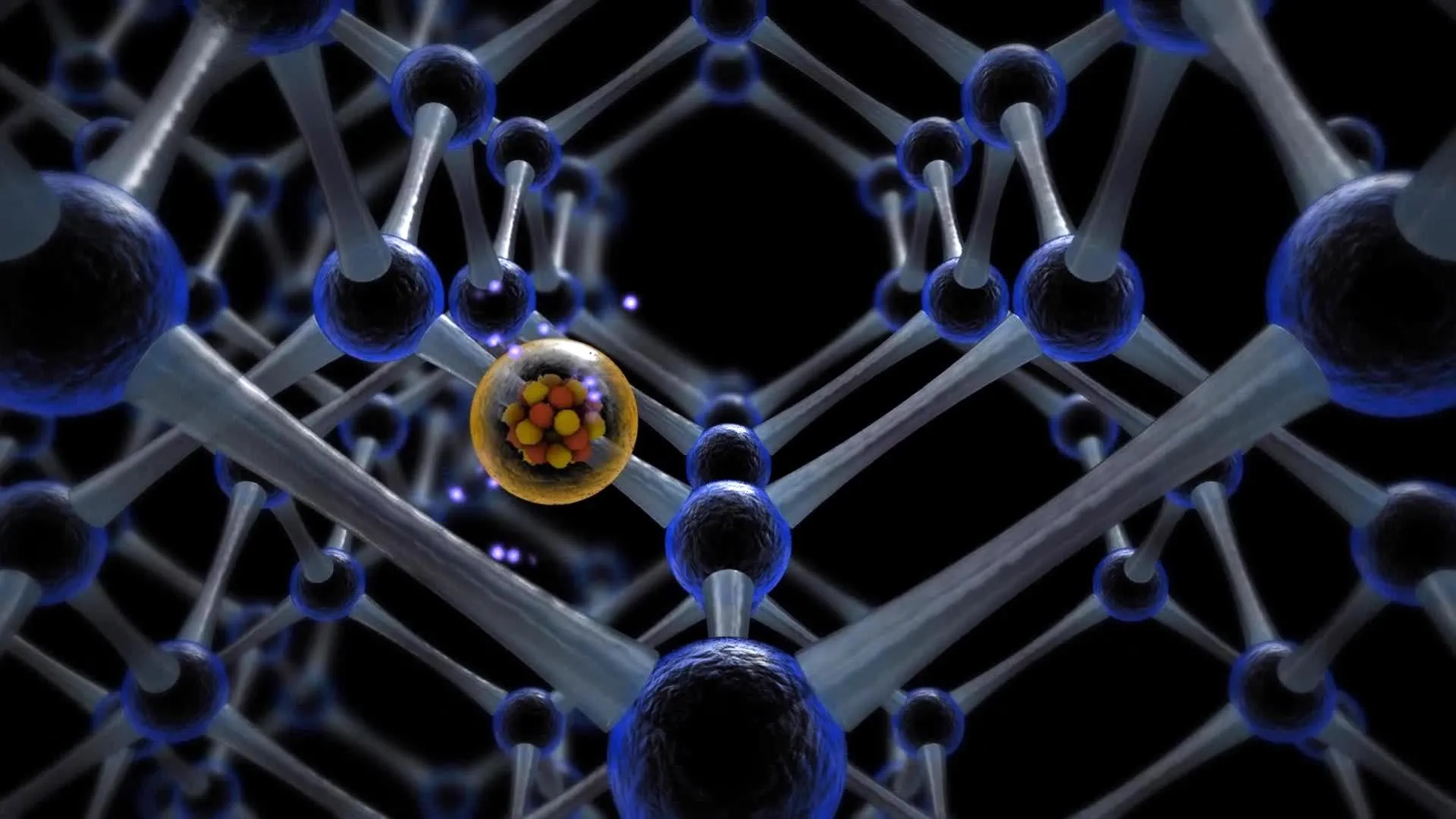
The breakthrough centers on the concept of chirality, or "handedness." In the world of chemistry and physics, a chiral object is one that cannot be superimposed on its mirror image, much like a human left hand cannot perfectly align with a right-handed glove. While many common materials possess symmetrical atomic structures, certain crystals, such as alpha-quartz, are naturally chiral. Their atoms are arranged in a helical or spiral pattern, resembling the threads of a screw.
In any solid-state material, atoms are never truly stationary; they vibrate due to thermal energy. These collective vibrations travel through the material as waves known as phonons. In a standard symmetrical crystal, these vibrations occur in linear, back-and-forth patterns. However, in a chiral material, the spiral arrangement of the atoms forces the vibrations to follow a circular or elliptical path. These are known as chiral phonons.
The research team discovered that these chiral phonons carry their own angular momentum. When these vibrations interact with the electrons inhabiting the crystal, they transfer that momentum, effectively "spinning up" the electrons into specific orbital states. This transfer occurs naturally within the material’s structure, eliminating the need for external magnetic inputs or high-voltage injections.
Experimental Validation at the National High Magnetic Field Laboratory
To prove this phenomenon, the research team conducted a series of sophisticated experiments at the National High Magnetic Field Laboratory in Florida. They focused on alpha-quartz, a widely available and inexpensive mineral. Despite being non-magnetic, quartz’s chiral structure provided the perfect environment to observe the interaction between phonons and electrons.
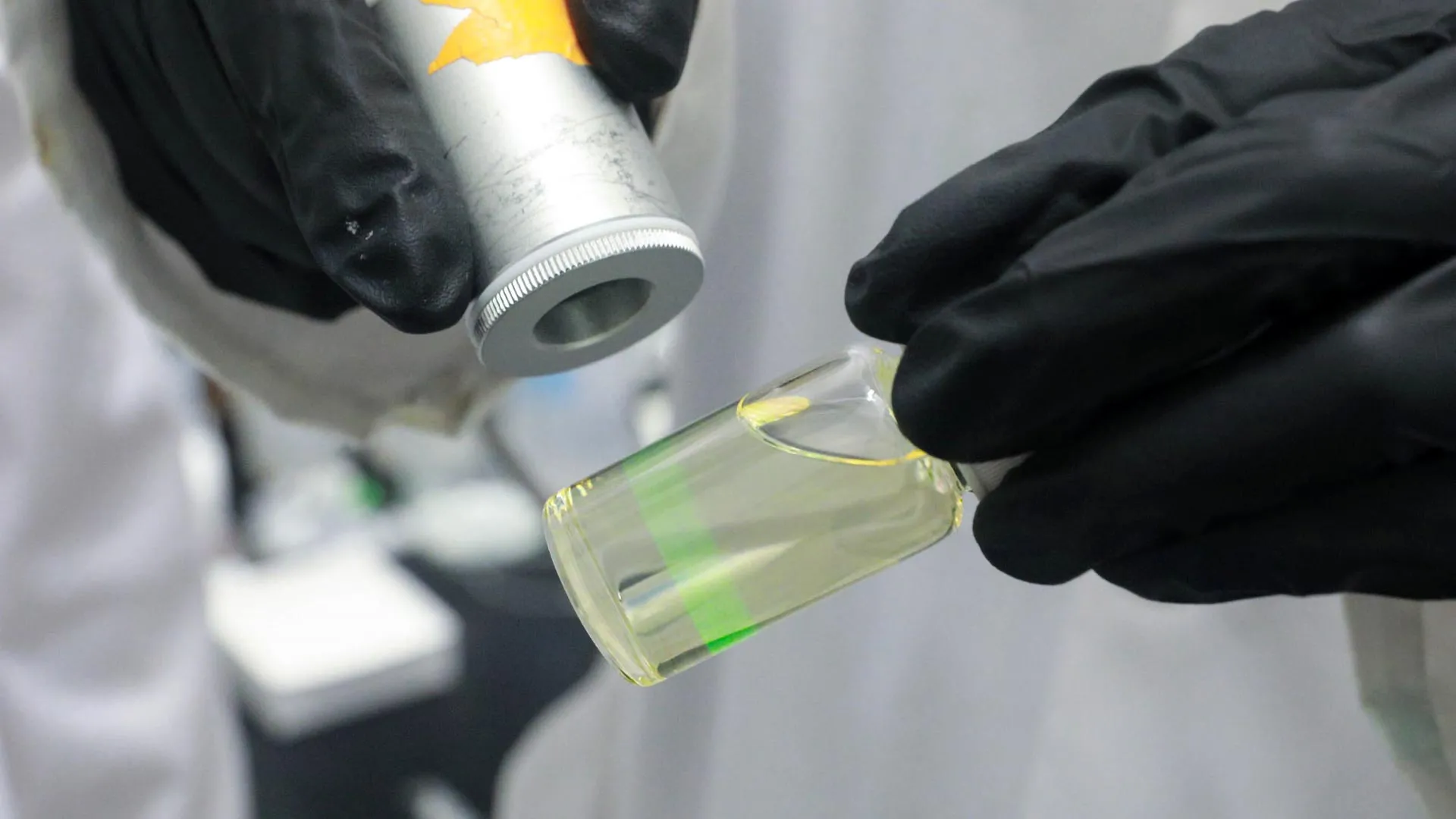
The team employed advanced laser spectroscopy to observe the material’s internal dynamics. By shining ultra-fast lasers through the quartz and analyzing the properties of the reflected light—specifically changes in wavelength and polarization—they were able to detect the presence of internal magnetic effects generated by the chiral phonons.
"Even though the material itself isn’t magnetic, the existence of chiral phonons gives us these magnetic levers to pull on," explained Rikard Bodin, a doctoral candidate at the University of Utah and co-author of the study. The measurements confirmed that when the chiral phonons were aligned, they created a measurable magnetic signature that influenced electron behavior, a phenomenon previously thought to be impossible in such materials.
The Discovery of the Orbital Seebeck Effect
A pivotal moment in the study was the identification of what the researchers have termed the "orbital Seebeck effect." In classical physics, the Seebeck effect describes the conversion of temperature differences directly into electricity. In spintronics, the "spin Seebeck effect" refers to using thermal gradients to generate spin currents.
The team demonstrated that by applying a magnetic field to align the naturally occurring chiral phonons in alpha-quartz and then removing that field, the phonons would maintain their collective motion. This alignment allowed for a sustained flow of orbital angular momentum. To detect this hidden flow, the researchers layered thin films of transition metals, such as tungsten and titanium, onto the quartz. These layers acted as converters, transforming the orbital motion of the electrons into a measurable electrical signal.
This process proved that information—carried via orbital angular momentum—could be moved through a non-magnetic medium and converted into a usable electronic format. Valy Vardeny, a distinguished professor at the University of Utah, noted the significance of this shift: "We don’t need a magnet. We don’t need a battery. We don’t need to use voltage. We just need a material with chiral phonons."
Timeline and Collaborative Scope
The development of this discovery was the result of years of theoretical groundwork and several months of intensive experimental testing. The project involved a massive collaboration across ten major research institutions, reflecting the complexity of merging phonon physics with orbital electronics.
- Phase 1: Theoretical Modeling: Physicists at North Carolina State University and the University of Utah developed the mathematical frameworks suggesting that chiral phonons could interact with electron orbits.
- Phase 2: Material Selection: The team identified alpha-quartz and other chiral structures like tellurium as primary candidates due to their well-documented helical lattices.
- Phase 3: Experimental Testing (2023-2024): High-precision measurements were conducted at the National High Magnetic Field Laboratory, utilizing specialized magneto-optical equipment.
- Phase 4: Data Verification: The "orbital Seebeck effect" was verified through repeated trials involving different metallic overlays to ensure the signal was a direct result of orbital transfer.
The collaborating institutions included Nanjing Normal University, the Air Force Research Laboratory, the University of Washington, the University of North Carolina at Chapel Hill, the University of Illinois at Urbana-Champaign, the University of South Carolina, and Pennsylvania State University.
Implications for Industry and Sustainability
The implications of this research extend far beyond the laboratory. As the tech industry grapples with the environmental and geopolitical costs of mining rare-earth elements, the ability to use abundant materials like quartz for high-tech applications is revolutionary.
Many of the materials currently required for advanced computing—such as platinum, tantalum, and various rare-earth magnets—are subject to volatile supply chains and ethical mining concerns. By shifting the operational burden from the material’s elemental composition (the need for heavy metals) to its geometric structure (chirality), the researchers have opened the door to a "greener" form of electronics.
Furthermore, the efficiency of the orbital Seebeck effect suggests that future devices could operate with significantly lower power requirements. In large-scale data centers, where cooling costs account for a massive portion of operational expenses, orbitronic components that generate less waste heat could lead to billions of dollars in energy savings and a substantial reduction in carbon footprints.
Future Outlook: Beyond Quartz
While quartz served as the ideal "proof of concept" material for this study, the researchers emphasize that the principle applies to a broad class of chiral materials. Future research will likely explore hybrid organic-inorganic perovskites, tellurium, and selenium, which may offer even more efficient phonon-electron coupling.
The transition from a laboratory discovery to a consumer product typically takes a decade or more, but the "levers" identified by this team provide a new toolkit for engineers. "I can’t tell you that your TV is going to run on it tomorrow," Bodin remarked, "but it’s creating more levers that we can pull on to do new things. Now that it’s here, someone else can push it forward and before you know it, it’s ubiquitous."
As the scientific community continues to dissect the nuances of chiral phonons, the focus will move toward integrating these materials into existing CMOS (Complementary Metal-Oxide-Semiconductor) technology. If successful, the marriage of chiral phonons and orbitronics could define the next era of the information age, characterized by devices that are not only faster and smarter but also fundamentally more in harmony with the materials available on our planet.















Leave a Reply