

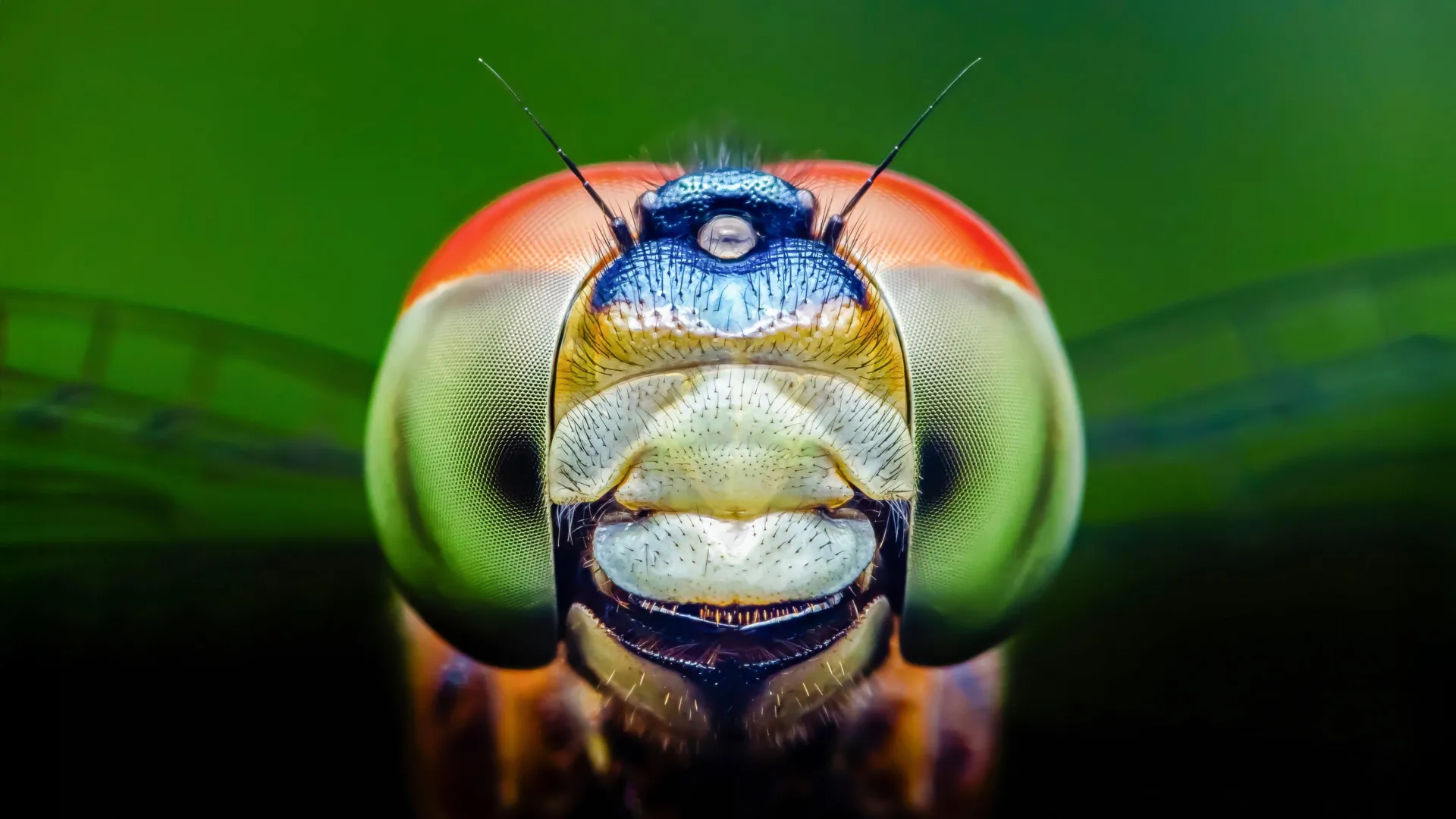
Researchers at Osaka Metropolitan University (OMU) have unearthed a remarkable instance of parallel evolution, demonstrating that dragonflies perceive red light through a mechanism strikingly similar to that employed by mammals, including humans. This discovery, extending beyond entomology, holds significant promise for the advancement of medical technologies, particularly in the burgeoning field of optogenetics. The findings, published in Cellular and Molecular Life Sciences, illuminate a shared molecular strategy for color perception that has independently arisen in vastly different branches of the evolutionary tree.
The Intricacies of Mammalian Color Vision
At the heart of human and mammalian color vision lies a class of proteins known as opsins. These photoreceptor proteins, embedded within the retina, are instrumental in capturing light and initiating the cascade of signals that our brains interpret as color. Humans possess three primary types of opsins, each exhibiting peak sensitivity to distinct wavelengths of light: blue, green, and red. This trichromatic system, a hallmark of primate vision, allows for the perception of a rich spectrum of colors. The specific molecular architecture of these opsins dictates their spectral sensitivity, with subtle variations in amino acid sequences conferring the ability to fine-tune their responsiveness to different light frequencies.
Dragonflies’ Unforeseen Red Sensitivity
While insects generally exhibit a more limited color perception, often skewed towards ultraviolet and blue light, dragonflies present a notable exception. Their ability to detect red light has long been recognized, but the precise molecular underpinnings of this capability have remained a subject of intense scientific inquiry. The OMU research team, spearheaded by Professors Mitsumasa Koyanagi and Akihisa Terakita from the Graduate School of Science, has identified a specific opsin in dragonflies that exhibits an extraordinary sensitivity to light wavelengths around 720 nanometers (nm). This spectral sensitivity extends beyond the deepest red visible to the human eye, a region often perceived as near-infrared.
Professor Terakita elaborated on the significance of this finding: "This is one of the most red-sensitive visual pigments ever found. Dragonflies can likely see deeper into red light than most insects." This enhanced red-sensing capability suggests a unique visual adaptation within the insect kingdom.
Evolutionary Significance: Why Deep Red Vision Matters for Dragonflies
The researchers hypothesized that this heightened sensitivity to deep red light plays a crucial role in the dragonfly’s reproductive strategies, particularly in mate recognition. To investigate this, the team focused on the phenomenon of reflectance, which describes how much light a surface bounces back. In many species, including dragonflies, the way individuals reflect light contributes significantly to their visual appearance to conspecifics.
Through meticulous measurements of light reflectance in dragonflies, the scientists observed distinct differences between males and females, specifically in their reflection of red to near-infrared light. These subtle spectral variations are believed to provide males with crucial visual cues, enabling them to swiftly identify potential mates amidst the dynamic aerial environment. This allows for efficient courtship and mating, a critical aspect of survival and species propagation. The ability to perceive these nuanced differences in reflected light could therefore confer a significant evolutionary advantage.
A Striking Case of Convergent Evolution
The most profound revelation of the OMU study lies in the comparison of the dragonfly red opsin mechanism with that of mammals. The research unveiled an astonishing degree of molecular similarity. "Surprisingly, the mechanism by which dragonfly red opsin detects red light is identical to that of red opsin in mammals, including humans," stated first author Ryu Sato, a graduate student. "This is an unexpected result, suggesting that the same evolutionary process occurred independently in distantly related lineages."
This discovery represents a compelling example of convergent evolution, or parallel evolution, where unrelated species independently evolve similar traits or solutions to similar environmental pressures. Despite the vast evolutionary distance separating insects and mammals, both lineages have converged on the same fundamental molecular strategy for sensing red light. This suggests that the functional demands placed upon red light detection might favor a specific evolutionary pathway, leading to similar molecular architectures despite distinct evolutionary histories. The common ancestor of insects and mammals lived hundreds of millions of years ago, making this parallel development particularly noteworthy.
Engineering Dragonfly Vision for Medical Applications
Beyond its implications for evolutionary biology, the OMU team’s work holds immense potential for technological innovation, particularly in medicine. A key breakthrough involved identifying a single critical amino acid position within the dragonfly opsin protein. This specific site was found to be the determinant of the protein’s spectral sensitivity. By strategically altering this single amino acid, the researchers were able to effectively "tune" the opsin’s responsiveness, shifting its sensitivity towards longer wavelengths and even into the near-infrared spectrum.
In a significant demonstration of this principle, the team engineered a modified version of the dragonfly opsin. This engineered protein exhibited an enhanced sensitivity to even longer wavelengths. Crucially, they successfully demonstrated that cells engineered to express this modified opsin could be activated by near-infrared light. This achievement marks a critical step towards harnessing insect vision for practical applications.
Revolutionizing Optogenetics with Near-Infrared Sensitivity
The ability to engineer opsins that respond to near-infrared light has profound implications for optogenetics, a rapidly advancing field that utilizes light-sensitive proteins to control and study cellular activity. Optogenetics has become an indispensable tool in neuroscience and other biological disciplines, allowing researchers to precisely manipulate neuronal firing patterns or gene expression in living organisms.
Current optogenetic tools often rely on visible light, which has limitations in terms of tissue penetration. Near-infrared light, however, possesses the ability to penetrate biological tissues more deeply than visible light. This property is especially advantageous for studying deep-seated neural circuits or activating cells located far beneath the surface of the skin or brain.
Professor Koyanagi highlighted the potential of their engineered opsin: "In this study, we succeeded in shifting the sensitivity of a modified near-infrared opsin from Gomphidae dragonflies even further toward longer wavelengths and confirmed that the modified near-infrared opsin can induce cellular responses in response to near-infrared light." He further elaborated, "These findings demonstrate this opsin as a promising optogenetic tool capable of detecting light even deep within living organisms."
The implications for medical research are substantial. For instance, in the study of neurological disorders, researchers could potentially use near-infrared light to precisely activate specific neurons in deep brain regions affected by conditions such as Parkinson’s disease or epilepsy, without the need for invasive surgical procedures. Similarly, in gene therapy, engineered opsins could allow for light-activated gene delivery or regulation in targeted tissues that are otherwise difficult to access.
A Timeline of Discovery and Future Prospects
The research leading to this groundbreaking discovery likely involved a multi-stage process, typical of complex scientific investigations. Early stages would have involved extensive field observations and behavioral studies of dragonflies to understand their visual ecology. This would have been followed by detailed molecular biology techniques to isolate and characterize the opsin genes responsible for their vision. Biochemical assays would then have been employed to precisely measure the spectral sensitivity of these opsins. The identification of the key amino acid residue likely involved site-directed mutagenesis experiments, where specific genes are altered to observe the functional consequences. Finally, cell culture experiments and potentially in vivo studies would have been conducted to validate the engineered opsin’s functionality.
The publication of the findings in Cellular and Molecular Life Sciences signifies the culmination of years of dedicated research and peer review. The scientific community is now poised to build upon this foundational work. Future research directions may include further refinement of the engineered opsins to achieve even greater specificity and efficiency, as well as exploring their application in a wider range of biological models and therapeutic contexts.
The collaboration between OMU and potentially other research institutions worldwide will be crucial in translating these laboratory findings into tangible medical advancements. The elegant parallel between dragonfly and mammalian vision, once a curiosity of evolutionary biology, has now opened a new frontier in the quest for more precise and less invasive therapeutic interventions. This discovery underscores the power of fundamental research to yield unexpected and transformative applications, bridging the gap between the natural world and human innovation.

















Leave a Reply