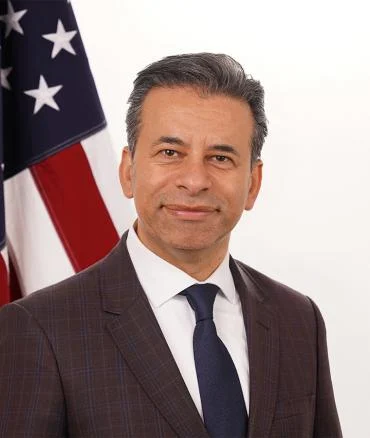
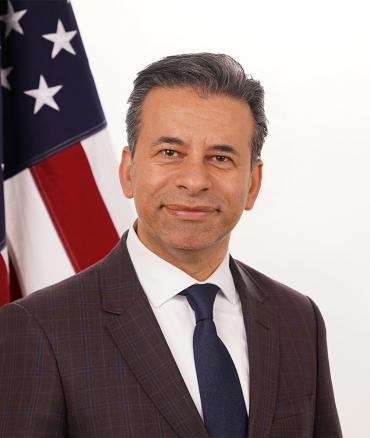
Marty Makary resigned on Tuesday as commissioner of the Food and Drug Administration, effective immediately, following escalating rumors that President Donald Trump was planning his dismissal. Makary’s abrupt departure marks a significant moment of instability for the nation’s premier health regulatory agency, leaving a vacuum in critical public health leadership during a period of intense scrutiny and evolving challenges.
The immediate catalyst for Makary’s resignation appears to be a profound policy conflict with the Trump administration over the authorization of fruit-flavored vaping products. Sources close to the administration indicate that President Trump had exerted considerable pressure on Makary to authorize specific flavored products, notably from Glas Inc., a move Makary reportedly resisted due to grave concerns about their appeal to and potential health impact on young people. Despite Makary’s initial opposition, two fruit-flavored vapes received approval earlier this month. Furthermore, just last Friday, the FDA issued a new policy that effectively broadened the marketing scope for these unauthorized electronic nicotine delivery systems (ENDS) and nicotine pouch products, signaling a shift that contradicted Makary’s stated public health priorities regarding youth vaping.
"He’s a great doctor, and he was having some difficulty," President Trump cryptically told reporters on Tuesday afternoon, acknowledging the departure without delving into specifics but hinting at underlying tensions that had become irreconcilable. This terse statement underscores the political undercurrents that frequently define high-level appointments within the executive branch, particularly in agencies with significant public health and economic ramifications.
The Thorny Path of Vape Regulation: A Policy Flashpoint
The controversy surrounding flavored vaping products has been a contentious issue for the FDA for several years. The agency is responsible for regulating tobacco products, including e-cigarettes, under the Family Smoking Prevention and Tobacco Control Act of 2009. This mandate requires e-cigarette products to undergo a rigorous Premarket Tobacco Application (PMTA) process to demonstrate that they are "appropriate for the protection of the public health" before they can be legally marketed. A key aspect of this evaluation is assessing the product’s risks and benefits to the population as a whole, including both users and non-users, and considering the likelihood of initiation by youth.
Youth vaping has surged in recent years, with data from the Centers for Disease Control and Prevention (CDC) and the National Youth Tobacco Survey (NYTS) consistently showing that flavored e-cigarettes are overwhelmingly preferred by adolescents. For instance, recent surveys indicated that over 80% of middle and high school students who use e-cigarettes report using flavored products, with fruit, candy, mint, and menthol being the most popular. Public health advocates, including medical organizations and parent groups, have long argued that these appealing flavors act as a gateway to nicotine addiction for a new generation, often masking the harsh taste of nicotine and making the products seem innocuous.
Makary, aligning with a significant segment of public health experts, had reportedly championed stricter enforcement against flavored vapes, viewing them as a critical public health threat. His resistance to authorizing additional flavored products, particularly those from Glas Inc., was consistent with this stance. However, the Trump administration has historically shown a more industry-friendly approach to regulation, often prioritizing economic considerations and consumer choice. The ultimate approval of the fruit-flavored vapes and the subsequent policy allowing broader marketing suggest a direct override of Makary’s public health concerns, indicative of the intense political pressure he faced. This dynamic highlights the inherent tension between the scientific independence of a regulatory body like the FDA and the political directives of an administration.
A Broad Spectrum of Criticism: Makary’s Beleaguered Tenure
Beyond the vaping debate, Makary’s tenure was characterized by significant criticism from various influential groups, underscoring the deeply polarized landscape of health policy.
The Mifepristone Controversy: Abortion Rights and Regulatory Scrutiny
Anti-abortion groups, most notably Susan B. Anthony Pro-Life America, had been vocal in their campaign for Makary’s removal. Their central accusation was that Makary was "slow-walking" a safety review of mifepristone, the medication commonly used for abortion, and simultaneously allowing new generic versions of the drug to enter the market. Mifepristone’s regulation has been a lightning rod in the ongoing national debate over abortion access. Approved by the FDA in 2000, mifepristone has been subject to a Risk Evaluation and Mitigation Strategy (REMS) program, which imposes specific restrictions on how the drug can be dispensed to ensure its safe use. These restrictions have been a constant target for both proponents and opponents of abortion rights, with the former arguing for easier access and the latter advocating for stricter controls or outright bans.
The introduction of generic versions of mifepristone is a standard pharmaceutical process following patent expiration. However, for anti-abortion groups, any action perceived as expanding access to the drug, or not imposing new restrictions, is viewed as a dereliction of duty from a pro-life perspective. Their accusations against Makary suggest a belief that the FDA under his leadership was not sufficiently responsive to their calls for tightening regulations on abortion medication, further complicating his political standing.
Vaccine Policy: Navigating a Politicized Landscape
Makary also faced a barrage of criticism from the "Make America Healthy Again" (MAHA) movement, an organization that champions a highly skeptical view of conventional public health interventions, particularly concerning vaccines. This movement accused Makary of failing to pull mRNA vaccines off the market, despite his administration’s actions to restrict certain COVID-19 vaccines and allegedly block the publication of safety manuscripts. This contradictory criticism highlights the difficulty of leading a public health agency in an era of deep mistrust and misinformation.
The MAHA movement, often aligned with figures who express skepticism about established vaccine science, likely sought a more aggressive stance against mRNA vaccines, particularly in the wake of the COVID-19 pandemic. Their calls for removal run counter to the vast body of scientific evidence supporting the safety and efficacy of mRNA vaccines, which underwent unprecedented rigorous testing and continuous monitoring. Conversely, Makary’s perceived "restriction" of certain COVID-19 vaccines and the alleged blocking of safety manuscripts could be interpreted in various ways. It might suggest a move towards greater caution or transparency, or it could be seen by critics as an attempt to control information, depending on one’s perspective and underlying biases.
Simultaneously, Makary and Vinay Prasad, a prominent academic often associated with critical views on certain public health policies, drew sharp condemnation from former FDA commissioners. Their proposed plan to overhaul the agency’s approach to approving vaccines was met with significant resistance. These former leaders expressed deep concerns that such an overhaul could undermine the FDA’s established scientific integrity, jeopardize public trust in vaccine safety, and potentially politicize a process that has historically been driven by robust scientific review. The FDA’s vaccine approval process is a global benchmark, and any significant alteration carries immense implications for national and international public health. The very notion of an overhaul in such a critical area, particularly from a politically embattled commissioner, raised red flags among those dedicated to the agency’s traditional mission.
Erosion of Stability: A Tenure Defined by Turmoil
Makary’s tenure was characterized by unprecedented organizational upheaval and a significant brain drain within the FDA. During what the article indicates was the first year of President Trump’s hypothetical second term, nearly all of the FDA’s senior career officials either resigned or were reportedly forced out. These officials represent decades of institutional knowledge, scientific expertise, and regulatory experience, making their departure a severe blow to the agency’s operational capacity and long-term stability. The exodus of such critical personnel often signals a challenging work environment, a lack of alignment with leadership, or perceived political interference in scientific processes.
Further compounding this instability, thousands of positions across the federal government, including within the FDA, were reportedly removed by the Department of Government Efficiency (DOGE). While the exact mandate and impact of DOGE are not fully detailed, such a department’s actions typically involve significant bureaucratic restructuring and workforce reductions aimed at streamlining operations or reducing government expenditure. For a scientific and regulatory agency like the FDA, which relies heavily on a specialized workforce to conduct research, review applications, and ensure compliance, large-scale job cuts can severely impede its ability to fulfill its mission effectively and efficiently. The removal of thousands of positions likely strained existing staff, slowed down critical processes, and created an environment of uncertainty and low morale.
The Center for Drug Evaluation and Research (CDER), one of the FDA’s most crucial divisions responsible for evaluating new drugs, generics, and over-the-counter medications, suffered particularly severe leadership instability. It saw six different leaders in a single year, a turnover rate virtually unheard of in a major federal agency. This rapid succession of leadership can cripple strategic planning, create policy inconsistencies, and delay vital drug approvals, ultimately impacting patient access to new therapies.
Among these short-lived appointments, Makary appointed George Tidmarsh as CDER head, who was subsequently forced to resign amidst serious allegations that he used his position for a personal vendetta. Such accusations, if substantiated, point to a severe breach of ethical conduct and a profound misuse of public office, further eroding trust in the FDA’s leadership. His successor, Rick Pazdur, a highly respected figure in oncology drug development, lasted only three weeks before resigning due to reported clashes with Makary. These clashes likely stemmed from fundamental disagreements over regulatory philosophy, the pace of drug approvals, or the degree of scientific independence afforded to CDER, highlighting Makary’s struggle to maintain cohesion and effective management within his own ranks.
The Regulatory Vacuum and Future Uncertainties
Makary’s abrupt resignation leaves the fate of several programs he introduced hanging in the balance. Many of these initiatives have not yet gone through the federal rulemaking process, which is essential to codify them into law and ensure their permanence regardless of leadership changes. Without this formalization, these programs—which could range from new drug development pathways to public health initiatives or changes in regulatory review standards—are vulnerable to being stalled, altered, or entirely discarded by the incoming leadership. This creates significant uncertainty for the pharmaceutical industry, researchers, and the public who might benefit from these programs.
The departure also exacerbates a broader leadership crisis within the federal health apparatus. The article notes that the CDC also currently lacks a permanent director, a surgeon general, and a vaccine chief. This collective leadership vacuum across multiple critical health agencies poses a significant risk to national public health. Without stable, confirmed leadership, these agencies may struggle to coordinate responses to emerging health threats, implement long-term strategic plans, or maintain public trust. The absence of a permanent surgeon general and vaccine chief, in particular, could hinder public health communication and vaccine confidence initiatives, especially given the ongoing controversies surrounding vaccine policy.
In the immediate aftermath of Makary’s resignation, Kyle Diamantas, an attorney reportedly with personal ties to Donald Trump Jr., will step in as the acting FDA commissioner. Diamantas is scheduled to testify in Makary’s place on May 13 at a crucial budget hearing, a high-stakes public appearance that will immediately thrust him into the spotlight. His background and perceived political connections suggest that the Trump administration intends to maintain a firm grip on the agency’s direction.
The search for a permanent replacement for Makary will undoubtedly be a highly politicized process. President Trump will need to appoint a nominee who aligns with his administration’s policy objectives, and that individual will then face a potentially contentious confirmation hearing in the Senate. Given the myriad controversies that plagued Makary’s tenure—from vape regulation and abortion medication to vaccine policy and internal agency instability—the next FDA commissioner will inherit an agency in turmoil, tasked with restoring confidence, rebuilding its scientific workforce, and navigating an increasingly complex and politicized public health landscape. The stability and integrity of the FDA, and by extension, the health of the nation, depend on the successful resolution of this leadership crisis.