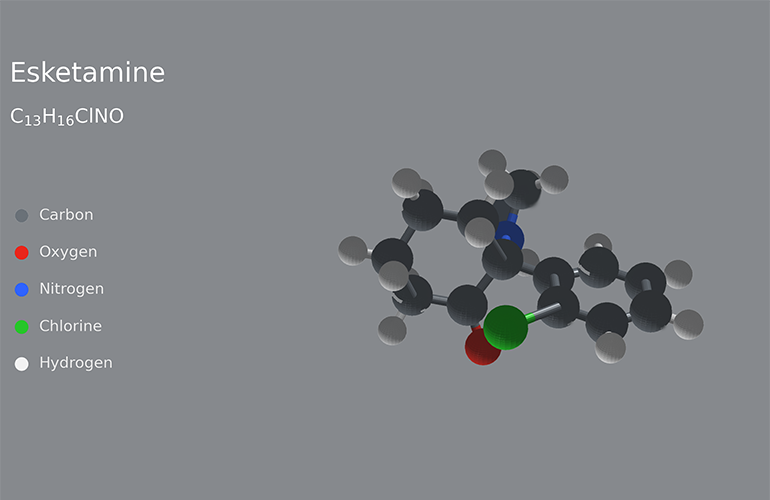
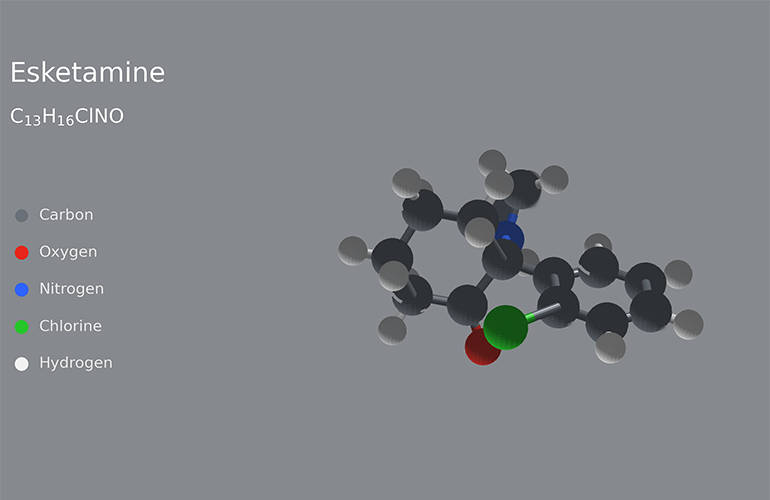
More than six decades after Calvin Stevens first synthesized ketamine at Parke-Davis in a quest for a safer anesthetic, the molecule has unequivocally completed its migration into psychiatry, where its derivative, esketamine, has emerged as a blockbuster therapy. Esketamine, the more potent S-enantiomer of the original compound, achieved initial FDA approval for treatment-resistant depression (TRD) as a nasal spray in March 2019, initially sanctioned only as an add-on to a conventional oral antidepressant. A pivotal moment arrived in January 2025 when regulatory bodies further cleared it as the first and only monotherapy for TRD, significantly expanding its clinical utility and market potential. Following a somewhat cautious start post-launch, the compound, marketed by Johnson & Johnson as Spravato, generated approximately $1.7 billion in revenue last year, with Wall Street analysts projecting an increase to closer to $2.3 billion in 2026. This financial trajectory underscores the drug’s growing impact in a notoriously challenging therapeutic area.
Unveiling New Remission Insights at Psych Congress Elevate
Johnson & Johnson is strategically aiming to further accelerate Spravato’s sales momentum by highlighting new clinical data, recently presented at Psych Congress Elevate. This presentation offered a comprehensive overview of remission rates associated with esketamine nasal spray, aggregating findings from six distinct clinical trials in treatment-resistant depression. The potential market for such an intervention is vast and continues to expand. According to the National Institute of Mental Health (NIMH), an estimated 21 million U.S. adults experienced at least one major depressive episode in 2021, accounting for 8.3% of the adult population. Within this considerable cohort, the challenge of TRD is particularly pronounced. Of the approximately 8.9 million U.S. adults receiving medication for major depression, roughly one-third—a staggering 2.8 million individuals—fail to respond adequately to standard oral antidepressants. This failure to achieve satisfactory improvement, typically after two or more adequate antidepressant trials, precisely defines treatment-resistant depression.
Dr. Rakesh Jain, MD, MPH, a clinical professor of psychiatry at Texas Tech University School of Medicine, Permian Basin, and the lead author of the presented analysis, emphasized the profound unmet need. "There are millions upon millions of patients, some of them your friends and mine, some of them your family members, who are being treated for depression and are simply not in remission," Dr. Jain stated, underscoring the critical importance of effective therapies that can achieve and sustain remission.
The Elusive Goal of Remission in Psychiatry
Dr. Jain framed remission as the central theme and most crucial outcome of the analysis. The poster specifically reported remission rates against two widely accepted cutoffs on the Montgomery-Åsberg Depression Rating Scale (MADRS). The MADRS is a clinician-rated instrument designed to assess the severity of depressive symptoms, scoring 10 core symptoms from 0 to 6 each, yielding a total score ranging from 0 to 60. Conventionally, a score of 7 to 19 indicates mild depression, 20 to 34 moderate, and 35 or above severe. Remission is traditionally defined as a MADRS score of 10 or below. Patients enrolled in these specific trials typically presented with baseline MADRS scores ranging from approximately 29 to 38, placing them firmly within the moderate-to-severe depression spectrum. Dr. Jain noted the analytical rigor applied to the Spravato data, stating, "We actually tightened the rules on SPRAVATO a little bit. We said, okay, 12 is fine, but can we go to 10? And it performed quite well, even at 10. That’s the key."
Achieving remission remains an exceptionally elusive goal in the treatment of major depression, particularly in treatment-resistant cases. Dr. Jain highlighted why remission numbers are often absent from reports of other augmentation trials. "With many atypical antipsychotic augmentation trials, the reason you haven’t read remission numbers is that they’re not typically put out there. The numbers look abysmal, or they don’t separate from placebo." This candid assessment underscores the significant challenge in identifying treatments that reliably lead to remission.
A critical benchmark Dr. Jain referenced is the Sequenced Treatment Alternatives to Relieve Depression (STARD) study. Conducted by the National Institute of Mental Health, STARD stands as the largest real-world depression treatment trial ever undertaken, enrolling over 4,000 outpatients with nonpsychotic major depression and guiding them through up to four successive treatment steps. In the initial level-one analysis focusing on citalopram, approximately 28% of 2,876 evaluable patients achieved remission, as measured by the Hamilton Depression Rating Scale (HAM-D). However, by the third step, after two prior antidepressant treatments had failed—the very threshold defining treatment resistance—the remission rate plummeted to a mere 13.7%. "The problem is that the moment you go to a second antidepressant, the remission rate drops sharply, to as little as 14 or 15%," Dr. Jain explained, emphasizing the dramatic and disheartening decline in treatment efficacy as resistance increases.
Spravato’s Remission Profile: Rapid Onset and Durability
Dr. Jain articulated his particular interest in esketamine for its dual potential: to support both rapid and durable remission. "The profound move is not just to achieve remission but to hold on to it year upon year upon year," he asserted. "That’s why this poster became such an important poster at this year’s meeting. It demonstrated to clinicians of all stripes that this is not just depression, this is TRD, and we’re able to help people get to remission in numbers that are unusual."
The analysis aimed to provide clarity across various study designs, addressing a common clinician need. "How does it behave in double-blind settings, in open-label, and in comparative analyses? … Because to a clinician, a double-blind study matters, but it’s of academic interest. In real life, what you want to know is all of the above," Dr. Jain explained. He affirmed the comprehensiveness of the data compilation, stating, "I think this data is not cherry-picking. We’re showing short-term, we’re showing long-term, we’re showing a head-to-head comparison, and we’re not taking the easy route."
The Johnson & Johnson poster reported notable remission rates. At week 4, using a MADRS score of ≤10, Spravato monotherapy doses achieved remission in 13.9% and 21.5% of patients, compared to 6.5% for placebo. In the TRANSFORM-2 trial, where Spravato was administered alongside an oral antidepressant, remission rates reached 42.6%, significantly higher than the 24.0% observed in the placebo-plus-oral-antidepressant group. Furthermore, data from open-label extension studies, which followed patients who continued on the drug, indicated sustained remission: 49.3% at approximately one year, 78.2% at about two and a half years, and 43.2% at the longest follow-up of around 5.5 years. It is important to note, however, that the poster explicitly labels this analysis as descriptive, meaning it involves no formal meta-analysis, pooled effect estimates, or statistical comparisons, and acknowledges trial-design differences that limit direct comparability.
The analysis compiled data from six previously reported esketamine trials:
- Two four-week, placebo-controlled studies: TRD4005 (monotherapy) and TRANSFORM-2 (esketamine with an oral antidepressant).
- One active-controlled trial: ESCAPE-TRD (pitting esketamine against quetiapine extended-release).
- Three open-label studies: ESCAPE-LTE, SUSTAIN-2, and SUSTAIN-3, which tracked patients for up to 5.5 years.
For each study, remission was reported against both MADRS ≤10 and ≤12 thresholds, reinforcing the robustness of the assessment. Dr. Jain underscored the strength of this diverse data set: "It’s such wide-ranging data: different studies, short-term, long-term, a comparative study."
Navigating Professional Opinions and Guideline Bodies
Despite the compelling data presented, professional opinion on esketamine, and specifically Spravato, spans a spectrum, with various guideline bodies adopting different positions. The 2022 VA/DoD depression guideline, for instance, lists ketamine or esketamine as an augmentation option only after several failed drug trials. Even then, it is presented as a "weak for" recommendation, based on low-quality evidence, and accompanied by explicit reservations regarding the necessary monitoring and feasibility challenges. Similarly, Britain’s National Institute for Health and Care Excellence (NICE) went further in 2022, declining to recommend esketamine for routine NHS use. NICE’s decision cited insufficient clinical and economic evidence to support a reliable cost-effectiveness estimate, a determination made prior to Spravato’s monotherapy approval. In contrast, Scotland’s medicines regulator had reached the opposite conclusion two years earlier, highlighting the international divergence in expert interpretation.
The strongest controlled evidence within the presented analysis indeed favors esketamine. In the head-to-head ESCAPE-TRD trial—the only one in the compilation comparing it against an active comparator—esketamine combined with an SSRI or SNRI demonstrated a higher remission rate than quetiapine extended-release on the same antidepressant backbone. At week 8, remission was achieved by 27.1% of esketamine patients versus 17.6% of quetiapine patients, a statistically significant result published in the prestigious New England Journal of Medicine. Furthermore, esketamine patients were also less likely to discontinue treatment due to safety or tolerability issues compared to those receiving quetiapine.
However, the magnitude of this advantage has been a subject of ongoing debate. The same ESCAPE-TRD trial revealed a relatively narrow gap in overall depression scores, with only a 2.8-point advantage on the 60-point MADRS scale at week 8 and 2.2 points at week 32. The corresponding NEJM correspondence acknowledged that both differences fell below the commonly accepted threshold for a smallest clinically meaningful difference. Two critiques published in the American Journal of Psychiatry further illustrate the nuanced professional discourse. In a 2025 editorial, Baylor psychiatrists Sanjay Mathew and Nicholas Murphy questioned whether the Phase 3 program truly established the necessity for patients to continue treatment much beyond the first week, noting that prescriptions nearly doubled after early 2023. Additionally, a systematic review by Fountoulakis, Saitis, and Schatzberg (AJP 2025) reported esketamine’s add-on effect sizes at weeks 2 to 4 to be between 0.15 and 0.23, which they argued was comparable to the atypical antipsychotic augmentation strategies that Dr. Jain himself had previously characterized as having "abysmal" remission numbers. This review also found no significant antisuicidal benefit associated with esketamine.
Clarifying Esketamine’s Role in Acute Suicidal Ideation
Dr. Jain also pointed to another FDA-approved use for esketamine: major depressive disorder with acute suicidal ideation or behavior, as further evidence of its broad therapeutic reach. "It’s also approved for what’s called MDD with suicidal ideation," he stated. "That’s a formal indication from the FDA." However, it is crucial to consult the prescribing information, which offers a more circumscribed interpretation of this indication than the label might initially suggest. The FDA approves esketamine, in conjunction with an oral antidepressant, for the rapid reduction of depressive symptoms in these acutely suicidal patients. Crucially, the label directly states that its effectiveness in preventing suicide or reducing suicidal ideation itself has not been demonstrated, and that its use does not obviate the need for hospitalization when clinically warranted. Essentially, the indication addresses the underlying depression in acutely suicidal patients; the drug’s label makes no direct claim that it reduces the act or thought of suicidality itself. Dr. Jain clarified the scope of the recent poster, stating, "That wasn’t a specific focus [on suicidality in] this particular poster. We were much more focused on the remission rates."
Overcoming Hurdles: Clinician Psychology and Regulatory Requirements
The ultimate impact of the Psych Congress Elevate poster on clinical practice, by Dr. Jain’s own admission, hinges as much on clinician psychology as it does on the data itself. "Psychiatry is slow to change, it just is," he acknowledged. "So there are many clinicians who have heard of Spravato but are hesitant, not for any particular reason, that’s just the nature of psychiatry." He identifies the main obstacles to broader adoption as inertia and a lack of comprehensive information—a gap that the presented poster is specifically designed to bridge.
Beyond these psychological factors, more concrete frictions exist in the practical implementation of Spravato. Due to potential risks, including sedation, dissociation, respiratory depression, and the potential for abuse, Spravato is dispensed solely through a restricted Risk Evaluation and Mitigation Strategy (REMS) program. This mandates administration in a certified healthcare setting, requiring a monitoring period of at least two hours after every dose, and prohibiting patients from driving until the following day. These stringent requirements add logistical complexity and resource demands for both patients and healthcare providers.
"While there are multiple roadblocks, I think one of the bigger ones is clinician hesitation and lack of knowledge, which is why I put this poster out," Dr. Jain reiterated. He reported that clinicians who engaged with the poster frequently expressed a newfound realization: they needed to consider initiating Spravato treatment earlier and more often in their TRD patient population. The feedback from these interactions was overwhelmingly positive, with Dr. Jain noting, "I didn’t get any pushback. On the contrary, the reaction was, ‘I really do need to start thinking about Spravato earlier and more often.’ And I told them, you’re right, that’s what the data compels us to do."
Broader Impact and Future Implications
The renewed emphasis on Spravato’s remission data comes at a time of significant innovation in mental health treatments. While demand for Spravato continues to grow, as evidenced by its robust sales and projected increases, the ongoing scientific and clinical debate surrounding its precise role and comparative effectiveness highlights the complexities inherent in treating TRD. The data presented at Psych Congress Elevate, by compiling existing evidence on remission rates, aims to provide a clearer picture of Spravato’s potential to clinicians, potentially addressing some of the hesitation and knowledge gaps identified by Dr. Jain.
For Johnson & Johnson, effectively communicating these remission rates is crucial for cementing Spravato’s position as a frontline option for TRD, especially given its monotherapy approval. The pharmaceutical giant is banking on this comprehensive data synthesis to drive wider adoption and overcome existing barriers. For patients suffering from TRD, the prospect of achieving not just symptom reduction but full remission offers a renewed sense of hope, potentially transforming lives marked by persistent depression. However, the practical implications of the REMS program and the ongoing need for careful patient selection and monitoring remain paramount.
The evolving landscape of TRD treatment will undoubtedly continue to feature rigorous scrutiny of new therapies. While the descriptive nature of the current analysis means it cannot replace formal meta-analyses, it serves as a powerful compilation of existing evidence, intended to inform and encourage clinicians. The dialogue between robust clinical data, real-world experience, and critical professional evaluation will continue to shape the optimal use of esketamine and other emerging treatments, ultimately aiming to improve outcomes for the millions grappling with treatment-resistant depression.