Researchers at the Department of Energy’s Oak Ridge National Laboratory (ORNL) have announced the development of RidgeAlloy, a breakthrough aluminum alloy designed to convert low-value, contaminated recycled aluminum into high-performance structural components for the automotive industry. This innovation addresses a looming crisis in the global recycling supply chain: a massive influx of aluminum scrap from retired vehicles that currently cannot be reused in critical safety applications due to impurities. By utilizing advanced computational modeling and neutron diffraction experiments, the ORNL team has successfully demonstrated that this new material can meet the rigorous strength, ductility, and crash-safety standards required for modern vehicle frames and underbodies, potentially revolutionizing the domestic manufacturing landscape and significantly reducing the energy footprint of the transportation sector.
The Impending Surge of Post-Consumer Aluminum Scrap
The narrative of aluminum in the American automotive industry shifted dramatically in 2015. This was the year Ford Motor Company introduced the first mass-produced, aluminum-intensive vehicle, the F-150 pickup truck. This transition was driven by the need for "lightweighting"—reducing the overall mass of vehicles to improve fuel efficiency and, more recently, to extend the range of electric vehicles (EVs). Since then, dozens of models have followed suit, incorporating large volumes of aluminum body panels and structural elements.
As these vehicles approach the end of their functional lifespans, typically estimated at 12 to 15 years, a "wave" of scrap is expected to hit the market. Industry analysts and ORNL researchers project that by the early 2030s, North American recycling systems will receive as much as 350,000 tons of aluminum body sheet scrap annually. Under current technological constraints, this material represents a significant challenge. When vehicles are shredded at the end of their life, the aluminum often becomes contaminated with small amounts of iron from rivets, fasteners, and other steel components.
Currently, this contaminated aluminum is "downcycled"—used for lower-value cast products like engine blocks that do not require high ductility—or exported to international markets where environmental and quality standards may vary. The inability to reuse this material in high-value, structural applications represents a lost opportunity for the U.S. economy and a persistent reliance on primary aluminum produced from mined ore.
Overcoming the "Iron Problem" in Aluminum Recycling
The primary technical hurdle in recycling automotive aluminum is the presence of iron. In the world of metallurgy, iron is often considered a "poison" in aluminum alloys. Even in small quantities, iron can form brittle intermetallic phases during the casting process. These needle-like structures act as stress concentrators, significantly reducing the material’s ductility and its ability to withstand impact without fracturing.
Structural components, such as crumple zones, pillars, and frame rails, must be able to deform and absorb energy during a collision to protect passengers. This requires high ductility. Because shredded scrap contains unpredictable levels of iron, manufacturers have historically relied on primary aluminum—metal produced from bauxite ore via the Hall-Héroult process. However, primary aluminum production is incredibly energy-intensive and carbon-heavy.
"Using remelted scrap instead of primary aluminum is estimated to result in up to a 95% reduction in the energy needed for processing a part," said Amit Shyam, leader of ORNL’s Alloy Behavior and Design Group. The development of RidgeAlloy effectively bypasses the need for high-energy primary production by creating a chemical "recipe" that tolerates higher levels of iron and silicon while maintaining the necessary mechanical properties.
A New Paradigm in Material Development: The 15-Month Innovation
The creation of RidgeAlloy was characterized by an unprecedented speed of innovation. Traditionally, the development of a new structural alloy can take a decade or more from laboratory conception to industrial implementation. The ORNL team, however, moved from a "paper concept" to a full-scale part demonstration in just 15 months.
This accelerated timeline was made possible through the use of high-throughput computing and the unique facilities available at ORNL. The research team performed more than two million calculations to predict how various combinations of elements—including magnesium, silicon, iron, and manganese—would interact at the atomic level. This computational approach allowed them to narrow down thousands of potential formulas to a handful of optimal candidates without the need for years of trial-and-error physical casting.
To verify these predictions, the team utilized the Spallation Neutron Source (SNS), a Department of Energy Office of Science user facility. Neutrons are uniquely suited for studying metals because they can penetrate deep into dense materials without damaging them. By using neutron diffraction, the scientists could observe the internal structures of the alloy as it solidified and cooled, providing a real-time view of how impurities like iron were being integrated into the material’s matrix. This deep-level understanding allowed the team to design an alloy that effectively "neutralizes" the negative effects of contaminants.
From Laboratory Simulation to Industrial Validation
To ensure that RidgeAlloy was not just a laboratory curiosity, ORNL partnered with industrial stakeholders to test the material under real-world manufacturing conditions. The project involved a collaborative supply chain demonstration:
- Material Sourcing: PSW Group’s Trialco Aluminum, based in Chicago, produced recycled aluminum ingots. These ingots were formulated using mixed automotive body sheet scrap, intentionally mimicking the contaminated material expected to flood the market in the 2030s.
- Casting: These ingots were sent to Falcon Lakeside Manufacturing in Michigan. There, the material was melted and processed using high-pressure die casting—the standard method for mass-producing automotive parts.
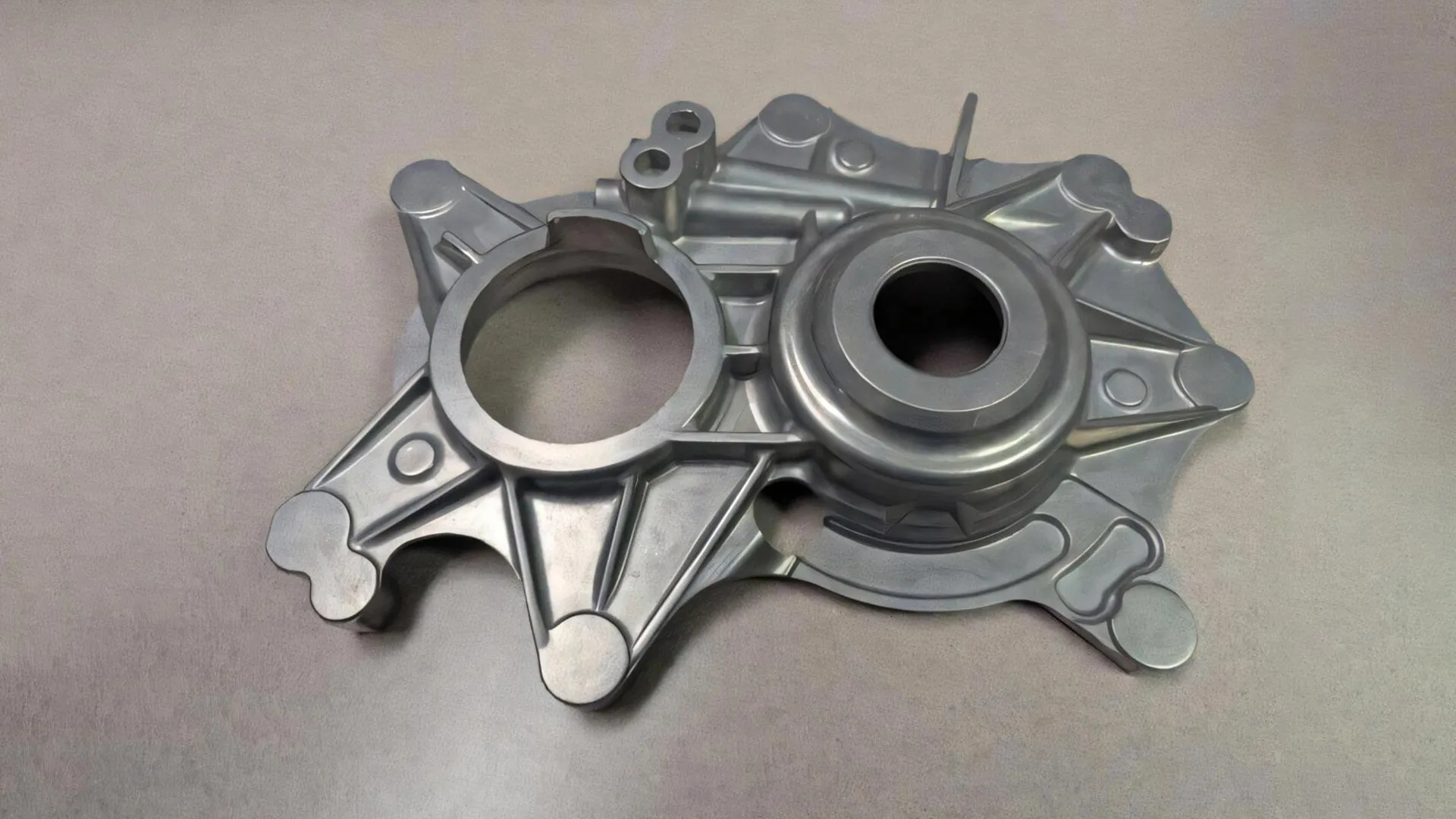
- Part Production: The team successfully cast a medium-sized, moderately complex automotive component. Testing of these parts confirmed that RidgeAlloy delivered the required strength, corrosion resistance, and ductility, even with elevated levels of iron and silicon.
"The part we chose was a first step," noted Alex Plotkowski, ORNL group leader of Computational Coupled Physics. "The ultimate goal is to eventually cast larger parts, perhaps even automotive giga-castings." Giga-casting is a relatively new manufacturing trend, popularized by electric vehicle manufacturers, where large sections of a vehicle’s chassis are cast as a single piece to reduce weight and complexity.
Economic and Strategic Implications for the United States
The development of RidgeAlloy arrives at a critical juncture for U.S. industrial policy. Aluminum is currently featured on the Department of Energy’s list of critical materials due to its vital role in the transition to clean energy. It is essential for electric vehicle battery enclosures, lightweight chassis, wind turbine components, and high-voltage transmission lines.
Despite its importance, the U.S. remains heavily dependent on imports for primary aluminum. By creating a technology that allows for the high-value reuse of domestic scrap, RidgeAlloy strengthens the domestic supply chain and reduces vulnerability to international market fluctuations and geopolitical tensions.
Furthermore, the economic impact of "upcycling" is substantial. By converting what was once considered "low-value" scrap into "high-value" structural material, the automotive recycling industry can capture significantly more revenue per ton of metal. This provides a financial incentive for better sorting and recovery technologies, further bolstering the circular economy.
Broader Applications Beyond the Automotive Sector
While the immediate focus of RidgeAlloy is the passenger vehicle market, its potential applications extend far beyond cars and trucks. The ability to create high-strength, ductile parts from recycled material is highly attractive to any industry where weight and energy efficiency are priorities.
Potential secondary markets include:
- Aerospace: Non-critical structural elements in aircraft could benefit from the lower cost and energy profile of recycled aluminum.
- Agriculture and Industry: Heavy machinery, tractors, and industrial equipment often require robust castings that could be satisfied by RidgeAlloy.
- Marine and Recreation: The alloy’s inherent corrosion resistance makes it suitable for jet skis, outboard motor components, and marine hardware.
- Power Generation: Mobile power units and renewable energy infrastructure could utilize the material for housings and structural supports.
Conclusion: A Circular Future for the Early 2030s
As the United States moves toward more aggressive decarbonization goals, the role of material science in reducing "embodied carbon"—the energy used to create materials before they even reach the consumer—becomes paramount. RidgeAlloy represents a tangible solution to one of the most pressing waste-management challenges of the next decade.
By the early 2030s, when the first generation of aluminum-intensive trucks and SUVs reaches the end of the road, the technology developed at ORNL will be ready to receive them. Allen Haynes, director of ORNL’s Light Metals Core Program, emphasized the "big picture" impact: "RidgeAlloy offers the first technology capable of recapturing the value of a fast-approaching and historically massive wave of domestic, high-quality recycled automotive aluminum sheet alloys."
The successful demonstration of RidgeAlloy marks a shift from viewing recycled metal as an inferior substitute to seeing it as a strategic domestic resource. Through the integration of high-performance computing, neutron science, and industrial collaboration, ORNL has provided a blueprint for how the United States can lead in the global circular economy, turning yesterday’s scrap into tomorrow’s infrastructure.