Evolution, nature’s millennia-spanning engineering marvel, continually refines biological systems by favoring genetic variations that enhance organismal function. From the microscopic dance of DNA, RNA, and proteins within cells to the deliberate selection of crops and livestock by early agriculturalists, humanity has long understood and subtly influenced this fundamental process. Today, scientists are pushing the boundaries of this understanding, employing sophisticated laboratory techniques to accelerate and direct evolution for specific applications. A groundbreaking advancement in this field, dubbed "optovolution," is now enabling the creation of proteins with unprecedented dynamic capabilities, including the ability to perform rudimentary computations, by leveraging the precise control offered by light.
The Limitations of Traditional Protein Engineering
For decades, directed evolution has been a cornerstone of biotechnology, allowing researchers to enhance the performance of crucial proteins like enzymes and antibodies. These proteins are vital across numerous sectors, from the development of life-saving pharmaceuticals and the optimization of industrial manufacturing processes to the creation of everyday consumer products such as laundry detergents. The traditional approach typically involves subjecting a library of protein variants to a constant selective pressure, rewarding those that exhibit superior activity or stability under specific conditions.
However, this "always-on" or "always-active" selection paradigm falls short when mimicking the nuanced functionality of proteins in natural biological systems. Many proteins do not operate in a static state; instead, they act as sophisticated molecular switches, signaling mechanisms, or biological "logic gates." These proteins are designed to dynamically change their state in response to fluctuating environmental cues, combining multiple inputs to make binary, yes-or-no decisions. A prime example is a protein that might activate briefly, then deactivate, only to re-activate later. Traditional directed evolution, by rewarding sustained activity, can inadvertently lead to the degradation of these crucial switching capabilities. Proteins that lose their ability to transition between states can become detrimental to cellular health, potentially leading to cell death. Consequently, engineering proteins with complex, multi-state behaviors has remained a significant challenge.
A Paradigm Shift: Optovolution and Light-Guided Evolution
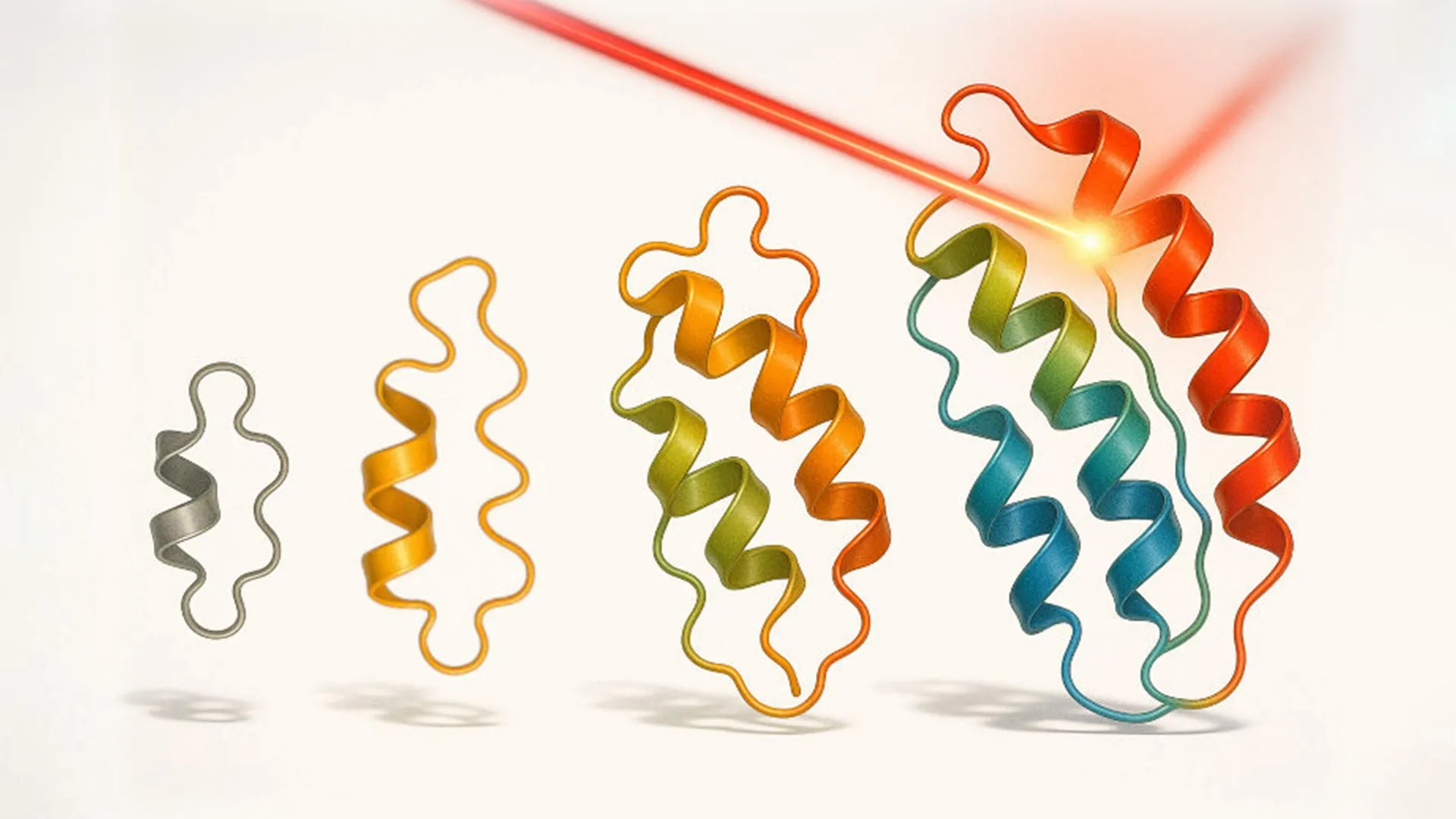
The research, spearheaded by Sahand Jamal Rahi and his team at EPFL’s Laboratory of the Physics of Biological Systems, introduces "optovolution," a novel strategy that employs light to meticulously guide the evolutionary trajectory of proteins. This innovative technique allows for the development of proteins capable of not only dynamic state-switching but also the execution of simple computational tasks governed by logical rules. The findings, published in the prestigious journal Cell, represent a significant leap forward, bringing laboratory-directed evolution into closer alignment with the intricate and time-sensitive operations of living cells. In biological systems, the precise timing and sequential switching of protein states are often as critical as the signal’s inherent strength.
Engineering Yeast for Dynamic Protein Selection
To implement this ambitious vision, the researchers turned to Saccharomyces cerevisiae, commonly known as budding yeast. This single-celled organism is a workhorse in both the brewing industry and fundamental scientific research, making it an ideal model system. The EPFL team ingeniously re-engineered the yeast cell cycle, making cell division contingent upon the dynamic behavior of the protein under evolutionary scrutiny. Specifically, the protein was required to transition cleanly and predictably between active and inactive states for the cell to successfully complete its reproductive cycle.
The scientists ingeniously linked the protein’s output signal to a regulatory element that governs the cell cycle. This regulator is essential for a particular phase of the cell cycle but becomes toxic if it remains active during another phase. Consequently, if the evolved protein remained in its active or inactive state for an extended duration, the yeast cell would either stall in its development or perish. Only those yeast cells harboring proteins that exhibited the correct temporal switching behavior were able to survive and continue dividing, effectively creating a rigorous evolutionary pressure for dynamic functionality.
Real-Time Evolution Under Precise Light Control
The critical element that elevates optovolution beyond previous methods is the precise, real-time control afforded by light. The researchers harnessed optogenetics, a sophisticated field that utilizes light to control genetically engineered cells. By delivering precisely timed pulses of light, they could actively compel the target protein to switch between its active and inactive states, dictating the rhythm of the evolutionary experiment.
Each yeast cell cycle, lasting approximately 90 minutes, served as a rapid, high-throughput "pass or fail" test. This automated screening mechanism assessed whether the protein had switched states at the opportune moment. Proteins that demonstrated superior dynamic switching capabilities enabled their host cells to survive and proliferate, while variants exhibiting suboptimal switching were efficiently eliminated. This automated selection process allowed optovolution to identify and propagate proteins with enhanced dynamic behavior without the need for laborious manual screening or iterative adjustments, a significant bottleneck in traditional directed evolution.
Generating Novel Protein Variants with Expanded Color Sensitivity
The power of optovolution was vividly demonstrated through the successful evolution of several distinct protein types. Initially, the team focused on improving a widely used light-controlled transcription factor, a protein that regulates gene expression in response to light. Through the optovolution process, they generated an impressive 19 novel variants. These new variants exhibited remarkable improvements, including heightened sensitivity to light, reduced activity in the absence of light, and, crucially, the ability to respond to green light, a significant expansion from the blue light sensitivity of the original protein. The engineering of proteins that can be activated by warmer color spectrums, such as green or red light, has historically been exceptionally challenging due to the specific ways these proteins absorb light energy.
In a further demonstration of the technique’s versatility, the researchers also evolved a red light-activated optogenetic system. This advancement eliminated the requirement for yeast cells to be supplemented with an external chemical cofactor, simplifying experimental setup and execution. The evolutionary process resulted in an unexpected mutation that effectively disabled a native yeast transport protein. This serendipitous modification allowed the optogenetic system to utilize light-sensitive molecules already present within the cell, streamlining the system’s integration and application in experimental settings.
Proteins as Biological Computers: The Dawn of Cellular Logic
Beyond light-sensing proteins, the study proved that optovolution could extend its reach to engineer proteins capable of more complex computational functions. The researchers successfully evolved a transcription factor that operates as a single-molecule biological computer. This engineered protein was designed to activate downstream gene expression only when presented with two specific inputs simultaneously: one light signal and one chemical signal. This demonstrates the potential for creating sophisticated cellular logic gates, where decisions are made based on the integration of multiple environmental cues.
The ability of proteins to exhibit dynamic behavior is fundamental to a vast array of biological processes. These include sensing subtle environmental changes, making intricate decisions within the cellular environment, and orchestrating the precise control of cell division. By enabling these dynamic behaviors to evolve continuously within living cells, optovolution unlocks transformative possibilities for the fields of synthetic biology, biotechnology, and fundamental biological research.
The implications of this breakthrough are far-reaching. Scientists may now be able to design more sophisticated cellular circuits for a variety of applications, from biosensing to therapeutic delivery. The development of optogenetic tools that can respond independently to different colors of light could lead to more precise control over cellular processes in research and medicine. Furthermore, optovolution offers a powerful new lens through which to investigate how complex protein behaviors, essential for life’s intricate symphony, arise through the relentless force of evolution. This technology promises to accelerate the design of "smart" cellular systems capable of complex decision-making and sophisticated responses to their environment, bridging the gap between engineered biological systems and the elegance of natural cellular machinery.