


In the fundamental architecture of the universe, scientists have long operated under a strict binary classification for all known elementary particles. For nearly a century, every particle discovered or theorized has been sorted into one of two camps: bosons or fermions. This division, governed by the laws of quantum mechanics, dictates how matter is structured and how forces are transmitted across the cosmos. However, a groundbreaking collaborative study between the Okinawa Institute of Science and Technology (OIST) and the University of Oklahoma has challenged the permanence of this duality. By exploring the unique constraints of one-dimensional systems, researchers have identified a pathway for the existence and manipulation of anyons—mysterious particles that defy the traditional boson-fermion binary.
The research, detailed in two successive papers published in the prestigious journal Physical Review A, marks a significant leap in theoretical physics. While anyons were previously confined to the realm of two-dimensional mathematical models and niche experimental observations, the new findings suggest that these "intermediate" particles can exist in one-dimensional environments. More importantly, the team discovered that the fundamental nature of these anyons can be "tuned" by adjusting the interactions between particles, potentially opening a new frontier in quantum computing and material science.
The Traditional Quantum Binary: Bosons vs. Fermions
To understand the magnitude of this discovery, one must first look at the traditional pillars of particle physics. Bosons, named after the Indian physicist Satyendra Nath Bose, are often described as the "messengers" of the universe. They include photons, which carry the electromagnetic force, and gluons, which hold atomic nuclei together. The defining characteristic of bosons is their social nature; they can occupy the same quantum state simultaneously. This property allows for the creation of lasers, where countless photons move in perfect synchronization, and Bose-Einstein Condensates (BECs), a state of matter where atoms at near-absolute zero temperatures merge into a single "super-atom."
Fermions, named after Enrico Fermi, are the "builders" of the universe. This category includes electrons, protons, and neutrons—the constituents of ordinary matter. Unlike bosons, fermions are fiercely solitary due to the Pauli Exclusion Principle, which forbids two fermions from occupying the same quantum state. This resistance to crowding is what gives matter its volume and prevents solid objects from passing through one another. It is also the reason why the periodic table of elements is so diverse; electrons must fill successive energy shells rather than huddling in the lowest one.
The distinction between these two families is mathematically rooted in the concept of "exchange statistics." When two identical particles are swapped in three-dimensional space, the wave function—the mathematical description of the system—either remains exactly the same (bosons) or flips its sign (fermions). For decades, it was believed that these were the only two possible outcomes allowed by the laws of physics.
The Evolution of Anyon Theory: A Chronology of Discovery
The journey toward the discovery of anyons began in the late 1970s and early 1980s. Theoretical physicists, including Jon Magne Leinaas, Jan Myrheim, and later Frank Wilczek (who coined the term "anyon"), began to realize that the rules of particle exchange might be more flexible in lower-dimensional universes.
1977: Leinaas and Myrheim first proposed that the boson-fermion dichotomy was a consequence of living in a three-dimensional world. They argued that in two dimensions, the "exchange factor" could be any complex number, not just +1 or -1.
1982: Frank Wilczek expanded on this, suggesting that these particles could have "fractional" statistics. He named them anyons because their exchange could result in any phase change.
1980s–1990s: The Fractional Quantum Hall Effect provided the first indirect evidence of anyons. Researchers observed that in extremely thin layers of semiconductors subjected to high magnetic fields, electrons appeared to group together to form "quasiparticles" with fractional electric charges.
2020: A major milestone was reached when researchers at the École Normale Supérieure in Paris and other institutions experimentally observed anyonic behavior in 2D systems. By colliding quasiparticles in a tiny "collider," they confirmed that the particles did not behave like pure bosons or fermions.
2024: The OIST and University of Oklahoma study takes this evolution a step further, moving the focus from 2D planes to 1D lines, revealing that anyons are not just a curiosity of two-dimensional surfaces but can be engineered and controlled in one-dimensional quantum wires.
The Geometry of Quantum Movement
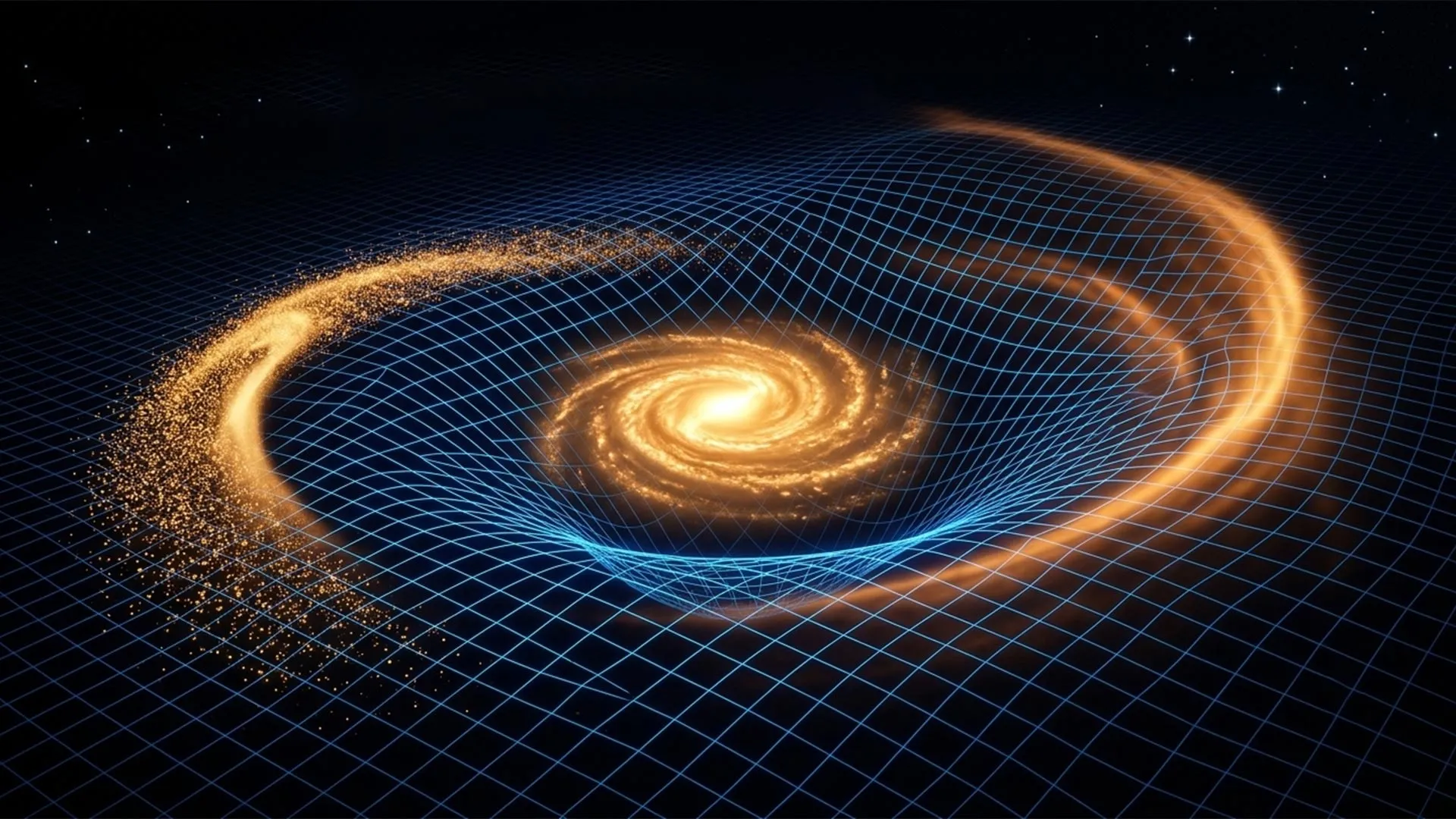
The reason dimensionality changes the rules of physics lies in topology—the study of how shapes and paths are connected. In our 3D world, if you take two particles and swap their positions twice, the path they take can be mathematically "untangled" back to the starting position. It is equivalent to doing nothing. In the language of quantum mechanics, this means the square of the exchange factor must be 1. The only numbers that satisfy this are +1 (bosons) and -1 (fermions).
However, in lower dimensions, the paths become "braided." In a 2D system, if one particle moves around another, the path cannot be untangled without passing through the other particle. In a 1D system, the constraints are even more severe. Particles cannot move "around" each other at all; they must pass "through" each other.
"In lower dimensions, this exchange is no longer topologically equivalent to doing nothing," explains Raúl Hidalgo-Sacoto, a PhD student at OIST and a lead author of the study. "To satisfy the law of indistinguishability, we need exchange factors over a continuous range to account for the exchange, dependent on the exact twists and turns of the paths."
This "continuous range" is where anyons reside. By existing in 1D, the researchers found that the particles develop a "memory" of their exchange, leading to physical properties that are a hybrid of bosonic and fermionic traits.
Technical Breakthrough: Tunability in One Dimension
The OIST-Oklahoma team’s most significant contribution is the discovery that 1D anyons are not static. Their research suggests that the exchange statistics—the very identity of the particle—can be adjusted.
In a 1D environment, the "passing through" of particles is governed by short-range interactions. The researchers demonstrated that by changing the strength of these interactions (using tools like magnetic fields or laser intensity), they could shift the particles along the spectrum from bosonic behavior to fermionic behavior.
This is a radical departure from traditional physics, where a particle’s identity is fixed. An electron is always a fermion; a photon is always a boson. In the 1D systems described by Professor Thomas Busch and his team, a particle could theoretically be "tuned" to act more like a boson or more like a fermion depending on the needs of the experiment.
The team utilized advanced mathematical modeling to show that the "momentum distribution" of these particles serves as a clear signature of their anyonic nature. In a purely bosonic system, particles tend to cluster at low momentum. In a fermionic system, they spread out. The anyonic system shows a unique, intermediate distribution that can be measured in a lab.
Perspectives from the Research Front
The implications of these findings have resonated throughout the quantum physics community. Professor Thomas Busch, leader of the Quantum Systems Unit at OIST, emphasized the fundamental nature of the inquiry.
"Every particle in our universe seems to fit strictly into two categories: bosonic or fermionic. Why are there no others?" Busch asks. "With these works, we’ve now opened the door to improving our understanding of the fundamental properties of the quantum world, and it’s very exciting to see where theoretical and experimental physics take us from here."
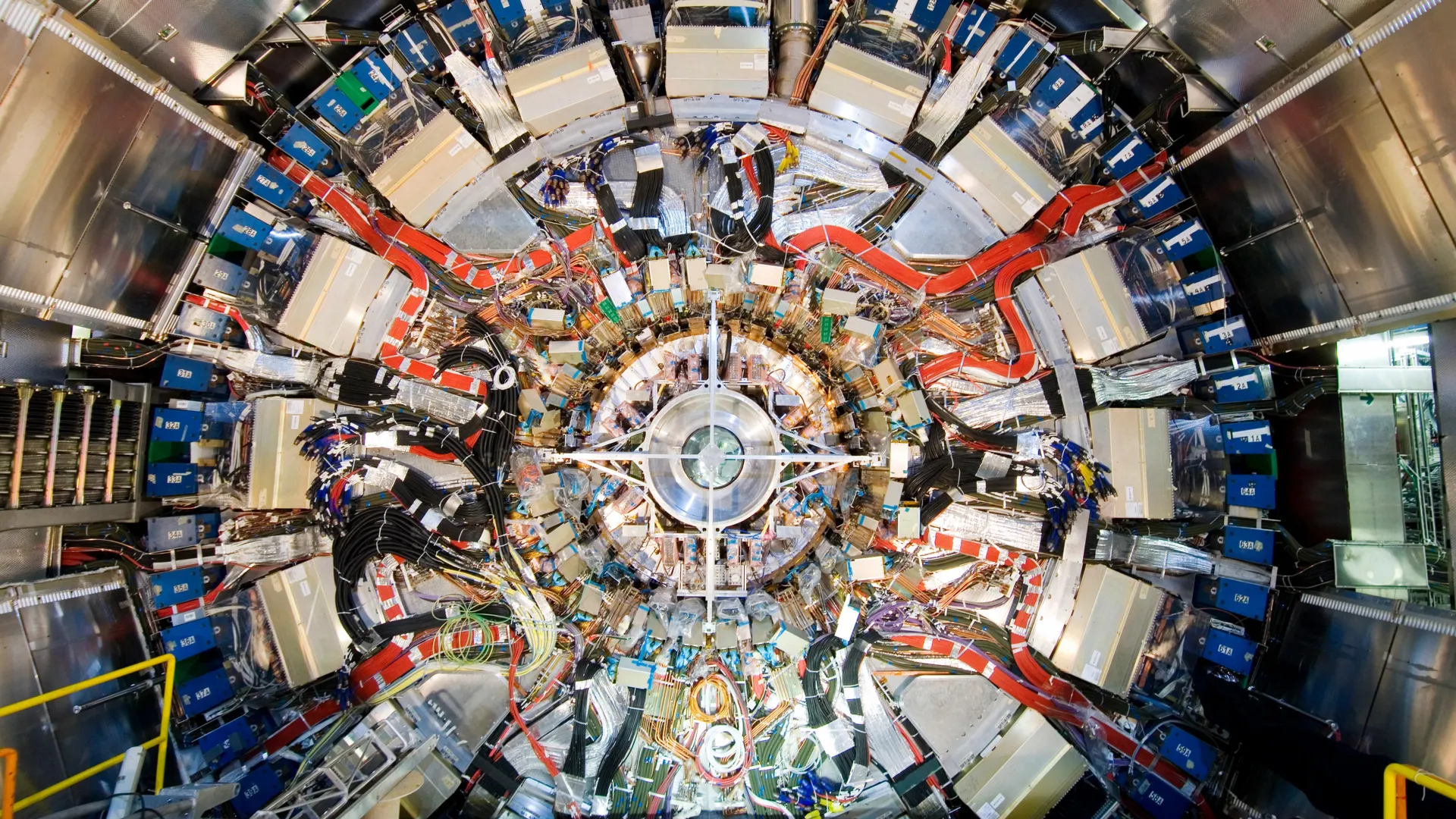
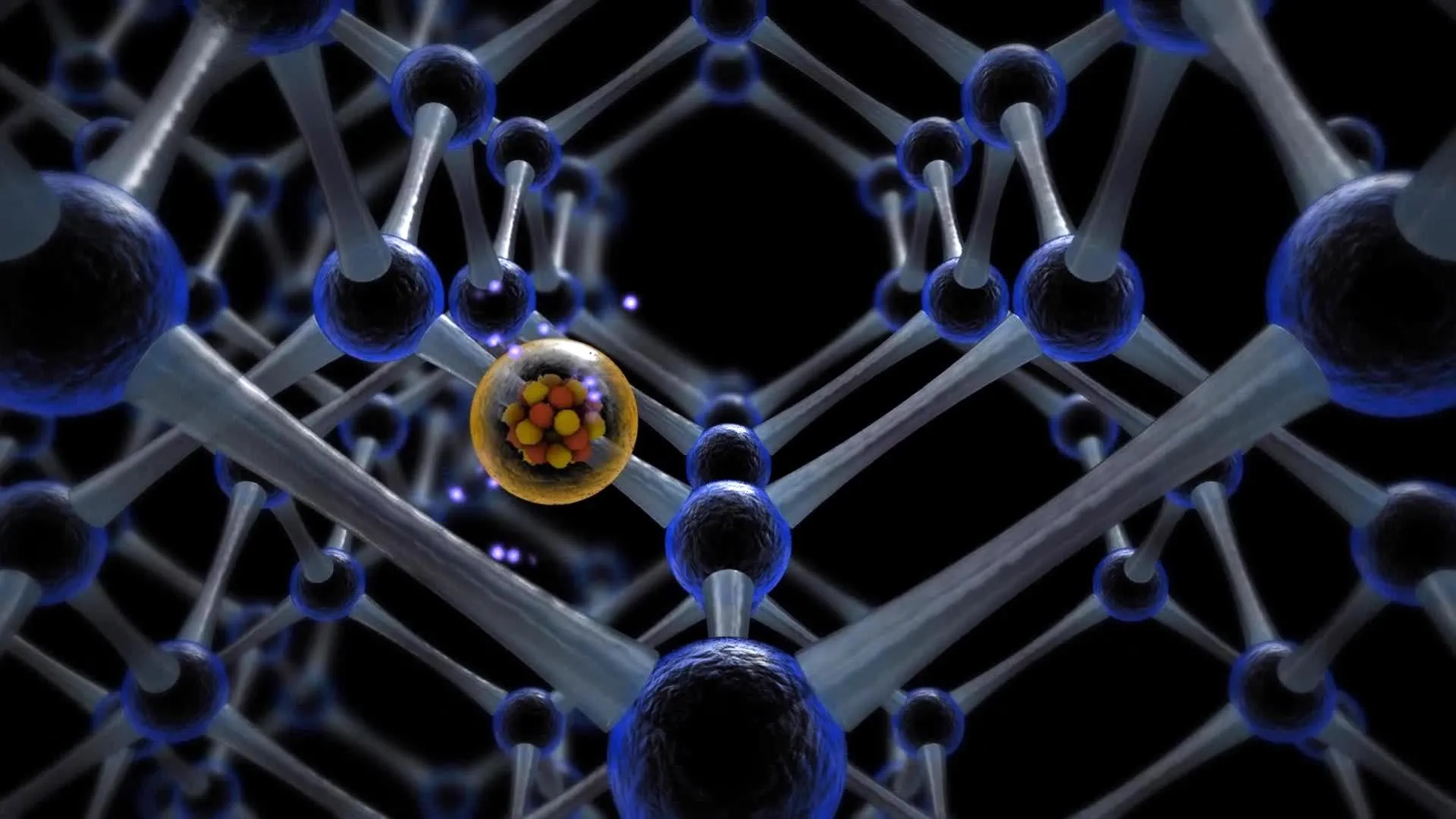
The collaboration with the University of Oklahoma provided the computational and theoretical depth required to map these 1D interactions. The researchers noted that the technology required to test these theories already exists. Ultracold atomic systems, which use lasers to trap atoms in 1D "optical lattices," are currently capable of reaching the temperatures and precision needed to observe these tunable anyons.
Broader Impact and the Future of Quantum Computing
The study of anyons is not merely a theoretical exercise; it has profound implications for the future of technology, specifically in the field of quantum computing.
One of the greatest hurdles in building a functional quantum computer is "decoherence"—the tendency of quantum states to collapse when disturbed by the environment. Anyons are the primary candidates for "topological quantum computing." In this model, information is stored not in the state of a single particle, but in the "braid" or the path the particles take around each other. Because these braids are topologically protected, the information is much more resistant to local errors and environmental noise.
By proving that anyonic behavior can be supported and tuned in 1D systems, the OIST and Oklahoma researchers have provided a new platform for developing these stable quantum bits (qubits). 1D systems are often easier to engineer and control than complex 2D surfaces, potentially accelerating the development of robust quantum hardware.
Furthermore, this research enriches our understanding of "many-body physics"—the study of how large numbers of interacting particles behave. The ability to tune the fundamental statistics of particles allows scientists to simulate various states of matter that do not exist naturally in our 3D world, potentially leading to the discovery of new superconductors or exotic magnetic materials.
Conclusion
The work of the OIST and University of Oklahoma teams represents a landmark shift in how we perceive the building blocks of reality. By demonstrating that the boson-fermion divide is a product of our three-dimensional perspective rather than an absolute law of the universe, they have expanded the toolkit available to physicists.
As experimentalists begin to apply these theoretical frameworks to real-world ultracold atomic systems, the scientific community moves closer to a future where the properties of matter are not just discovered, but designed. The "door" that Professor Busch and his colleagues have opened leads to a quantum landscape where the rules are flexible, the particles are tunable, and the potential for technological innovation is limited only by the dimensions in which we choose to operate.














Leave a Reply