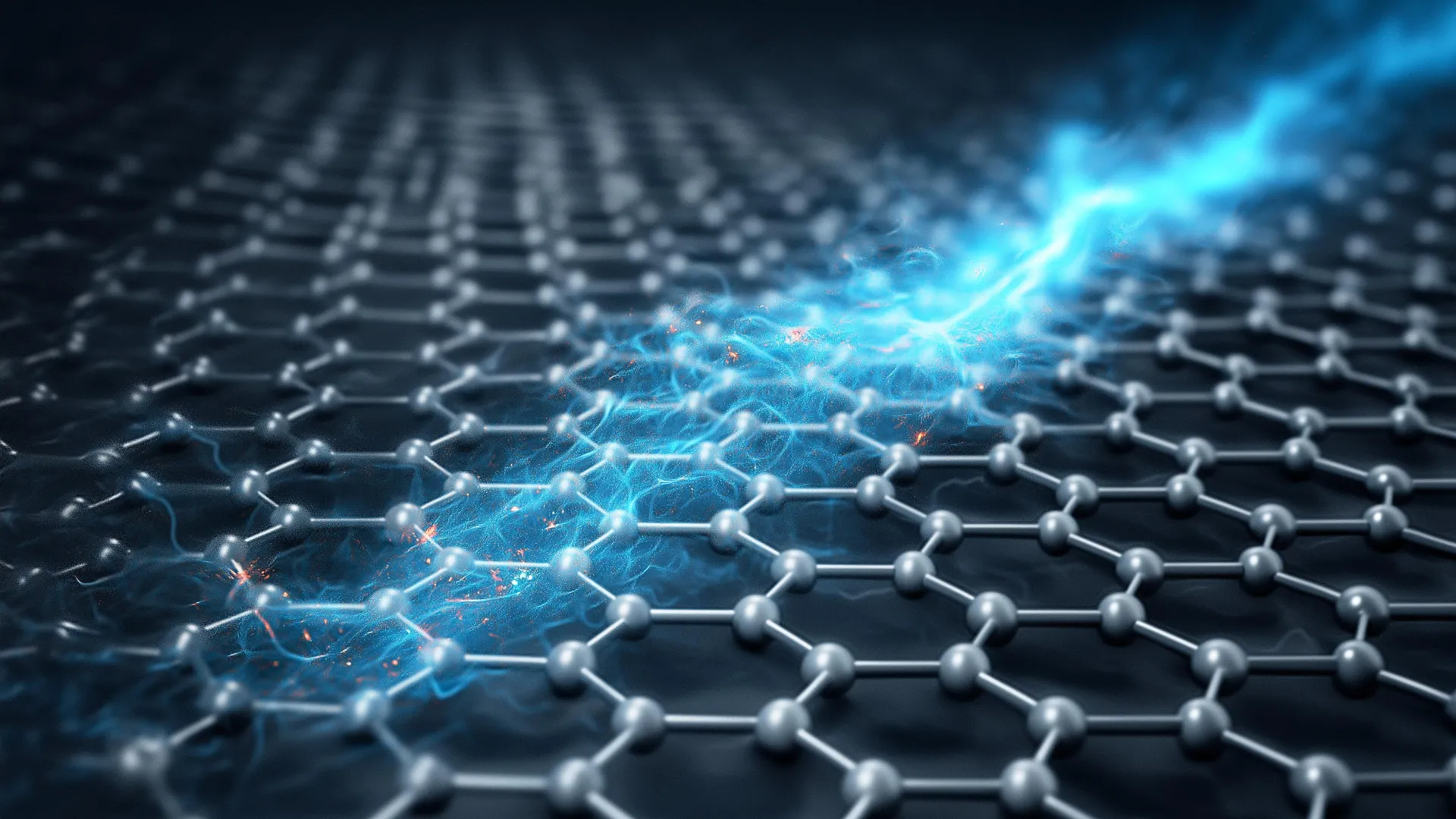
In a landmark discovery that challenges over a century of established physical principles, researchers at the Department of Physics, Indian Institute of Science (IISc), in collaboration with the National Institute for Materials Science (NIMS) in Japan, have successfully identified and measured a "Dirac fluid" within a single layer of carbon atoms. This exotic state of matter, where electrons behave not as individual particles but as a collective, nearly frictionless fluid, represents a significant breakthrough in the field of condensed matter physics. The findings, published in the prestigious journal Nature Physics, provide the first clear evidence of electrons moving in a hydrodynamic regime within graphene, a phenomenon that has eluded scientists since the material’s discovery two decades ago.
For nearly 170 years, the Wiedemann-Franz law has served as a cornerstone of metallic physics. Formulated in 1853, the law dictates that the ratio of the electronic contribution of thermal conductivity to the electrical conductivity of a metal is proportional to its temperature. Essentially, it suggests that because electrons carry both charge and heat, the two properties should fluctuate in tandem. However, the IISc-led team observed a staggering deviation from this principle, with thermal and electrical conductivities moving in opposite directions—a discovery that signals a total breakdown of standard electron transport models under specific quantum conditions.
A Paradigm Shift in Condensed Matter Physics
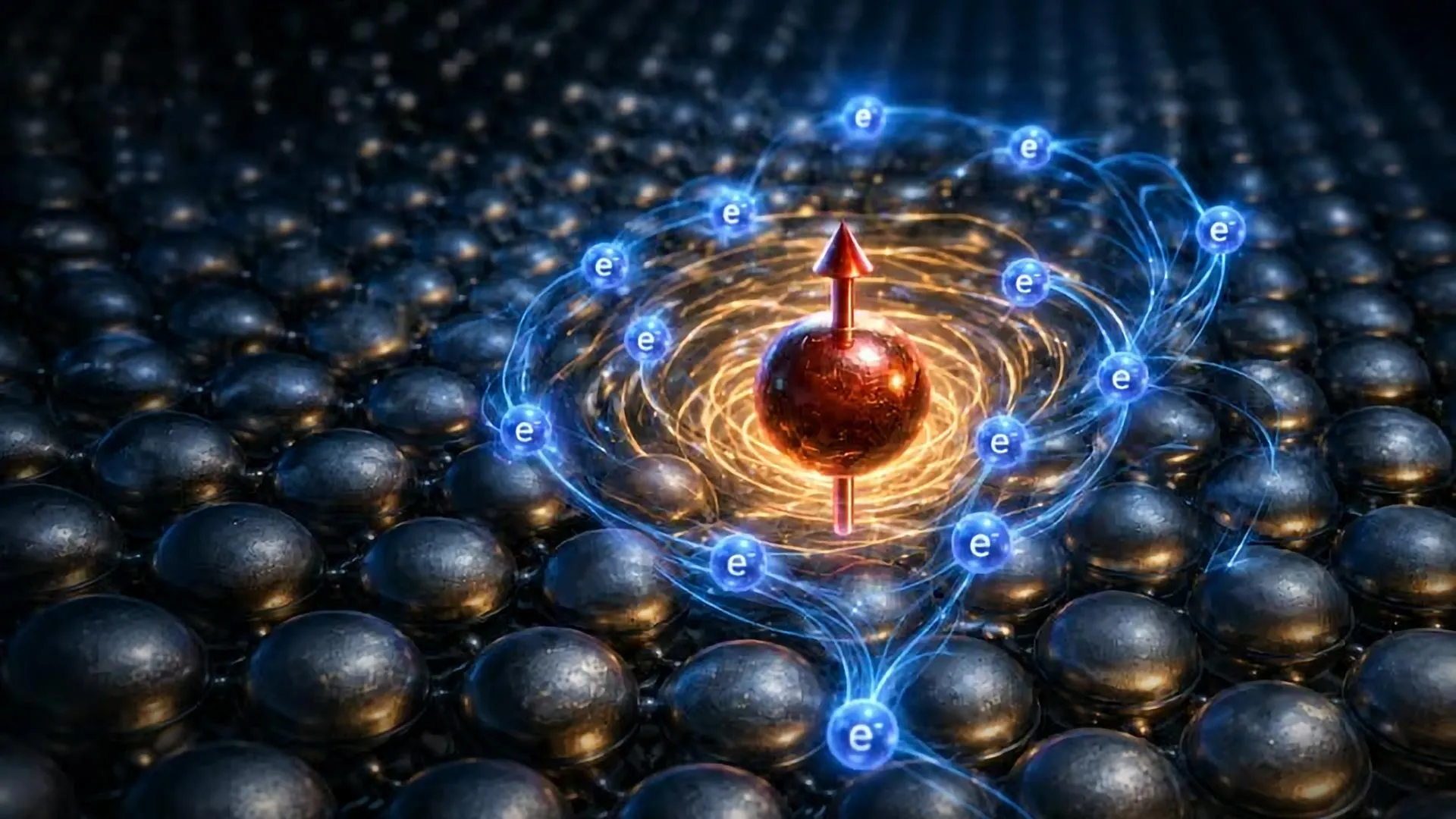
The observation of a Dirac fluid in graphene marks the culmination of decades of theoretical speculation. In traditional conductors like copper or silver, electrons act much like a gas, frequently bumping into impurities, lattice defects, and each other. These collisions dissipate energy and create resistance. In the "hydrodynamic" regime, however, electron-electron interactions become so dominant and frequent that the particles begin to flow collectively, much like water through a pipe.
This specific state occurs at the "Dirac point" of graphene. Graphene is a two-dimensional honeycomb lattice of carbon atoms where the energy-momentum relationship of electrons is linear, mimicking the behavior of massless relativistic particles (Dirac fermions). At the Dirac point, the material sits at a delicate equilibrium between an insulator and a conductor. By meticulously tuning the charge carrier density to this point, the researchers were able to force the electrons into a state of collective "soup," where the individual identities of the particles are lost to the fluid-like motion of the whole.
"It is amazing that there is so much to do on just a single layer of graphene even after 20 years of discovery," noted Arindam Ghosh, Professor at the Department of Physics, IISc, and one of the corresponding authors of the study. His comments reflect a broader sentiment in the scientific community: that graphene remains a "wonder material" capable of revealing the deepest secrets of quantum mechanics when pushed to its limits.
The Challenge of Material Purity and the Role of NIMS
The primary obstacle to observing these delicate quantum effects has historically been the presence of impurities. Even the slightest atomic defect or a stray molecule on the surface of the graphene can act as a "speed bump," scattering electrons and destroying the fluid-like flow. To overcome this, the IISc researchers utilized ultra-high-purity graphene samples.
The collaboration with the National Institute for Materials Science in Japan was critical in this regard. NIMS provided high-quality crystals of hexagonal boron nitride (hBN), which were used to encapsulate the graphene layer. This "sandwiching" technique protects the graphene from environmental contamination and provides an atomically smooth substrate, reducing scattering to unprecedented levels. This level of purity allowed the researchers to probe the intrinsic properties of the carbon atoms without the "noise" of material imperfections.
Challenging the Wiedemann-Franz Law: The 200-Fold Deviation
The most striking aspect of the study is the definitive violation of the Wiedemann-Franz law. Under normal circumstances, if you increase the number of charge carriers in a metal, both electricity and heat flow more easily. In the Dirac fluid state, the researchers observed the opposite: as electrical conductivity increased, thermal conductivity dropped, and vice versa.
At low temperatures, the team recorded deviations from the Wiedemann-Franz law by more than 200 times. This suggests that in a Dirac fluid, heat and charge are "decoupled." The charge is carried by the collective motion of the fluid, while the heat transport is governed by different internal dynamics of the quantum state. This separation is a hallmark of "strong correlation," a state where particles are so inextricably linked that they no longer follow the rules governing independent agents.
Understanding the Dirac Fluid: From Electrons to Hydrodynamics
The term "Dirac fluid" is not merely a metaphor; it describes a state where the viscosity of the electron flow is exceptionally low. In fact, the researchers found that the electron fluid in graphene is one of the "most perfect" fluids ever measured in a laboratory, meaning it has a very low ratio of shear viscosity to entropy density.
Aniket Majumdar, the first author of the study and a PhD student at IISc, explained the significance of this state. "Since this water-like behaviour is found near the Dirac point, it is called a Dirac fluid—an exotic state of matter which mimics the quark-gluon plasma, a soup of highly energetic subatomic particles observed in particle accelerators at CERN," Majumdar stated.
The comparison to quark-gluon plasma—the state of the universe microseconds after the Big Bang—highlights the importance of this work. It suggests that graphene can act as a "tabletop" laboratory for high-energy physics, allowing scientists to study the dynamics of the early universe without the need for multi-billion-dollar particle colliders.
A Universal Quantum Value in Chaos
Despite the seemingly chaotic departure from classical laws, the researchers discovered a new kind of order. The conduction properties of the Dirac fluid appear to be governed by a universal quantum constant. This constant is derived from the "quantum of conductance" ($e^2/h$), a fundamental value in physics that sets the scale for how electricity moves at the atomic level.
The fact that the fluid’s behavior can be described by a universal constant, regardless of the specific details of the sample, suggests that the Dirac fluid is a fundamental state of matter. This universality is of great interest to theoretical physicists, as it provides a bridge between condensed matter physics and the mathematics used to describe black holes and other gravitational anomalies.
A Window Into Extreme Physics: Black Holes and Entanglement
The implications of this discovery extend far beyond material science. The mathematical frameworks used to describe hydrodynamic electron flow in graphene are remarkably similar to those used in "holographic duality" or the AdS/CFT correspondence. This theory links quantum field theories (like those describing graphene) to theories of gravity (like those describing black holes).
By studying the Dirac fluid, scientists can now investigate complex concepts such as:
- Black-hole thermodynamics: Understanding how information and energy are processed at extreme limits.
- Entanglement entropy scaling: Exploring how quantum particles are linked across space and time.
- Hydrodynamic limits: Testing the absolute physical limits of how "thin" or "smooth" a fluid can be.
The ability to explore these "extreme" physics concepts in a solid-state device at manageable temperatures (though still requiring cryogenic cooling) democratizes high-energy physics research, moving it from the realm of massive accelerators to the laboratory bench.
Practical Applications: The Future of Quantum Sensing
While the theoretical implications are profound, the practical applications of the Dirac fluid could revolutionize the next generation of technology. The unique properties of collective electron flow make graphene an ideal candidate for:
- Ultra-Sensitive Quantum Sensors: Because the Dirac fluid is highly sensitive to external perturbations, it could be used to create sensors capable of detecting incredibly faint magnetic fields or electrical signals that are currently invisible to modern equipment.
- Next-Generation Bolometers: The decoupling of heat and charge could lead to more efficient thermal detectors, which are essential for everything from medical imaging to deep-space astronomy.
- Thermal Management in Microelectronics: As transistors continue to shrink, heat dissipation becomes a major hurdle. Understanding how to manipulate a fluid that carries heat differently than charge could lead to new ways of cooling high-performance chips.
- Quantum Computing Components: The "perfect" nature of the fluid suggests low energy dissipation, which is a key requirement for maintaining the stability of quantum bits (qubits).
The 20-Year Legacy of Graphene Research
The discovery of the Dirac fluid comes exactly two decades after Andre Geim and Konstantin Novoselov first isolated graphene using the "Scotch tape method" at the University of Manchester in 2004. Since then, graphene has been hailed as a miracle material due to its strength, flexibility, and conductivity. However, the observation of its hydrodynamic properties remained a "Holy Grail" for physicists.
This IISc-led study serves as a reminder that even well-studied materials can harbor deep, undiscovered secrets. The transition from viewing electrons as a "gas" to viewing them as a "fluid" requires not just advanced equipment, but a fundamental shift in how physicists conceptualize transport in 2D materials.
As the scientific community digests these findings, the focus will likely shift toward finding ways to sustain the Dirac fluid at higher temperatures and in more complex geometries. The collaboration between India and Japan has set a high bar for international research, proving that when the world’s best material scientists and experimental physicists join forces, they can rewrite the laws of physics—or at least discover where they no longer apply.