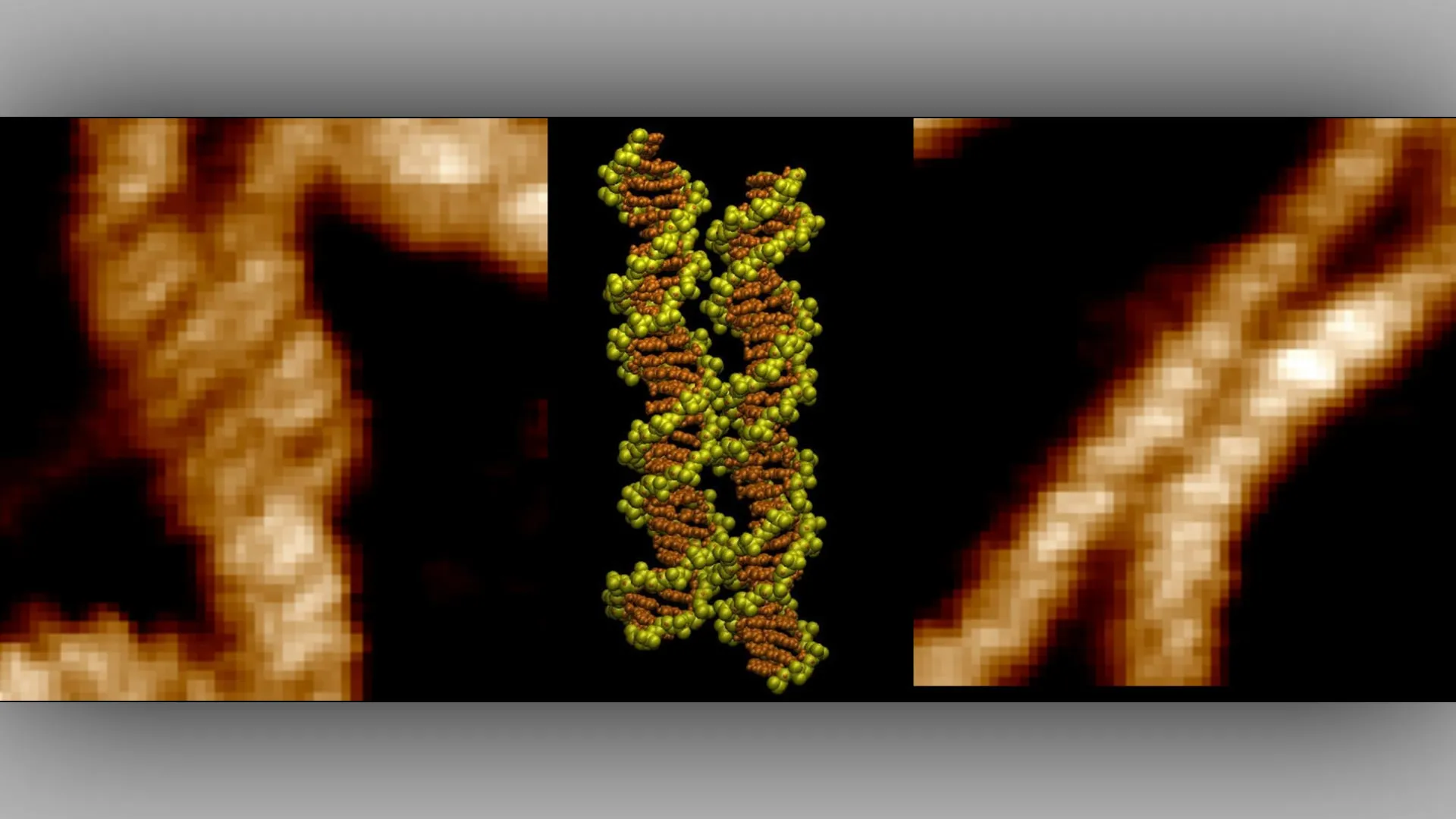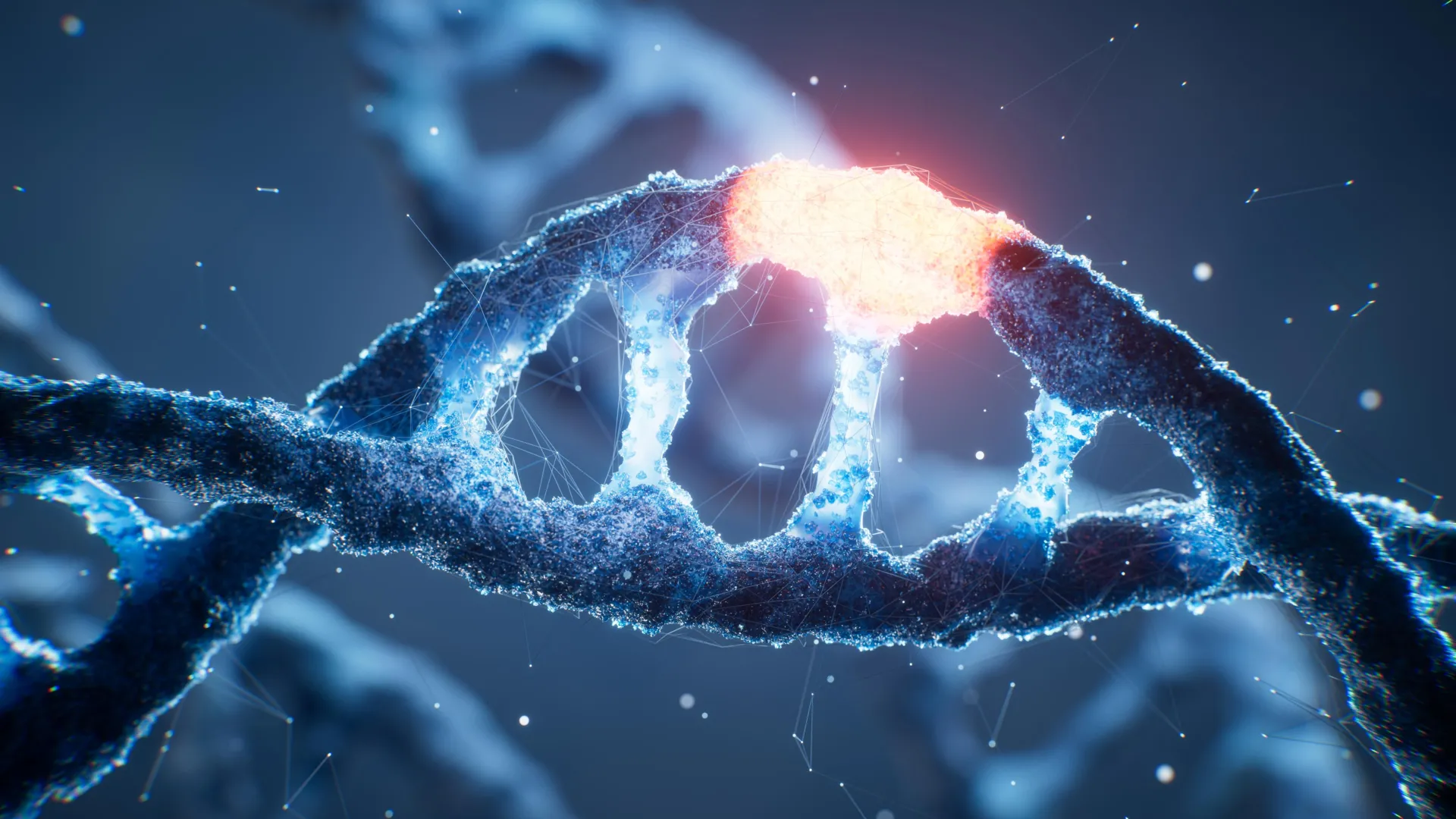
For billions of years, the narrative of life on Earth has been written in a four-letter language. Every living organism—from the simplest bacterium to the most complex human being—relies on the same four chemical bases: adenine (A), cytosine (C), guanine (G), and thymine (T). This genetic alphabet, organized into the double-helix structure discovered by Watson and Crick in 1953, serves as the fundamental instruction manual for protein synthesis and biological development. However, a groundbreaking study from the University of California San Diego has fundamentally challenged the constraints of this biological dogma. Researchers have demonstrated that the core molecular machinery of life, specifically the enzyme RNA polymerase, is not tethered to this four-letter limit. Instead, it possesses an inherent, latent ability to read and transcribe an expanded genetic alphabet consisting of eight letters.
This scientific milestone, detailed in recent publications in Nature Communications and PNAS, represents a pivot point for the field of synthetic biology. By proving that cellular machinery can accommodate synthetic, unnatural base pairs, scientists are moving closer to the creation of "synthetic life" or at least "synthetic functions" that could revolutionize medicine, materials science, and biotechnology.
The Mechanism of Transcription: Breaking the Four-Letter Ceiling
At the heart of the research led by Dr. Dong Wang, a professor at the UC San Diego Skaggs School of Pharmacy and Pharmaceutical Sciences, lies the enzyme RNA polymerase. This enzyme is the biological equivalent of a molecular transcriptionist; it traverses a strand of DNA, reads the genetic code, and synthesizes a corresponding strand of RNA. This RNA molecule then carries the instructions for building proteins, which are the functional building blocks of all biological activity.
For decades, the assumption in molecular biology was that RNA polymerase was evolutionarily "tuned" strictly to the geometry and chemical properties of the natural four-letter code. If the enzyme encountered a foreign or synthetic base, the common hypothesis suggested it would stall, fail, or induce a catastrophic mutation. The UC San Diego team sought to test this hypothesis by introducing "Hachimoji" DNA—a term derived from the Japanese word for "eight letters."
To observe this process, the research team employed high-resolution cryo-electron microscopy (cryo-EM). This imaging technique allows researchers to freeze biological samples in a glass-like state and photograph them at near-atomic resolution. By capturing images of E. coli RNA polymerase as it interacted with synthetic DNA, the team revealed that the enzyme does not "reject" the foreign letters. Instead, it employs the same structural and biochemical signals—such as specific hydrogen bonding patterns and physical shape recognition—that it uses for natural DNA. The enzyme’s "active site," the region where the transcription magic happens, is surprisingly adaptable, acting as a universal reader capable of processing information that nature never intended for it to handle.
A Chronology of Synthetic Expansion
The journey toward an eight-letter alphabet has been a decades-long pursuit, marked by incremental successes in chemical synthesis:
- 1960s–1980s: Early pioneers like Steven Benner begin exploring the chemical possibilities of expanding the DNA alphabet by creating synthetic base pairs that rely on different hydrogen-bonding arrangements.
- 2014: Researchers at the Scripps Research Institute announce the successful incorporation of a synthetic "X-Y" base pair into a living E. coli cell, allowing the bacteria to replicate with six genetic letters.
- 2019: The "Hachimoji" system is formally unveiled, expanding the alphabet to eight letters (the four natural bases plus four synthetic ones) and demonstrating that this DNA can be transcribed into RNA in a test tube.
- August 12, 2026: The research team publishes findings in PNAS showing that RNA polymerase can transcribe synthetic base pairs that lack traditional hydrogen bonds, proving that the enzyme’s recognition mechanism is more flexible than previously assumed.
- September 2, 2026: The definitive Nature Communications paper is published, providing the structural, visual proof that the E. coli RNA polymerase effectively incorporates these synthetic letters during transcription.
Data-Driven Insights: How the Enzyme Adapts
The implications of the August 2026 PNAS study are particularly profound. Previously, it was believed that the hydrogen bonds between DNA bases were the primary "handshake" required for the enzyme to proceed. However, the study found that hydrophobic forces—the tendency of non-polar substances to aggregate in aqueous solution—could drive the process just as effectively.
When the researchers analyzed the "trigger loop" of the RNA polymerase, they observed that it closed securely around the synthetic pairs, facilitating the chemical reaction required for transcription. This suggests that the enzyme’s fidelity is not based on the "correctness" of the chemical letter, but on the physical fit and the thermodynamic stability of the complex. By removing the strict requirement for hydrogen bonding, the researchers have effectively opened the door to an infinite array of potential synthetic bases, provided they can fit within the structural geometry of the double helix.
Implications for Medicine and Biotechnology
The ability to expand the genetic alphabet is not merely a theoretical exercise; it has immediate, tangible applications in the pharmaceutical and diagnostic sectors.
1. Targeted Diagnostics:
Earlier iterations of synthetic DNA have already demonstrated the ability to act as high-affinity probes. Because these synthetic bases are not found in the human body or in common pathogens, they can be engineered to bind specifically to biomarkers associated with liver cancer or other malignancies. This creates a "seek and destroy" diagnostic tool that is significantly more accurate than traditional antibody-based detection.
2. Enhanced Therapeutics:
By utilizing an expanded genetic code, scientists can engineer proteins that contain non-natural amino acids. These proteins could have entirely new structural properties—such as increased resistance to degradation in the bloodstream, improved binding to disease-causing proteins, or the ability to deliver drugs directly into specific cell types without triggering an immune response.
3. Biological Manufacturing:
Engineered biological systems could eventually be designed to produce high-value chemicals, biofuels, or specialized materials that currently require environmentally damaging industrial processes. By rewriting the code of an organism to utilize an eight-letter system, researchers can essentially create a "firewall," ensuring that the synthetic organisms cannot interbreed with natural ones or survive outside of a controlled, lab-defined environment.
The Ethical and Regulatory Frontier
While the scientific community views this as a breakthrough, the prospect of synthetic genetic codes brings with it a necessary discourse on ethics and biosecurity. Regulatory bodies, including the National Institutes of Health (NIH) and international biosafety panels, are increasingly focused on the "dual-use" nature of this research.
Experts in the field of synthetic biology, such as those at the Wilson Center’s Synthetic Biology Project, have noted that as the barrier to creating custom biological instructions falls, the need for robust oversight becomes critical. "We are moving from reading the code of life to writing it," says one independent expert in bioethics. "While the medical benefits are profound, we must ensure that our capacity for synthesis does not outpace our capacity for containment."
The UC San Diego team has been transparent about these risks, emphasizing that their research is conducted in highly contained E. coli models. The goal is to develop tools that are inherently safe, relying on "genetic safeguards"—such as dependencies on synthetic nutrients—that would prevent these organisms from persisting in the wild.
Future Perspectives: The Path Toward Synthetic Life
As we look toward the remainder of the decade, the focus of the Wang lab and their collaborators will likely shift toward "whole-cell" integration. While the current study confirms that the enzyme can transcribe eight letters, the next hurdle is ensuring that the entire cellular ecosystem—ribosomes, transfer RNA, and metabolic pathways—can support the translation of these eight letters into functional, folded proteins.
If the cell can successfully translate an eight-letter code into an eight-letter protein, the possibilities for synthetic biology become essentially limitless. We could witness the development of a new era of "xenobiology," where organisms are defined not by their evolutionary history, but by the creative potential of their designers.
The research published in September 2026 serves as a definitive answer to the question of whether our biological machinery is a rigid cage or a flexible platform. It appears the answer is the latter. The enzyme that sustains all life on Earth has been shown to be far more accommodating of human innovation than anyone dared to imagine. As scientists continue to map the structural basis of this interaction, they are effectively drafting the first pages of a new, expanded volume of life, potentially setting the stage for advancements that will redefine the boundary between the natural and the engineered. The four-letter language that has defined existence for billions of years may be about to gain a much larger vocabulary.