For domestic cats, the world is navigated through a sophisticated olfactory map. While human interaction with the environment is primarily visual, cats rely heavily on scent to establish social boundaries, mark territories, and gain information about the presence of other felines. Urine and other odor marks act as a persistent, invisible billboard, transmitting data long after the animal that produced the signal has departed. This survival mechanism has long puzzled biologists, as the volatile molecules that compose these scents typically degrade rapidly when exposed to air, heat, and moisture. If a scent profile is in a constant state of chemical flux, how is a cat able to accurately identify the individual who left the mark?
A collaborative team of researchers from Japan, Germany, and Spain, led by Professor Masao Miyazaki of Iwate University, has finally uncovered a critical piece of this biological puzzle. Their findings, published in the journal Current Biology, identify a unique group of 13 branched-chain fatty acids (BFAs) that serve as a durable, individual chemical signature in domestic cat urine. This discovery not only provides a solution to a long-standing question in animal communication but also solves a century-old mystery regarding the unique structure of feline kidneys.
The Behavioral Foundation of Feline Scent Recognition
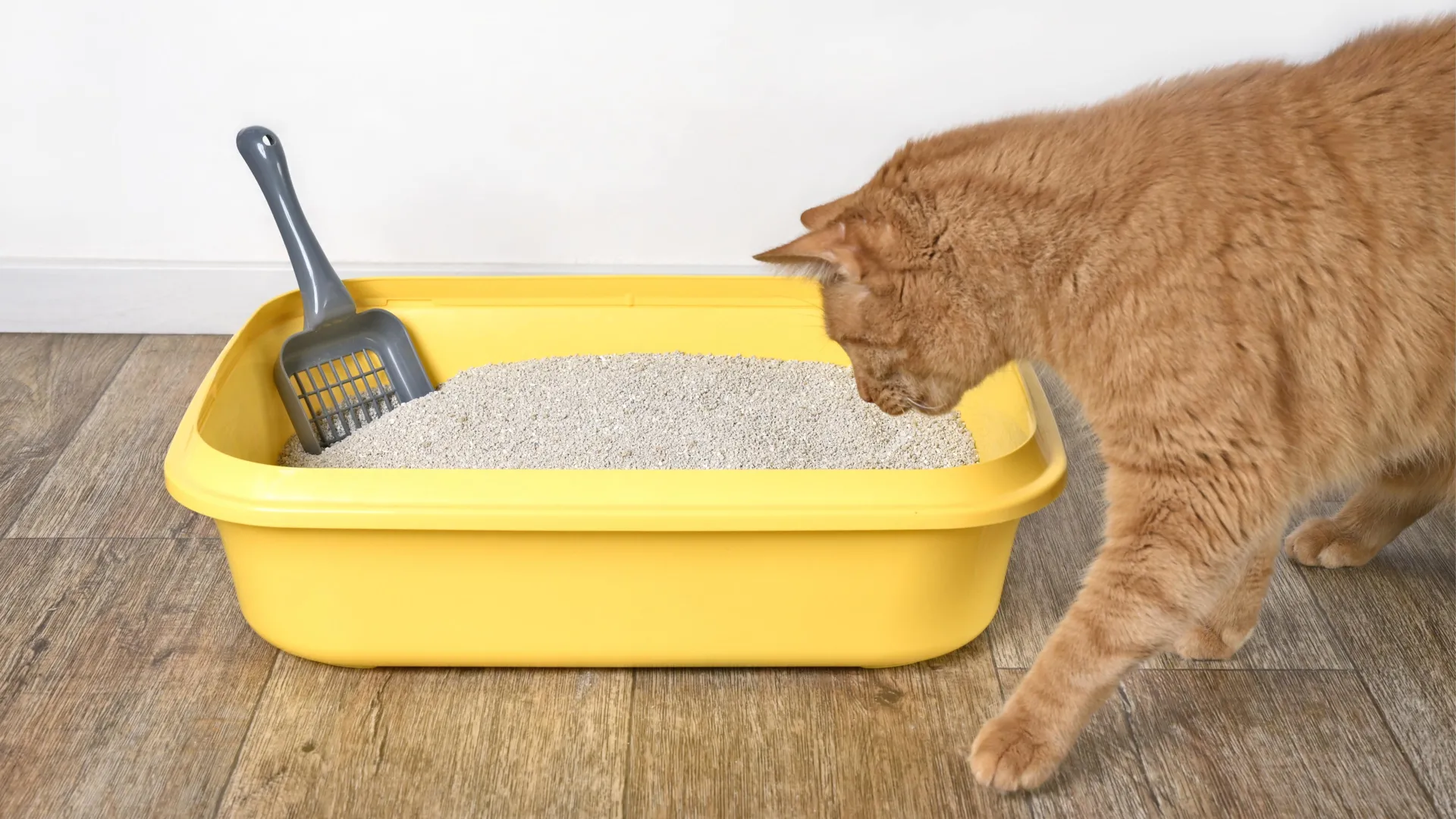
To understand the chemical nature of these markers, the research team first established a behavioral baseline. In a series of controlled experiments, scientists observed how domestic cats interacted with various urine samples. The methodology relied on a phenomenon known as "habituation," where an animal’s interest in a stimulus decreases as it becomes familiar with it.
The researchers presented cats with specific urine samples repeatedly. Initially, the cats spent a significant amount of time sniffing the samples. Over time, as the scent became familiar, the time spent investigating declined—a sign that the animal had "cataloged" the identity of the donor. When researchers introduced urine from a different cat, the subjects immediately displayed a resurgence in interest, characterized by longer investigation times and increased sniffing.
Most notably, this memory proved remarkably durable. Even after intervals of several months, cats showed a reduced response to previously encountered scents, suggesting the existence of a long-term olfactory memory. This recognition was further validated by the "flehmen response," a behavior in which a cat curls back its upper lip to expose the vomeronasal organ, a specialized sensory structure in the roof of the mouth that processes pheromones and complex chemical signals. The frequency of the flehmen response increased significantly when the cats encountered unfamiliar urine, only to subside as they became accustomed to the donor’s scent profile.
The Chemistry of Identity: Decoding the 13 Fatty Acids
With behavioral evidence firmly established, the team turned to the molecular analysis of the urine. By isolating different chemical fractions, they identified 13 specific branched-chain fatty acids (BFAs). A comparative review of existing literature confirmed that these specific compounds had never before been documented in the excretions of other mammals, marking them as a distinctive feline trait.
The breakthrough lay in the "profile" of these acids. Each cat possessed a unique combination and relative abundance of these 13 compounds. While the proportions remained stable for an individual cat over multiple testing dates, they varied significantly between different animals. Furthermore, the researchers observed a genetic component to these signatures: while related cats exhibited more similar BFA patterns, each individual maintained a unique profile, functioning as a chemical fingerprint.
Unlike common volatile odorants that break down quickly, these BFAs are semi-volatile, meaning they evaporate at a slower, more controlled rate. In laboratory settings, the researchers stored urine-soaked samples at 25°C and found that the distinctive BFA profiles remained stable for at least 24 hours. This durability allows the scent to act as a reliable "calling card" in the natural environment, where environmental conditions are rarely static.
Solving a Century-Old Kidney Mystery
One of the most significant aspects of the study is its potential to explain a physiological feature of the cat kidney that has perplexed anatomists since the late 19th century. During their investigation, the team detected the same BFA-related compounds within the renal cortex—the outer layer of the kidney—but not in other feline tissues.
Specifically, these lipids were stored inside neutral lipid droplets. While cats are known for having an unusually high concentration of these lipid droplets in their kidneys, their biological purpose was previously unknown. The research team posits that these droplets serve as a storage reservoir. By buffering the production of these fatty acids, the kidneys may ensure a consistent chemical output, preventing the "scent signature" from shifting drastically due to short-term changes in the cat’s diet or metabolic state.
Professor Miyazaki noted that the presence of these droplets suggests a sophisticated internal regulatory system. "Lipid droplets in the cat kidney have been known for more than a century, but why cats have so many of them has remained a mystery," said Miyazaki. "Our findings suggest that one of their functions may be to support a stable chemical signature in urine."
Evolutionary Breadth Across the Felidae Family
The implications of the study extend well beyond the domestic house cat. The researchers examined urine and renal lipid samples from several wild felid species, including lions, tigers, leopards, jaguars, lynxes, and the Iriomote cat. The presence of BFA-related compounds was confirmed across these species, indicating that this chemical communication system is a conserved evolutionary trait within the Felidae family.
However, the team noted significant variations. The specific BFA profiles and the distribution of kidney lipid droplets differed between species and even between geographically isolated populations of the same species. This suggests that while the fundamental mechanism is ancient, it has diversified over millions of years of feline evolution. While the researchers have yet to confirm if wild felids utilize these specific compounds for individual recognition in the wild, the presence of the machinery to do so is a strong indicator of a widespread biological strategy.
Broader Implications for Animal Communication
The discovery provides a compelling alternative to the prevailing theories of animal communication. In many mammals, such as mice, major urinary proteins are known to act as carriers for individual identity. However, this system has not been universally identified in other species. The feline model demonstrates that mammals may utilize distinctive combinations of semi-volatile, lipid-derived molecules to achieve the same result.
This research offers a bridge between molecular biology and behavioral ecology. It addresses the fundamental problem of how biological signals remain coherent in an entropic environment. By relying on semi-volatile molecules backed by a renal storage system, cats have evolved a way to bypass the limitations of rapid evaporation, ensuring their social identity remains "legible" to others.
Future Applications and Scientific Outlook
While the study is currently classified as basic scientific research, the potential for practical applications is significant. Understanding the composition and stability of these BFAs could lead to advancements in the management of feline urine odor, offering new avenues for pet hygiene products that address the source of the scent rather than simply masking it.
Furthermore, the discovery has potential in the field of conservation biology. If the individual-specific nature of these BFA profiles can be standardized, it could offer a non-invasive tool for tracking and monitoring rare or elusive wild felids. Researchers could collect environmental DNA or urine samples from the field to identify specific individuals without the stress of trapping or the cost of constant camera-trap surveillance.
The study also provides a new lens through which to view renal health. As researchers continue to investigate why lipid accumulation is a normal physiological feature in healthy cats, they may uncover parallels in how other animals store and utilize lipids. By connecting the dots between a century-old anatomical curiosity and the sophisticated social lives of modern felines, this research highlights the complexity of the evolutionary pressures that shape animal behavior and physiology. As the study moves forward, the focus will likely shift to the mechanism by which these stored lipids are mobilized into urine, a question that promises to yield even deeper insights into the biological hardware of the cat family.