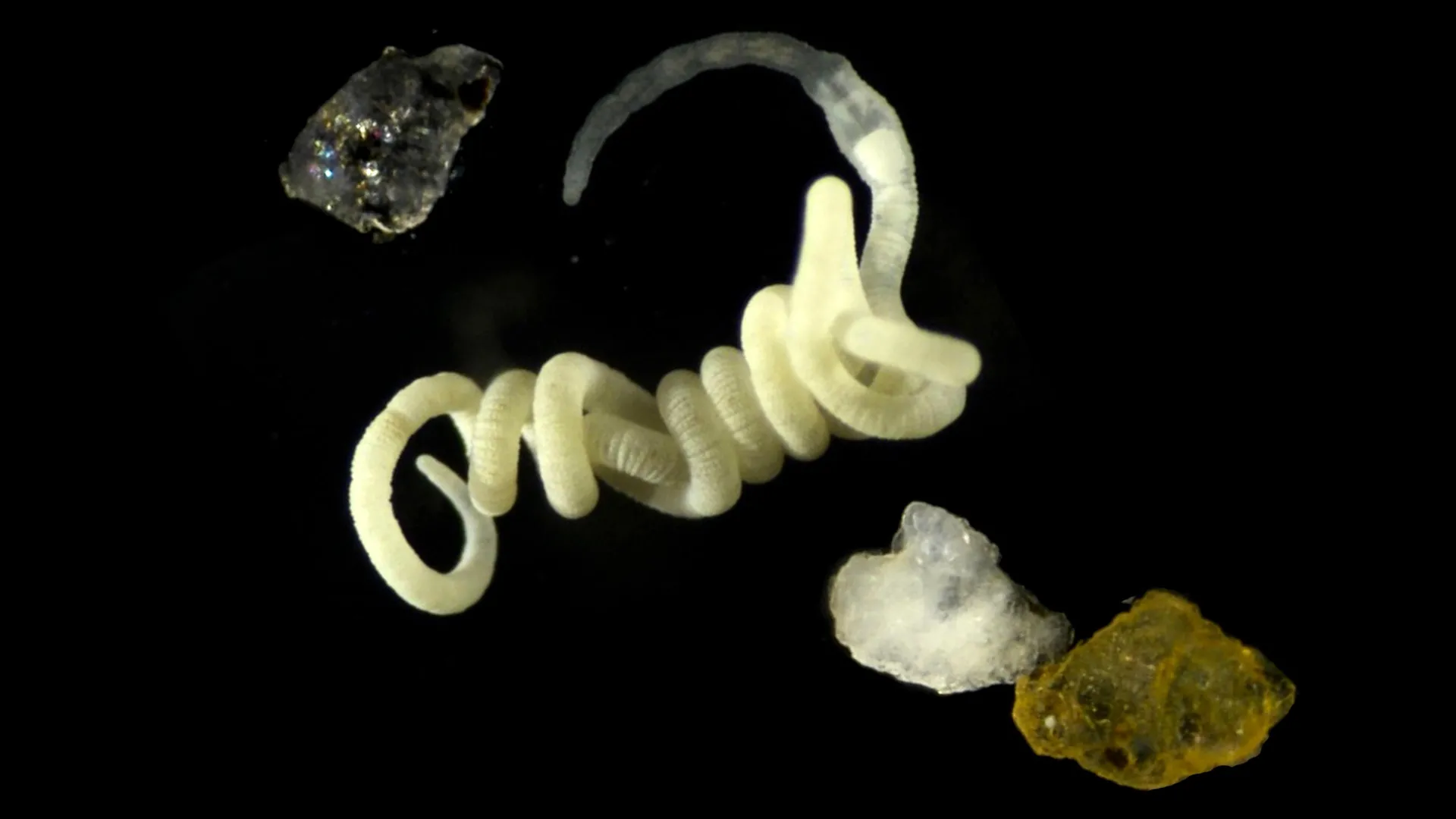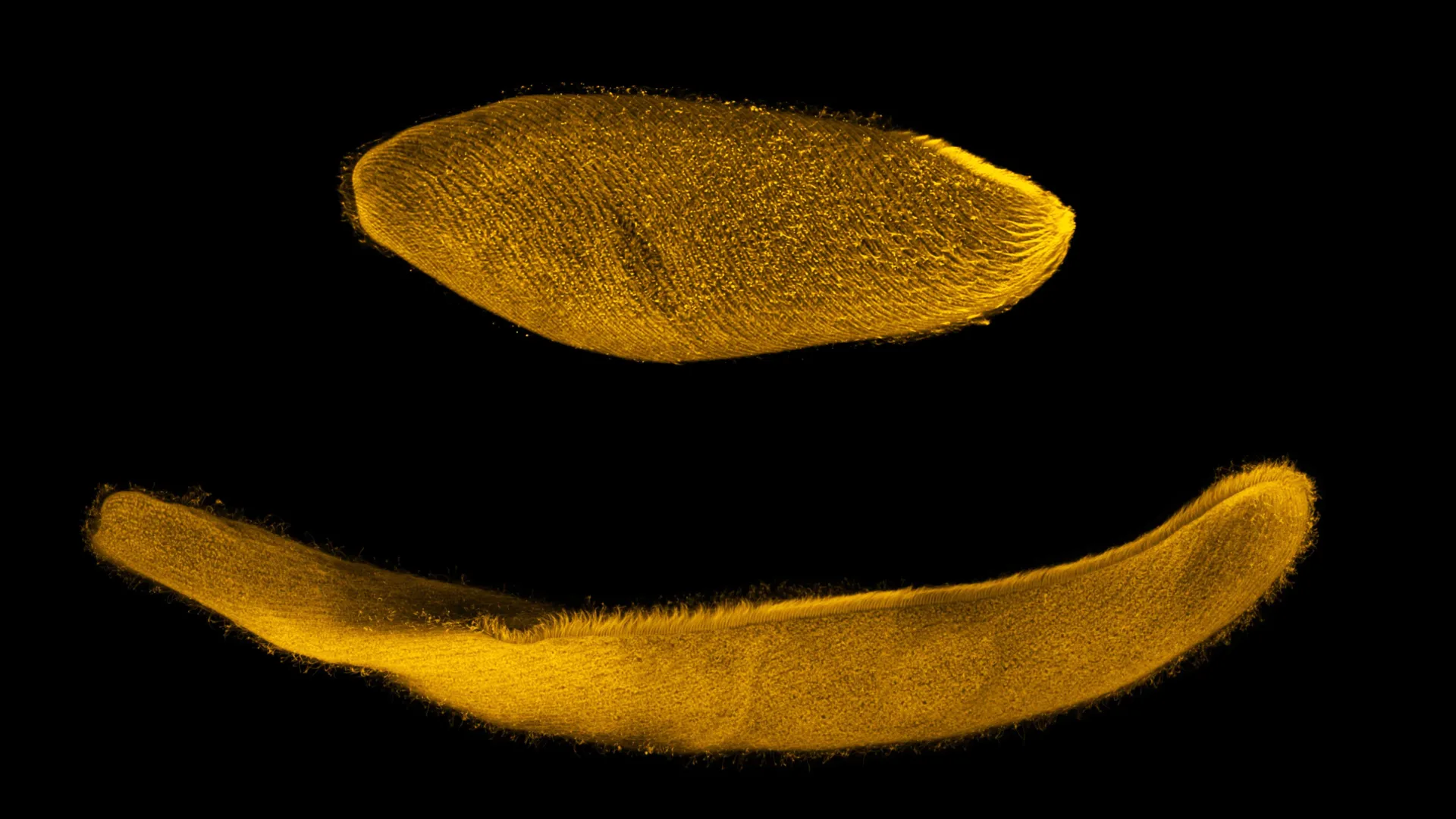
In the quiet, often overlooked realm of single-celled organisms, the ciliate Spirostomum ambiguum stands as a titan of physical performance. A giant among microbes, this organism possesses an extraordinary ability to compress its entire body to one-quarter of its original length in under five milliseconds—a feat of acceleration that dwarfs the human blink, which typically occurs over a span of 100 to 400 milliseconds. For decades, the mechanics behind this violent, repetitive contraction have remained a mystery to the scientific community. Now, a multidisciplinary research team has unveiled the structural and chemical secrets governing this movement, potentially paving the way for a new generation of synthetic bio-inspired engineering.
The study, published in the Proceedings of the National Academy of Sciences, represents a significant milestone in biophysics. By integrating advanced electron and immunofluorescence microscopy with computational modeling, researchers have identified a specialized, fishnet-like protein network that allows Spirostomum to execute movements at speeds reaching approximately 100 body lengths per second.
A Chronology of Discovery and Investigation
The investigation into Spirostomum did not occur in a vacuum; it follows a long history of interest in contractile ciliates that dates back to early microscopic observations in the 19th century. However, the specific focus on the protein-based mechanics of this organism gained momentum over the last decade as researchers sought to bridge the gap between biological movement and soft robotics.
In recent years, the collaborative effort involving North Carolina State University, the University of Chicago, Drake University, and the University of Colorado at Boulder began a rigorous investigation into the "myonemes"—the fibrous, contractile structures that allow the organism to move without the benefit of traditional muscle fibers found in multicellular animals. The team’s work, supported by a series of grants from the National Science Foundation and the National Institutes of Health, involved dissecting the organism’s response to environmental stimuli. The researchers observed that the contraction is not merely a reflexive flinch but a highly orchestrated event that must be repeated without degrading the cell’s internal integrity.
The Anatomy of a Microscopic Spring
To understand how a single cell exerts such force without tearing itself apart, the team analyzed the architecture of the myonemes. In multicellular organisms, muscles function through the sliding filament theory, involving actin and myosin proteins powered by adenosine triphosphate (ATP). Spirostomum operates under a different paradigm.
The research revealed that the organism is encased in a fishnet-like web of specialized proteins: centrin and Sfi1. This geometry is critical. Unlike a linear muscle fiber, the fishnet structure allows for uniform contraction, distributing the immense stress of the rapid movement across the entire surface of the cell. This geometry acts as a protective mechanism, shielding the delicate internal organelles from the shockwaves generated by the contraction.
The transition from a relaxed to a contracted state is triggered by calcium ions. In the presence of these ions, the Sfi1 protein undergoes a structural shift, moving from a rigid, rod-like configuration to a flexible, clumped state—often described by researchers as a ball of wet spaghetti. This instantaneous loss of stiffness pulls the fishnet web tight, forcing the organism to shrink in a fraction of the time required for human muscle contraction.
Powering Movement: Gas Versus Electricity
Perhaps the most startling finding is the metabolic divergence between human movement and the mechanics of Spirostomum. Human muscle contraction is an ATP-dependent chemical process. In metabolic terms, this is akin to an internal combustion engine; it requires a chemical "fuel" to trigger the structural changes in myosin and actin.
In contrast, Spirostomum utilizes what researchers characterize as an electrical-like signal. Calcium ions act as the primary catalyst, effectively flipping a molecular switch. This raises profound questions regarding the bio-electrochemical environment of the cell. While the researchers have identified that calcium ions initiate the contraction, the mechanisms governing the voltage that powers the current, and the "reset" mechanism that allows the cell to return to its original length, remain the subject of intense ongoing study.
Mary Elting, an associate professor of biophysics at North Carolina State University and a co-corresponding author of the study, draws a clear distinction: "Comparing the way our muscles contract to the way Spirostomum works is like comparing gas to electric power. ATP undergoes a chemical change and gets ‘burned up,’ like gasoline, whereas calcium ions act like an electrical current."
Implications for Synthetic Machinery and Soft Robotics
The identification of this mechanism carries substantial implications for the field of synthetic biology and soft robotics. Currently, most artificial muscles rely on complex, energy-intensive systems that struggle to replicate the high-speed, high-frequency performance seen in nature. By isolating the principles of the Spirostomum contraction, engineers may be able to develop actuators that function independently of ATP and exhibit the high-speed, repeatable performance of the ciliate.
The potential applications are broad. Artificial muscles that function through rapid ion-triggered protein shifts could lead to more efficient, faster, and more durable synthetic devices. These could range from soft surgical robots that can navigate tight biological spaces with rapid responsiveness, to advanced materials that adjust their physical properties in milliseconds in response to environmental stimuli.
Addressing the Reset Problem
A significant hurdle for engineers attempting to mimic this organism is the "one-shot" nature of many biological reactions. Typically, calcium-triggered events in nature are singular; however, Spirostomum demonstrates a remarkable ability to reset its system repeatedly. Determining how the organism pumps calcium out or reconfigures its Sfi1 proteins to reset for the next contraction is the current "holy grail" for the research team.
"We would expect calcium-triggered reactions to be ‘one shot,’ but Spirostomum can do it repeatedly," says Elting. "Understanding those aspects of its motion are the keys to building a fast-moving, ATP-independent artificial muscle."
Collaborative Scientific Context
The depth of this discovery is a testament to the multi-institutional approach taken by the researchers. The study brought together expertise in chemistry, physics, and biological engineering to tackle the problem from multiple angles. Co-corresponding authors Aaron Dinner of the University of Chicago, Jerry Honts of Drake University, and Saad Bhamla of the University of Colorado at Boulder provided critical insights into the chemical and mechanical properties of the protein network.
The research was bolstered by the contributions of first author Joseph Lannan, a former Ph.D. student at NC State, and Research Assistant Professor Peter Thompson, alongside a wide array of collaborators from the University of Chicago, Georgia Institute of Technology, and the University of California San Francisco.
Future Directions
As the scientific community continues to explore the boundaries of biological performance, Spirostomum ambiguum serves as a poignant reminder that even the smallest organisms can hold the keys to revolutionary technological advancements. The research team is now focused on the kinetics of the reset process and the underlying electrophysiology of the cell.
By deconstructing the "fishnet" mechanism, the researchers have not only provided a clearer picture of how a single-celled organism survives in a predatory environment, but they have also provided a blueprint for future synthetic systems. The journey from observing a microscopic blur to engineering a synthetic, high-speed actuator is a long one, but the discovery of the calcium-powered Sfi1-centrin network has provided the necessary foundation to begin that translation. Whether this leads to the next generation of industrial robotics or advanced medical devices, the influence of this humble ciliate on the future of engineering appears set to be profound.