A research team led by physicists at the University of Wisconsin–Madison has identified a fundamental process that allows vast, organized magnetic fields to emerge from the chaotic turbulence of the cosmos, potentially resolving a paradox that has challenged astrophysicists for seven decades. Published recently in the journal Nature, the study utilizes some of the most complex computer simulations ever conducted to demonstrate how large-scale magnetic structures can materialize when turbulent plasma develops organized, jet-like flows. This discovery provides a missing link in our understanding of the "invisible architecture" of the universe, offering new insights into the formation of black holes, the behavior of neutron stars, and the prediction of solar weather that impacts Earth’s technological infrastructure.
For nearly 70 years, the scientific community has grappled with the "dynamo problem"—the question of how celestial bodies and galaxies generate and maintain their magnetic fields. While it is well-established that magnetic fields are ubiquitous, appearing in everything from the smallest planets to the largest galactic clusters, the mechanism behind their orderly structure has remained elusive. Traditional physics suggests that the turbulent motion of plasma—the ionized gas that makes up 99% of the visible universe—should naturally break down large-scale order into small, chaotic fragments. However, astronomical observations consistently show the opposite: massive, coherent magnetic fields that span thousands of light-years.
The Paradox of Cosmic Turbulence and Order
The research, spearheaded by Bindesh Tripathi, a former UW–Madison physics graduate student and current postdoctoral researcher at Columbia University, addresses the inherent contradiction between turbulence and order. In fluid dynamics and plasma physics, turbulence is typically viewed as a destructive agent. Much like a spoonful of cream stirred into coffee, turbulent motion tends to mix and dissipate concentrated structures, leading to a state of high entropy and disorder.
"Magnetic fields across the cosmos are large-scale and ordered, but our understanding of how these fields are generated is that they come from some kind of turbulent motion," Tripathi explained regarding the impetus of the study. "Given that turbulence is known to be a destructive agent, the question remains: how does it create a constructive, large-scale field?"
The study’s senior author, Paul Terry, a professor of physics at UW–Madison, noted that previous theoretical models frequently failed to match the reality observed by telescopes. For decades, simulations of "magnetic dynamos"—the engines that convert kinetic energy from moving fluids into magnetic energy—resulted in fields that were messy, localized, and short-lived. This discrepancy between theory and observation created a significant gap in astrophysical models, particularly those involving the evolution of galaxies and the dynamics of the early universe.
Methodology: Pushing the Limits of Computational Physics
To solve this long-standing mystery, the research team shifted their focus toward three-dimensional (3D) simulations of plasma flows. Tripathi’s previous work had centered on two-dimensional systems, which are easier to calculate but often fail to capture the complex "twisting" and "stretching" of magnetic field lines essential to dynamo theory. Magnetic field generation is inherently a 3D process; a field line must be stretched and folded back on itself to amplify, a process often compared to the way a baker kneads dough.
The team’s breakthrough came from two critical adjustments to standard simulation parameters. First, they introduced a "velocity gradient" that was constantly renewed throughout the simulation. A velocity gradient occurs when different layers of a fluid or plasma move at different speeds. To illustrate this, the researchers used the analogy of a cyclist: if a cyclist hits a curb, the bike stops abruptly, but the rider’s body continues forward. This difference in velocity creates a shear force. In the universe, such gradients are common, occurring within the rotating interiors of stars, during the violent mergers of neutron stars, and in the accretion disks surrounding black holes.
Second, the team leveraged unprecedented computational power. Utilizing the Anvil supercomputer at Purdue University, the researchers conducted what is considered one of the most detailed simulations of magnetic turbulence in history. The model employed a staggering 137 billion grid points in 3D space. Over the course of the project, the team ran approximately 90 separate simulations, consuming nearly 100 million CPU hours and generating 0.25 petabytes (250,000 gigabytes) of data.
Chronology of the Simulation Discovery
The simulations began with a plasma flow containing a pre-set velocity gradient. The researchers then introduced "tiny perturbations"—infinitesimal movements of individual fluid particles—to see how they would evolve.
In the initial stages of the simulation, these perturbations behaved as expected: they triggered chaotic, turbulent flows and created small-scale, disordered magnetic "tangled" structures. However, as the simulation progressed, a surprising pattern emerged. When the large-scale velocity gradient was maintained as a steady influence, the small-scale turbulence began to organize itself. The plasma developed "jet-like flows" that acted as a scaffold for the magnetic field.
Over time, the chaotic magnetic fragments merged and aligned, forming large, ordered structures that mirrored the scale of the velocity gradient itself. To confirm the necessity of this gradient, the team conducted control simulations where the gradient was allowed to decay. In those instances, the system remained in a state of permanent chaos, and the large-scale magnetic fields never formed. This established the steady velocity gradient as the "missing piece" of the cosmic puzzle.
Validation Through Laboratory and Observational Data
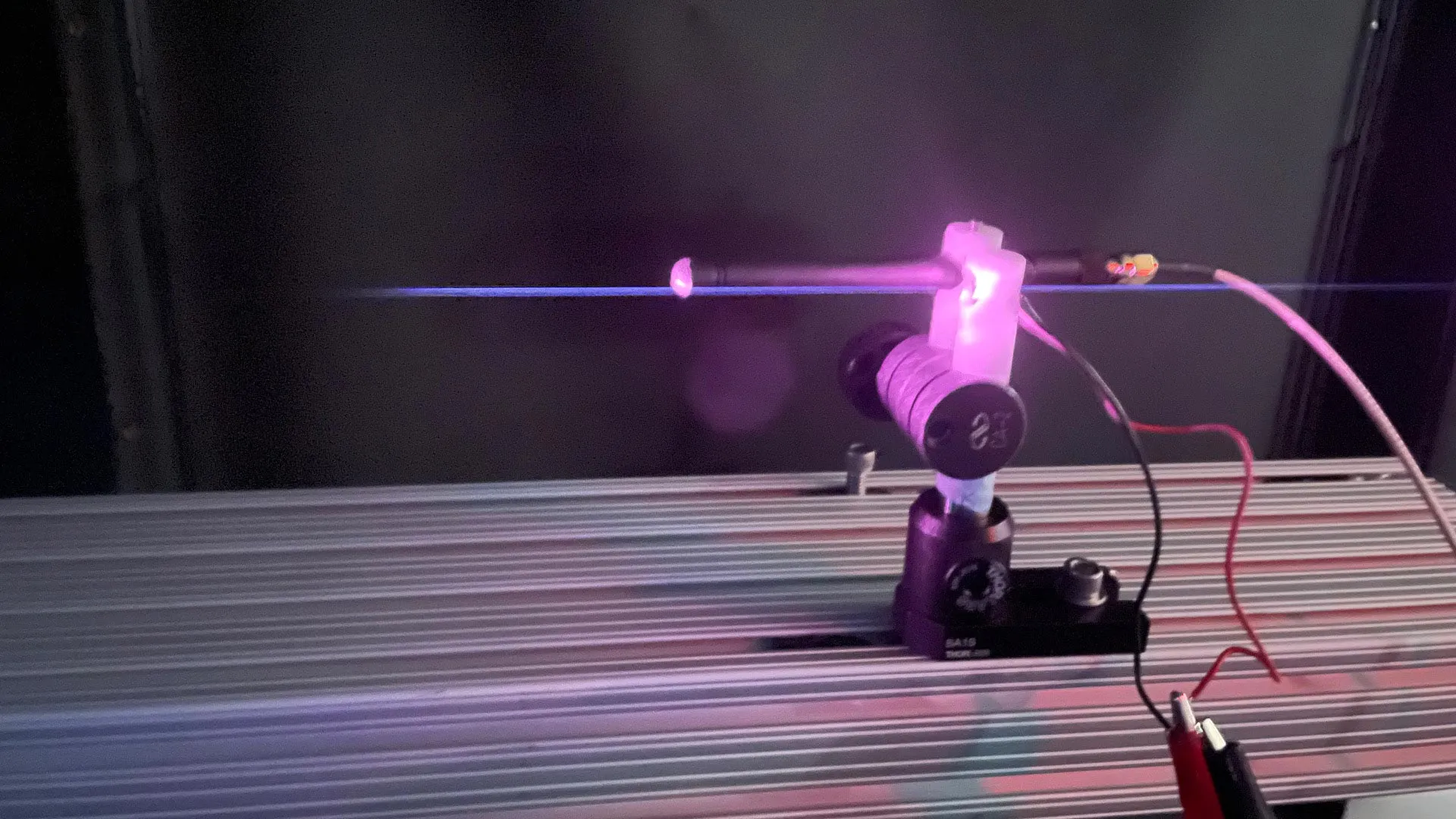
While the findings are theoretical and based on digital modeling, they are supported by physical evidence closer to home. The researchers noted that their results align with observations made at the Wisconsin Plasma Physics Laboratory (WiPPL) in 2012. At that time, experimentalists observed magnetic behaviors in plasma that defied then-current theories. The new model developed by Tripathi and Terry provides a mathematical and physical framework that finally explains those decade-old experimental anomalies.
Furthermore, the study helps explain why magnetic fields in spiral galaxies like the Milky Way appear so well-organized along the spiral arms. Galactic rotation naturally creates the kind of velocity gradients the team simulated. By showing that these gradients can harness turbulence to build magnetic order, the study provides a robust explanation for the large-scale magnetism observed by radio astronomers through techniques such as Faraday rotation and Zeeman splitting.
Implications for Astrophysics and Multimessenger Astronomy
The implications of this research extend far beyond theoretical physics, touching on several high-priority areas of modern astronomy. One of the most significant applications is in the field of "multimessenger astronomy," which combines data from light, gravitational waves, and particles.
When two neutron stars merge—a violent event that produces both gravitational waves and heavy elements like gold—the resulting magnetic dynamics are incredibly complex. Understanding how ordered magnetic fields emerge in these environments is crucial for interpreting the signals detected by observatories like LIGO and Virgo. The UW–Madison model suggests that the intense shear forces present during such mergers are the primary drivers of the massive magnetic fields that power short gamma-ray bursts.
The research also offers a clearer picture of black hole formation. As matter falls into a black hole, it forms an accretion disk characterized by extreme velocity gradients. The resulting ordered magnetic fields are responsible for launching massive "jets" of plasma that can span entire galaxies. By understanding the birth of these fields, scientists can better model how black holes influence the evolution of their host galaxies.
Predictive Capabilities for Space Weather
On a more local scale, the study has practical applications for "space weather" forecasting. The Sun is a massive ball of turbulent plasma with complex velocity gradients between its poles and equator. These gradients generate the solar magnetic fields that periodically erupt in the form of Coronal Mass Ejections (CMEs) and solar flares.
When these solar storms reach Earth, they interact with our planet’s magnetosphere, potentially disrupting satellite communications, GPS signals, and power grids. By applying the new understanding of how jet-like flows and velocity gradients create ordered magnetic structures, solar physicists may be able to develop more accurate models for predicting when and where the Sun will eject gas toward Earth. This could provide critical lead time for protecting global infrastructure.
Conclusion and Institutional Support
The study marks a significant milestone in the DOE/NSF Partnership in Basic Plasma Science and Engineering. The research was supported by the National Science Foundation (NSF) and the U.S. Department of Energy (DOE). The massive computational resources were provided through the Advanced Cyberinfrastructure Coordination Ecosystem: Services & Support (ACCESS) program, which manages the Anvil supercomputer.
As Tripathi and his colleagues continue to refine their models, the focus will likely shift toward applying these findings to specific cosmic events. The resolution of the 70-year-old dynamo problem suggests that the universe’s most chaotic environments are not merely destructive; rather, they are the very engines of the large-scale order that defines the structure of our cosmos. By identifying the role of velocity gradients and jet-like flows, the team has provided a new lens through which we can view the invisible forces that shape the stars.