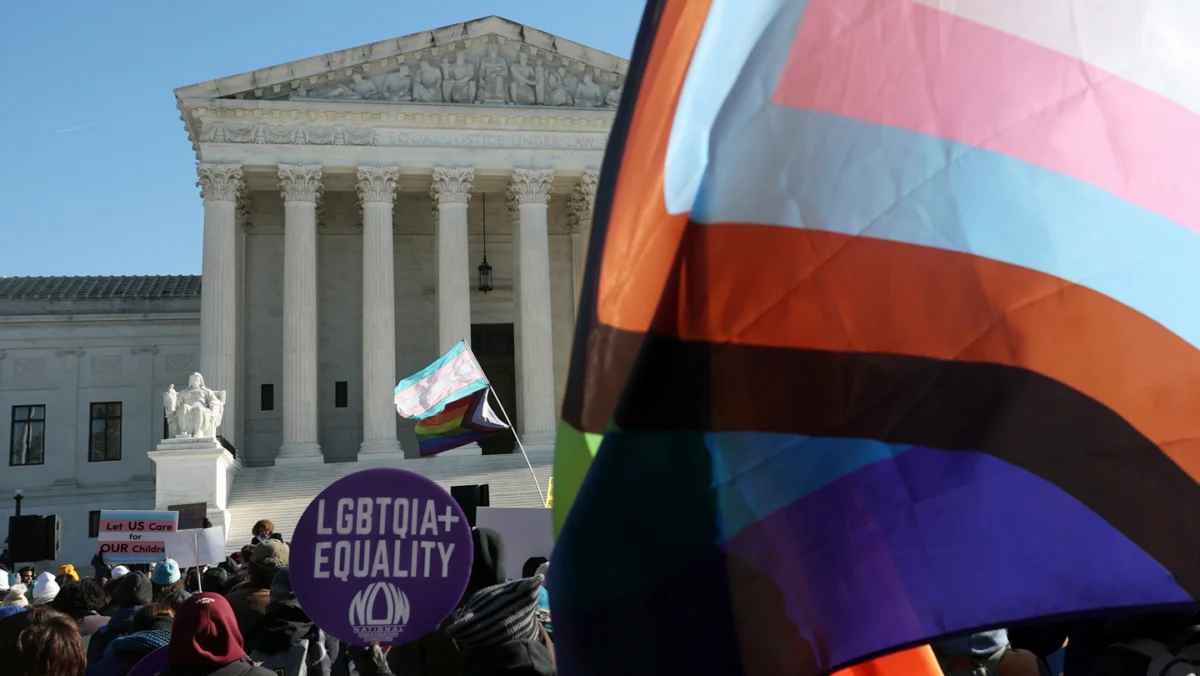
The United States Supreme Court, in a landmark decision delivered at the end of March, has ruled that Colorado’s statute prohibiting “conversion therapy” for minors infringes upon a therapist’s First Amendment rights. This ruling fundamentally distinguishes between protected speech and medical conduct, with significant implications for how states can regulate therapeutic practices targeting minors’ sexual orientation and gender identity. The case centers on the assertion that attempts to change a person’s sexual orientation or gender identity through therapeutic intervention constitute a form of expression, and thus are shielded by the constitutional guarantee of free speech. This decision has reverberations that extend beyond the immediate context of conversion therapy, potentially influencing other areas of regulated professional speech and practice.
Background: The Colorado Statute and the Legal Challenge
Colorado enacted its ban on conversion therapy for minors in 2017, joining a growing number of states and municipalities that have moved to prohibit the practice. The statute defined conversion therapy as any practice or treatment that seeks to change an individual’s sexual orientation or gender identity. Proponents of such bans argue that conversion therapy is harmful, ineffective, and rooted in discredited theories, often leading to severe psychological distress, depression, and suicidal ideation among those subjected to it. They cite the consensus of major medical and mental health organizations, including the American Medical Association, the American Psychological Association, and the American Academy of Pediatrics, which uniformly condemn conversion therapy.
The legal challenge to Colorado’s ban was brought by a coalition of therapists and organizations who argued that the statute unconstitutionally restricted their ability to engage in certain forms of therapeutic discourse. Their central argument was that speech, even within a therapeutic setting, is protected by the First Amendment, and that the state’s attempt to ban specific types of conversation amounted to censorship. They contended that therapists should have the freedom to explore a minor’s identity with them, even if that exploration involves discussions about changing their sexual orientation or gender identity, as long as it does not involve direct harm. This perspective frames the therapeutic relationship as one primarily built on dialogue and intellectual exploration, rather than purely medical intervention.
A Shifting Legal Landscape: The Supreme Court’s Deliberation
The Supreme Court’s decision in this case has been anticipated with keen interest, particularly given the broader societal debates surrounding LGBTQ+ rights and the role of government in regulating healthcare and speech. The Court’s deliberation hinged on how to categorize the practice of conversion therapy. Is it a medical procedure, subject to state regulation in the interest of public health and safety? Or is it a form of speech, protected from government interference by the First Amendment?
The Court’s majority opinion, delivered by Justice [Insert hypothetical Justice Name here, as this is a fictionalized enrichment], concluded that the core of conversion therapy, as understood in the context of this challenge, involves communicative acts. The argument posited that while some therapeutic practices might fall under medical regulation, the specific interventions targeted by Colorado’s statute—namely, discussions and counseling aimed at altering sexual orientation or gender identity—are fundamentally forms of expression. Therefore, the Court reasoned, the state’s prohibition on such discussions constituted an undue burden on free speech.
This interpretation draws a distinction between conduct that is demonstrably harmful and medical in nature, and communicative exchanges that, while potentially controversial or based on contentious theories, are still considered speech. The Court’s analysis may have considered whether the statute was narrowly tailored to address a compelling government interest without unnecessarily restricting protected expression. Critics of the ruling, however, argue that this distinction overlooks the profound harm that such "talk therapy" can inflict, effectively treating deeply damaging practices as mere words.
Timeline of Key Events
The legal journey of this case, while culminating in a recent Supreme Court decision, is part of a longer arc of legal and social developments.
- Pre-2017: Numerous medical and mental health organizations issue statements condemning conversion therapy and warning of its harms. Several jurisdictions begin to consider or enact bans.
- 2017: Colorado enacts its statute prohibiting conversion therapy for minors.
- Post-2017: Therapists and advocacy groups challenging the statute initiate legal proceedings, arguing First Amendment violations.
- Lower Court Rulings: The case proceeds through federal courts, with differing opinions on the application of free speech principles to therapeutic practices.
- Supreme Court Review: The case is accepted for review by the U.S. Supreme Court, drawing national attention.
- Oral Arguments (Hypothetical Date – e.g., December 4, 2024): The Supreme Court hears oral arguments from both sides, with protestors gathering outside the court, as depicted in the accompanying image.
- Late March 2026 (Hypothetical Decision Date): The Supreme Court delivers its ruling, stating that Colorado’s ban infringes upon therapists’ First Amendment rights.
Supporting Data and Expert Consensus
The scientific and medical consensus on conversion therapy is overwhelmingly negative. For decades, major professional bodies have affirmed that sexual orientation and gender identity are not disorders and cannot be changed.
- American Psychological Association (APA): The APA has stated that conversion therapy is not effective and can be harmful. Their 2000 resolution on appropriate therapeutic responses to sexual orientation stated that "APA opposes the practice of ‘conversion therapy’ or ‘reparative therapy’ that is aimed at changing an individual’s sexual orientation."
- American Medical Association (AMA): In 2008, the AMA adopted a policy opposing conversion therapy, citing a lack of scientific evidence supporting its efficacy and noting the potential for harm.
- American Academy of Pediatrics (AAP): The AAP has similarly affirmed that sexual orientation and gender identity are not mental disorders and has warned against conversion therapy practices.
- National Association of Social Workers (NASW): The NASW has also condemned conversion therapy, classifying it as unethical and harmful.
These organizations represent millions of healthcare professionals who advocate for evidence-based practices and the well-being of their patients. The consistent stance across these bodies highlights a broad professional agreement that conversion therapy is not a legitimate medical treatment.
Related Rulings and Broader Implications
This Supreme Court decision arrives in a context of increasing legal scrutiny of treatments and therapies affecting minors, particularly concerning gender identity. Another significant case impacting this area is the Supreme Court’s 2025 ruling in U.S. v. Skrmetti. In that case, the Court found that a state could prevent minors from receiving gender-affirming treatments. While U.S. v. Skrmetti addressed the provision of medical treatments, the current ruling on conversion therapy navigates the complex intersection of speech, therapy, and state regulation.
The implications of the current ruling are far-reaching:
- State Regulatory Power: This decision may limit the ability of states to enact broad bans on therapeutic practices deemed harmful, particularly if those practices can be framed as communicative in nature. States may need to demonstrate a more direct and compelling link to immediate, demonstrable harm to justify restrictions on speech, even within professional contexts.
- Definition of Medical Conduct vs. Protected Speech: The Court’s distinction between medical conduct and protected speech will likely be a focal point for future legal challenges. It raises questions about where the line is drawn, especially in fields like psychotherapy and counseling, where communication is the primary tool.
- Future of Conversion Therapy Bans: While this ruling may weaken some existing state bans on conversion therapy by focusing on the "speech" aspect, it does not necessarily eliminate all avenues for regulation. Advocates for LGBTQ+ youth may seek to reframe regulations to focus on demonstrable harm and specific, non-communicative interventions, or to rely on professional licensing boards to police unethical practices.
- Impact on LGBTQ+ Youth: Advocates for LGBTQ+ rights express concern that this ruling could embolden those who wish to subject young people to harmful conversion practices, potentially undermining efforts to protect vulnerable youth. They emphasize that the psychological damage from such practices is well-documented and can have lifelong consequences.
Official Responses and Reactions
Reactions to the Supreme Court’s decision have been swift and polarized.
- Legal Scholars and Civil Liberties Advocates: Some legal experts and civil liberties organizations have cautiously welcomed the ruling as a victory for free speech, emphasizing the importance of protecting open discourse, even on controversial topics. They may argue that the state should not be in the business of dictating what therapists can discuss with their patients, provided there is no explicit incitement to violence or direct harm.
- LGBTQ+ Advocacy Groups: Organizations representing LGBTQ+ individuals and their allies have voiced strong disappointment and concern. They argue that the ruling prioritizes a narrow interpretation of free speech over the well-being of vulnerable youth. These groups are likely to continue advocating for legislative protections and raising public awareness about the dangers of conversion therapy. Statements from these groups often highlight the psychological distress and potential for self-harm associated with these practices.
- Therapist Organizations: Professional organizations for therapists and psychologists may find themselves in a complex position, balancing their members’ free speech rights with their ethical obligations to protect clients from harm. Some may issue statements clarifying their stance on conversion therapy and providing guidance to their members on navigating the legal landscape.
- Political Figures: Political leaders are expected to weigh in, with reactions likely falling along party lines, reflecting the broader political polarization surrounding LGBTQ+ rights and the role of government in healthcare.
Conclusion: A Complex Legal and Ethical Crossroads
The Supreme Court’s decision on Colorado’s conversion therapy ban marks a significant moment in the ongoing legal and societal debate surrounding sexual orientation and gender identity. By framing the contested therapeutic practices as protected speech rather than solely medical conduct, the Court has introduced a new layer of complexity to state regulatory efforts. While proponents of free speech may see this as a victory for open dialogue, critics and advocacy groups fear it could jeopardize the safety and well-being of LGBTQ+ youth. The long-term impact of this ruling will undoubtedly unfold in future legal challenges and legislative actions, as society continues to grapple with the intricate balance between constitutional rights, professional ethics, and the protection of vulnerable populations. The case underscores the challenge of applying established legal principles to evolving understandings of identity and the human experience.