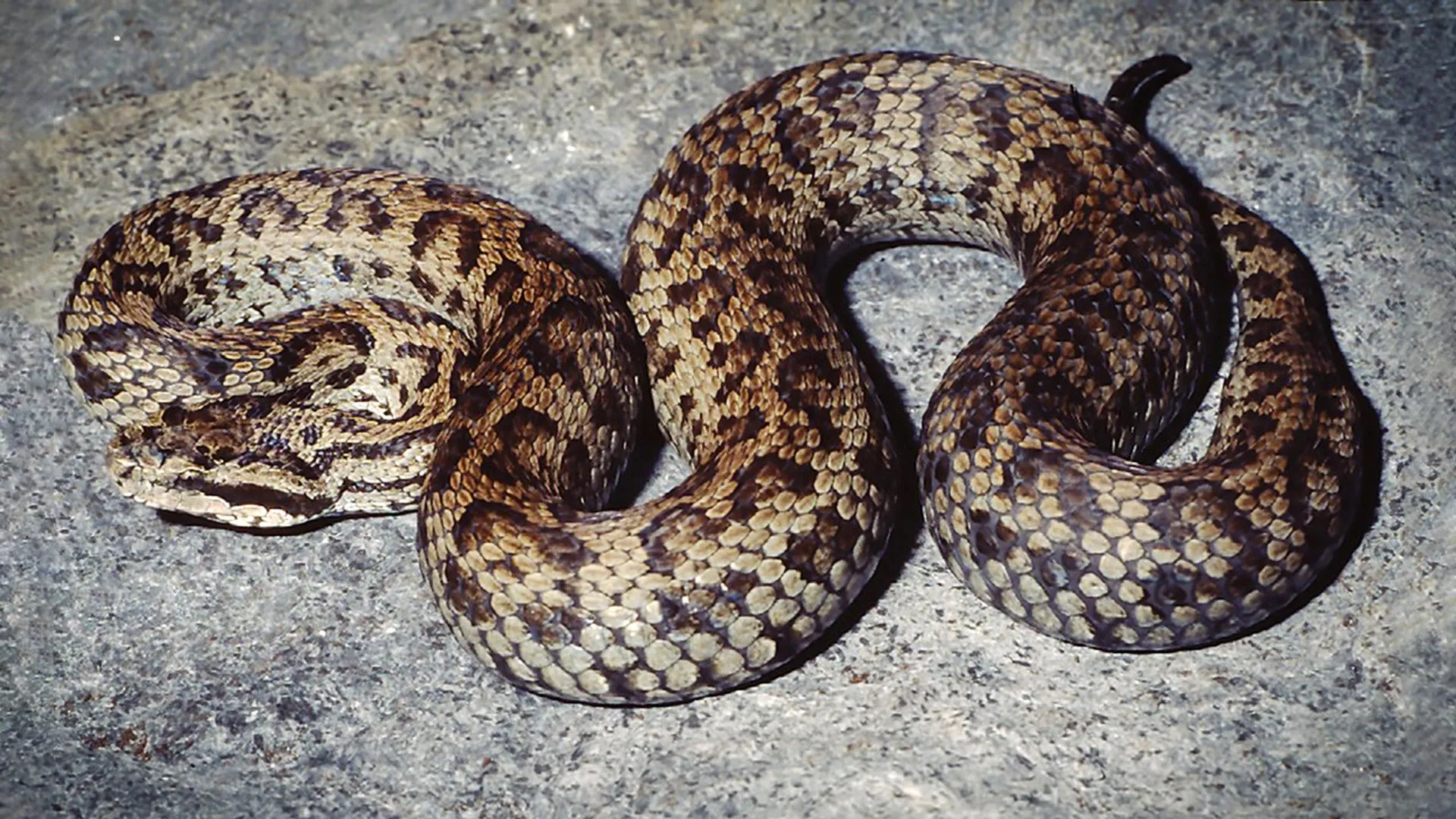
The formidable mountain ranges of Asia, vast expanses of rock and ice that have long been considered among the planet’s final frontiers for wildlife exploration, continue to yield astonishing discoveries. In a groundbreaking revelation that reshapes our understanding of regional biodiversity, an international team of scientists has determined that a single, enigmatic venomous snake, the Himalayan pit viper, is, in fact, not one species but a complex group comprising five distinct lineages. This significant finding includes the identification of three previously unknown to science, underscoring the immense, often overlooked, biological treasures held within these remote altitudes.
The meticulous research, published in the esteemed open-access journal ZooKeys, represents a paradigm shift in herpetological classification for the region. For over a century, the Himalayan pit viper (Gloydius himalayanus) was widely accepted as a single, widespread species, first described in 1864. However, by employing a sophisticated interdisciplinary approach, combining cutting-edge genetic analysis with detailed osteological (skeletal) studies, careful examination of physical characteristics, and comprehensive ecological observations, the research team has definitively demonstrated that this perception was a considerable oversimplification. Their work unequivocally shows that what was once considered a single entity actually encompasses several deeply diverged evolutionary lineages, each with its own unique genetic blueprint and distinct physical manifestations.
Deciphering the Serpent’s True Identity: A Multi-faceted Investigation
The comprehensive study identified five distinct species-level lineages within the broader Himalayan pit viper complex. These include the species scientifically recognized as the Himalayan pit viper in its strictest taxonomic sense. Alongside this established entity, the research confirms the existence of Gloydius chambensis, a species that was only formally described in 2022, hinting at the ongoing nature of discovery even within recently identified groups. Most significantly, the investigation has brought to light three entirely new species, each discovered inhabiting specific, geographically defined regions within Pakistan and Nepal. These newly recognized vipers are distinguished not only by clear genetic divergence, indicative of long-term reproductive isolation and independent evolutionary trajectories, but also by discernible differences in their skeletal structures and external physical traits, such as scale patterns, coloration, and head morphology.
Daniel Jablonski, a lead researcher from Comenius University Bratislava, who has dedicated many years to extensive fieldwork and research in Pakistan and Afghanistan, emphasized the profound implications of these findings. "These mountain systems," Jablonski stated, "still harbor overlooked vertebrate diversity and hold important clues to the biogeography of Asia." He further elaborated on the methodology, highlighting the synergistic power of modern techniques and historical records: "By combining modern field sampling with data from historical museum specimens, we uncovered evolutionary lineages that had remained hidden for more than a century after the original description of the Himalayan pit viper." This statement underscores the critical role of both contemporary exploration and the preservation of historical scientific assets in advancing biological knowledge.
The Unseen Archives: Ancient Specimens as Keys to Modern Discovery
A particularly crucial element of this scientific endeavor involved the meticulous analysis of DNA extracted from historical museum specimens. These specimens, collected by intrepid naturalists and explorers during the 19th and early 20th centuries, represent invaluable time capsules of biological information. Among these treasured archives was the original type specimen of the Himalayan pit viper. This particular specimen, the very individual upon which the species’ initial scientific description was based, proved instrumental in confirming the true scientific identity of the snake and in differentiating it from its newly recognized relatives. Without access to these irreplaceable historical collections, the profound evolutionary history of this viper group might have remained obscured.
The study thus serves as a powerful testament to the enduring and often underestimated importance of natural history collections. Specimens painstakingly gathered by generations of explorers, often at great personal risk and expense, continue to yield invaluable scientific insights decades, and even centuries, later. This is particularly true for remote and challenging regions like the high Himalayas, where consistent and extensive fieldwork can be logistically difficult and financially prohibitive. In numerous instances, the critical evidence needed to resolve these taxonomic mysteries had been passively residing within museum drawers for decades, awaiting the development of analytical tools capable of unlocking their secrets.
Sylvia Hofmann from the Museum Koenig, part of the Leibniz Institute for the Analysis of Biodiversity Change, who has conducted extensive research across the Himalaya and Tibetan Plateau over the past two decades, articulated the contemporary value of these collections. "Museum specimens are not just records of the past," Hofmann explained. "They are active research tools and essential infrastructure for future science." She further elaborated on the transformative impact of technological advancement: "Some of the key evidence had been sitting in museum collections for more than a hundred years. We just didn’t have the tools to recognize it. As analytical methods continue to improve, the scientific value of these collections will only grow and revealing biodiversity we didn’t even know was there." This perspective highlights a crucial paradigm shift in how natural history museums are viewed – not as static repositories, but as dynamic hubs for ongoing scientific inquiry.
Ecological Significance: The Crucial Role of Himalayan Pit Vipers
The reclassification of the Himalayan pit viper group carries significant implications beyond mere taxonomic revision. Herpetofauna, encompassing snakes, lizards, amphibians, and turtles, plays a vital and often underappreciated role in maintaining the health and stability of ecosystems. As ecological indicators, their presence, absence, and population dynamics can signal broader environmental changes. They function as crucial predators within intricate food webs, helping to regulate populations of smaller vertebrates and invertebrates. Furthermore, many snake species act as natural controllers of pest populations, including rodents that can impact agricultural productivity and human health.
Within the rugged mountain environments of the Himalayas, pit vipers represent some of the region’s apex predators, uniquely adapted to survive and thrive in extreme conditions. Despite their ecological importance, they have historically been subject to very little dedicated scientific study in this vast mountain range. This knowledge gap has hindered efforts to understand their specific ecological roles, their conservation needs, and their potential medical relevance.
Frank Tillack, associated with the Museum für Naturkunde Berlin, Leibniz Institute for Evolution and Biodiversity Research, who has collaborated closely with colleagues in Nepal for 35 years on projects concerning Himalayan reptile and amphibian biodiversity, expressed the research’s ambition to address these deficiencies. "Our work aims to close these gaps in knowledge and to lay the groundwork and provide inspiration for further, in-depth studies on this ecologically and medically relevant group," Tillack stated. His long-standing commitment to the region and his collaborative approach exemplify the dedication required to unravel the complex biological tapestry of such challenging landscapes.
Uncharted Territories: Remote Mountains Still Harbor Biological Surprises
The discovery of new pit viper species in the Himalayas reinforces the compelling notion that vast tracts of Asia, particularly its inaccessible high-altitude regions, continue to hold a wealth of undiscovered biological diversity. For decades, socio-political instability and immense logistical hurdles have limited scientific access to many of these areas, leaving large swathes of their natural heritage largely undocumented.
Rafaqat Masroor, a leading herpetologist from the Pakistan Museum of Natural History and a key figure in this research, conveyed the excitement and ongoing potential of exploration in his home country. "Pakistan’s high mountains are still full of biological surprises," Masroor remarked. His observation carries significant weight, suggesting that this discovery is likely just the tip of the iceberg. He further highlighted the broader context of scientific exploration in the region: "This finding highlights how little we still know about a region long shaped by socio-political instability." This statement implicitly calls for increased international collaboration and support for scientific endeavors in areas that have historically faced significant challenges.
Conservation Imperatives: Protecting Newly Discovered Biodiversity
Beyond the sheer excitement of discovering new species, this research carries profound implications for conservation. Each of the three newly recognized pit viper species appears to occupy a relatively restricted geographic range within these fragile mountain environments. This limited distribution makes them inherently more vulnerable to habitat degradation, climate change, and other anthropogenic threats. The identification of distinct, geographically isolated populations raises critical ecological and evolutionary questions about their specific adaptive strategies and their long-term survival prospects.
The researchers underscore that effectively recognizing and cataloging hidden biodiversity is an indispensable prerequisite for any meaningful conservation effort. Without a clear understanding of the number of species that exist, their geographical distributions, and their ecological requirements, scientists are unable to accurately assess the threats they face or to develop and implement targeted and effective protection strategies. The potential extinction of a species before it is even known to science represents an irreversible loss of unique genetic heritage and a diminished understanding of the planet’s intricate web of life. This discovery serves as a stark reminder that the work of cataloging and understanding Earth’s biodiversity is far from complete, and that continued investment in scientific research, particularly in remote and understudied regions, is paramount for the future of conservation. The future of these newly unveiled reptilian inhabitants of the Himalayas, and countless other species yet to be discovered, hinges on our commitment to scientific exploration and environmental stewardship.