The global healthcare industry, a cornerstone of human well-being, faces a profound paradox: while dedicated to improving health, its operational footprint significantly contributes to environmental degradation. Estimates suggest that the healthcare sector is responsible for approximately 4.4% of total global emissions annually, a figure that underscores its substantial environmental impact. A staggering 71% of this contribution originates from the expansive healthcare supply chain, encompassing the pharmaceutical and biotechnology sectors, which are critical yet resource-intensive components of modern medicine.
Within this complex web, the production and distribution of medicines themselves account for a significant portion, contributing between 20% and 55% of healthcare’s total carbon footprint. This substantial contribution stems from a confluence of factors, including corporate operational emissions, the energy-intensive production of Active Pharmaceutical Ingredients (APIs), and the vast manufacturing processes required to bring drugs to market. The intricate journey from raw material to finished product often involves stages that are disproportionately resource-heavy, creating a challenging sustainability landscape for an industry vital to global public health.
The Resource-Intensive Nature of Pharmaceutical Manufacturing
Pharmaceutical manufacturing is inherently a high-intensity endeavor. The process often generates a substantial amount of chemical waste, with reports indicating that 25 to 100 kilograms of chemical waste can be produced for every single kilogram of active drug. This represents a significant inefficiency compared to many other chemical industries. A primary driver of this waste is the extensive use of solvents, which typically constitute 80% to 90% of the total mass in pharmaceutical processes. This reliance on solvents is the largest contributor to Process Mass Intensity (PMI), a metric used to quantify the amount of material inputs required per unit of product. The median PMI in the pharmaceutical sector ranges from 168 to 308, a figure markedly higher than those observed in other chemical sectors, highlighting the unique environmental challenges faced by drug manufacturers.
Beyond the immediate manufacturing waste, the environmental impact of pharmaceuticals extends to the post-consumption phase. Pharmaceutical residues frequently enter the environment through various pathways: patient excretion, emissions from manufacturing plants, and the improper disposal of unused or expired medicines. While current exposure levels of these residues in drinking water are generally considered to pose a low direct risk to human health, there are growing concerns regarding their long-term ecological effects. These effects can include impacts on aquatic life, disruption of endocrine systems in wildlife, and broader ecosystem imbalances. A particularly pressing concern is the presence of antibiotic residues in manufacturing effluents, which can significantly promote the development of antibiotic resistance, exacerbating the global threat of "superbugs" and undermining the efficacy of essential life-saving treatments.
Industry Commitments and the Drive Towards Sustainability
Recognizing the urgent need to address these multifaceted environmental challenges, many leading pharmaceutical companies have voluntarily adopted ambitious sustainability goals and initiatives. This shift reflects a growing corporate responsibility alongside increasing pressure from investors, regulators, and the public. Major players such as AstraZeneca, Johnson & Johnson, and Novartis have publicly committed to achieving carbon neutrality, with targets generally set for the 2040s. These commitments often align with global efforts to limit global warming to 1.5 degrees Celsius above pre-industrial levels, a critical threshold identified by the Intergovernmental Panel on Climate Change (IPCC).
The collective progress of the sector in aligning with these critical climate trajectories has shown an encouraging upward trend. According to the My Green Lab 2025 Carbon Impact Report, sector alignment with 1.5-degree Celsius targets surged from 30% in 2024 to an impressive 52% in 2025. This indicates a broader industry-wide acknowledgment of climate risks and a concerted effort to integrate sustainability into core business strategies.
Individual companies have reported significant strides in their sustainability journeys. AstraZeneca, for instance, has reported being on track to achieve a substantial 98% reduction in operational emissions by 2026. Beyond carbon, the company also demonstrated progress in other environmental metrics, reducing water use by 23% and waste production by 13% in 2025. Similarly, Sanofi has positioned itself as a leader in decarbonization, reporting in 2024 that it is on track to achieve carbon neutrality by 2030, having already reduced its emissions by 47% compared to its 2019 baseline. Sanofi’s commitment extends further, aiming for 100% of its manufacturing sites to implement robust monitoring and management plans specifically designed to control the release of pharmaceuticals into the environment, addressing the critical issue of ecological contamination.
The Persistent Challenge of Rising Absolute Emissions
Despite these commendable individual company efforts and the increasing alignment with global climate goals, a significant and troubling trend persists: the overall emissions from the healthcare industry continue to rise. This paradox highlights the immense scale of the challenge and the complex interplay between growth, demand, and environmental impact.
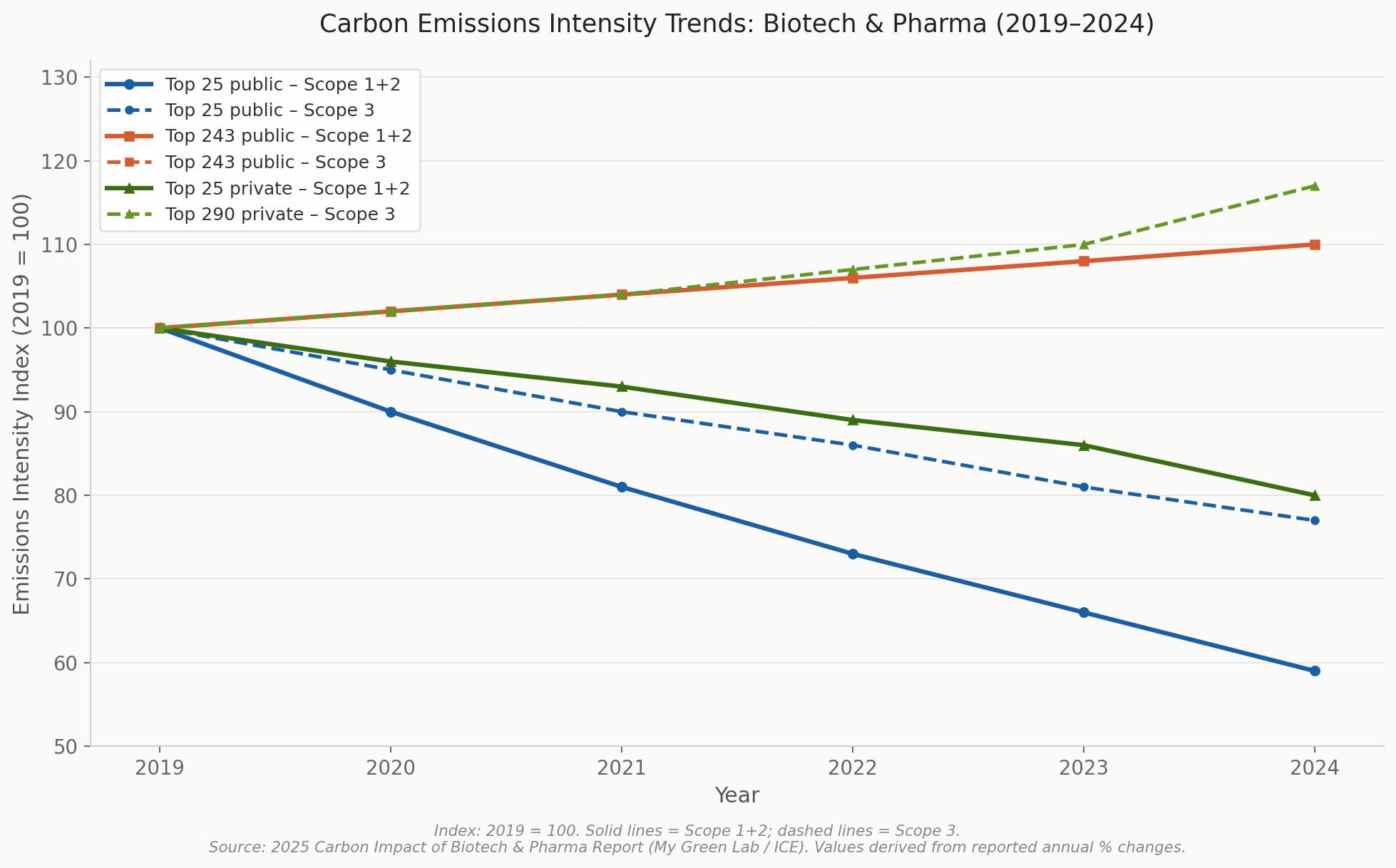
The My Green Lab 2022 report revealed that the total carbon output of public companies in the sector increased by 15%, climbing from 197 million tCO2e in 2020 to 227 million tCO2e in 2021. This upward trajectory continued in subsequent years, with the sector’s carbon impact increasing from 3.9% of global emissions in 2021 to 5% in 2022. The most recent report further corroborates this trend, indicating a 2% increase in absolute emissions from 2023 to 2024.
Several factors contribute to this disconcerting trend. The rapid scale-up of production, driven by increasing global demand for medicines, new drug discoveries, and the expansion into new markets, often outpaces the effectiveness of individual sustainability initiatives. For example, Novo Nordisk reported a 19% increase in total emissions between 2024 and 2025. This rise was directly attributed to the acquisition of new production sites and a corresponding increase in energy use, underscoring how business growth, while essential for public health, can inadvertently inflate environmental footprints.
A critical aspect of understanding these emissions lies in the industry’s categorization of its carbon output according to the Greenhouse Gas (GHG) Protocol. This framework divides emissions into three scopes:
- Scope 1 emissions: Direct emissions from sources owned or controlled by the company (e.g., fuel combustion in company vehicles or facilities).
- Scope 2 emissions: Indirect emissions from the generation of purchased electricity, heat, or steam consumed by the company.
- Scope 3 emissions: All other indirect emissions that occur in a company’s value chain, both upstream and downstream. These are not directly controlled by the company but are a consequence of its activities.
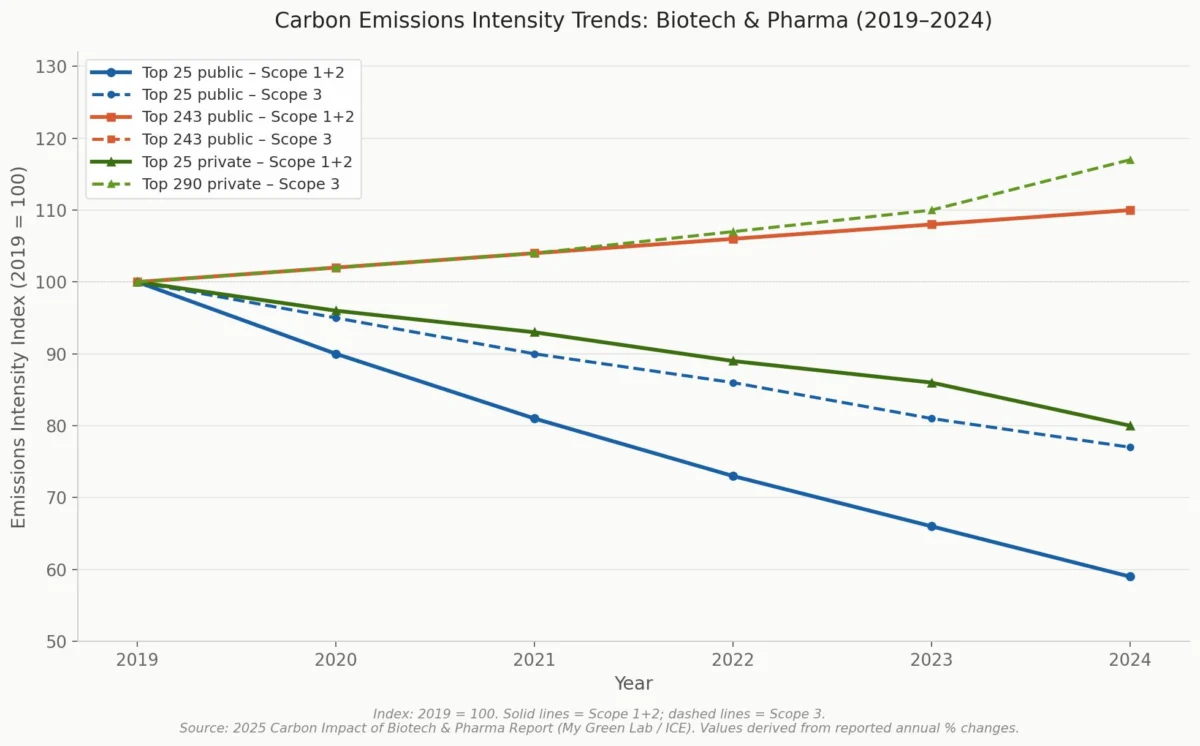
While many of the top 25 public pharmaceutical companies have demonstrated success in reducing their Scope 1 and 2 emissions through operational efficiencies, renewable energy adoption, and cleaner technologies, the overall carbon intensity of the industry continues to rise. This is largely attributable to two major factors: the collective emissions from smaller and private firms, which may have fewer resources or less stringent sustainability mandates, and the overwhelming impact of Scope 3 emissions.
The Enigma of Scope 3: The Untamed Majority
Scope 3 emissions represent the vast majority of the pharmaceutical industry’s total carbon footprint, accounting for an estimated 82%. This category is incredibly broad and complex, encompassing a wide array of activities across the entire value chain. Key sources of Scope 3 emissions include:
- Purchased goods and services: This includes the emissions generated during the production of raw materials, active pharmaceutical ingredients (APIs), excipients, and other components sourced from suppliers. For pharmaceutical companies, emissions from API synthesis, raw material sourcing, and outsourced manufacturing often constitute the largest single source of carbon emissions within this category.
- Capital goods: Emissions associated with the construction and maintenance of facilities, laboratories, and manufacturing plants.
- Upstream and downstream transportation and distribution: Emissions from logistics, including the shipping of raw materials to manufacturing sites and finished products to markets, often globally.
- Use of sold products: Emissions related to the energy consumption or waste generation during the use phase of a pharmaceutical product, though this is often less significant than other Scope 3 categories for drugs themselves.
- End-of-life treatment of sold products: Emissions from the disposal or recycling of pharmaceutical products and their packaging.
The inherent difficulty in managing Scope 3 emissions stems from their occurrence outside the direct operational control of pharmaceutical companies. This means that even a company with exemplary Scope 1 and 2 performance can see its overall footprint increase due to activities undertaken by its suppliers, distributors, or even its customers. The data clearly illustrates this challenge: AstraZeneca, despite decreasing its operational (Scope 1 and 2) emissions, saw its absolute Scope 3 emissions grow by 24% from its 2019 baseline. Similarly, Eli Lilly’s Scope 3 emissions rose significantly, from approximately 2.99 million metric tons in 2021 to 5.14 million metric tons in 2023, reflecting the pervasive nature of these indirect impacts.
Strategies for Taming Scope 3 Emissions and Broader Implications
Addressing Scope 3 emissions requires innovative and collaborative approaches that extend beyond a company’s direct operational boundaries. Pharmaceutical companies can implement several strategies to exert influence and drive change throughout their value chains:
- Supplier Engagement and Incentivization: Companies can require or incentivize their suppliers to set and achieve their own sustainability targets, transition to renewable energy sources, and adopt greener manufacturing processes. This could involve preferred supplier status, technical support, or even contractual obligations.
- Green Chemistry and Circular Economy Principles: Investing in and promoting green chemistry principles, which focus on designing products and processes that minimize the use and generation of hazardous substances, can significantly reduce waste and energy consumption during API synthesis and manufacturing. Embracing circular economy principles, such as designing for recyclability and reducing reliance on virgin materials, can also reduce upstream emissions.
- Logistics Optimization: Shifting from high-emission air freight to lower-emission alternatives like sea or road freight for product transportation can make a substantial dent in logistics-related Scope 3 emissions. Optimizing supply chain routes and warehousing can also contribute.
- Lifecycle Assessment (LCA): Conducting comprehensive LCAs for products can help identify emission hotspots across the entire product lifecycle, from raw material extraction to disposal, enabling targeted intervention.
- Collaboration and Industry Standards: Working with industry consortia, NGOs, and regulatory bodies to develop common standards, share best practices, and collectively address systemic supply chain issues can amplify impact.
The implications of the pharmaceutical industry’s environmental footprint are far-reaching. Ecologically, it contributes to biodiversity loss, water pollution, and soil degradation, threatening ecosystem services vital for human health. From a public health perspective, the rise of antibiotic resistance due to pharmaceutical residues poses an existential threat, while the long-term effects of other drug residues remain a concern. Economically, companies that fail to adequately address their environmental impact may face increased regulatory scrutiny, reputational damage, higher operational costs (e.g., carbon taxes), and limited access to capital from environmentally conscious investors.
Ultimately, the journey towards true sustainability in the pharmaceutical sector demands a fundamental shift in mindset and operational practices. While individual company commitments to reduce direct emissions are vital, the industry’s ability to make a substantial and lasting impact hinges on its capacity to effectively manage and mitigate its extensive Scope 3 emissions. This requires unprecedented collaboration, technological innovation, and a steadfast commitment to integrating environmental stewardship into every facet of drug discovery, development, manufacturing, and distribution. The health of the planet and its inhabitants depends on it.