The global healthcare industry, a cornerstone of human well-being and longevity, is simultaneously a significant contributor to the planet’s environmental challenges. It is estimated that the sector accounts for approximately 4.4% of total global emissions annually, a figure that underscores its considerable carbon footprint. A substantial portion of this impact, roughly 71%, emanates from the complex and far-reaching healthcare supply chain, within which the pharmaceutical and biotechnology sectors play a particularly prominent role. This dynamic creates a paradox: an industry dedicated to health and life grappling with the environmental consequences of its very operations.
Medicines themselves, from their inception through active pharmaceutical ingredient (API) production, manufacturing, and distribution, contribute an estimated 20% to 55% of healthcare’s overall carbon footprint. This broad range highlights the varying intensities across different drug types and production processes, but consistently points to the substantial environmental weight carried by pharmaceutical products. The journey of a drug, from raw material to patient, is inherently resource-intensive, demanding vast quantities of energy, water, and chemicals, and generating considerable waste at multiple stages.
The Resource-Intensive Nature of Pharmaceutical Manufacturing
Pharmaceutical manufacturing stands out as one of the most resource-intensive industrial processes. It is often cited that producing just one kilogram of an active drug can generate anywhere from 25 to 100 kilograms of chemical waste. This staggering ratio underscores the inefficiency inherent in many traditional synthesis routes. A major culprit in this waste generation is the extensive use of solvents, which typically comprise 80% to 90% of the total mass involved in pharmaceutical processes. Solvents are critical for dissolution, reaction media, and purification, yet their volume contributes significantly to the Process Mass Intensity (PMI) – a metric that quantifies the total mass of materials used per unit mass of product. The median PMI in the pharmaceutical industry ranges from 168 to 308, figures that are notably higher than those observed in other chemical sectors, indicating a greater environmental burden per unit of output.
Beyond the immediate manufacturing waste, pharmaceutical residues pose a longer-term environmental challenge. These residues can enter the environment through various pathways: patient excretion after drug metabolism, emissions from manufacturing plants, and the improper disposal of unused or expired medicines. While current exposure levels of pharmaceuticals in drinking water are generally considered low risk to human health, scientific concerns persist regarding their potential long-term ecological effects on aquatic life, soil ecosystems, and biodiversity. A particularly pressing issue is the presence of antibiotic residues in manufacturing effluents. These residues can promote antibiotic resistance in bacteria, accelerating the development of "superbugs" – a global health crisis that threatens the efficacy of current treatments for infectious diseases.
A Growing Imperative: Top Companies Set Sustainability Targets
In recognition of these profound environmental impacts, many leading pharmaceutical companies have voluntarily initiated robust sustainability goals and initiatives. This shift reflects a growing awareness of corporate social responsibility, increasing pressure from investors focused on Environmental, Social, and Governance (ESG) criteria, and a proactive approach to potential future regulations. Giants like AstraZeneca, Johnson & Johnson, and Novartis have publicly committed to achieving carbon neutrality, with targets generally set for the 2040s. These commitments often encompass reductions across their operations, supply chains, and product lifecycles.
The industry’s collective response appears to be gaining momentum. According to the My Green Lab 2025 Carbon Impact Report, there was a notable surge in sector alignment with 1.5-degree Celsius trajectories – the ambitious global warming limit set by the Paris Agreement. This alignment increased from 30% in 2024 to an encouraging 52% in 2025, indicating a broader adoption of science-based targets aimed at mitigating climate change.
Individual company reports illustrate concrete progress in certain areas. AstraZeneca, for instance, reported being on track to achieve a remarkable 98% reduction in operational emissions by 2026. Their 2025 data also showed tangible improvements in resource efficiency, with a 23% reduction in water use and a 13% decrease in waste production. Similarly, Sanofi has declared its ambition to be carbon neutral by 2030, reporting a 47% reduction in emissions compared to its 2019 baseline as of 2024. Sanofi’s commitment extends to ensuring 100% of its manufacturing sites implement robust monitoring and management plans to control the release of pharmaceuticals into the environment, addressing the critical issue of ecological contamination.
The Paradox of Growth: When Production Outpaces Progress
Despite these commendable individual efforts and the overall increase in sustainability alignment, the pharmaceutical industry faces a significant hurdle: the relentless demand for new and existing medicines often necessitates a rapid scale-up of production. This growth frequently outpaces the gains made by sustainability initiatives, leading to an overall increase in emissions. The industry’s expansion, driven by global health needs, demographic shifts, and the development of breakthrough therapies, presents a complex challenge to its environmental commitments.
A stark illustration of this paradox comes from Novo Nordisk, which reported a 19% increase in total emissions between 2024 and 2025. This rise was attributed primarily to the acquisition of new production sites and a subsequent increase in energy use, reflecting the company’s efforts to meet soaring demand for its products. While expanding capacity is vital for patient access, it simultaneously escalates the environmental footprint.
This trend is not isolated. While AstraZeneca achieved significant reductions in its operational (Scope 1 and 2) emissions, its absolute Scope 3 emissions grew by 24% from its 2019 baseline. Similarly, Eli Lilly’s Scope 3 emissions saw a substantial rise, climbing from approximately 2.99 million metric tons in 2021 to 5.14 million metric tons in 2023. These figures highlight a critical distinction in emission types and the immense challenge posed by indirect emissions.
Understanding the Emissions Landscape: Scopes 1, 2, and 3
To accurately measure and manage carbon output, the industry largely adheres to the GHG Protocol, which categorizes emissions into three scopes:
- Scope 1 Emissions: These are direct emissions from sources owned or controlled by the company, such as emissions from manufacturing facilities, company-owned vehicles, and chemical reactions occurring on-site.
- Scope 2 Emissions: These are indirect emissions from the generation of purchased energy, primarily electricity, consumed by the company.
- Scope 3 Emissions: These are all other indirect emissions that occur in a company’s value chain, both upstream and downstream. They are typically the largest and most complex category to measure and manage.
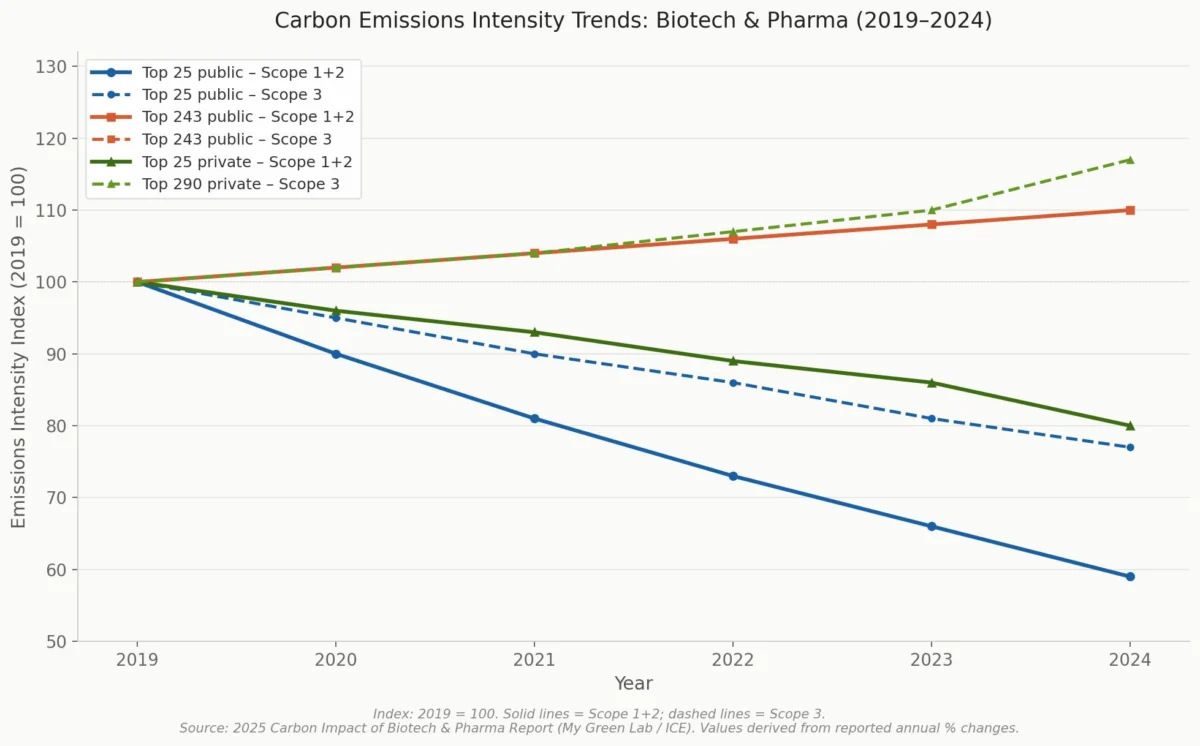
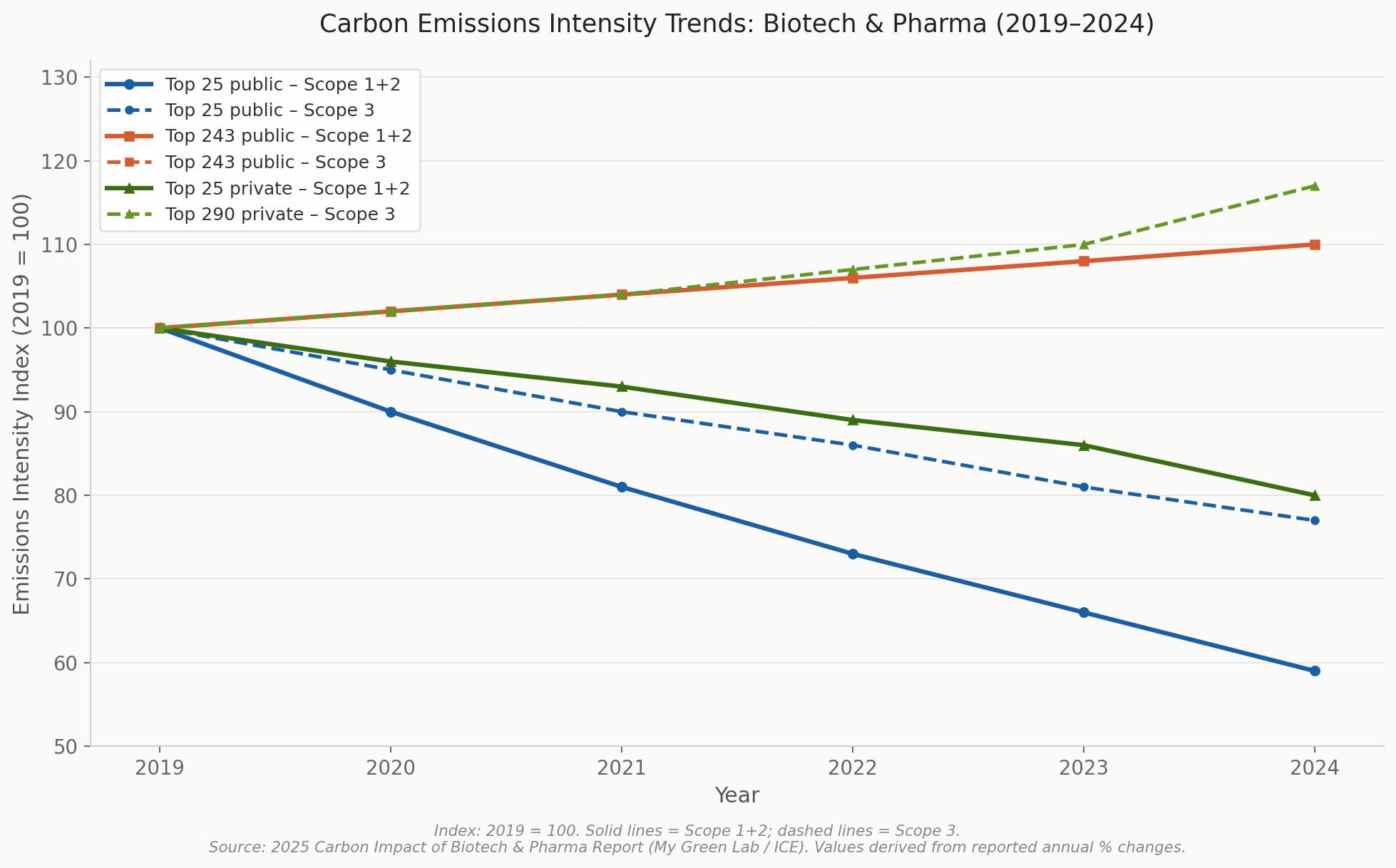
While many top public companies have demonstrated success in reducing their Scope 1 and 2 emissions through investments in renewable energy, energy efficiency, and cleaner on-site operations, the overall carbon intensity of the healthcare sector continues to rise. This increase is largely driven by two factors: the growing contribution of smaller and private firms that may not have the same resources or reporting obligations as industry giants, and, more significantly, the overwhelming challenge of Scope 3 emissions. Scope 3 emissions represent a staggering 82% of the industry’s total carbon footprint, underscoring where the primary battle for decarbonization must be fought.
Navigating the Complexity of Scope 3 Emissions
For pharmaceutical companies, Scope 3 emissions are a vast and multifaceted category. They encompass emissions from purchased goods and services, which notably include the energy-intensive processes of Active Pharmaceutical Ingredient (API) synthesis and raw material sourcing. Capital goods, such as the construction of new facilities and equipment, also fall under this scope. Furthermore, upstream transportation and distribution (logistics), the use of sold products by patients, and the ultimate disposal of products at their end-of-life cycle all contribute to a company’s Scope 3 footprint. Within this complex web, emissions stemming from API synthesis, the sourcing of raw materials, and outsourced manufacturing often represent the largest single sources of carbon emissions for pharmaceutical companies. This is due to the globalized nature of drug production, involving numerous suppliers and contractors across different continents, each with varying environmental standards and energy mixes.
The inherent difficulty in managing Scope 3 emissions lies precisely in their indirect nature: they occur largely outside the direct operational control of the pharmaceutical company. This necessitates a collaborative approach, extending beyond a company’s own four walls and into its entire value chain.
Strategies for Decarbonization: A Path Forward
Addressing the colossal challenge of Scope 3 emissions requires innovative and collaborative strategies. Pharmaceutical companies are exploring and implementing several key approaches:
- Supplier Engagement and Incentivization: Companies can exert significant influence over their supply chain partners. This involves requiring or incentivizing suppliers to adopt their own sustainability targets, transition to renewable energy sources, improve process efficiency, and report their emissions data transparently. This often takes the form of supplier codes of conduct, preferred supplier programs, and joint innovation initiatives.
- Green Chemistry and Process Innovation: Investing in green chemistry principles is crucial. This involves designing chemical products and processes that reduce or eliminate the use and generation of hazardous substances. Innovations in catalysis, solvent selection (moving towards less toxic, renewable, or solvent-free processes), and reaction efficiency can drastically reduce waste and energy consumption in API synthesis and manufacturing.
- Renewable Energy Transition: While often impacting Scope 2, promoting renewable energy adoption throughout the supply chain can significantly reduce Scope 3 emissions from purchased goods and services. This includes supporting suppliers in their transition to solar, wind, or other clean energy sources.
- Logistics Optimization: Re-evaluating transportation strategies can yield substantial emission reductions. Shifting from high-carbon air freight to lower-carbon alternatives like sea or road freight, optimizing delivery routes, and investing in more fuel-efficient fleets are critical steps. The "last mile" delivery, particularly for temperature-sensitive biologics, presents unique challenges but also opportunities for innovation in cold chain logistics.
- Product Lifecycle Management: Designing products for minimal environmental impact from conception to disposal is another avenue. This includes developing more stable formulations to reduce waste from expiry, exploring biodegradable packaging, and supporting take-back programs for unused medicines to prevent environmental contamination.
These strategies, individually and collectively, are essential for making a substantial and meaningful dent in the industry’s overall emissions. They demand a holistic approach, technological innovation, and a commitment to transforming global supply chains.
Broader Implications and the Road Ahead
The pharmaceutical industry stands at a critical juncture. Its indispensable role in global health is undeniable, yet the environmental cost of its operations is becoming increasingly unsustainable. The current trajectory, where ambitious sustainability goals are set but overall emissions continue to rise, signals an urgent need for accelerated action and deeper systemic change.
The implications of continued emission growth are far-reaching. They include exacerbating climate change impacts, increasing ecological damage from pharmaceutical residues, and potentially undermining the very health outcomes the industry seeks to provide. Moreover, regulatory scrutiny is likely to intensify, with governments and international bodies potentially imposing stricter environmental performance standards and reporting requirements. This could lead to increased operational costs, necessitate significant capital investments in green technologies, and potentially impact market access for companies that fail to adapt.
The path forward requires not only individual corporate responsibility but also industry-wide collaboration, robust regulatory frameworks, and consumer awareness. It necessitates a paradigm shift where environmental sustainability is integrated into every stage of drug discovery, development, manufacturing, and distribution. Balancing the imperative of producing life-saving medicines with the urgent need to protect the planet is arguably one of the most significant challenges facing the pharmaceutical sector in the coming decades. Success in this endeavor will define not only the industry’s legacy but also its continued social license to operate in an increasingly climate-conscious world.