The field of quantum fluid dynamics has reached a significant milestone as researchers from the University of British Columbia (UBC) and the University of Freiburg have successfully demonstrated the ability to control the rotation of molecules inside liquid helium nano-droplets. This achievement, published in the prestigious journal Physical Review Letters, marks the first time scientists have achieved precise manipulation of molecular rotation within a superfluid environment. By utilizing a sophisticated optical centrifuge technique, the team has provided a new methodology for probing the fundamental properties of superfluids—substances that exhibit zero viscosity and flow without the loss of kinetic energy. The study offers a transformative "control knob" for physicists seeking to understand the microscopic interactions between matter and quantum solvents, potentially paving the way for advancements in quantum computing and material science.
The Nature of Superfluidity and the Solvation Challenge
To appreciate the significance of this breakthrough, one must first understand the unique properties of superfluids. When certain isotopes, most notably helium-4, are cooled to temperatures near absolute zero (approximately 2.17 Kelvin, known as the Lambda point), they undergo a phase transition into a state of matter characterized by a complete lack of internal friction. In this state, the liquid can flow through microscopic capillaries without resistance, climb the walls of containers, and maintain persistent currents indefinitely.
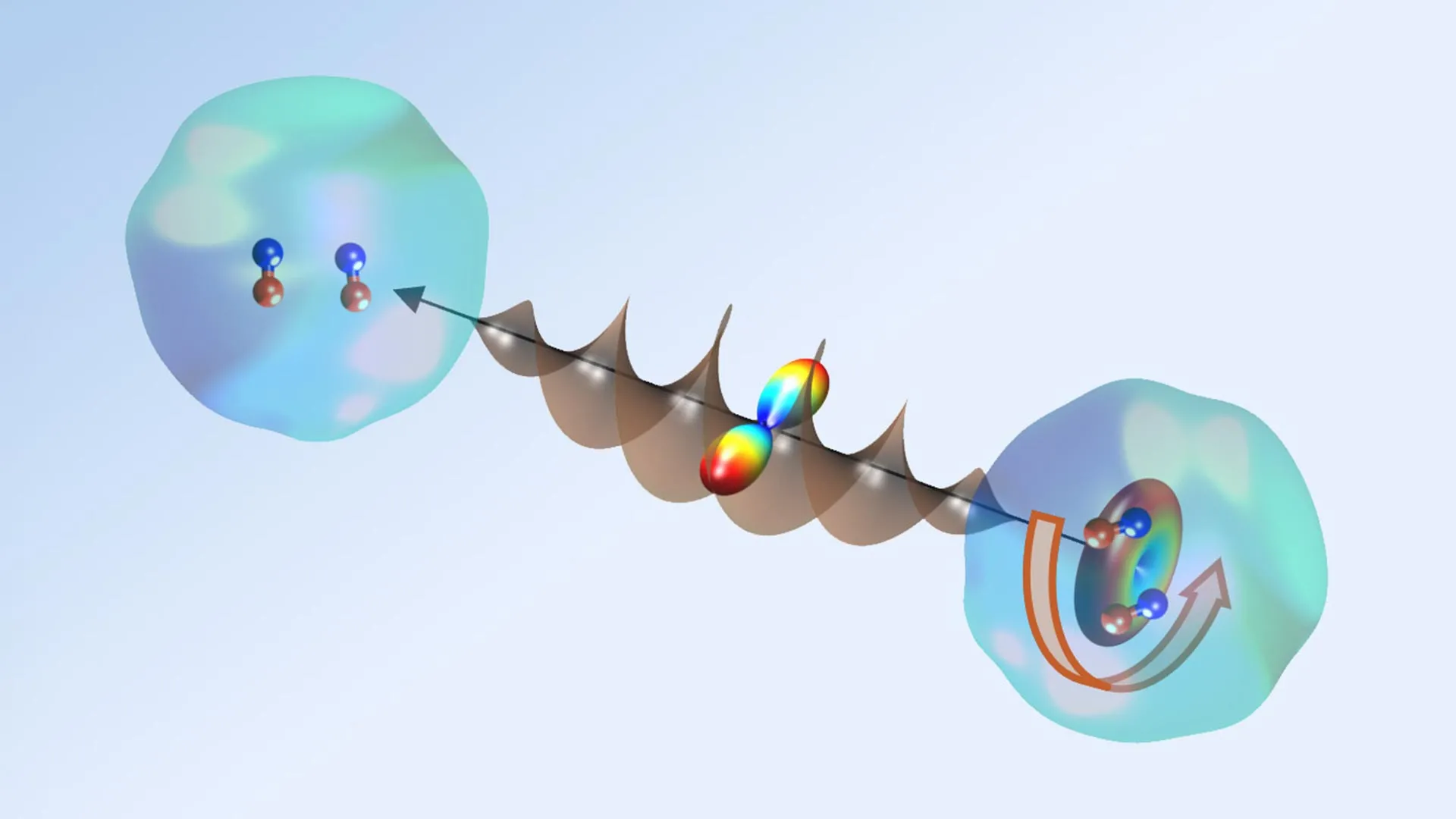
While superfluids are frictionless in a macroscopic sense, they still interact with microscopic particles dissolved within them. In traditional chemistry and physics, when a molecule is dissolved in a solvent, it interacts with the surrounding atoms. Dr. Valery Milner, an associate professor at UBC’s Department of Physics and Astronomy and a lead author of the study, describes this phenomenon using the analogy of a "snowball." As a molecule rotates or moves through a fluid, it effectively "collects" surrounding atoms, increasing its effective mass and moment of inertia. This makes the molecule heavier and significantly more difficult to manipulate than it would be in a vacuum or a gaseous state.
Until now, observing and controlling this "snowball" effect in a superfluid has been a primary challenge. While the superfluid lacks viscosity, the quantum mechanical coupling between the rotating molecule and the helium atoms creates a complex environment where the rules of classical rotation no longer apply. The UBC-led team sought to break through this barrier by finding a way to "spin up" these molecules despite the drag of the surrounding quantum medium.
The Evolution of the Optical Centrifuge
The primary tool used in this experiment is the optical centrifuge, a device that uses ultra-short, high-intensity laser pulses to spin molecules to extreme rotational speeds. Traditional optical centrifuges work by creating a rotating electric field. When a gas-phase molecule is exposed to this field, its electric dipole aligns with the field, and as the field’s rotation frequency increases—or "chirps"—the molecule is dragged along, reaching rotational frequencies in the terahertz range.
However, applying this technique to molecules submerged in a liquid, even a superfluid like liquid helium, proved difficult. The dense environment of the liquid helium nano-droplets usually dampens the rotation or causes the molecule to decouple from the laser field before significant speeds can be reached.
The breakthrough occurred when the research team modified the pulse sequence of the laser. Instead of a continuous acceleration, they introduced a brief, calculated delay between laser pulses. This created a specific type of interference that resulted in a slower, more stable, and highly controlled rotation rate. This modification significantly enhanced the "spinnability" of the molecules within the droplets, allowing them to overcome the initial resistance of the surrounding helium atoms and achieve a steady state of rotation that could be measured and adjusted.
Experimental Setup and Chronology
The research was a collaborative effort involving high-precision experimental physics and advanced molecular spectroscopy. The timeline of the development began with the theoretical framework for "slow" optical centrifuges, which was then tested in the laboratory settings at UBC and the University of Freiburg.
- Preparation of Helium Nano-droplets: The experiment began by creating a beam of liquid helium nano-droplets. These droplets are formed by expanding high-pressure helium gas into a vacuum through a cryogenic nozzle. The resulting droplets typically contain several thousand helium atoms and are cooled to a temperature of 0.37 Kelvin through evaporative cooling.
- Doping the Droplets: The droplets were then "doped" with nitric oxide (NO) dimers. Nitric oxide was chosen because of its specific molecular structure and its responsiveness to optical fields.
- Application of the Optical Centrifuge: The doped droplets were intersected by the modified optical centrifuge laser. By adjusting the delay between the pulses, the researchers could dictate the final rotational frequency of the nitric oxide molecules.
- Detection and Measurement: The rotation was detected using a technique known as ion imaging. By ionizing the molecules after they had been spun, the researchers could observe the spatial distribution of the fragments, which directly correlates to the molecule’s rotational state and orientation.
This structured approach allowed the team to verify that they were not only spinning the molecules but doing so with a degree of precision that allowed for the direct observation of how the superfluid environment responded to varying rotational speeds.
Supporting Data and Technical Analysis
The data gathered during the experiment provided critical insights into the "effective mass" of molecules in a quantum solvent. The researchers observed that at lower rotational frequencies, the molecules behaved as if they were significantly heavier than their vacuum-state mass. This confirmed the "snowball" theory, where a certain number of helium atoms become "entrained" with the molecule, rotating in unison with it.
Quantitative analysis showed that the "spinnability" of the molecule—the ease with which it could be accelerated—was highly dependent on the timing of the laser pulses. By fine-tuning the centrifuge to a "slow-spin" mode, the team was able to maintain the coupling between the laser and the molecule for a longer duration than previously possible.
The researchers utilized "chirped" pulses, where the frequency of the laser light changes over time. In a standard centrifuge, the chirp is very fast. In this new iteration, the interference between two delayed pulses creates a "beating" effect that effectively slows down the rotation of the laser’s polarization, matching the slower response time of a molecule encumbered by a superfluid shell.
Reactions from the Scientific Community
While the UBC team led the experimental charge, the broader physics community has recognized the work as a vital step forward. Dr. Milner’s assertion that this provides a "new control knob" for quantum matter research has resonated with specialists in Bose-Einstein Condensates (BECs) and condensed matter physics.
"This work is a elegant marriage of ultra-fast optics and low-temperature physics," noted one independent researcher in the field of molecular spectroscopy. "For years, we have used helium droplets as a ‘nanolaboratory’ to study molecules in isolation, but we were always limited by our inability to actively manipulate their motion once they were inside. This changes the game."
The collaboration between the University of British Columbia and the University of Freiburg was also highlighted as a model for international scientific cooperation, combining UBC’s expertise in optical manipulation with Freiburg’s long-standing history in the study of clusters and droplets.
Broader Impact and Future Directions
The implications of this research extend far beyond the study of liquid helium. One of the most anticipated applications of this technique is the investigation of the limits of superfluidity itself.
The UBC team plans to use their new "control knob" to push molecules to increasingly higher rotational frequencies. Theoretical models suggest that there is a "critical frequency" at which the superfluidity of the helium surrounding the molecule will break down. At this point, the frictionless flow should cease, and the molecule should experience a sudden increase in resistance or a change in its rotational dynamics.
"It is not well understood how and when this transition will happen at such a tiny atomic scale," says Dr. Milner. Identifying this transition point would provide a definitive answer to one of the most persistent questions in quantum mechanics: how many atoms does it take to form a superfluid, and at what point do the macroscopic laws of superfluidity fail at the microscopic level?
Furthermore, the ability to control molecular rotation in a quantum environment has potential applications in:
- Quantum Information Science: Rotating molecules can serve as "qubits" or sensors. Controlling their rotation in a decoherence-free environment like a superfluid could lead to more stable quantum systems.
- Astrochemistry: Many molecules in interstellar space exist in extremely cold environments. Studying them in helium droplets mimics these conditions, and the ability to control their rotation allows for better interpretation of telescopic data.
- Precision Measurement: The technique allows for the study of weak intermolecular forces that are usually masked by thermal noise in warmer environments.
Conclusion
The successful demonstration of controlled molecular rotation in liquid helium nano-droplets represents a landmark achievement for the University of British Columbia and the University of Freiburg. By overcoming the "snowball effect" through innovative laser pulse manipulation, the researchers have opened a new window into the quantum world.
As the team moves forward to explore the breakdown of superfluidity at high frequencies, the scientific community anticipates a wealth of new data that will refine our understanding of phase transitions and quantum coherence. The research, supported by the Natural Sciences and Engineering Research Council of Canada (NSERC), the Canada Foundation for Innovation (CFI), and the BC Knowledge Development Fund, stands as a testament to the power of precision optics in unlocking the secrets of the coldest, most mysterious states of matter.