The global industrial landscape remains heavily reliant on the diesel engine, a mechanical workhorse that powers the backbone of international trade, agriculture, and power generation. From the heavy-duty freight trucks traversing transcontinental highways to the massive generators providing backup power for hospitals and data centers, the compression-ignition engine is prized for its high torque, durability, and superior thermal efficiency. However, the environmental toll of diesel combustion has long been a subject of intense regulatory scrutiny and public health concern. Addressing this challenge, a comprehensive research review conducted by engineering experts at the Federal University of Technology Owerri (FUTO) in Nigeria suggests that a remarkably accessible solution—mixing water into diesel fuel—could serve as a transformative tool in the quest for cleaner air.
The study, led by Dr. Chukwuemeka Fortunatus Nnadozie and Professor Emeka Emmanuel Oguzie, meticulously analyzed decades of global data regarding Water-in-Diesel Emulsion (WiDE) technology. Their findings, published in a recent academic review, indicate that by blending small, precise amounts of water with standard diesel fuel using stabilizing agents, nitrogen oxide (NOx) emissions can be slashed by up to 67%, while particulate matter (PM) can be reduced by as much as 68%. This breakthrough offers a potential "bridge technology" that could allow existing diesel infrastructure to operate with a significantly lower environmental footprint without the need for prohibitively expensive engine redesigns or the immediate abandonment of internal combustion technology.
The Environmental and Public Health Imperative
To understand the significance of the Owerri findings, one must first consider the scale of the diesel pollution problem. Unlike gasoline engines, diesel engines operate at high pressures and temperatures, which facilitates the reaction of atmospheric nitrogen and oxygen to form nitrogen oxides. NOx is a primary precursor to ground-level ozone and smog, which are linked to chronic respiratory conditions such as asthma and bronchitis. Furthermore, diesel combustion releases particulate matter—microscopic carbon-based soot particles that can penetrate deep into the human lungs and enter the bloodstream, posing risks for cardiovascular disease and lung cancer.
For decades, the automotive and industrial sectors have relied on "after-treatment" technologies to manage these emissions. Systems such as Selective Catalytic Reduction (SCR), which uses urea-based Diesel Exhaust Fluid (DEF), and Diesel Particulate Filters (DPF) have become standard in developed markets. However, these systems add thousands of dollars to the cost of a vehicle, require regular maintenance, and are often prone to failure or tampering in regions where regulatory oversight is less stringent. The Nigerian research team emphasizes that WiDE technology addresses the pollution at the point of combustion, rather than attempting to clean the exhaust after it has already been formed, offering a more fundamental and cost-effective intervention.
The Mechanics of Micro-Explosions and Combustion Optimization
The concept of mixing water with fuel initially appears counterintuitive to mechanical engineers, as water is traditionally viewed as a contaminant that can cause corrosion and fuel system failure. The innovation of WiDE technology lies in the "emulsification" process. Rather than having free-standing water in the fuel tank, the water is dispersed into billions of microscopic droplets, each encapsulated within the diesel fuel.
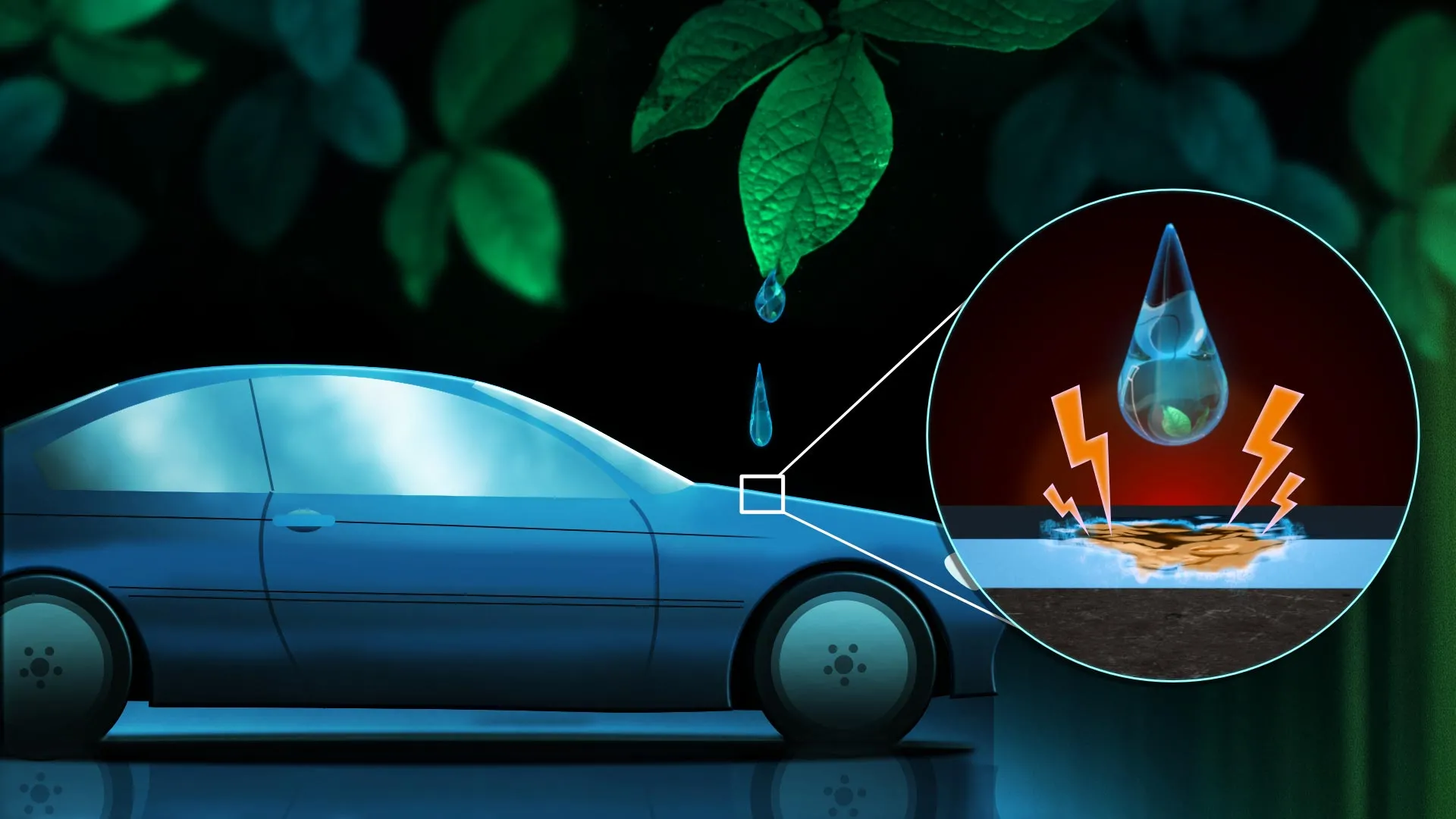
When this emulsion is injected into the high-temperature environment of the engine’s combustion chamber, the water droplets—which have a lower boiling point than diesel—reach their boiling phase almost instantaneously. This results in a phenomenon known as "micro-explosions." As the water turns to steam, it expands rapidly, shattering the surrounding diesel fuel into even finer droplets. This secondary atomization creates a significantly larger surface area for the fuel to interact with oxygen, leading to more complete and efficient combustion.
The presence of water also serves as a thermal buffer. The evaporation of the water droplets absorbs heat, effectively lowering the peak combustion temperature. Since NOx formation is highly temperature-dependent, this cooling effect is the primary mechanism behind the dramatic 67% reduction in nitrogen oxide emissions reported in the study. Simultaneously, the improved atomization from micro-explosions ensures that carbon particles are burned more thoroughly, which accounts for the massive reduction in soot and particulate matter.
Historical Context and the Evolution of Emulsified Fuels
While the FUTO study provides a modern, data-driven validation of WiDE, the concept of adding water to fuel has a long and storied history in mechanical engineering. During World War II, water injection was used in high-performance aircraft engines to prevent "knocking" and allow for higher power outputs during combat maneuvers. In the late 20th century, various experiments were conducted to apply these principles to commercial diesel engines, but early attempts were often stymied by the instability of the fuel mixtures.
The primary hurdle has always been the natural tendency of water and oil to separate. Without the right chemical intervention, an emulsion would break down within minutes, leading to slugs of pure water entering the fuel injectors—a scenario that can cause catastrophic engine damage. The chronological progression of this technology has moved from simple mechanical stirring to the sophisticated use of "surfactants" or emulsifiers. These are chemical compounds that possess both a water-loving (hydrophilic) head and an oil-loving (lipophilic) tail, allowing them to bridge the gap between the two substances and create a stable, homogenous fluid.
The Owerri researchers highlighted that the most significant recent advancement in this field is the development of surfactant packages that can maintain fuel stability for up to 60 days. This duration is critical for the commercial viability of the technology, as it ensures the fuel remains usable throughout the typical logistics and storage cycle, from the refinery or blending station to the end-user’s fuel tank.
Comparative Data and Efficiency Gains
The FUTO review synthesized data from various experimental setups, including single-cylinder test engines and multi-cylinder heavy-duty power plants. A consistent theme across the data was that WiDE technology does not merely reduce pollution; it can also improve "brake thermal efficiency" (BTE).
Brake thermal efficiency is a metric that measures how much of the chemical energy in the fuel is converted into actual mechanical work. In many of the reviewed studies, the use of water-in-diesel emulsions led to a noticeable increase in BTE. This is attributed to the more uniform air-fuel mixing caused by the micro-explosions. When fuel burns more completely, the engine extracts more energy from every drop, potentially offsetting the fact that water itself carries no caloric value.
Data points from the review include:
- NOx Reductions: Range from 30% to 67% depending on water content (typically 5% to 15% water).
- Particulate Matter Reductions: Range from 25% to 68%.
- Fuel Consumption: While the volume of liquid consumed may increase slightly due to the water content, the actual consumption of the diesel portion often stays neutral or improves due to better combustion efficiency.
- Stability: Modern formulations using non-ionic surfactants showed the highest stability and least impact on engine components.
Strategic Implications for Developing and Developed Nations
The implications of this research are particularly profound for developing economies like Nigeria, where diesel is a primary source of energy for both transport and decentralized power. In many parts of the world, the electrical grid is unreliable, forcing businesses and homeowners to rely on diesel generators. These generators often lack the sophisticated emissions controls found in modern European or American trucks, leading to poor air quality in urban centers.
Dr. Nnadozie noted that because WiDE technology is a "drop-in" solution that does not require engine modifications, it provides an immediate path toward meeting environmental standards in regions where the wholesale replacement of the engine fleet is economically unfeasible. For developed nations, the technology could serve as a secondary layer of emission reduction, working in tandem with existing SCR and DPF systems to reach the ultra-low emission targets required by future "Euro 7" or similar regulatory frameworks.
Industry Reactions and Potential Challenges
While the scientific community has reacted positively to the FUTO review, the industrial implementation of WiDE faces several hurdles. Logistics experts suggest that the widespread adoption of emulsified fuels would require a localized blending infrastructure. Since the fuel has a shelf life of roughly two months, it cannot be stored indefinitely in strategic reserves like pure diesel.
Engine manufacturers (Original Equipment Manufacturers or OEMs) are also expected to be cautious. There are concerns regarding the long-term effects of water vapor on cylinder walls and valve seats. While the FUTO researchers pointed out that the water is turned to steam and expelled, the potential for increased corrosion or "pitting" over hundreds of thousands of miles remains a topic for future longitudinal studies.
"The chemistry must be perfect," says one industry analyst. "If the surfactant fails and the water separates in the high-pressure common rail of a modern diesel engine, the repair costs could be astronomical. This is why the Owerri research emphasizes the critical role of surfactant selection."
Future Outlook: A Hybrid Energy Strategy
The researchers at the Federal University of Technology Owerri do not view Water-in-Diesel Emulsion as a "silver bullet" that will replace the transition to electric vehicles (EVs) or hydrogen fuel cells. Instead, they frame it as a pragmatic tool for the "here and now."
As the world navigates a complex energy transition, the reality is that heavy-duty shipping, long-haul trucking, and industrial mining will likely rely on diesel for decades to come due to the high energy density required for these operations. The FUTO team suggests that the next phase of research should focus on "tri-fuel" blends—combining diesel, water, and biodiesel. Biodiesel, derived from plant oils or waste fats, could further reduce the carbon intensity of the fuel, while the water component manages the NOx and particulate emissions that are sometimes higher in biodiesel combustion.
Professor Emeka Emmanuel Oguzie concluded that the goal is to create a sustainable ecosystem where industrial productivity does not come at the expense of public health. By leveraging the simple, physical properties of water and the sophisticated science of surfactants, the "dirty" reputation of the diesel engine may finally be cleaned, providing a clearer path toward a sustainable energy future. For now, the Owerri study stands as a significant contribution to environmental engineering, proving that sometimes the most effective solutions to modern problems are found in the most basic elements.