


In a significant advancement for the field of condensed matter physics, a multi-institutional research team has identified a novel method for generating and controlling electron motion through the use of chiral phonons, potentially ushering in a new era of energy-efficient computing known as orbitronics. The study, published in the prestigious journal Nature Physics, demonstrates for the first time that orbital angular momentum—the movement of electrons around an atom’s nucleus—can be harnessed in non-magnetic materials like quartz. By utilizing the inherent "twist" in the atomic structure of these materials, researchers have bypassed the long-standing requirement for heavy, expensive, and rare-earth magnetic elements, offering a sustainable path toward the next generation of data storage and processing technologies.
The Evolution of Information Processing: From Spintronics to Orbitronics
For decades, the semiconductor industry has relied on the flow of electrical charge to process information. However, as transistors shrink toward their physical limits, the heat generated by traditional charge-based computing has become a primary bottleneck. This led to the development of spintronics, which utilizes the "spin" or intrinsic magnetism of electrons to carry information. While spintronics is more efficient than charge-based electronics, it often requires specialized magnetic materials and complex interfaces to function.
Orbitronics represents the next logical step in this evolution. Rather than focusing on the spin of the electron, orbitronics focuses on its orbital angular momentum (OAM). OAM refers to the path an electron takes as it orbits the nucleus of an atom. Historically, controlling OAM has been difficult because it typically requires the injection of charge into transition metals like platinum or tantalum—materials that are increasingly classified as "critical" due to supply chain vulnerabilities and high costs.
The discovery that chiral phonons can generate these orbital currents in common materials like quartz changes the fundamental landscape of the field. By removing the necessity for magnets, high-voltage inputs, or rare materials, this new approach provides a simpler and more scalable architecture for future devices.
The Mechanism of Chirality and Atomic Vibration
To understand this breakthrough, one must look at the atomic architecture of solids. In most common materials, atoms are arranged in symmetrical lattice structures where the arrangement looks identical to its mirror image. However, certain materials possess a property known as chirality, or "handedness." Much like a human hand or the threads of a screw, a chiral structure has a distinct twist that cannot be superimposed on its mirror image.
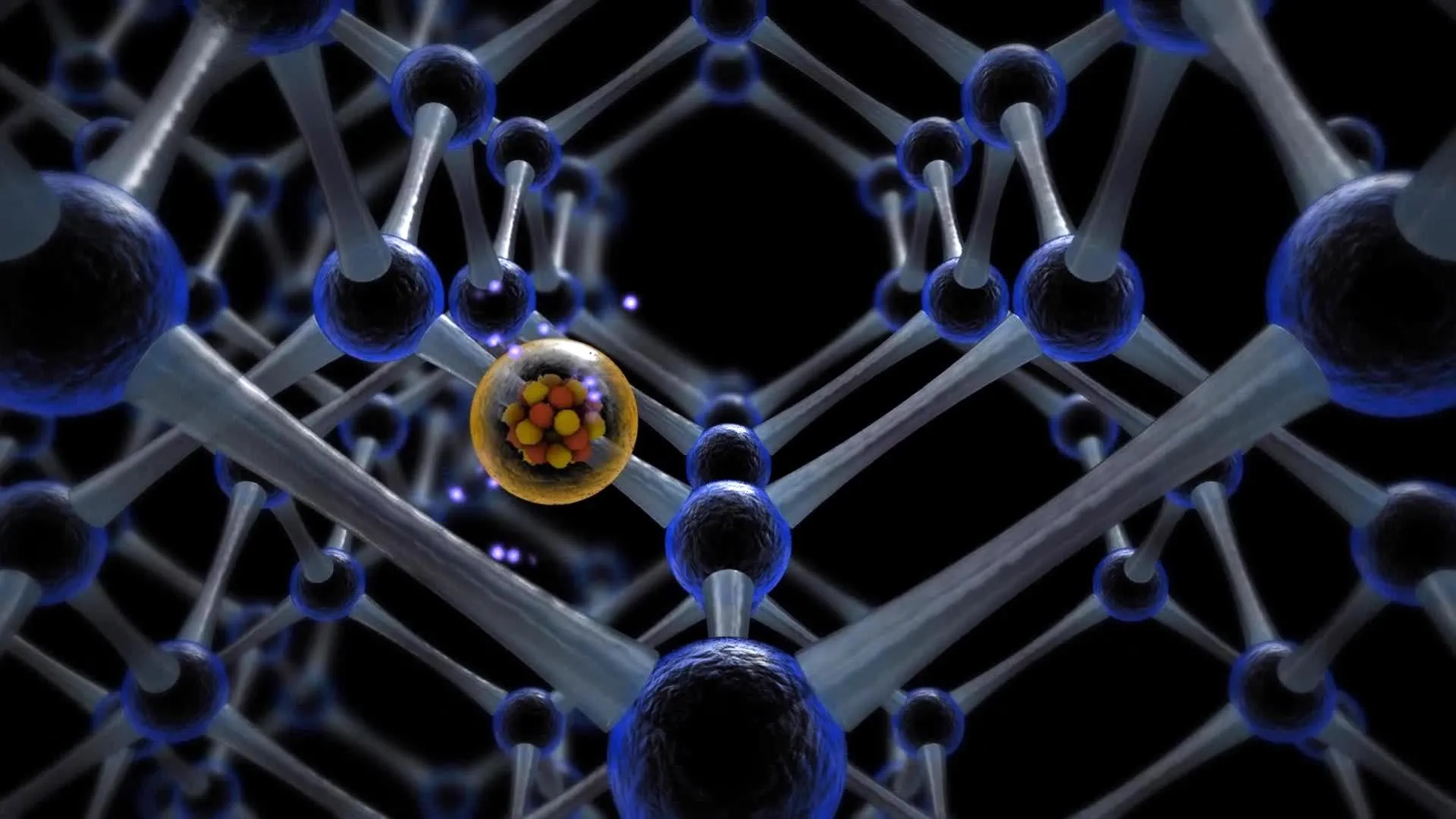
In these chiral materials, such as $alpha$-quartz, the atoms are arranged in a spiral or helical pattern. Atoms in a solid are never truly still; they vibrate constantly due to thermal energy. In symmetrical materials, these vibrations are usually linear or random. In chiral materials, however, the spiral arrangement of the lattice forces the atoms to vibrate in circular or elliptical patterns. These collective vibrations are known as phonons. When these phonons move in a circular fashion, they are referred to as chiral phonons.
The research team discovered that these circular vibrations carry their own angular momentum. Crucially, they found that this momentum can be transferred directly to the electrons within the material. This transfer gives the electrons orbital angular momentum without the need for an external magnetic field or the use of magnetic elements within the crystal structure itself.
Chronology of the Discovery and Experimental Validation
The journey toward this discovery involved several years of theoretical modeling and sophisticated experimental testing across multiple global institutions. The research was spearheaded by North Carolina State University, with critical experimental support provided by the University of Utah and the National High Magnetic Field Laboratory.
The timeline of the research began with the selection of $alpha$-quartz as the primary testing medium. Quartz was chosen not only for its abundance and low cost but because its naturally chiral structure makes it an ideal "laboratory" for studying phonon-electron interactions.
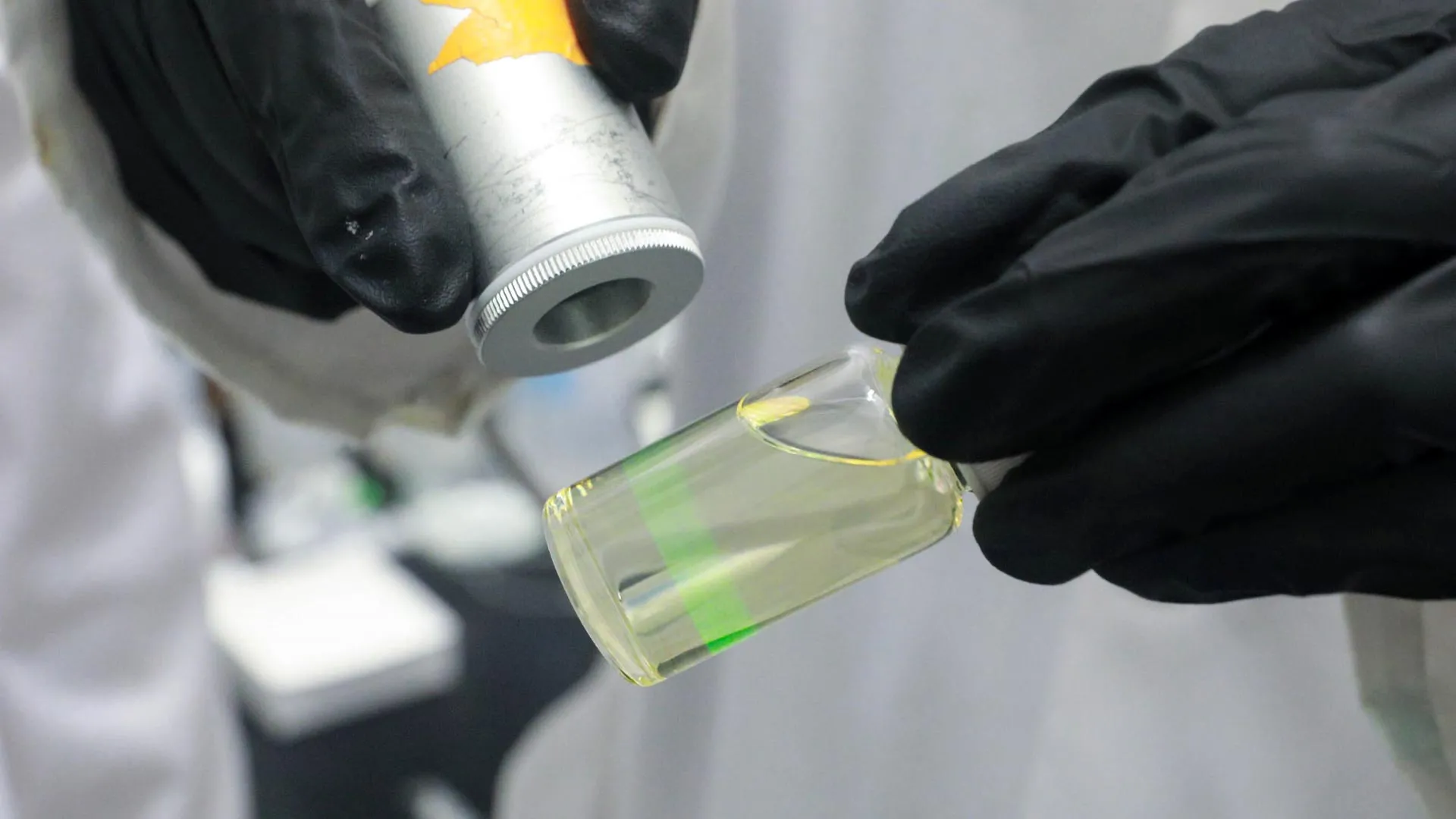
In the second phase of the study, researchers at the University of Utah utilized the specialized facilities at the National High Magnetic Field Laboratory in Florida. Using ultra-precise laser spectroscopy, the team shone light through quartz samples to observe how the reflected light changed in color and wavelength. This technique allowed them to measure the "hidden" magnetic effects generated by the chiral phonons.
The breakthrough moment occurred when the team successfully demonstrated the "Orbital Seebeck Effect." By applying a temporary magnetic field to align the chiral phonons in the quartz, they observed that the phonons began to drive a flow of orbital angular momentum in the electrons. Even after the external magnetic field was removed, the orbital flow persisted, proving that the material’s internal structure could sustain the effect.
To confirm the presence of this hidden orbital current, the scientists layered thin films of tungsten and titanium onto the quartz. These metals acted as detectors, converting the orbital motion of the electrons into a measurable electrical signal, providing the first direct evidence of phonon-driven orbitronics.
Supporting Data: Efficiency and Material Versatility
The data gathered during the study highlights several key advantages of phonon-driven orbitronics over traditional methods. First, the persistence of the orbital current in quartz suggests that information could be stored or moved with significantly lower energy inputs. Traditional spintronic devices often require constant voltage or specific magnetic alignments that can be energy-intensive to maintain.
Furthermore, the study indicates that this effect is not unique to quartz. The researchers noted that the same principles could be applied to other chiral materials, including:
- Tellurium and Selenium: Elemental semiconductors that naturally possess helical chains.
- Hybrid Organic-Inorganic Perovskites: A class of materials already being revolutionized for use in high-efficiency solar cells.
By utilizing these materials, engineers can design devices that are not only faster but also more environmentally friendly. The ability to use "earth-abundant" materials like quartz reduces the geopolitical and environmental costs associated with mining rare transition metals.
Official Responses and Scientific Impact
The lead authors and contributors to the study have expressed optimism that this discovery marks the birth of a new sub-field in physics.
Dali Sun, a physicist at North Carolina State University and co-author, emphasized the economic importance of the find. "The generation of orbital currents traditionally necessitates the injection of charge current into specific transition metals, many of which are now classified as critical materials," Sun noted. "This method allows for the use of cheaper, more abundant materials, which is vital for long-term technological sustainability."
Valy Vardeny of the University of Utah highlighted the revolutionary nature of the mechanism. "We don’t need a magnet. We don’t need a battery. We don’t need to use voltage," Vardeny stated. "Before, it was unimaginable. Now, we’ve essentially invented a new field."
Rikard Bodin, a doctoral candidate at the University of Utah who participated in the measurements, offered a pragmatic view of the discovery’s trajectory. "When we talk about discovering things like the orbital Seebeck effect, I can’t tell you that your TV is going to run on it tomorrow," Bodin said. "But it’s creating more levers that we can pull on to do new things. That’s how technology is—someone discovers a lever, and someone else pushes it forward until it becomes ubiquitous."
Broader Implications for the Future of Technology
The implications of this research extend far beyond the laboratory. As the global demand for data processing continues to skyrocket—driven by the rise of artificial intelligence, cloud computing, and the Internet of Things (IoT)—the energy consumption of data centers has become a major global concern. Orbitronics offers a potential solution to this energy crisis by providing a way to process data with minimal heat dissipation.
Moreover, the simplicity of the "phonon-to-electron" momentum transfer suggests that future devices could be more durable and easier to manufacture. By eliminating the need for complex magnetic layers, manufacturers can simplify the fabrication process of microchips and memory units.
The collaborative nature of this study, involving ten different institutions including the Air Force Research Laboratory and the University of Washington, underscores the interdisciplinary effort required to solve modern computing challenges. As researchers continue to explore the "levers" provided by chiral phonons, the transition from theoretical physics to practical, everyday technology appears increasingly inevitable.
In conclusion, the discovery of the orbital Seebeck effect in non-magnetic chiral materials represents a fundamental shift in how scientists view electron control. By tapping into the natural vibrations of atoms, the research team has unlocked a hidden source of momentum that could power the next century of digital innovation. The move toward sustainable, efficient, and abundant materials in electronics is no longer just a goal—it is a tangible reality being shaped in the quantum world.















Leave a Reply