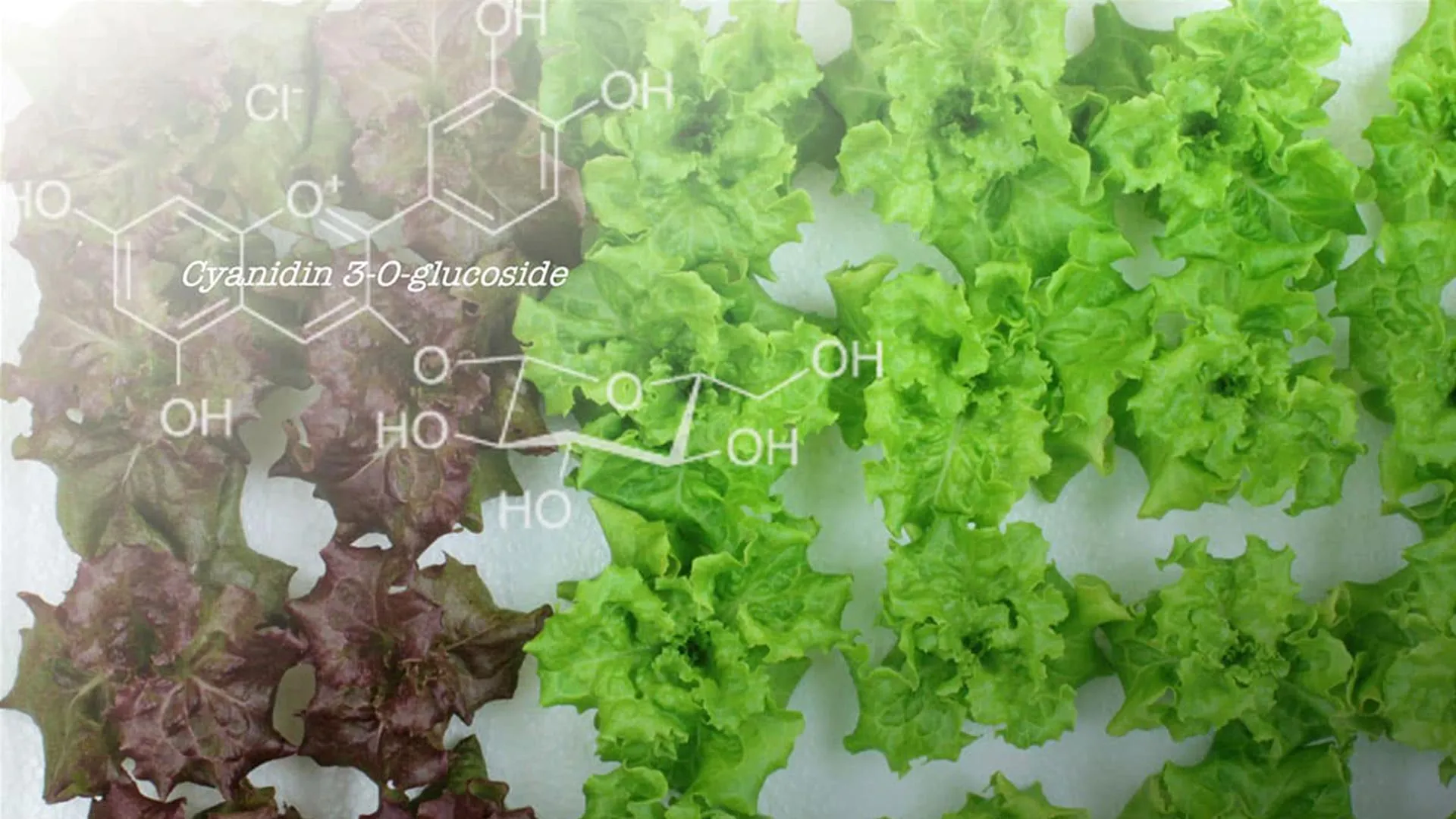
The captivating crimson hue of red leaf lettuce, a visual delight in salads and culinary creations worldwide, is not merely an aesthetic feature but a testament to a complex biochemical symphony orchestrated by nature. This vibrant coloration is primarily attributed to anthocyanins, a powerful class of polyphenol pigments renowned for their potent antioxidant properties. These naturally occurring compounds, found in a wide array of fruits, vegetables, and flowers, have long been the subject of scientific inquiry due to their potential contributions to human health, ranging from cardiovascular protection to anti-inflammatory effects. Now, a groundbreaking study employing advanced genome editing techniques has shed new light on the intricate pathways that govern anthocyanin production in red lettuce, revealing unexpected consequences for other beneficial plant compounds and opening doors to the development of nutritionally enhanced crop varieties.
The journey of anthocyanin synthesis within a plant is a meticulously orchestrated process, initiated by the fundamental amino acid phenylalanine. Through a cascade of enzyme-driven reactions, this precursor molecule embarks on a metabolic pathway that ultimately leads to the formation of anthocyanins. Along this intricate route, a diverse array of flavonoids are generated – a broad and vital category of plant compounds that fulfill numerous roles in plant physiology, from UV protection to attracting pollinators. It is within this fascinating biochemical landscape that researchers have identified a critical juncture, a point where the plant’s resources are channeled towards either anthocyanin production or the accumulation of other valuable flavonoids.
A Targeted Intervention: Disrupting the Red Pigment Pathway
In a significant advancement, a team of researchers has successfully utilized genome editing technology to precisely target and deactivate a key enzyme in the anthocyanin biosynthesis pathway of red lettuce. The enzyme in question, dihydroflavonol 4-reductase (DFR), plays a pivotal role in a crucial step immediately preceding the final formation of anthocyanins. By employing gene editing to "switch off" the gene responsible for producing DFR, the scientists effectively halted the production of the vibrant red pigment that defines this popular lettuce variety. The visual evidence was immediate and striking: the modified lettuce plants, once bursting with their characteristic crimson glow, lost their red coloration, reverting to a more muted, green appearance.
This targeted intervention, however, yielded more than just a change in visual appeal. Subsequent detailed analysis of the modified lettuce plants revealed a fascinating metabolic shift. While anthocyanin production was effectively silenced, the levels of several other important flavonoids within the plant saw a significant increase. Among these accumulating compounds was quercetin, another well-studied flavonoid known for its antioxidant and anti-inflammatory benefits. This observation strongly suggests that by blocking the pathway leading to anthocyanin formation, the plant’s biochemical machinery was rerouted, diverting its resources and metabolic activity towards the enhanced synthesis and accumulation of these alternative flavonoid compounds. This discovery underscores the interconnectedness of plant metabolic pathways and the potential for subtle genetic modifications to have profound effects on the overall biochemical profile of a plant.
No Compromise on Growth: A Promising Outlook for Crop Development
Crucially, despite the dramatic alteration in pigment composition and the significant shift in flavonoid profiles, the modified lettuce plants exhibited no discernible negative impact on their growth and development. This finding is of paramount importance for the agricultural sector. It suggests that it is indeed possible to manipulate the balance of flavonoids within lettuce by influencing the accumulation of precursor compounds and other beneficial molecules, rather than solely relying on the production of anthocyanins, without compromising the plant’s overall health, vigor, and yield. This opens up exciting possibilities for developing lettuce varieties that are not only aesthetically appealing but also possess enhanced nutritional profiles, offering consumers a greater intake of beneficial antioxidants and other phytochemicals.
While direct comparative studies between these newly engineered plants and conventional green lettuce varieties are still in their nascent stages, the existing knowledge base regarding red lettuce provides valuable context. Red lettuce is already recognized for its inherently high polyphenol content, a characteristic that contributes to its perceived health benefits. The strategy employed in this study, which focuses on redirecting metabolic pathways, could therefore serve as a powerful tool for developing specialized lettuce varieties with precisely tailored functional components. Imagine lettuce cultivars optimized to produce higher levels of specific flavonoids, each offering unique health advantages, or varieties engineered to deliver a broader spectrum of antioxidants. This level of customization could revolutionize how we approach vegetable cultivation, moving beyond basic nutritional content to actively designing crops with targeted health benefits.
Harnessing the Power of Controlled Environments: The Role of Plant Factories
The researchers also highlighted an important consideration: the inherent sensitivity of flavonoid production to environmental factors. Light intensity and temperature, for instance, can significantly influence the synthesis of these valuable compounds. This sensitivity, coupled with the rapid advancements in controlled environment agriculture, such as vertical farms and indoor cultivation systems, presents a synergistic opportunity. Plant factories, with their ability to meticulously control environmental parameters, offer an ideal setting for cultivating these genetically modified lettuce varieties. By precisely managing light, temperature, and other growth conditions, growers can potentially further optimize the production of specific flavonoids, maximizing the nutritional output of each crop. This integration of advanced breeding techniques with cutting-edge agricultural technologies could pave the way for highly efficient and sustainable production of nutrient-dense leafy greens.
A Deeper Dive into the Biochemical Pathway: Unraveling the Flavonoid Network
The flavonoid biosynthesis pathway is a complex network of enzymatic reactions that begins with the production of chalcones, which are then converted into various subclasses of flavonoids. Anthocyanins, for example, are a type of flavonoid characterized by their specific chemical structure and vibrant colors, ranging from red and purple to blue. The enzyme DFR, targeted in this study, acts at a critical branching point. It converts dihydroflavonols into leucoanthocyanidins, which are direct precursors to anthocyanins. By inhibiting DFR, the researchers effectively diverted the flow of metabolic intermediates away from the anthocyanin branch of the pathway.
The increased levels of quercetin observed in the modified lettuce are also significant. Quercetin is a prominent flavonol, another subclass of flavonoids, widely studied for its potent antioxidant, anti-inflammatory, and potential anti-cancer properties. Its accumulation suggests that the genetic modification not only silenced anthocyanin production but also boosted the production of other beneficial compounds within the broader flavonoid family. This unintended but beneficial consequence underscores the intricate interplay of genes and enzymes within metabolic pathways and highlights the potential for unforeseen positive outcomes in gene editing experiments.
Historical Context: The Evolution of Understanding Plant Pigments
The study of plant pigments, particularly anthocyanins, has a long and rich history. Early botanical observations noted the correlation between color and various properties of plants. Scientific inquiry in the late 19th and early 20th centuries began to unravel the chemical nature of these pigments, with the term "flavonoid" being coined in 1953. Over the decades, advancements in analytical chemistry and molecular biology have allowed scientists to map out the complex biosynthetic pathways of these compounds. The advent of gene editing technologies, such as CRISPR-Cas9, has revolutionized the ability to precisely manipulate these pathways, moving beyond traditional breeding methods to targeted genetic interventions. This latest research represents a significant step forward in leveraging this powerful technology to understand and enhance the nutritional value of our food crops.
Implications for Health and Agriculture: A Future of Tailored Nutrition
The implications of this research extend far beyond the realm of academic curiosity. The ability to precisely control and enhance the production of specific beneficial compounds in crops like lettuce has profound implications for public health and the agricultural industry.
- Enhanced Nutritional Value: Consumers are increasingly seeking foods that offer more than just basic sustenance; they desire foods that contribute to their overall well-being. By engineering lettuce to produce higher concentrations of specific flavonoids like quercetin, this research paves the way for the development of "functional foods" that actively promote health. This could be particularly beneficial for individuals with specific dietary needs or those looking to proactively manage their health through diet.
- Diversification of Crop Varieties: This study demonstrates the potential to create novel lettuce varieties with distinct nutritional profiles, catering to a wider range of consumer preferences and health goals. This diversification could lead to a more resilient and adaptable food system, less reliant on a narrow range of staple crops.
- Sustainable Agriculture: The potential to optimize nutrient production in controlled environments also aligns with the growing demand for sustainable agricultural practices. By reducing reliance on land and water resources, and by minimizing the need for chemical inputs, indoor farming of nutritionally enhanced crops offers a more environmentally friendly approach to food production.
- Economic Opportunities: The development of specialized, high-value crop varieties can create new economic opportunities for farmers and food producers. Consumers may be willing to pay a premium for lettuce that offers demonstrably enhanced health benefits, driving innovation and investment in the sector.
Looking Ahead: Further Research and Regulatory Considerations
While this study represents a significant leap forward, further research is essential. Scientists will likely focus on:
- Comprehensive Nutritional Analysis: Detailed studies are needed to quantify the exact levels of various flavonoids and other beneficial compounds in the modified lettuce and to assess their bioavailability and health impacts in humans.
- Long-Term Growth and Stability: While initial growth was unaffected, long-term studies are necessary to ensure the continued stability and productivity of these modified plants under various conditions.
- Consumer Acceptance and Regulatory Approval: As with any genetically modified organism, consumer acceptance and rigorous regulatory approval processes will be crucial for the widespread adoption of these new lettuce varieties.
The research, conducted within the Ezura group, was supported by the Program on Open Innovation Platform with Enterprises, Research Institute and Academia, Japan Science and Technology Agency (JSTOPERA, JPMJOP1851), underscoring the collaborative and forward-thinking nature of this scientific endeavor. As the field of plant science continues to evolve, discoveries like these offer a compelling glimpse into a future where our food is not only nutritious but also precisely engineered to support optimal human health, all stemming from the humble, yet scientifically rich, red leaf lettuce.