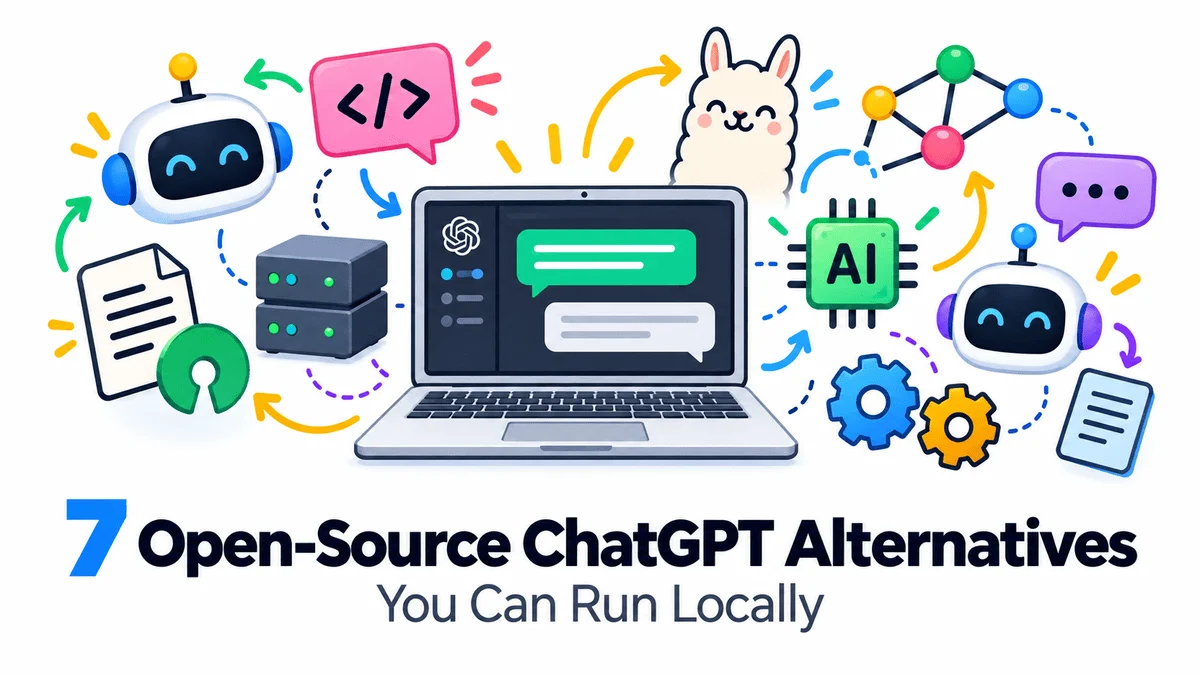
The landscape of artificial intelligence is experiencing a fundamental structural shift as individual users, enterprises, and independent developers increasingly pivot away from centralized, cloud-dependent AI subscriptions in favor of locally hosted solutions. Driven by a confluence of rising operational costs, strict data privacy regulations, and the rapid democratization of high-performance open-source large language models (LLMs), the demand for self-hosted AI architectures has reached unprecedented levels. Modern consumer-grade graphics processing units (GPUs) and unified memory architectures found in contemporary personal computers are now sufficiently powerful to execute robust language models locally. Consequently, users no longer need to sacrifice data privacy or accept recurring subscription fees to access sophisticated generative AI capabilities.
To bridge the gap between powerful back-end inference engines and an intuitive user experience, developers have engineered a diverse ecosystem of open-source, ChatGPT-style user interfaces. These platforms replicate or exceed the advanced feature sets of commercial offerings, supporting multi-turn conversations, document ingestion, autonomous agents, tool integration, and multimodal workflows entirely offline or within private server environments.
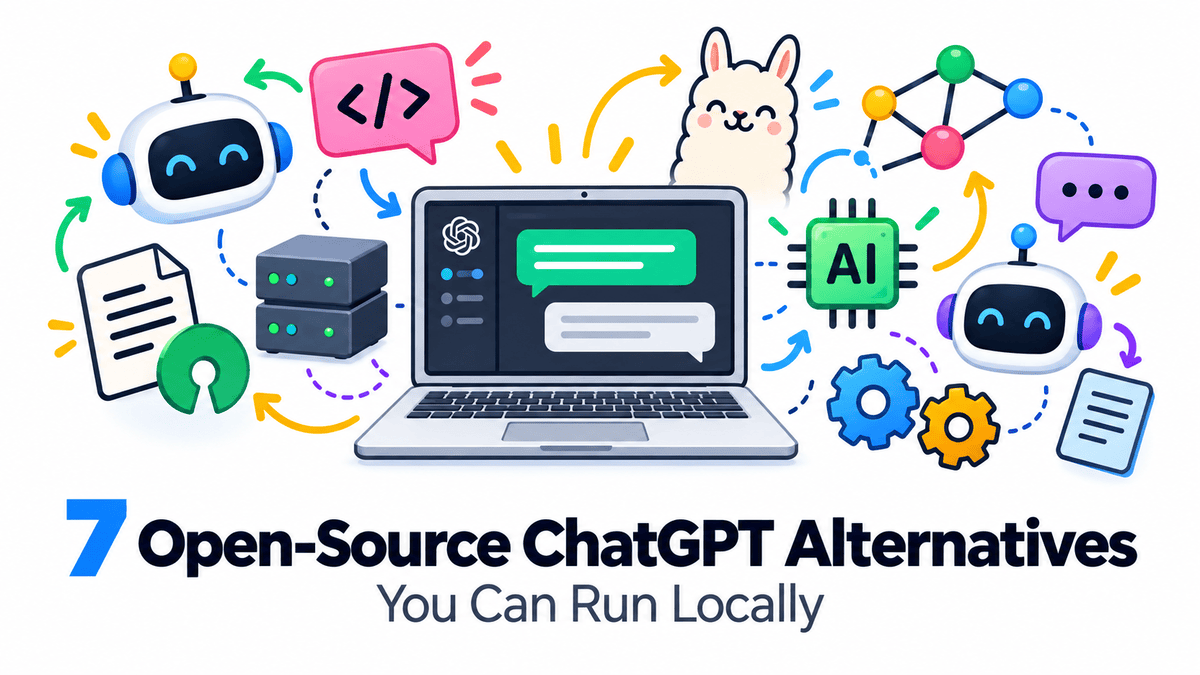
The Evolution of Local AI: Background and Context
The mass adoption of cloud-based AI assistants like OpenAI’s ChatGPT, Anthropic’s Claude, and Google’s Gemini revolutionized how knowledge workers, software engineers, and researchers interact with technology. However, this centralized paradigm introduced significant vulnerabilities, including enterprise data exposure, vulnerability to network outages, and recurring subscription fatigue.
The turning point for local AI began with the open-source community’s relentless optimization of model weights and inference runtimes. Innovations such as model quantization—which compresses large model weights into smaller formats like GGUF without catastrophic loss in performance—allowed powerful models such as Meta’s Llama series, Mistral, and Qwen to execute on standard consumer hardware. Frameworks like Ollama and llama.cpp further streamlined the deployment process, transforming complex command-line operations into accessible background services.
Despite these technical breakthroughs, raw command-line interfaces lack the visual polish and multi-modal convenience of commercial web applications. To solve this, software engineers developed open-source web frontends that seamlessly interface with local runtimes, giving rise to a robust ecosystem of self-hosted chat applications that rival proprietary software in usability, speed, and feature richness.
1. Open WebUI: The Comprehensive Workspace
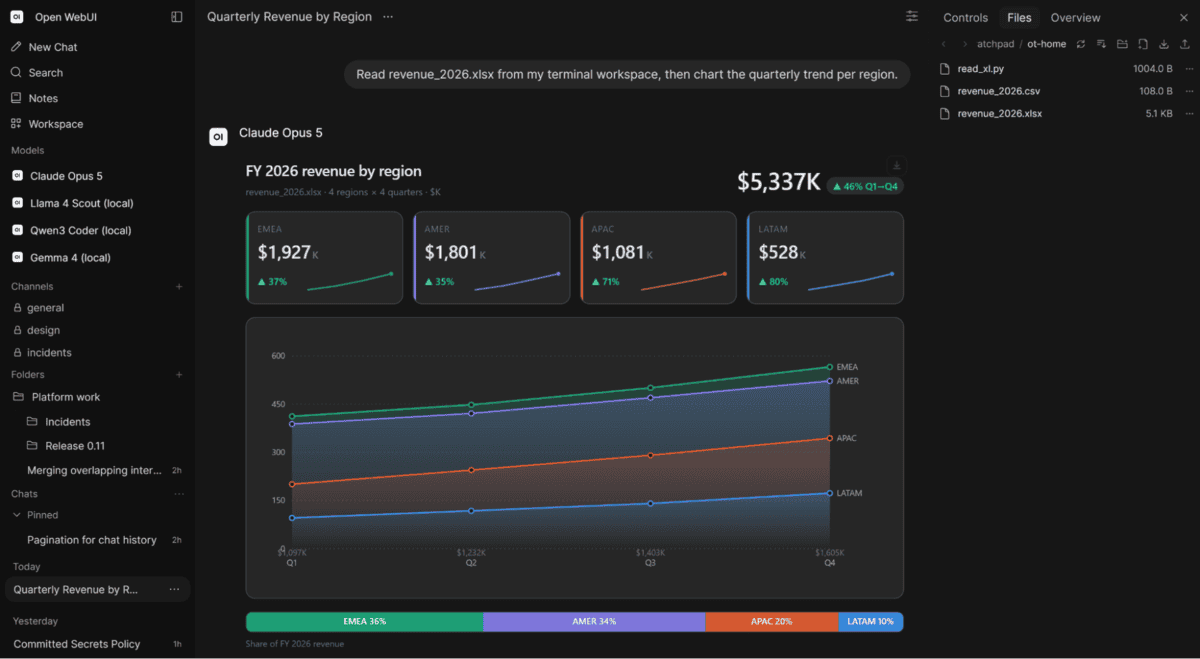
Emerging as one of the earliest and most widely adopted frontends in the self-hosted AI community, Open WebUI provides an environment that closely mirrors the look, feel, and functionality of commercial platforms. Engineered to deploy effortlessly via Docker or Python environments, the application natively connects to local runtimes such as Ollama and llama.cpp, often automatically detecting active local endpoints upon startup.
Open WebUI transcends simple text generation by offering a comprehensive workspace. Users can upload documents for Retrieval-Augmented Generation (RAG), switch dynamically between multiple model endpoints, execute custom tools, and leverage web-search integration. Its modular architecture and active community contributions make it the de facto standard for individuals and organizations seeking a feature-complete, zero-compromise replacement for cloud-based chat interfaces.
2. Llama.cpp WebUI: The Lightweight Efficiency Choice
For users operating within minimalist technical environments, the native WebUI integrated directly into llama.cpp offers unparalleled efficiency. Rather than running a separate application stack, executing the llama-server command simultaneously initializes an OpenAI-compatible API and a responsive, browser-based chat interface.
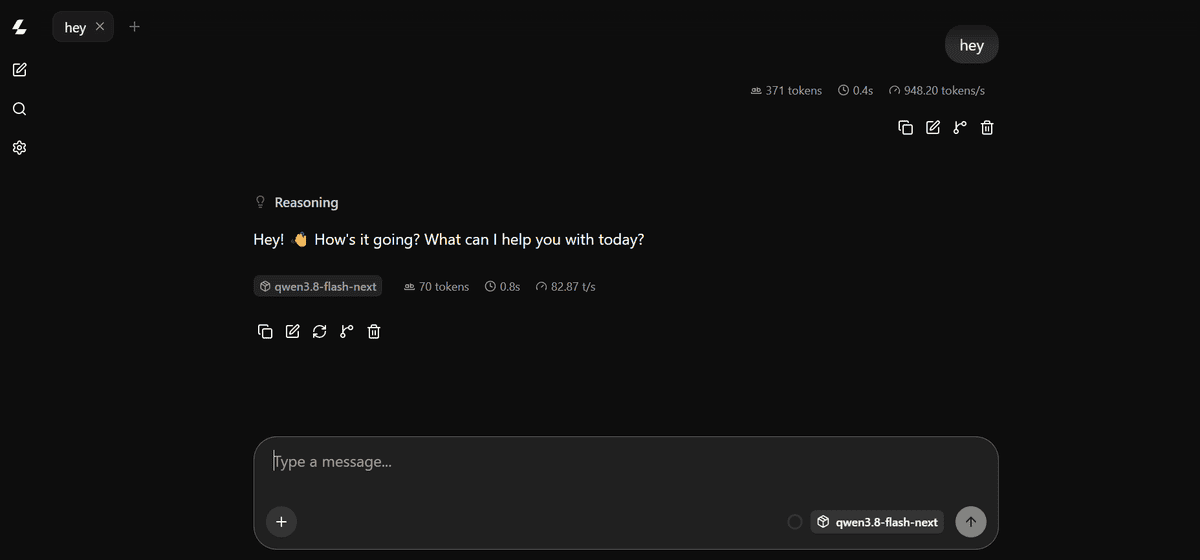
This integrated approach eliminates unnecessary software bloat, making it an ideal choice for resource-constrained hardware or developers prioritizing raw performance and minimal latency. Despite its lightweight footprint, the interface supports essential modern features including multi-conversation management, streaming responses, reasoning output visualization, and conversation history tracking, allowing users to interact directly with GGUF-formatted models with zero configuration overhead.
3. LobeHub: Enterprise-Grade Aesthetics and Agent Specialization
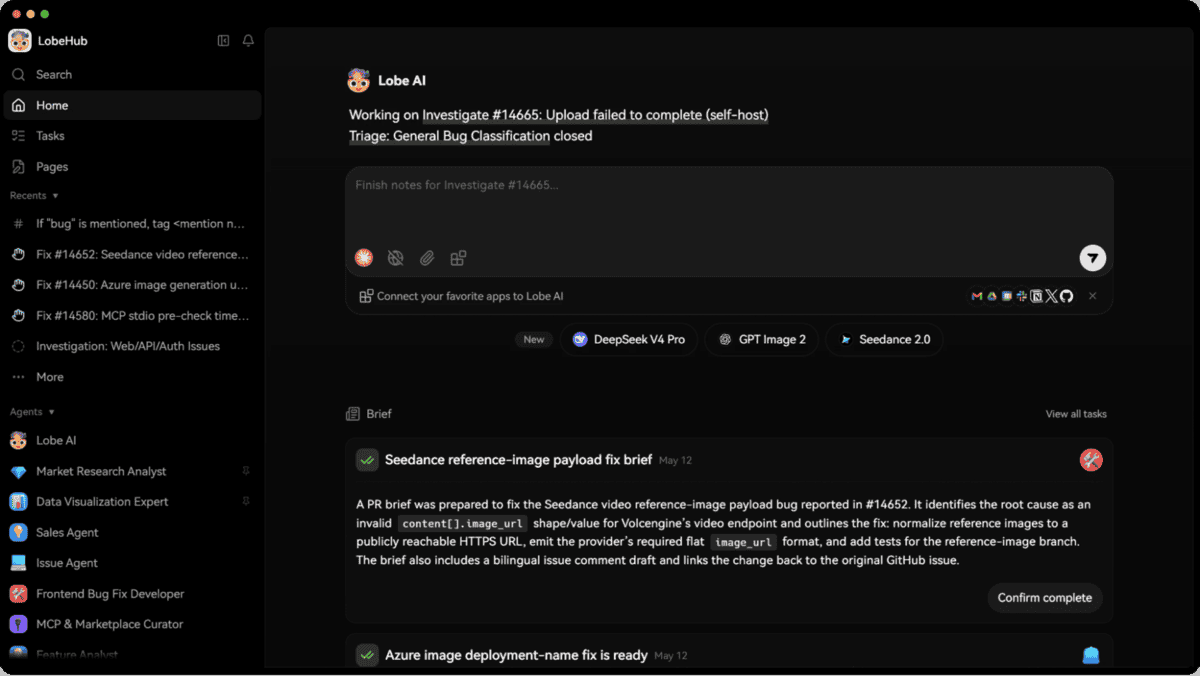
LobeHub approaches the self-hosted interface market with a strong emphasis on modern design and extensible agent workflows. Delivering a user experience that surpasses many commercial platforms, LobeHub integrates smoothly with local inference engines to provide a clean, highly polished chat environment.
Beyond standard text conversations, LobeHub distinguishes itself through its robust agent creation framework. Users can instantiate specialized virtual assistants—tailored for software engineering, academic research, or technical writing—each equipped with dedicated system prompts and specific tool permissions. This architecture allows organizations to transition from a generic conversational interface to a specialized, multi-agent operational workspace hosted entirely on private infrastructure.
4. AnythingLLM: Specialized Document Workspaces and RAG
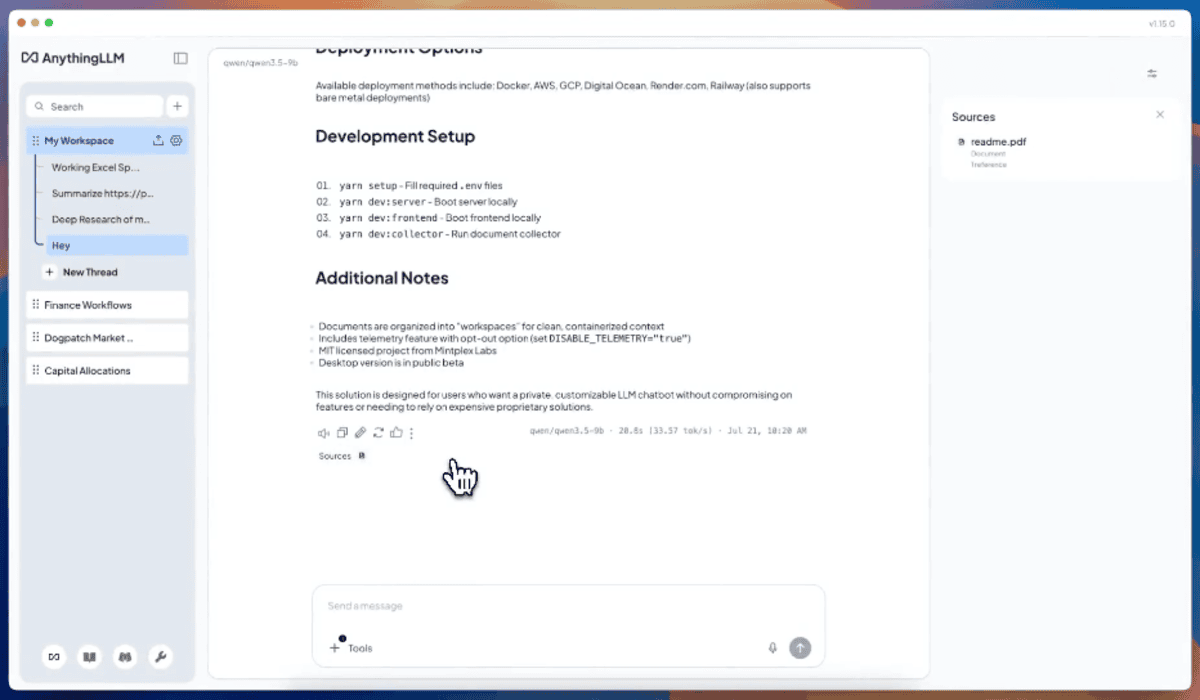
In professional and academic environments, the primary utility of an AI assistant lies in its ability to parse, query, and synthesize internal documentation. AnythingLLM is purpose-built to address this requirement by embedding advanced Retrieval-Augmented Generation (RAG) pipelines directly into an accessible, self-hosted interface.
The platform allows users to compartmentalize information by creating isolated workspaces—separating sensitive corporate policy documents, technical specifications, and academic research papers into distinct knowledge bases. By handling document ingestion, vector database management, and chunking strategies automatically behind the scenes, AnythingLLM eliminates the engineering friction traditionally associated with deploying private RAG systems, functioning less like a chatbot and more like an institutional knowledge assistant.
5. Jan: Zero-Configuration Desktop Simplicity
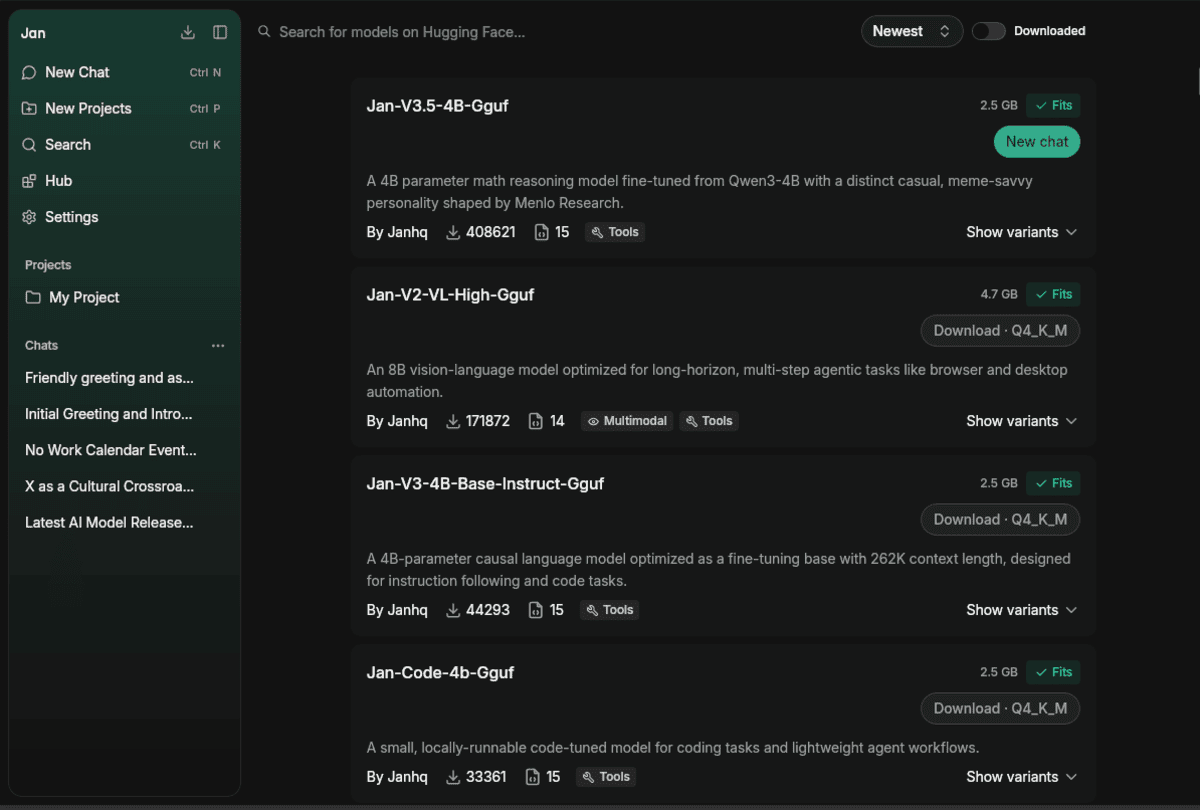
Overcoming the technical barrier of containerization platforms like Docker has been a primary objective for increasing the mainstream adoption of local AI. Jan removes this hurdle entirely by packaging local LLM execution into a standalone, cross-platform desktop application.
By streamlining model downloading, hardware acceleration, and inference management into a single-click installation process, Jan allows non-technical users to establish an offline, air-gapped AI environment within minutes. While the software abstracts away the underlying infrastructure complexity, it retains advanced configuration menus for power users, successfully bridging the gap between absolute simplicity and professional flexibility.
6. LibreChat: Advanced Extensibility and Multi-Provider Management
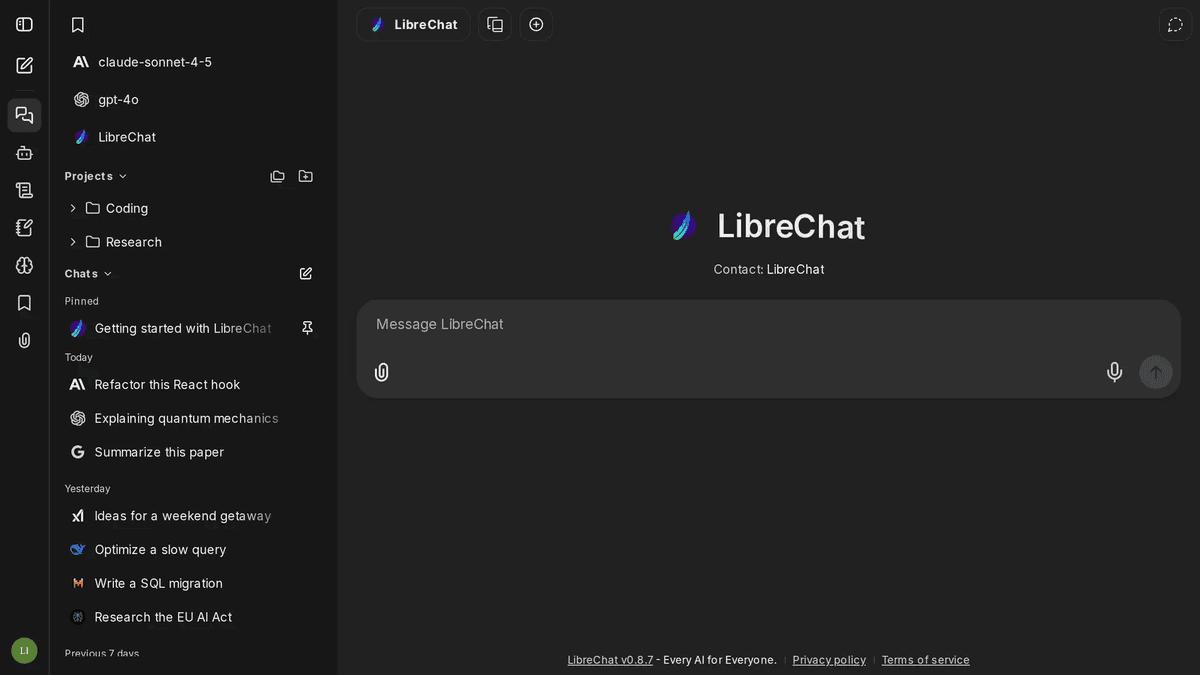
LibreChat stands out as one of the most technologically ambitious and feature-packed open-source chat interfaces available. Designed to unify diverse AI ecosystems, it supports multi-user authentication, granular access controls, conversation search, and code execution environments.
Crucially, LibreChat accommodates a wide array of model providers, bridging local self-hosted instances with commercial API endpoints under a single, cohesive roof. Features such as Model Context Protocol (MCP) support, custom actions, and advanced agent orchestration make LibreChat an optimal deployment choice for teams and organizations requiring a scalable, highly secure private AI platform capable of adapting to complex operational workflows.
7. Hugging Face Chat UI: The Developer-Centric Frontend
For technical users and developers who have already established dedicated local inference pipelines, the Hugging Face Chat UI provides a streamlined, reliable, and unpretentious frontend. Built to communicate seamlessly with any OpenAI-compatible API—including Ollama and llama.cpp—this interface avoids proprietary lock-in while delivering core operational necessities.
While it lacks the heavy all-in-one workspace features of platforms like Open WebUI, it offers robust support for streaming responses, multimodal inputs, model switching, and user authentication. Its clean, developer-friendly architecture makes it an efficient option for teams seeking to deploy a standardized chat interface over existing back-end infrastructure without introducing unnecessary abstraction layers.
Industry Implications and Strategic Outlook
The rapid maturation of open-source AI interfaces and local execution models carries profound implications for the global technology sector. As regulatory scrutiny regarding data privacy intensifies under frameworks such as the European Union’s Artificial Intelligence Act, organizations across legal, medical, and financial sectors face mounting pressure to secure their proprietary data. Local AI deployments neutralize data exfiltration risks by ensuring that sensitive intellectual property never traverses external cloud networks.
Furthermore, the economic implications of local inference are significant. By leveraging existing hardware investments to run open-weight models that frequently match or exceed the performance of older proprietary architectures, enterprises can drastically reduce recurring API expenditures and software subscription costs.
As hardware manufacturers continue to optimize neural processing units (NPUs) and consumer GPUs for edge AI workloads, the performance gap between cloud-based services and local installations will continue to narrow. The proliferation of tools like Open WebUI, AnythingLLM, and LibreChat ensures that users retain absolute sovereignty over their computational workflows, marking a definitive transition toward decentralized, user-controlled artificial intelligence.