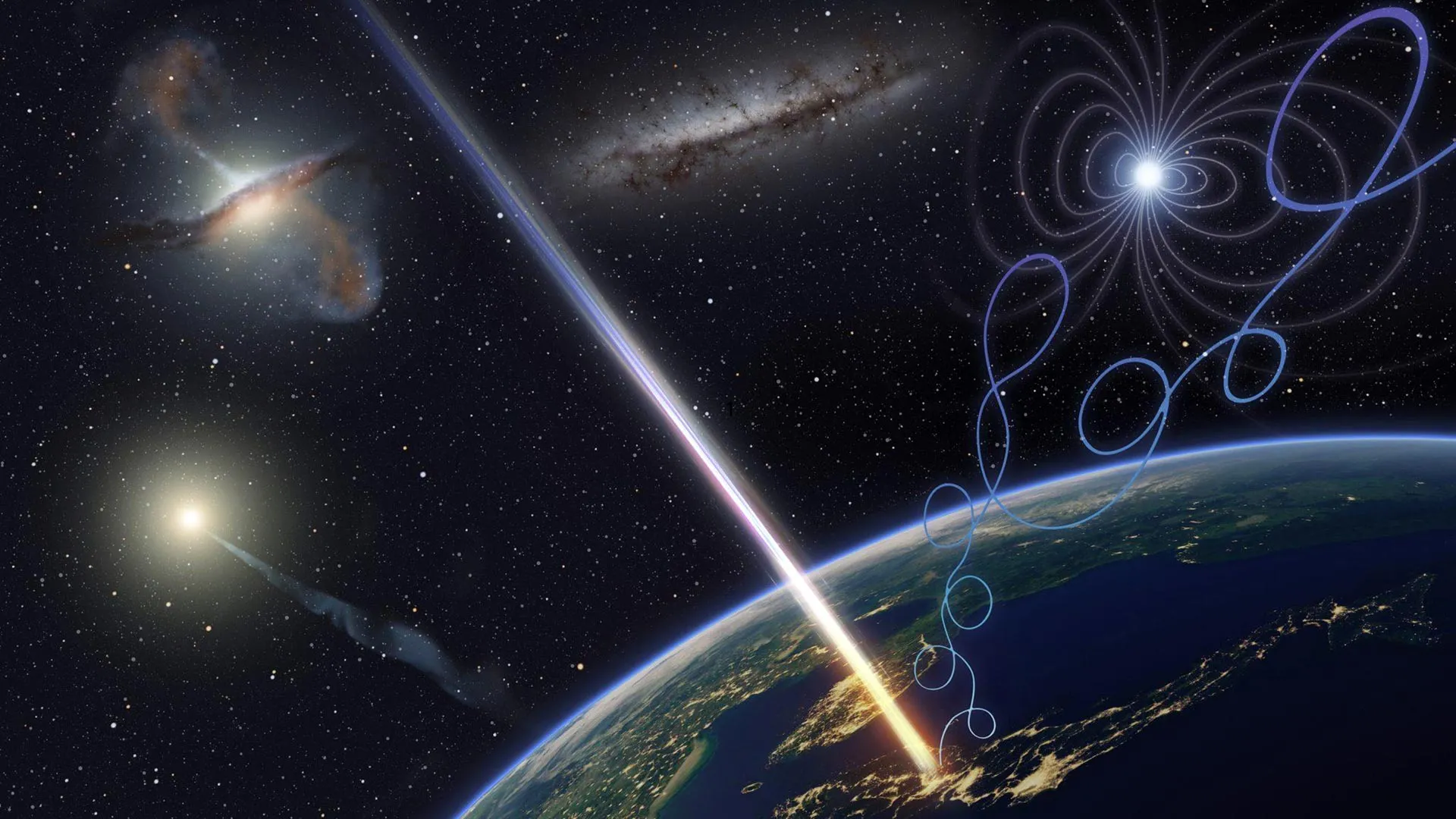
The detection of the Amaterasu particle in 2021 sent shockwaves through the global astrophysical community, marking one of the most energetic events ever recorded in the history of cosmic ray observation. Detected by the Telescope Array experiment in Utah, this single subatomic particle carried an estimated energy of 240 exa-electron volts (EeV), a figure so vast that it challenges the current boundaries of theoretical physics. Despite its monumental energy, the particle’s origin remained a profound mystery, as its trajectory appeared to originate from the "Local Void," a desolate region of space largely devoid of galaxies or known high-energy sources. New research led by scientists at Pennsylvania State University and published in Physical Review Letters now suggests that the key to this mystery may lie in the composition of the particles themselves. The study proposes that these ultrahigh-energy cosmic rays (UHECRs) are not protons, as previously assumed, but ultraheavy atomic nuclei—elements heavier than iron—which possess unique physical properties allowing them to traverse the cosmos while maintaining extreme energy levels.
The Detection of the Amaterasu Particle
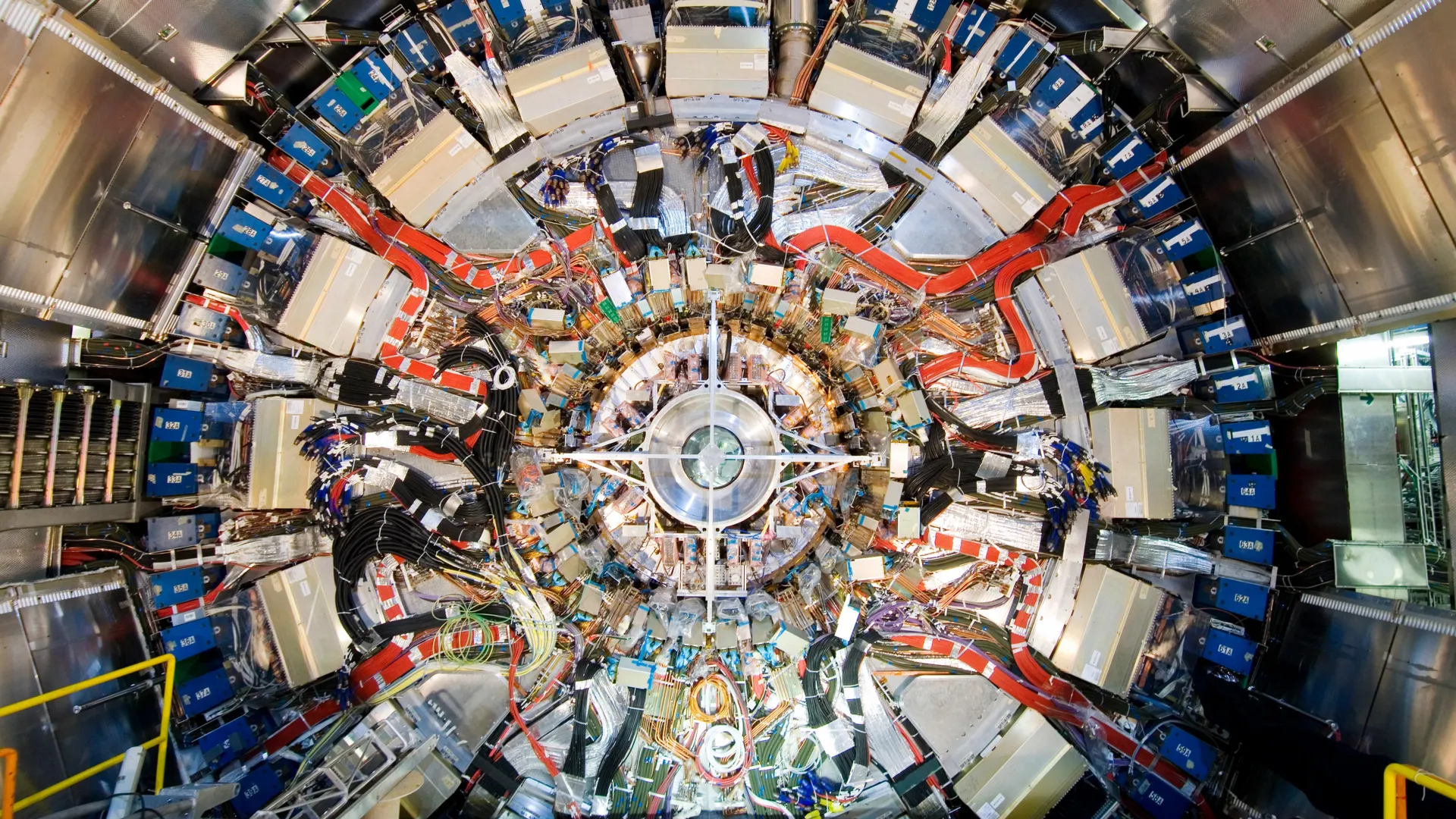
In May 2021, the Telescope Array, a collaborative project involving research institutions from the United States, Japan, Korea, Russia, and Belgium, triggered a series of surface detectors across the Utah desert. The data revealed a cosmic ray of unprecedented power. Named "Amaterasu" after the sun goddess in Japanese mythology, the particle was calculated to have an energy level of approximately 240 EeV. To put this in perspective, 1 EeV is equal to one quintillion (10^18) electron volts. The Amaterasu particle was roughly 40 million times more energetic than the protons accelerated in the Large Hadron Collider (LHC), the most powerful machine ever built by humanity.
The Amaterasu event is surpassed in recorded history only by the "Oh-My-God" particle, detected in 1991 by the Fly’s Eye experiment, which reached a staggering 320 EeV. These particles are so energetic that they travel at 99.99999999999999999999951% of the speed of light. At such velocities, the kinetic energy of a single subatomic particle is comparable to that of a professional tennis serve or a baseball traveling at 60 miles per hour. The central problem for astrophysicists is that according to the Greisen-Zatsepin-Kuzmin (GZK) limit, particles with such high energies should interact with the cosmic microwave background (CMB) radiation that permeates the universe, losing energy rapidly over long distances. Consequently, such particles must originate from relatively nearby sources—within approximately 50 to 100 megaparsecs. However, when scientists traced the Amaterasu particle back to its source, they found nothing but empty space.
A New Theoretical Framework: Ultraheavy Nuclei
The research team, led by Kohta Murase, a professor of physics and of astronomy and astrophysics at Penn State, utilized advanced computational modeling to simulate the journey of various particles across intergalactic space. Their findings suggest that the traditional assumption—that UHECRs are primarily protons or light nuclei like helium—may be incorrect for the highest energy tiers. Instead, the team found that ultraheavy nuclei, specifically those with an atomic mass greater than iron (atomic number 26), could be the primary candidates for these extreme events.
Atomic nuclei are the dense cores of atoms, consisting of protons and neutrons. While they occupy only a fraction of an atom’s volume, they contain nearly all its mass. The Penn State study indicates that ultraheavy nuclei lose their energy more slowly than lighter particles when interacting with the background radiation of the universe. While protons are prone to photomeson production—a process where they collide with photons to create new particles, thereby losing energy—heavy nuclei primarily lose energy through photodisintegration, where they shed individual nucleons. At the specific energy levels of the Amaterasu particle, the simulations showed that ultraheavy nuclei remain more "durable" over megaparsec-scale distances, allowing them to arrive at Earth with their extreme energy signatures intact.
Chronology of Cosmic Ray Discovery and Evolution
The quest to understand cosmic rays began over a century ago, and the Amaterasu particle represents the latest milestone in a long timeline of discovery:
- 1912: Physicist Victor Hess discovered cosmic radiation by taking an ionization chamber into the atmosphere via a hot-air balloon, proving that radiation increases with altitude and originates from space.
- 1962: John Linsley and his team at the Volcano Ranch experiment in New Mexico detected the first cosmic ray with an energy exceeding 100 EeV, proving that the universe could accelerate particles to far greater energies than solar flares.
- 1991: The Fly’s Eye experiment in Utah recorded the "Oh-My-God" particle at 320 EeV, a discovery that shattered existing expectations of the GZK limit and sparked decades of theoretical debate.
- 2008: The Pierre Auger Observatory in Argentina began providing large-scale data, suggesting a correlation between high-energy cosmic rays and the positions of nearby active galactic nuclei (AGN).
- 2021: The Telescope Array detected the Amaterasu particle. Its energy was confirmed at 240 EeV, but its arrival direction from the "Local Void" contradicted the AGN correlation theory.
- 2024: The Penn State study introduces the ultraheavy nuclei hypothesis as a viable solution to the arrival-direction and energy-persistence paradoxes.
Potential Astrophysical Engines
If ultraheavy nuclei are indeed the culprits behind these rare events, the focus of the scientific community must shift toward identifying cosmic "accelerators" capable of forging and launching such massive particles. Professor Murase and his colleagues point toward some of the most violent phenomena in the known universe.
"Ultrahigh-energy cosmic rays can only be accelerated by some of the most powerful sources in the universe," Murase noted. The research highlights two primary candidates: binary neutron star mergers and the collapse of massive stars into black holes or highly magnetized neutron stars (magnetars).
In the case of binary neutron star mergers—events that also produce detectable gravitational waves—the extreme magnetic fields and shockwaves generated during the collision can act as a natural synchrotron, accelerating heavy elements to near-light speeds. Similarly, when a massive star collapses, it can produce a gamma-ray burst (GRB), the brightest electromagnetic event in the universe. These environments are rich in heavy elements produced through r-process nucleosynthesis, making them the perfect "factories" for ultraheavy cosmic rays.
Statistical Discrepancies and the North-South Divide
One of the most intriguing aspects of UHECR research is the apparent discrepancy between observations in the Northern and Southern Hemispheres. The Telescope Array in Utah (Northern Hemisphere) and the Pierre Auger Observatory in Argentina (Southern Hemisphere) have reported slightly different energy spectra and arrival-direction patterns.
The Penn State team suggests that the inclusion of ultraheavy nuclei in astrophysical models could explain these differences. If the composition of cosmic rays varies by region—perhaps due to the distribution of nearby magnetars or neutron star mergers—it would account for why the "hotspots" of cosmic ray activity do not align perfectly across the globe. Furthermore, the researchers noted that if the highest-energy events are indeed ultraheavy nuclei, future data should show a distinct shift in the statistically inferred composition toward heavier elements as energy levels increase.
Future Implications for Observational Astronomy
The findings from the Penn State and Yukawa Institute for Theoretical Physics collaboration provide a roadmap for the next generation of astrophysical observatories. Current facilities are already being upgraded to test these hypotheses. The Pierre Auger Observatory is currently undergoing an upgrade known as AugerPrime, which includes the installation of plastic scintillator detectors designed specifically to better distinguish between the types of particles (mass composition) hitting the atmosphere.
Furthermore, the proposed Global Cosmic Ray Observatory (GCOS) aims to create a worldwide network of detectors with unprecedented sensitivity. By capturing a larger sample size of events like the Amaterasu particle, scientists will be able to determine if these particles are indeed ultraheavy nuclei.
"We are not saying that all ultrahigh-energy cosmic rays are ultraheavy nuclei," Murase cautioned. "But if some of the highest-energy events are ultraheavy nuclei, that would impact how we search for their sources."
The implications of this research extend beyond just identifying the particles; they touch upon the very nature of matter and energy under extreme conditions. If these particles are confirmed as ultraheavy nuclei, it would confirm that the universe possesses natural accelerators far more efficient and powerful than anything human engineering can currently conceive. It would also provide a new "messenger" for multi-messenger astronomy, allowing scientists to link cosmic ray detections with gravitational wave signals and gamma-ray bursts to create a comprehensive map of the most violent events in the cosmos.
As theoretical work continues and new observatories come online, the mystery of the Amaterasu particle may transition from a puzzling anomaly to a foundational piece of evidence in our understanding of the high-energy universe. For now, the ultraheavy nuclei hypothesis stands as the most robust explanation for how a particle could emerge from a cosmic void and strike our atmosphere with the force of a falling star.