The conceptual framework of space-time stands as one of the most transformative pillars of modern science, fundamentally altering the human perception of the universe since its formalization in the early 20th century. At its core, space-time represents the interwoven four-dimensional continuum of the three spatial dimensions—length, width, and height—fused with the single dimension of time. This synthesis, primarily attributed to the work of Albert Einstein and his former teacher Hermann Minkowski, provides the geometric foundation for the general theory of relativity. However, as contemporary physics pushes toward a unified theory of everything, the precise nature of space-time has become a subject of intense scrutiny, oscillating between being viewed as a physical substance, a mathematical structure, or a linguistic metaphor.
The Evolution of Space-Time: A Chronological Overview
To understand the current debates surrounding the existence of space-time, it is necessary to trace the evolution of the concept from classical mechanics to modern cosmology. Prior to the 20th century, the Newtonian worldview dominated scientific thought. Isaac Newton envisioned space and time as absolute, independent entities—a static stage upon which the drama of the universe unfolded. In this "container" model, time flowed at a constant rate for all observers, regardless of their motion or position.
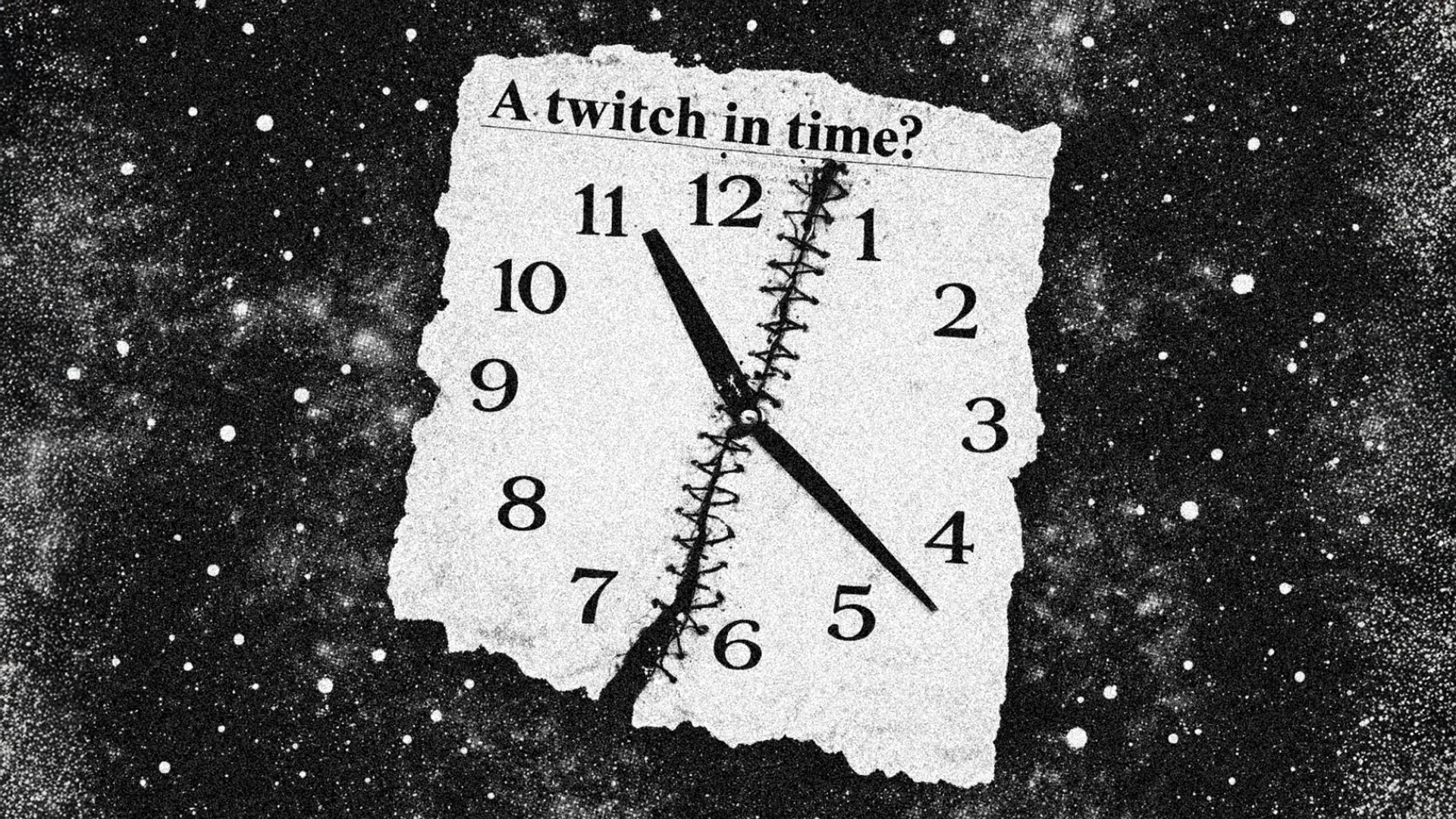
The shift began in 1905 with Einstein’s Special Theory of Relativity, which demonstrated that space and time are not absolute but relative to the observer’s velocity. It was Minkowski who, in 1908, famously declared that "henceforth space by itself, and time by itself, are doomed to fade away into mere shadows, and only a kind of union of the two will preserve an independent reality." This was the birth of the four-dimensional manifold.
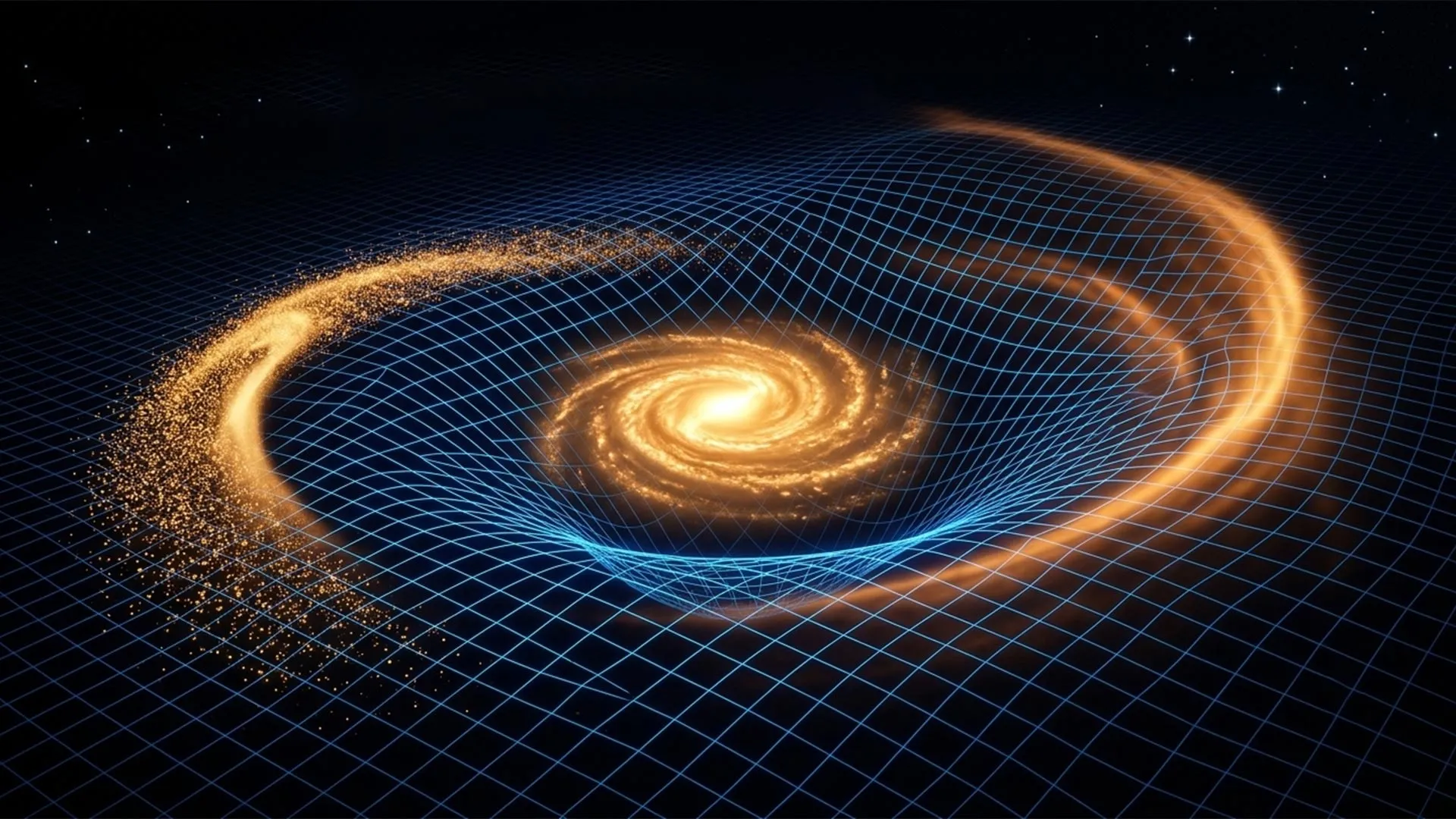
By 1915, Einstein’s General Theory of Relativity expanded this further, proposing that space-time is not a passive backdrop but a dynamic field. Gravity, rather than being a mysterious force acting at a distance, was redefined as the curvature of space-time caused by mass and energy. This "fabric" could bend, stretch, and even ripple, as evidenced by the 2015 detection of gravitational waves by the Laser Interferometer Gravitational-Wave Observatory (LIGO), a discovery that provided empirical weight to the idea of space-time as a tangible reality.
The Linguistic Trap: When Physics Meets Philosophy
Despite its mathematical success, the language used to describe space-time is fraught with inconsistency. Austrian-British philosopher Ludwig Wittgenstein famously cautioned that philosophical confusion often arises when "language goes on holiday"—when words are removed from their everyday context and applied to abstract concepts without careful redefinition. In the realm of physics, terms like "exist," "now," and "timeless" are frequently repurposed, leading to what many theorists describe as a conceptual crisis.
In everyday speech, "existence" usually implies a presence within time. We say an object exists if it is present "now." However, in the context of the "Block Universe" theory—a common interpretation of relativity—the word "exists" takes on a radically different meaning. The Block Universe, or eternalism, posits that all points in time—past, present, and future—are equally real and exist simultaneously within a four-dimensional structure. In this view, the "flow" of time is a persistent psychological illusion.
This leads to a structural paradox: if the entire history of the universe is a static block, what does it mean to say that the block itself "exists"? Critics argue that physicists often smuggle a "meta-time" into their descriptions. To say a 4D block exists implies it occupies a moment in a higher-order temporal dimension, effectively creating a 5D framework that current physics does not officially recognize.
Existence vs. Occurrence: The Elephant Analogy
A significant point of contention in the philosophy of physics is the distinction between "existence" and "occurrence." This distinction is vital for understanding whether space-time is a substance or merely a relational map.
Consider the analogy of an elephant in a room. In standard three-dimensional terms, the elephant is a physical object that "exists" and endures through time. Its existence is characterized by its persistence. However, if we view the elephant through the lens of a four-dimensional world-line, it is a long "tube" extending from its birth to its death. Any single moment of the elephant—a "slice" of that tube—does not "exist" in the way the whole tube does; rather, that slice "occurs."
When applied to the universe, the question becomes: is space-time the "existing" tube, or is it the collection of "occurring" slices? If space-time is merely a descriptive framework for events that occur, then it is a metaphor rather than a substance. If it is a substance, it must possess properties that allow it to exist independently of the events within it. This debate is not merely academic; it has profound implications for how scientists approach quantum gravity, where the very "smoothness" of Einsteinian space-time is expected to break down into discrete, "pixelated" units.
Supporting Data and Theoretical Proposals
The debate over the nature of space-time is fueled by several radical new proposals in the field of theoretical physics.
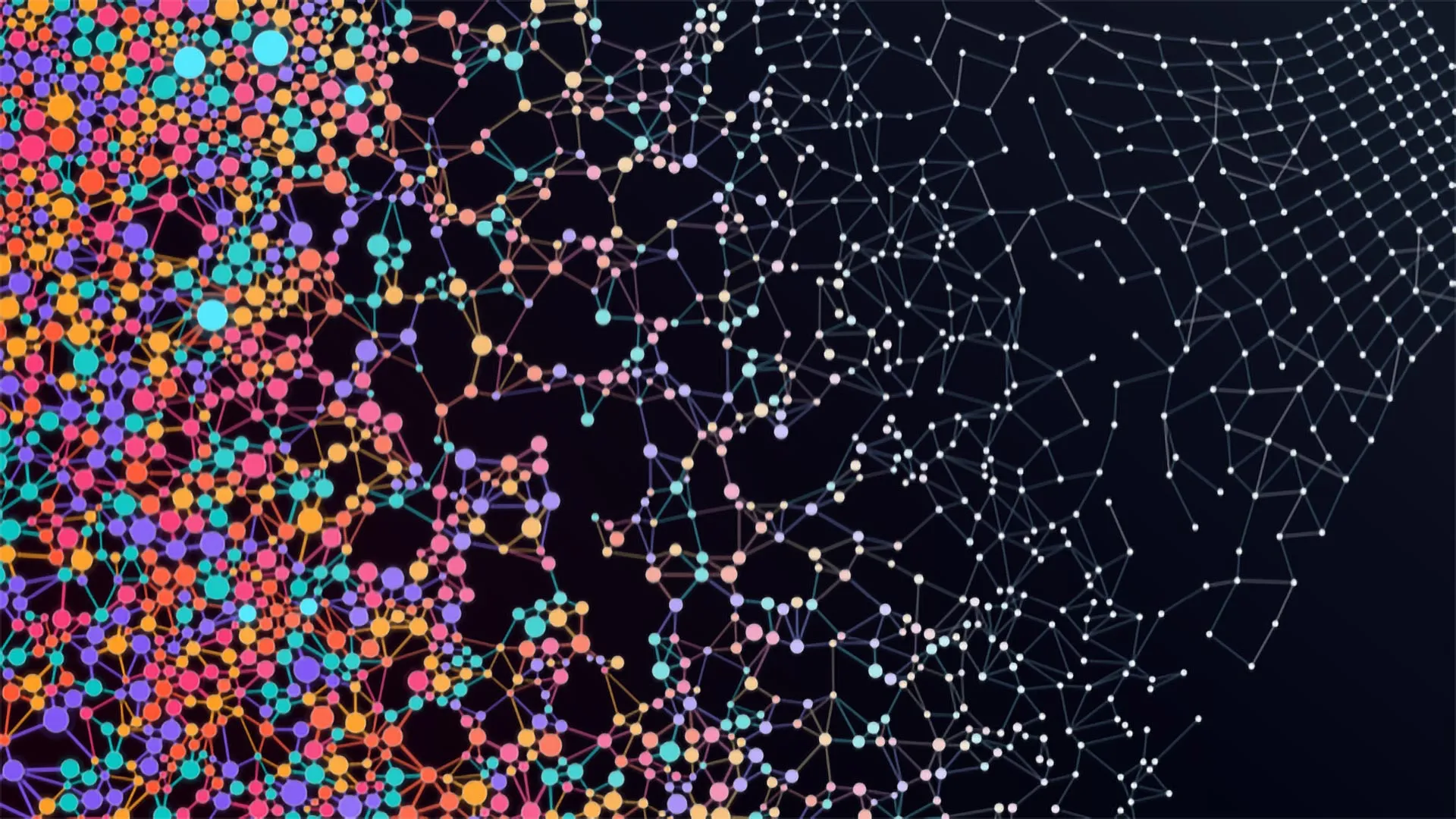
- Emergent Space-Time: Some theorists, such as those working on Loop Quantum Gravity (LQG), suggest that space-time is not fundamental but "emergent." Much like how the "fluidity" of water emerges from the interaction of countless H2O molecules, space-time may emerge from more fundamental, non-spatial, and non-temporal quantum building blocks.
- Space-Time as Memory: A 2024 proposal suggests that space-time may act as the universe’s "memory." This theory posits that gravitational fields retain information about every mass that has passed through them, potentially solving paradoxes related to information loss in black holes.
- The Holographic Principle: Derived from string theory, this principle suggests that the entire three-dimensional universe (plus time) is actually a projection of information stored on a distant, two-dimensional surface. In this model, space-time is a holographic illusion.
Empirical data from the James Webb Space Telescope (JWST) and ongoing studies into the "Hubble Tension"—the discrepancy in the measured rate of the universe’s expansion—are forcing scientists to reconsider the standard cosmological model. If the fabric of space-time behaves differently than predicted at the edges of the observable universe, our definitions of its existence must evolve.
Pop Culture Interpretations and Public Perception
The ambiguity of space-time has permeated popular culture, often resulting in conflicting narratives about the nature of reality. Cinematic depictions of time travel offer a clear look at these competing metaphysical models.
In the Terminator franchise, time is treated as a fixed, immutable block. Even when characters travel back in time, their actions are often revealed to have always been part of the historical record. This aligns with a strict "Eternalist" view where the future is as unchangeable as the past.
Conversely, Avengers: Endgame presents a model where the past can be altered, creating branching timelines or "multiverses." This suggests a dynamic block universe—one that exists as a structure but remains subject to change. Such a scenario, while popular in fiction, introduces the "5D problem" mentioned earlier: for a 4D timeline to "change," there must be a second dimension of time in which that change can take place.
These fictional tropes reflect a genuine struggle within the scientific community to communicate the reality of relativity without falling into the traps of everyday language.
Broader Impact and Future Implications
The resolution of what space-time "is" remains the "Holy Grail" of modern physics. The current incompatibility between General Relativity (which describes the large-scale structure of space-time) and Quantum Mechanics (which describes the subatomic world) is largely rooted in their differing treatments of time. In quantum mechanics, time is an external parameter; in relativity, it is a dynamic part of the geometry.
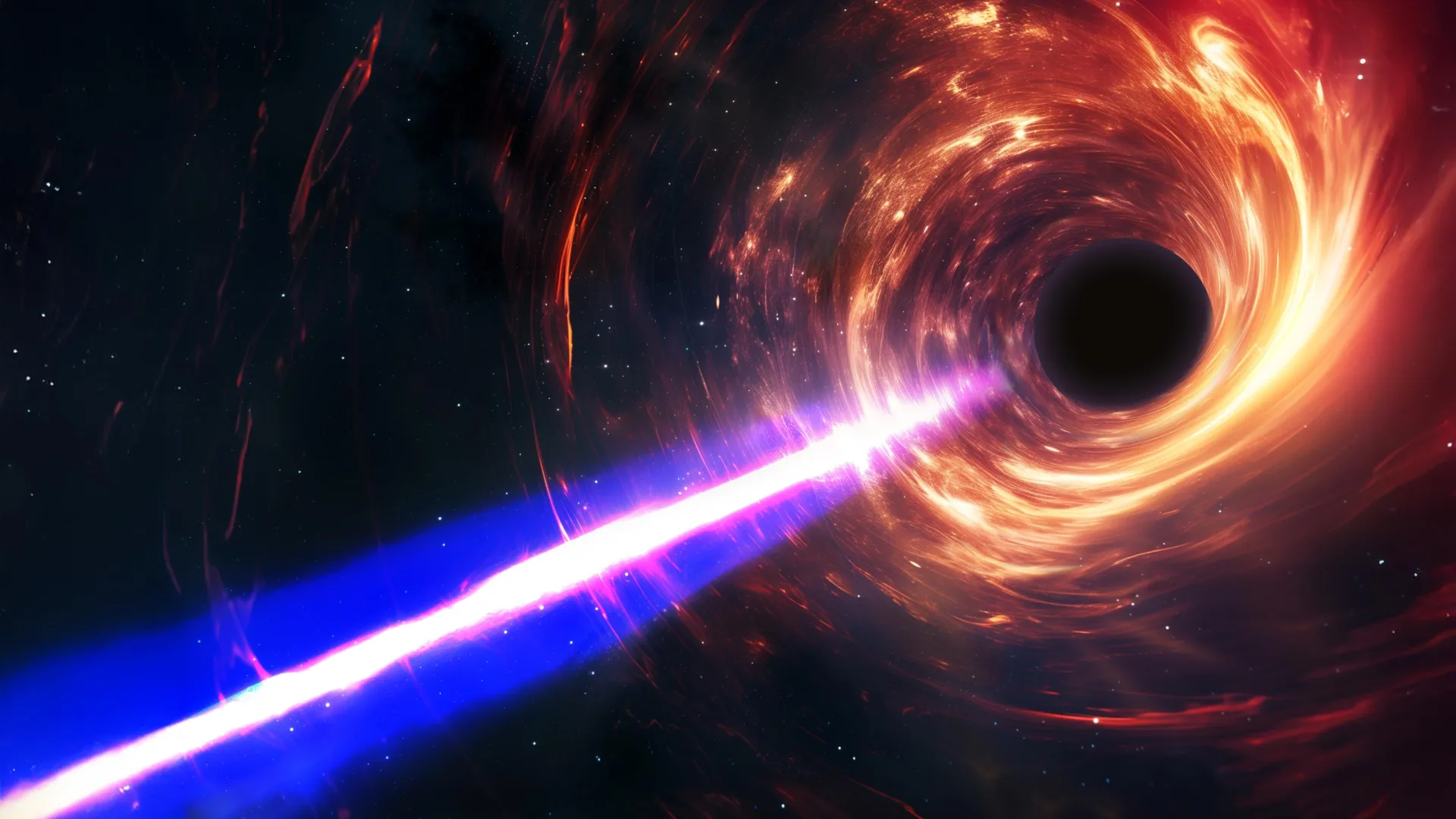
Reconciling these two views is essential for understanding the origins of the universe, the interior of black holes, and the potential for advanced propulsion systems. If space-time is a substance, it might be "tapped" or manipulated. If it is a structure or a metaphor, our limitations are far more rigid.
As the scientific community moves forward, the focus is shifting toward a "post-spacetime" era of physics. Leading thinkers, including Nima Arkani-Hamed, have suggested that "space-time is doomed," arguing that it must be replaced by more fundamental mathematical constructs, such as the "Amplituhedron," which simplifies calculations of particle interactions by removing the need for space and time altogether.
In conclusion, while Einstein’s equations continue to hold up under the most rigorous empirical tests, the interpretation of what those equations say about the "fabric of reality" is more contested than ever. Defining space-time is not merely a technical hurdle; it is a fundamental inquiry into the nature of existence itself. Whether it is a substance that can be felt, a structure that can be mapped, or a metaphor that helps us navigate the cosmos, space-time remains the most profound enigma of the modern age.