For nearly a century, the study of turbulence has been defined by the pursuit of order within what appears to be absolute chaos. From the churning of the Earth’s atmosphere to the powerful currents of the deep ocean, turbulence is a universal phenomenon that dictates how energy, heat, and matter are distributed across the globe. However, a groundbreaking study led by researchers at the University of Pittsburgh’s Swanson School of Engineering, in collaboration with the University of Turin in Italy, has unveiled a discovery that fundamentally alters the scientific understanding of how energy moves through these chaotic systems.
The research team, led by Lei Fang, an assistant professor in the Department of Civil and Environmental Engineering at the University of Pittsburgh, has demonstrated that the direction of energy flux in a turbulent system is not a fixed law of nature, but a variable that can be manipulated through geometric intervention. Published in the journal Science Advances under the title "Manipulating the direction of turbulent energy flux via tensor geometry in a two-dimensional flow," the findings suggest that the traditional "energy cascade" can be reversed or redirected. This breakthrough has far-reaching implications, ranging from more accurate climate change modeling to the development of advanced medical devices and more efficient coastal management strategies.
The Evolution of Turbulence Theory: From Kolmogorov to the Present
To appreciate the significance of this discovery, one must look back to the mid-20th century. In 1941, the Soviet mathematician Andrey Kolmogorov published a series of papers that became the bedrock of modern turbulence theory. Kolmogorov’s hypothesis, often referred to as "K41," proposed that in three-dimensional (3D) environments, energy follows a predictable "forward cascade." In this model, energy is injected into a system at a large scale—such as a massive ocean current—and is then transferred to smaller and smaller swirling eddies through a process of vortex stretching. Eventually, these vortices become so small that their energy is dissipated as heat due to the fluid’s viscosity.
Conversely, in two-dimensional (2D) flows—which occur in thin layers of fluid, such as the Earth’s atmosphere or the surface of the ocean—the energy flux is typically reversed. Known as an "inverse cascade," energy in 2D systems tends to move from smaller scales to larger ones, leading to the formation of massive, stable structures like Jupiter’s Great Red Spot or large-scale atmospheric weather patterns.
For over 80 years, these directions were considered largely immutable, determined by the dimensionality of the space. However, Lei Fang and his colleagues, including PhD student Xinyu Si, along with Filippo De Lillo and Guido Boffetta from the University of Turin, began to question whether these pathways were truly set in stone. By revisiting the fundamental Navier-Stokes equations—the mathematical foundation of fluid mechanics—the team sought to determine if the relationship between force and displacement could be re-engineered to change the very direction of the energy flow.
The Methodology: Recasting Energy Flux as a Mechanical Process
The core of the team’s breakthrough lies in the innovative use of tensor geometry. In physics and engineering, tensors are mathematical objects used to describe the relationship between sets of algebraic objects related to a vector space. In the context of fluid dynamics, tensors describe quantities such as stress, strain, and deformation within a liquid or gas.
"To understand this abstract concept at different scales, I recast the energy flux process into a mechanical process based on Navier-Stokes equations," Professor Fang explained. "Since this is a mechanical process, I could try to reverse it by changing the geometry between displacement and force."
The researchers developed a geometric framework that focused on the alignment of these tensors. They hypothesized that the direction of energy transfer—whether it cascades down to smaller scales or climbs up to larger ones—is dependent on how the external forces acting on the fluid align with the internal stresses of the flow. By manipulating this "tensor alignment," the team discovered they could produce turbulent flows that exhibited either forward or inverse energy flux, regardless of the traditional expectations for a 2D environment.
This approach represented a significant departure from previous research, which often focused on the statistical properties of turbulence. By treating turbulence as a controllable mechanical system, the Pitt-Turin team opened the door to "tuning" the behavior of fluids in real-time.
Experimental Validation: The Electromagnetic Water Layer
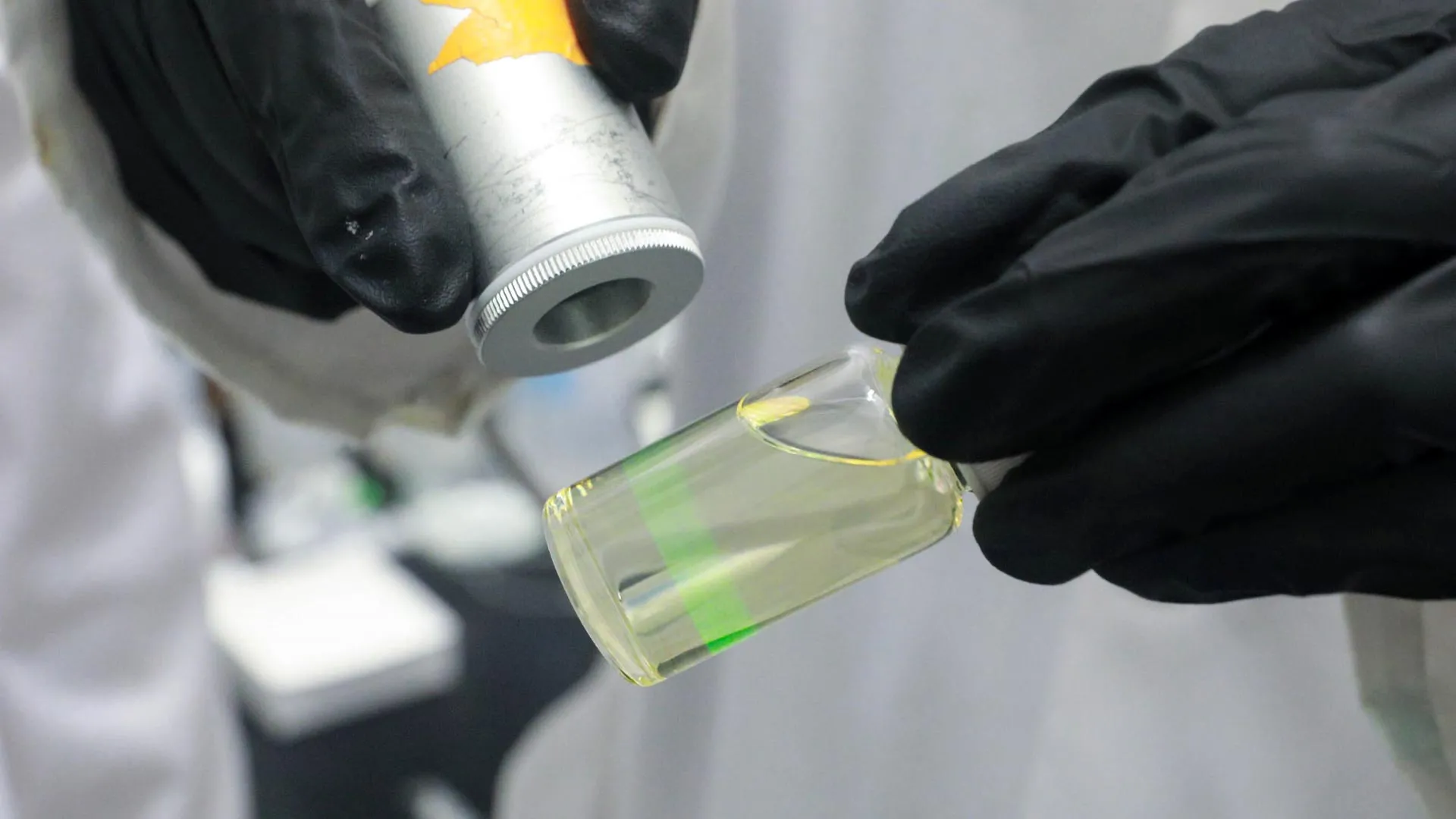
To test their theoretical framework, the researchers moved from mathematical modeling to physical experimentation. They designed a laboratory setup consisting of a very thin layer of water—essentially a 2D environment—driven by electromagnetic forces.
The experiment utilized a horizontal magnetic field to generate the primary flow, while an array of physical rods was introduced to disturb the fluid and create turbulence. To visualize the results, the team used tracer particles suspended in a thin electrolyte layer. These particles allowed the researchers to use high-speed imaging to track the movement of the fluid at a microscopic level, a technique often referred to in the field as Particle Image Velocimetry (PIV).
The results were conclusive: by adjusting the alignment of the forces and the geometry of the disturbances (the rods), the team was able to observe energy moving in directions that defied the standard 2D inverse cascade. The experimental data matched their computer simulations with high precision, confirming that the direction of energy flux could indeed be dictated by tensor geometry.
Chronology of the Discovery and Previous Research
The path to this discovery was built on years of incremental progress. Professor Fang’s interest in the manipulation of currents was previously highlighted in a study exploring how "tiny swimmers"—such as microorganisms or small autonomous underwater vehicles—could disrupt large-scale ocean currents. That earlier work suggested that small-scale interventions could have disproportionately large effects on massive systems.
The timeline of the current breakthrough follows a logical progression:
- 2021-2022: Initial theoretical modeling at the University of Pittsburgh explores the relationship between tensor alignment and the Navier-Stokes equations.
- Late 2022: Collaboration with the University of Turin begins, focusing on the mathematical proofs required to validate the "mechanical recasting" of energy flux.
- 2023: Laboratory experiments are conducted at Pitt’s Swanson School of Engineering, utilizing electromagnetic 2D flow tanks.
- 2024: The findings are peer-reviewed and published in Science Advances, providing a new framework for both 2D and 3D turbulence.
Implications for Coastal Management and Environmental Protection
One of the most immediate practical applications of this research lies in the management of coastal environments. Along coastlines, the dispersal of wastewater, oil spills, and chemical contaminants is governed by turbulent transport barriers. These barriers can trap pollutants near the shore, leading to ecological damage and public health risks.
"Through this theoretical framework, we found that we can use small physical boundaries up to ten meters to perturb ocean transport barriers that span kilometers," Fang noted.
By understanding how to redirect energy flux, engineers could potentially design coastal infrastructure—such as specifically shaped piers, breakwaters, or submerged arrays—that manipulate local turbulence to push contaminants away from the shore and into the open ocean, where they can be more safely diluted and broken down. This "surgical" intervention in fluid flow offers a more cost-effective and less intrusive method of environmental protection than traditional large-scale dredging or barrier construction.
Revolutionizing Microfluidics and Medical Diagnostics
Beyond the vast scale of the ocean, the Pitt-Turin study has significant implications for the microscopic world of medicine. In the field of microfluidics, scientists work with fluids in channels smaller than a millimeter. At this scale, the "viscosity" of the liquid dominates, and turbulence is almost entirely absent—a state known as "low Reynolds number flow."
In these environments, mixing different liquids is notoriously difficult because they tend to flow in parallel lines (laminar flow) rather than swirling together. This is a major hurdle in "lab-on-a-chip" technologies, where rapid mixing is essential for chemical reactions and medical diagnostics.
The new research suggests a solution. "In microfluidic flows… we could align the forces and displacement to generate weak ‘low Reynolds number turbulence,’ which could speed up mixing of agents," Fang said. By applying the tensor geometry framework to these small-scale systems, medical researchers could create devices that mix blood samples with reagents or deliver drugs with unprecedented efficiency and speed.
Climate Science: Enhancing the Accuracy of Global Models
Perhaps the most critical long-term impact of this research is in the realm of climate science. Current climate models rely heavily on assumptions about how energy is transferred through the atmosphere and the oceans. These models often use "parameterizations" to represent turbulence because the scales are too large to calculate every individual eddy.
As climate change alters global wind patterns and ocean temperatures, the "wind stress" on the ocean surface is changing. The Pitt-Turin study suggests that these changes in force could actually be flipping the direction of energy flux in certain regions of the world, leading to "feedback loops" that current models do not account for.
"While it’s hypothetical at this point, the research could improve climate modeling," Fang explained. "As climate change alters wind patterns and ocean flows, wind stress and currents could change the direction of energy flux. Understanding the forces that create this change can lead to more accurate models."
By incorporating tensor geometry into climate simulations, scientists may be able to better predict the intensity of storms, the rate of polar ice melt, and the shifting of major currents like the Gulf Stream.
A New Paradigm for Fluid Mechanics
The work of Fang, Si, De Lillo, and Boffetta represents a shift in how scientists view the "unsolvable" problem of turbulence. For decades, turbulence was treated as a statistical certainty—something to be observed and reacted to. This new research moves the field toward a paradigm of control.
While the team acknowledges that more research is needed to fully transition these findings from 2D laboratory settings to complex 3D real-world environments, the "Science Advances" paper provides the mathematical and experimental proof of concept. The discovery that the "immutable" laws of Kolmogorov can be bypassed through geometric manipulation marks a new chapter in fluid dynamics, offering humanity the potential to guide the very chaos that shapes our world.