A collaborative group of scientists from the CSIR-Central Salt and Marine Chemicals Research Institute (CSMCRI), the Indian Institute of Technology Gandhinagar (IITGN), Nanyang Technological University (NTU) in Singapore, and the S N Bose National Centre for Basic Sciences has announced the development of a pioneering filtration technology. This innovation, centered on a new class of crystalline membranes known as "POMbranes," represents a significant leap in molecular separation science. Detailed in the Journal of the American Chemical Society, the research addresses two of the most pressing challenges in modern manufacturing: the massive energy consumption of industrial separation processes and the urgent need for sustainable water management.
Industrial separations—the processes used to isolate specific chemicals, purify drugs, or treat wastewater—are the backbone of the modern global economy. However, these operations are notoriously inefficient. Current estimates suggest that separation processes account for approximately 40% to 50% of the total energy consumed by the global industrial sector. By introducing a membrane that operates with unprecedented precision and durability, the research team offers a pathway to drastically reduce the carbon footprint of sectors ranging from textiles to pharmaceuticals.
The Technological Crisis in Industrial Separations
For decades, the industrial world has relied on thermal-based separation methods such as distillation, evaporation, and crystallization. While these methods are effective at high scales, they require the application of intense heat to phase-change liquids into gases, a process that consumes vast quantities of fossil fuels and electricity. In an era defined by the push for "Net Zero" emissions, these traditional methods are increasingly viewed as unsustainable.
Membrane-based filtration has long been proposed as a "cold" and more efficient alternative. Unlike distillation, which uses heat, membranes act as physical barriers that allow certain molecules to pass while blocking others based on size or chemical properties. However, conventional membranes—typically made from organic polymers—suffer from inherent flaws. Their pores are often uneven in size and shape, leading to "leaky" filtration where unwanted molecules slip through. Furthermore, under the harsh pressures and chemical environments of industrial plants, these polymer pores tend to stretch, degrade, or clog, leading to frequent replacements and inconsistent output.
The development of POMbranes seeks to eliminate these inconsistencies by moving away from flexible polymers toward a more rigid, crystalline structure inspired by the efficiency of biological systems.
Nature-Inspired Engineering: The Rise of POMbranes
The inspiration for this new technology comes from the microscopic world of biology. Living cells utilize specialized proteins called aquaporins to regulate the flow of water across cell membranes. These biological channels are perfectly sized to allow water molecules through while excluding ions and other solutes with absolute precision.
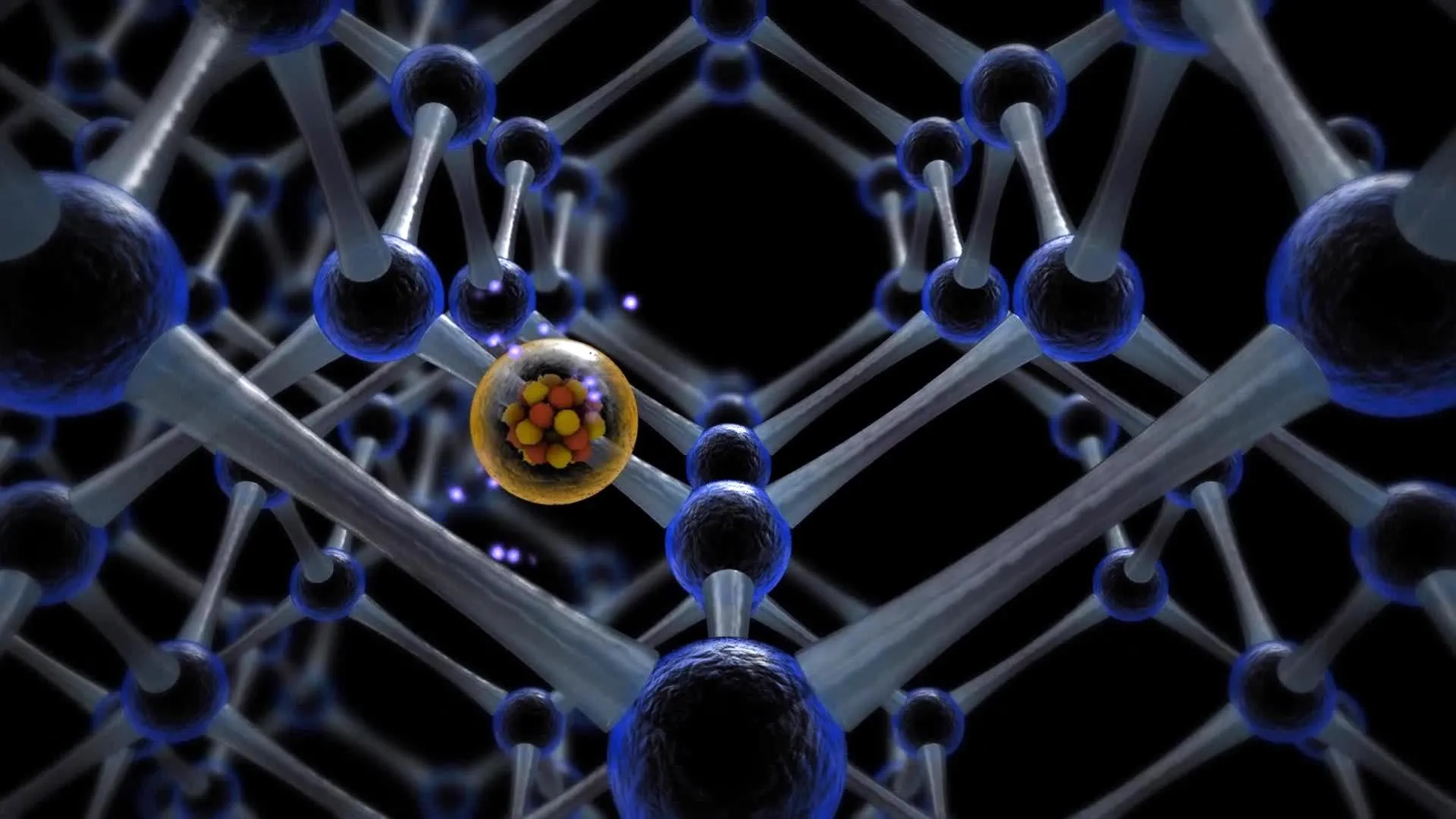
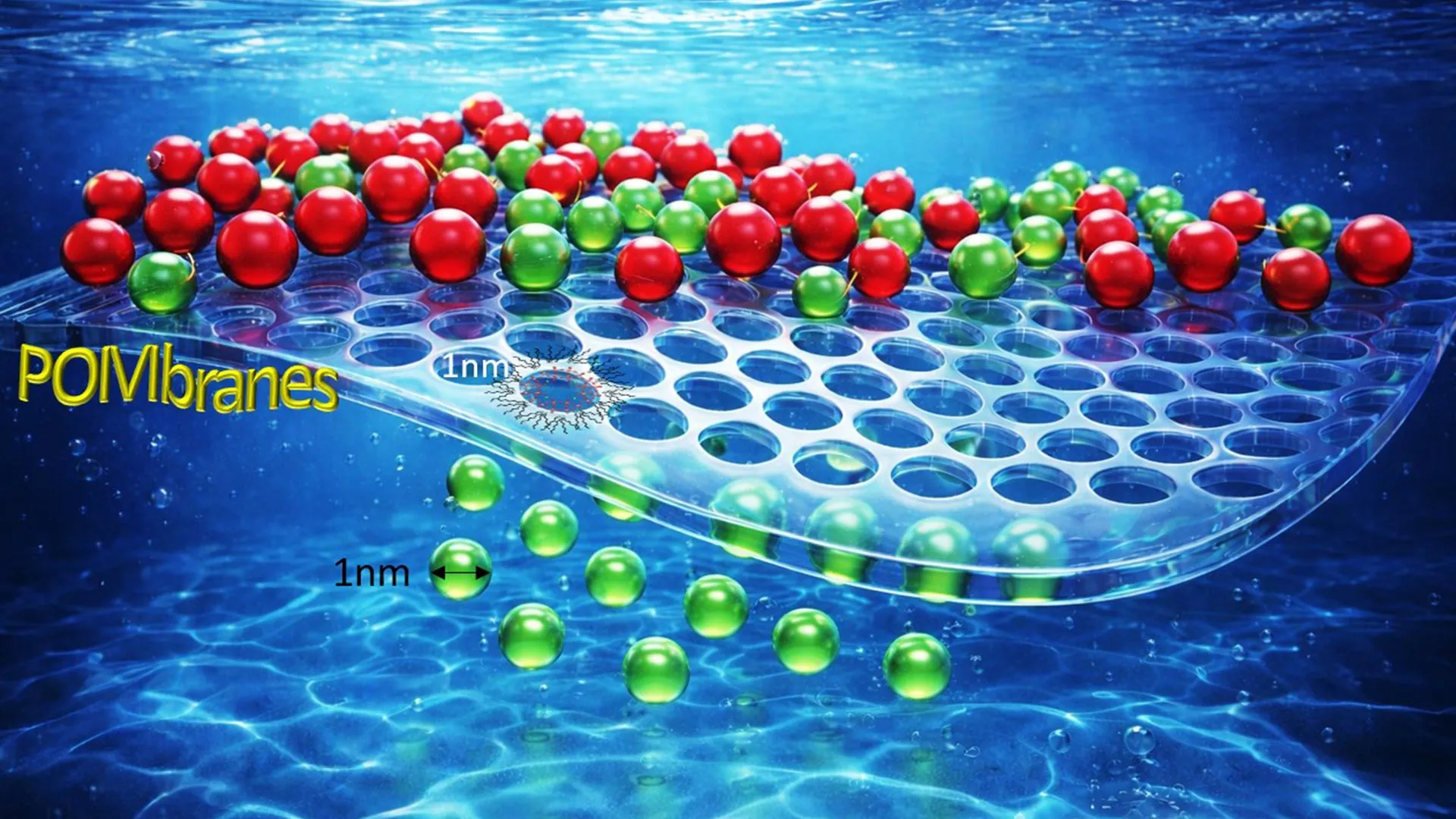
To replicate this biological perfection, the research team utilized polyoxometalate (POM) clusters. POMs are inorganic, metal-oxygen clusters known for their structural diversity and stability. Dr. Shilpi Kushwaha, a Senior Scientist at CSMCRI and one of the lead researchers, explained that the team engineered these clusters to function as "POMbranes." These membranes contain pores that are exactly one nanometer wide—roughly 100,000 times thinner than a human hair.
"To address the limitations of traditional filters, we engineered a new class of ultra-selective, crystalline membranes," Dr. Kushwaha stated. "These contain pores that remain permanently stable, providing a level of control that was previously unattainable in synthetic materials."
The breakthrough lies in the "crown-shaped" geometry of the POM clusters. Ms. Priyanka Dobariya, a research scholar at CSMCRI and co-first author of the study, noted that these clusters possess a "permanent, perfect hole" at their center. Unlike the pores in plastic or polymer filters, which can warp under pressure, these inorganic holes are structurally rigid. This ensures that the filtration remains consistent over long periods of operation.
Molecular Architecture and the Sieve Effect
Creating a functional membrane is not as simple as discovering a single pore; it requires the assembly of billions of these pores into a continuous, defect-free sheet. The research team achieved this through a sophisticated chemical assembly process. By attaching flexible chemical chains to the rigid POM clusters, they created a hybrid material that could be manipulated at the molecular level.
When these modified clusters were spread across a water surface, they underwent a process of self-organization. The flexible chains acted as spacers, allowing the researchers to control exactly how tightly the POM rings packed together. This resulted in an ultrathin, large-area film where the only available path for a molecule to travel was through the one-nanometer holes in the clusters.
Dr. Raghavan Ranganathan, an Associate Professor at IITGN’s Department of Materials Engineering, described the resulting structure as a "high-tech sieve." To verify the mechanics of this sieve, Dr. Ranganathan and Mr. Vinay Thakur, a PhD scholar at IITGN, conducted extensive molecular-level simulations. These simulations provided a digital map of how molecules interact with the POM pores, confirming that the membrane could distinguish between substances with a precision of 100-200 Daltons. To put this in perspective, a difference of 100 Daltons is roughly equivalent to the weight of a few carbon atoms, a margin of error that is virtually impossible for standard industrial filters to manage.
Comparative Performance and Scalability
The testing phase of the research yielded results that outperformed existing technologies by an order of magnitude. According to Dr. Ketan Patel, Principal Scientist at CSMCRI, the POMbranes demonstrated separation performance nearly ten times better than conventional polymer membranes.
Key performance indicators highlighted in the study include:
- Selectivity: The ability to separate molecules of nearly identical sizes.
- Stability: The membranes remained functional across a wide range of pH levels, from highly acidic to highly alkaline environments, which are common in industrial waste streams.
- Flexibility: Despite being crystalline, the thin-film nature of the POMbranes allows them to be handled and rolled like traditional membranes.
- Scalability: The self-assembly method used to create the films is conducive to large-scale manufacturing, a critical requirement for industrial adoption.
Implications for India’s Textile and Pharmaceutical Sectors
The timing of this discovery is particularly relevant for India, where the textile and pharmaceutical industries are central to the national economy but face increasing pressure to adopt "green" manufacturing practices.
India’s textile and apparel sector contributes approximately 2.3% to the national GDP and accounts for 13% of the country’s total industrial production. With the domestic market projected to reach $350 billion by 2030, the environmental toll of this growth is a major concern. Textile dyeing is a water-intensive process that generates massive volumes of wastewater contaminated with complex dye molecules.
Currently, treating this water to a level where it can be reused is expensive and energy-intensive. POMbranes offer a solution by selectively "sieving" out dye molecules while allowing clean water to pass through. This could transform textile plants into closed-loop systems, significantly reducing freshwater withdrawal and chemical discharge into local waterways.
Similarly, the pharmaceutical industry—often referred to as the "pharmacy of the world"—stands to benefit. Drug purification and solvent recovery are the most expensive stages of pharmaceutical manufacturing. "Highly selective membranes can lower energy use while maintaining the stringent purity standards required for life-saving medications," noted Mr. Vinay Thakur. By replacing thermal distillation with POMbrane filtration, pharmaceutical companies could reduce their energy bills by up to 70% in specific purification stages.
A Timeline of Collaborative Innovation
The development of POMbranes was the result of a multi-year effort that spanned several prestigious institutions:
- Conceptualization (2020-2021): The team identified the "pore-size inconsistency" in polymer membranes as a primary barrier to industrial efficiency and began looking at inorganic clusters (POMs) as an alternative.
- Synthesis and Engineering (2021-2022): Researchers at CSMCRI successfully modified POM clusters with organic chains to enable film formation.
- Simulation and Validation (2022-2023): The IIT Gandhinagar team used high-performance computing to model the molecular flow, proving the "sieve" theory.
- International Testing (2023): Collaboration with Nanyang Technological University provided access to advanced characterization tools to verify the membrane’s crystalline structure and durability.
- Publication (2024): The findings were peer-reviewed and published in the Journal of the American Chemical Society, marking the technology’s formal introduction to the global scientific community.
Analysis: The Future of the "Energy-Water Nexus"
The success of POMbranes highlights a growing trend in materials science: the "Energy-Water Nexus." This concept recognizes that water scarcity and energy consumption are inextricably linked. Saving water often requires energy-intensive treatment, and producing energy requires vast amounts of water.
By providing a technology that addresses both—reducing the energy needed for separation while enabling the reuse of water—the researchers have created what they call a "platform technology." This means the application of POMbranes is not limited to one specific task. In the future, these membranes could be adapted for lithium extraction from brine (essential for electric vehicle batteries), carbon capture from industrial flues, or even the desalination of seawater.
As global industries face stricter environmental regulations and rising energy costs, the shift from "brute force" thermal separations to "elegant" molecular sieving appears inevitable. The work of the CSMCRI, IITGN, NTU, and S N Bose National Centre team provides a scalable, nature-inspired blueprint for this transition, proving that the smallest pores can indeed solve the largest industrial problems.