The fundamental understanding of the universe’s most enigmatic objects has been challenged by a new theoretical framework that suggests what we currently identify as black holes might actually be "gravastars" containing entire miniature universes. For decades, the scientific community has grappled with the mathematical and physical paradoxes presented by black holes, particularly the "singularity"—a point of infinite density where the known laws of physics cease to function. This latest research, conducted by theoretical physicists at Goethe University Frankfurt, provides a dynamic solution to Albert Einstein’s equations of general relativity, offering a potential bridge between the macroscopic world of gravity and the mysterious properties of dark energy.
The Mathematical Crisis of the Singularity
To understand the significance of the gravastar model, one must first examine the inherent contradictions within the standard model of black holes. According to general relativity, when a massive star—typically one with a mass exceeding the Tolman-Oppenheimer-Volkoff limit of approximately 2.1 to 3 solar masses—exhausts its nuclear fuel, it can no longer support itself against its own gravitational pull. In the absence of outward radiation pressure from nuclear fusion, the core undergoes a catastrophic collapse.
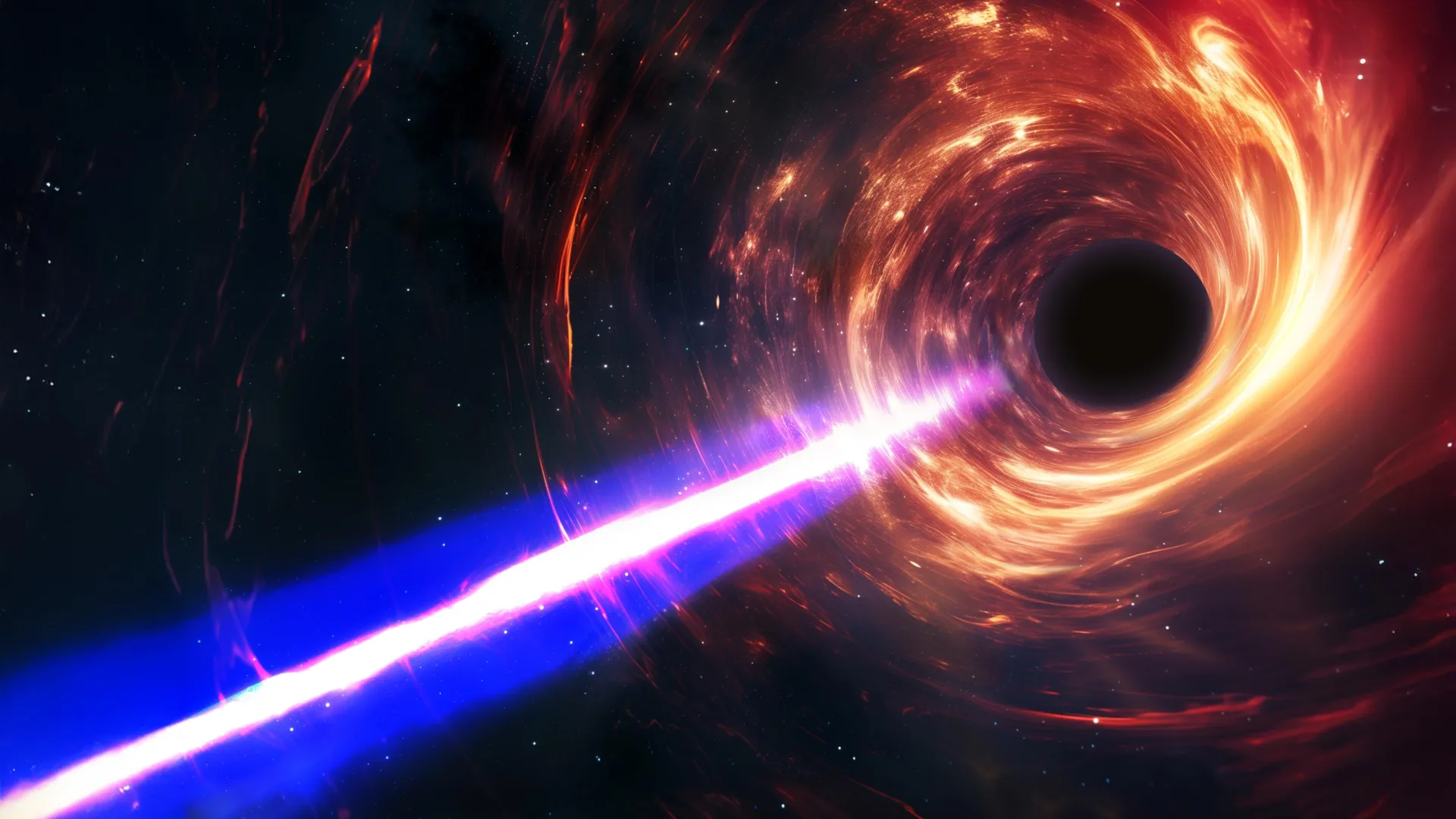
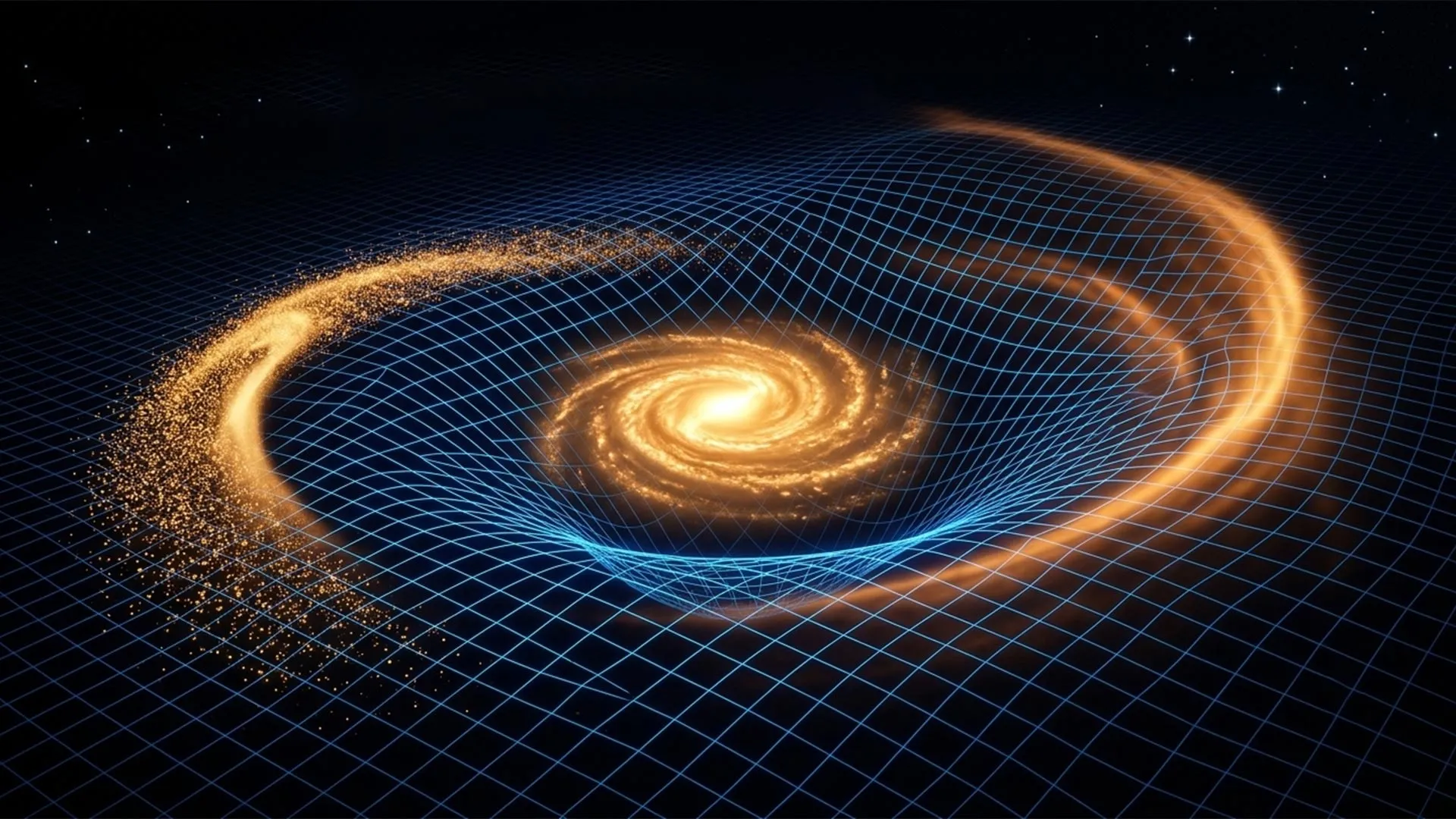
Standard theory dictates that this collapse continues until all the star’s mass is compressed into a singularity. At this point, the curvature of spacetime becomes infinite. For physicists, the singularity is a "mathematical pathology." It represents a breakdown in the predictive power of general relativity, as quantities like density and pressure reach infinity, which is physically impossible in a measurable universe. Furthermore, the "event horizon" surrounding a black hole creates an information paradox; according to quantum mechanics, information cannot be destroyed, yet anything crossing an event horizon is effectively deleted from the observable universe. These unresolved conflicts have led many researchers to seek "regular" alternatives—objects that possess the massive gravitational influence of a black hole but lack its problematic internal structure.
The Concept of the Gravastar: A Dark Energy Alternative
In 2001, physicists Pawel Mazur and Emil Mottola proposed an alternative known as the "gravitational vacuum star," or gravastar. In this model, the collapse of a massive star does not lead to a singularity. Instead, the matter reaches a phase transition point where it is converted into a physical vacuum characterized by a "de Sitter" geometry.
Essentially, a gravastar consists of a ultra-thin shell of very dense ordinary matter surrounding a core of dark energy. Dark energy, which is currently thought to drive the accelerated expansion of our universe, exerts a powerful negative pressure (repulsion). In a gravastar, this internal repulsive force perfectly balances the inward crush of gravity, resulting in a stable, compact object. Because a gravastar has no event horizon in the traditional sense, and no singularity, it avoids the information paradox and the mathematical infinities that plague black hole theory.
Despite the elegance of the gravastar theory, it has faced a significant hurdle for nearly a quarter of a century: the lack of a "dynamic solution." While scientists could describe what a gravastar might look like once formed, they could not explain the physical process by which a collapsing star transforms into one.
The Goethe University Breakthrough: The Birth of a Mini-Universe
The new study, authored by Daniel Jampolski and Professor Luciano Rezzolla, provides the first dynamic mathematical description of gravastar formation. Their solution suggests that the process of stellar collapse triggers a phenomenon akin to a "miniature Big Bang" within the star’s interior.
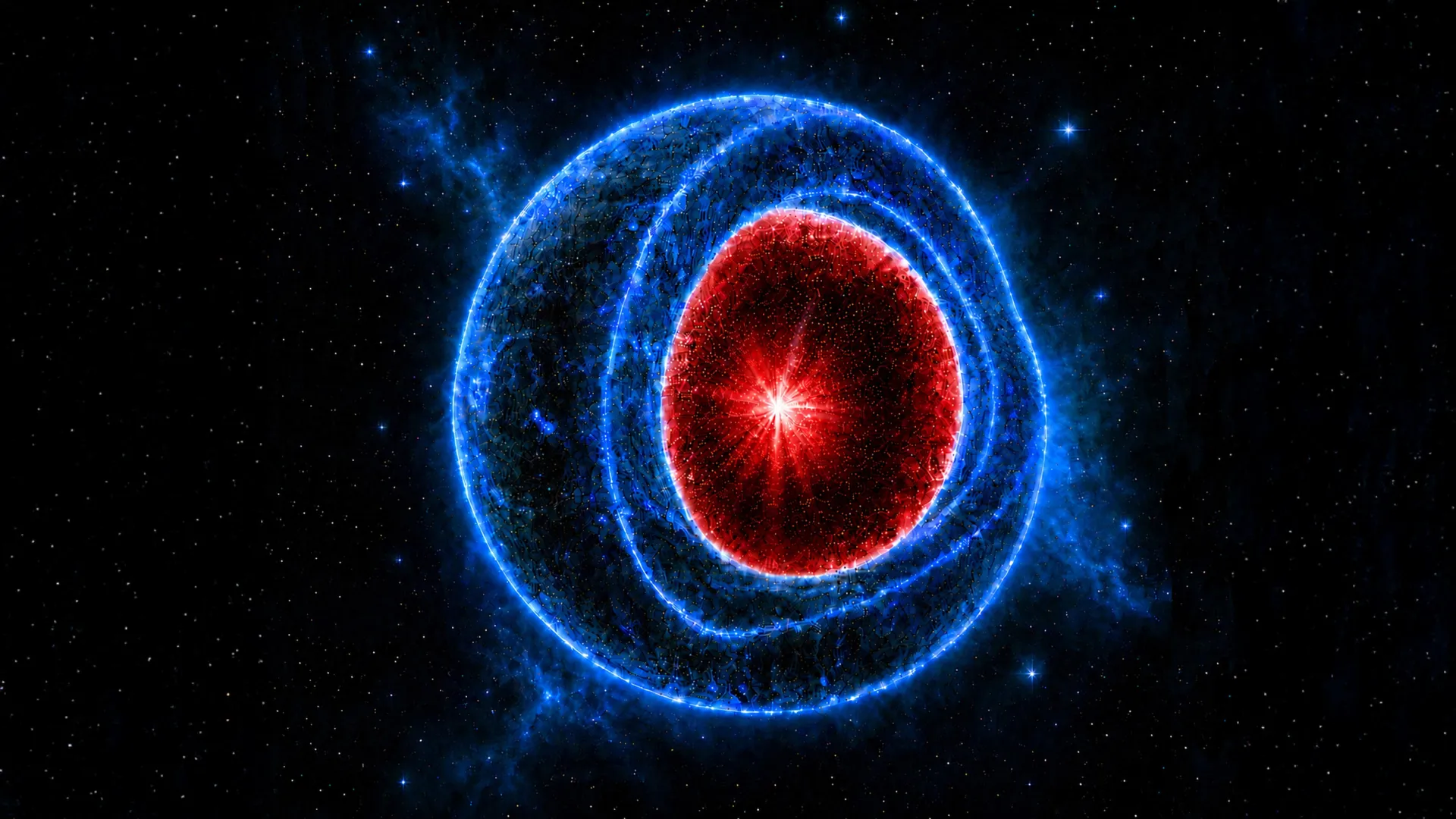
As the star’s matter is compressed to extreme densities, nearing the point where a black hole would normally form, the model indicates that a phase transition occurs. This transition births a new, expanding region of spacetime—a mini-universe—inside the collapsing material. This internal universe is filled with dark energy, which begins to expand outward.
"The Big Bang of the emerging universe can unfold once the star has already collapsed almost to the point of becoming a black hole," explains Daniel Jampolski, who developed the solution as part of his master’s thesis. This expansion creates a "pressure balance." The inward gravitational pull of the original stellar matter is met by the outward expansion of the internal dark energy core. The result is not a point of infinite density, but a stable, layered structure.
Nested Stars and the Matryoshka Effect
One of the most intriguing aspects of Jampolski and Rezzolla’s research is the discovery that these objects could be "nested." The mathematical solutions allow for a series of shells within shells, a concept the researchers have nicknamed "nestars" (nested stars).
In this scenario, a gravastar could contain a smaller gravastar inside its dark energy core, which in turn could contain another. This structure is reminiscent of a Russian Matryoshka doll. Each layer represents a different stage of collapse and expansion, where the outward pressure of dark energy from the innermost "mini-universe" supports the layers above it. This suggests a fractal-like complexity to the structure of spacetime at extreme densities, potentially offering a new way to look at the hierarchy of the cosmos.
Chronology of Gravitational Theory and Research
The evolution of these ideas represents over a century of progress in theoretical astrophysics:
- 1915: Albert Einstein publishes the General Theory of Relativity, describing gravity as the curvature of spacetime.
- 1916: Karl Schwarzschild finds the first exact solution to Einstein’s equations, predicting the existence of what would later be called black holes.
- 1939: Oppenheimer and Snyder provide the first description of gravitational collapse.
- 1960s-70s: The "Golden Age" of black hole physics; Stephen Hawking and Roger Penrose prove singularity theorems.
- 2001: Mazur and Mottola propose the gravastar as a singularity-free alternative.
- 2015: LIGO detects gravitational waves from merging black holes, confirming the existence of ultra-compact objects.
- 2019: The Event Horizon Telescope (EHT) captures the first image of the "shadow" of a black hole in the galaxy M87.
- 2024: Jampolski and Rezzolla publish the dynamic solution for gravastar formation, introducing the concept of the "nestar."
Scientific Context and Observational Challenges
While the theoretical framework for gravastars is robust, distinguishing them from black holes in the real world remains a monumental task for astronomers. To a distant observer, a gravastar and a black hole would appear nearly identical. Both would possess immense mass, exert the same gravitational pull on nearby stars, and emit similar "shadows" when viewed through radio telescopes like the EHT.
The primary difference lies at the boundary. A black hole has an event horizon—a "point of no return" from which nothing can escape. A gravastar has a physical shell of matter. Recent studies have focused on "gravitational wave echoes." When two compact objects merge, they send ripples through spacetime. If the objects are black holes, the signal should end abruptly. However, if they are gravastars, the presence of a physical shell might cause the gravitational waves to "bounce" or echo, providing a distinct signature that could be detected by future generations of gravitational wave observatories like the Einstein Telescope or LISA (Laser Interferometer Space Antenna).
Official Responses and Theoretical Philosophy
The researchers are careful to note that their work is not an attempt to disprove the existence of black holes, but rather to expand the horizons of theoretical physics. Professor Luciano Rezzolla, a leading expert in theoretical astrophysics, emphasizes the importance of exploring "exotic" solutions.
"Looking for alternatives to black holes should not suggest a skepticism towards black holes, which still represent the most natural and simplest solution to the fate of gravitational collapse," Rezzolla stated. "However, as scientists… it is essential to maintain an unbiased approach towards what we do not know and hence explore both the accepted wisdom and the more exotic interpretations. History teaches us that it is not unusual for the latter to become the former."
This sentiment is shared by many in the field who believe that the resolution to the conflict between quantum mechanics and gravity will likely come from these "extreme limit" cases. If gravastars do exist, they would provide a natural home for dark energy, potentially linking the physics of the very small (quantum fluctuations) with the physics of the very large (the expansion of the universe).
Broader Implications and Future Research
The proposal of a "mini-universe" inside a star has profound implications for cosmology. If stellar collapse can trigger a local Big Bang, it raises the question of whether our own universe might have originated from a similar process within a higher-dimensional "parent" star. This "cosmological natural selection" or "fecund universes" theory, originally proposed by Lee Smolin, gains new mathematical weight with Jampolski and Rezzolla’s dynamic solution.
Furthermore, the study provides a new playground for numerical relativity. Scientists can now use these equations to simulate the mergers of gravastars and compare the resulting "waveforms" with data collected by the LIGO-Virgo-KAGRA collaboration. If the data begins to show discrepancies that black hole models cannot explain, the gravastar may move from a theoretical curiosity to a primary candidate for the universe’s most massive inhabitants.
As the search for a Theory of Everything continues, the gravastar represents a vital piece of the puzzle. By removing the singularity and replacing it with the birth of new spacetime, physicists may finally be able to describe the life cycle of a star from its first nuclear spark to its final, mysterious transformation into a gateway for a new cosmos. For now, the "nestar" remains a mathematical masterpiece, waiting for the next generation of telescopes to prove its existence in the cold depths of space.