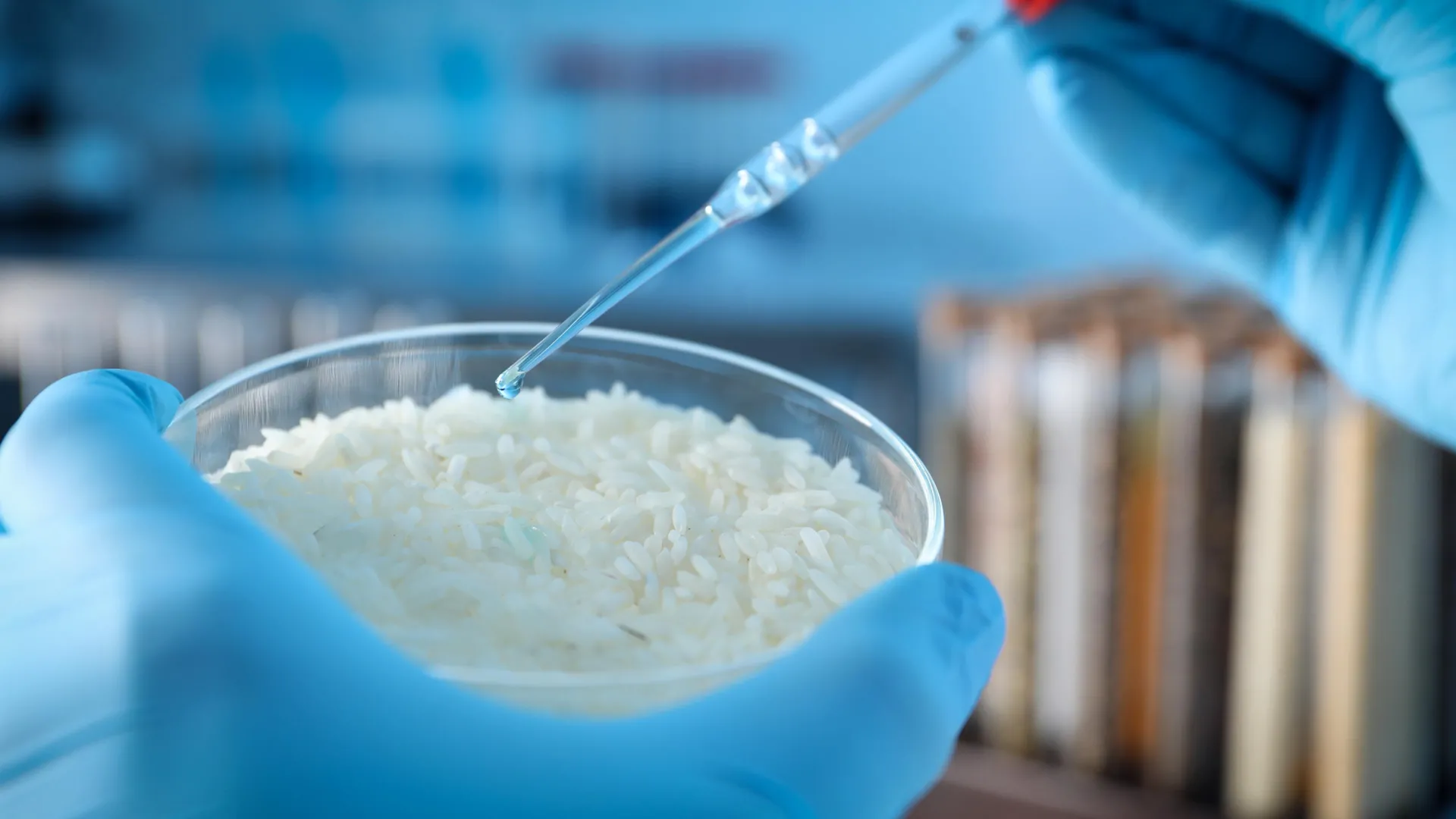
The intersection of agricultural science and advanced mechanical engineering has yielded a surprising breakthrough, as researchers have identified that the humble rice grain possesses unique physical properties that could revolutionize the development of smart materials and soft robotics. In a study led by the University of Birmingham and published in the prestigious journal Matter, an international team of scientists demonstrated that packed rice grains exhibit a counterintuitive mechanical response to pressure known as "rate softening." Unlike the vast majority of materials, which either maintain their integrity or harden when subjected to rapid force, rice grains become significantly weaker as the speed of compression increases. This discovery has paved the way for a new class of "intelligent" metamaterials that can adapt their stiffness and structural response to external stimuli without the need for electronic sensors or external power sources.
The Mechanics of Rate Softening in Granular Systems
At the heart of this discovery is the concept of granular mechanics, a field of physics that examines how collections of discrete particles—such as sand, soil, or cereal—behave under various conditions. For decades, engineers have understood that most granular materials undergo "rate hardening." For instance, when you run across wet sand, the rapid impact of your feet causes the grains to lock together, providing a firm surface; however, if you stand still, you slowly sink. Rice grains, as the Birmingham-led study reveals, operate on an entirely different physical principle.
The research team conducted a series of controlled experiments to observe how tightly packed rice grains responded to varying degrees of mechanical load. When the load was applied at a slow, deliberate pace, the internal friction between the grains allowed them to form stable "force chains"—microscopic networks of contact points that distribute weight and provide structural strength. However, as the loading speed increased, the researchers observed a sharp drop in the coefficient of sliding friction between the individual grains. This reduction in friction caused the internal force chains to collapse prematurely, leading to a significant weakening of the overall structure.
This "rate softening" phenomenon is exceedingly rare in nature. Dr. Mingchao Liu, a lead researcher from the University of Birmingham’s School of Engineering, noted that while rice is a global dietary staple, its potential as a mechanical blueprint had been largely overlooked. By analyzing the grain’s response at the molecular and structural levels, the team was able to isolate the specific variables—grain geometry, surface texture, and moisture content—that contribute to this unusual behavior.
A Chronology of the Research and Development Process
The journey toward this discovery began several years ago as part of a broader investigation into the "jamming transition" of granular matter. Scientists have long sought to understand why certain materials transition from a fluid-like state to a solid-like state when packed tightly. The University of Birmingham team, collaborating with international partners, initially set out to catalog the frictional properties of various organic seeds and grains to see how they compared to inorganic materials like glass beads or silica sand.
Between 2021 and 2023, the team conducted hundreds of compression tests using high-speed imaging and sensitive force transducers. Early data suggested an anomaly in the rice samples: the faster the compression piston moved, the less resistance the material offered. Initially dismissed as an experimental error, the results were consistently replicated across different varieties of rice, including long-grain and basmati.
By late 2023, the focus shifted from mere observation to engineering application. The researchers realized that if they could harness this rate-softening property, they could create a material that "knows" how to react to different types of impact. The final phase of the study involved the creation of a "granular metamaterial"—a composite structure that combines rice-based units with materials that exhibit the opposite property, such as sand or specialized polymers. The successful synthesis of this material and the documentation of its self-adaptive capabilities formed the core of the findings recently reported in Matter.
Engineering the Self-Adapting Metamaterial
The creation of the new metamaterial represents a significant leap in material science. By definition, a metamaterial is a structure engineered to have properties that are not found in naturally occurring substances. In this case, the researchers designed a composite that utilizes the "rate softening" of rice and the "rate hardening" of other granular substances to create a balanced, programmable response system.
The resulting material is essentially a series of encapsulated granular cells. Depending on the velocity of the force applied to these cells, the internal grains either lock together to provide rigidity or slide past one another to allow for flexibility. This allows the structure to bend, buckle, or stiffen dynamically.
What makes this innovation particularly significant is the absence of "active control." In traditional engineering, a material that changes its properties would require a suite of sensors to detect pressure, a microprocessor to analyze the data, and an actuator to trigger a physical change. The rice-inspired metamaterial achieves all of this through "embodied intelligence"—the physics of the material itself dictates the response. As Dr. Liu explained, "Instead of telling a structure how to respond, we let physics decide: fast loads trigger one behavior, slow loads another."
Implications for Soft Robotics and Human-Machine Interaction
The most immediate application for this technology lies in the rapidly expanding field of soft robotics. Traditional robots are often constructed from rigid metals and plastics, which can be dangerous when operating in close proximity to humans. Soft robots, made from flexible materials, are safer but often lack the ability to provide structural support when needed.
A robot built with rice-inspired metamaterials could offer the best of both worlds. During delicate tasks, such as surgical assistance or handling fragile objects, the robot could remain soft and compliant, moving slowly to ensure safety. However, if the robot were to encounter a sudden obstacle or require a burst of strength to lift a heavy load, the material properties could shift instantaneously to provide the necessary rigidity.
In a surgical context, this could lead to the development of catheters or endoscopes that are flexible enough to navigate the complex pathways of the human body but can stiffen on demand to provide a stable platform for precision instruments. The lack of electronics within the material itself also makes it ideal for use in MRI environments or other areas where electromagnetic interference is a concern.
Advancements in Protective Equipment and Safety Gear
Beyond robotics, the safety and defense industries are looking closely at the Birmingham team’s findings. The ability of a material to respond differently to different impact speeds has profound implications for personal protective equipment (PPE).
Current body armor and athletic padding are often designed to protect against specific types of high-velocity impact, such as a ballistic threat or a hard fall. However, these materials can be stiff and uncomfortable for the wearer during normal movement. A rice-inspired protective vest could remain supple and breathable during routine activity (slow movement) but instantly transform its mechanical state to absorb energy during a high-speed collision or fall.
Furthermore, this technology could be integrated into vehicle safety systems. Crumple zones in modern cars are designed to deform in a specific way during a crash to protect the occupants. By using rate-sensitive metamaterials, engineers could design car components that offer different levels of resistance depending on the severity and speed of the impact, potentially reducing the G-forces experienced by passengers in both low-speed "fender benders" and high-speed highway accidents.
Technical Analysis and Supporting Data
The data published in Matter highlights several key metrics that underscore the uniqueness of rice’s mechanical profile. During the experiments, the researchers measured the "stress-strain" relationship of the packed grains across a spectrum of loading rates.
Key findings included:
- Friction Reduction: At a compression speed of 1 millimeter per second, the friction between grains remained stable. However, when the speed was increased to 100 millimeters per second, the effective friction coefficient dropped by nearly 30%.
- Energy Dissipation: The metamaterial demonstrated a 40% improvement in energy absorption compared to standard homogenous granular fillers when subjected to rapid impact.
- Structural Versatility: The team showed that by varying the ratio of rice grains to hardening agents (like sand), they could "tune" the material to trigger its softening response at specific, pre-determined force thresholds.
These data points suggest that the behavior is not merely a curiosity of kitchen science but a robust physical phenomenon that can be calculated and engineered for industrial use.
Expert Reactions and Future Outlook
The scientific community has reacted with cautious optimism to the University of Birmingham’s report. Dr. Elena Rossi, a materials physicist not involved in the study, noted that "the utilization of bio-based granular materials as a design principle for metamaterials is a refreshing departure from synthetic polymers. It opens the door to more sustainable engineering solutions."
Industry analysts suggest that the cost-effectiveness of using rice as a foundational element for smart materials could accelerate the commercialization of the technology. Unlike carbon nanotubes or specialized alloys, rice is abundant, biodegradable, and inexpensive. This makes it an attractive option for large-scale applications in construction, where rate-sensitive dampers could be used to protect buildings from the different frequencies of seismic waves during an earthquake.
As the research moves from the laboratory to the prototype stage, the team at the University of Birmingham plans to investigate how other environmental factors, such as temperature and humidity, affect the rate-softening property. They also aim to explore whether other agricultural byproducts—such as husks or stalks—exhibit similar "intelligent" mechanical behaviors.
The study serves as a powerful reminder that some of the most sophisticated engineering solutions may be hidden in the most common places. By looking at a staple food through the lens of advanced physics, scientists have discovered a pathway toward a future where our tools, clothes, and machines are not just built, but are inherently capable of sensing and responding to the world around them.