The concept of space-time, the four-dimensional continuum that serves as the foundation for Albert Einstein’s general theory of relativity, remains one of the most transformative ideas in the history of science. It fundamentally altered the human understanding of reality, moving the world beyond the Newtonian view of absolute space and time toward a dynamic, interwoven fabric that responds to the presence of mass and energy. However, as the field of theoretical physics advances into the 21st century, a profound debate has emerged regarding the ontological status of this fabric. Scientists and philosophers are increasingly questioning whether space-time is a physical substance, a mathematical structure, or a linguistic metaphor that has been stretched beyond its utility. This inquiry is not merely academic; it strikes at the heart of how humanity interprets the universe, from the mechanics of the Big Bang to the theoretical possibility of time travel and the reconciliation of general relativity with quantum mechanics.
The Evolution of the Space-Time Paradigm
To understand the current debate, it is essential to trace the chronology of how the concept of space-time was established. For centuries, the Newtonian paradigm dominated, treating space as an empty stage and time as a universal, unwavering clock. This view was disrupted in 1905 when Albert Einstein published his theory of special relativity, which demonstrated that space and time are not independent but are relative to the observer’s motion.
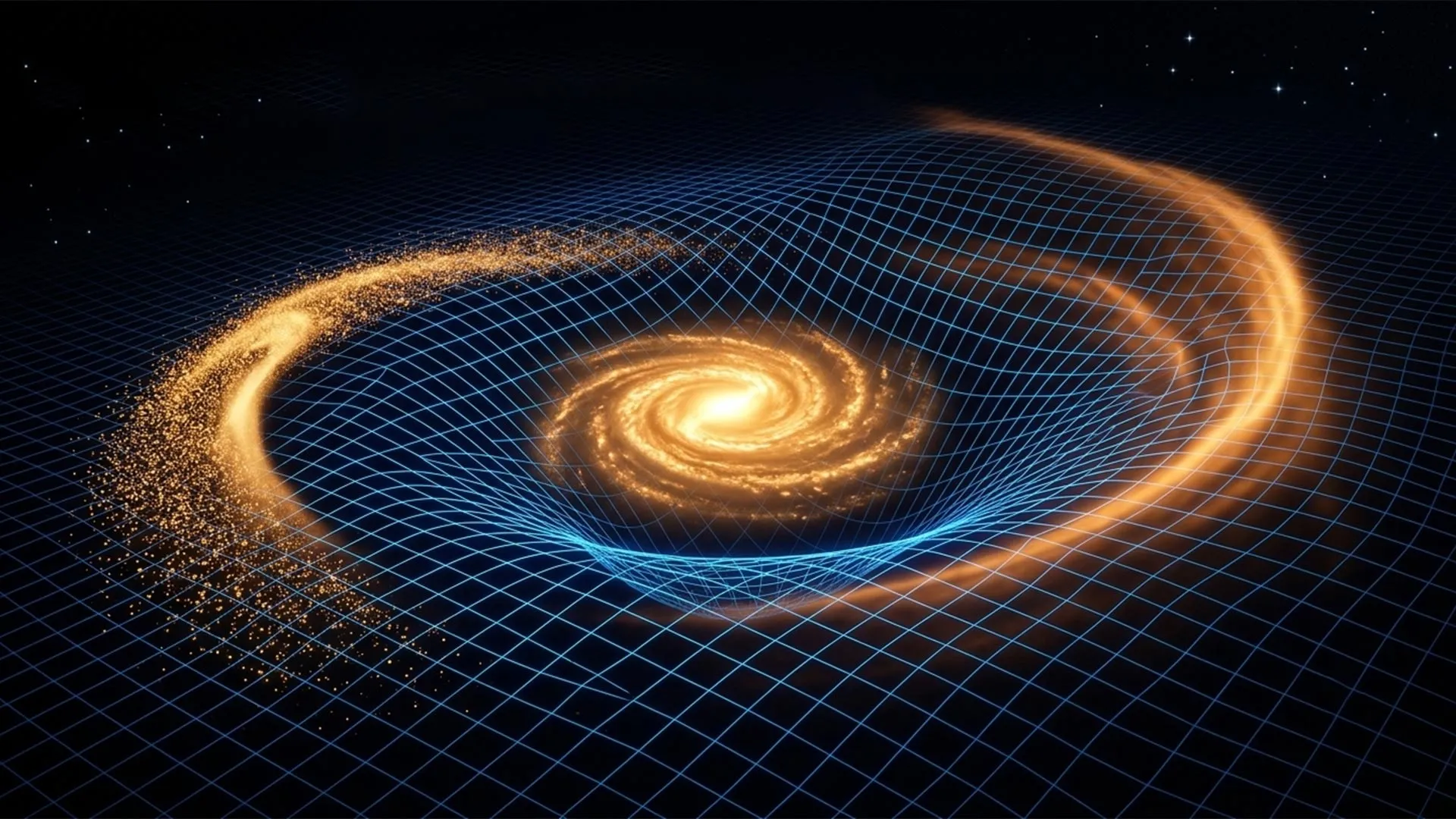
The true geometric synthesis occurred in 1908, when the mathematician Hermann Minkowski famously declared that "henceforth space by itself, and time by itself, are doomed to fade away into mere shadows, and only a kind of union of the two will preserve an independent reality." This "union" became the four-dimensional manifold known as Minkowski space. By 1915, Einstein expanded this into general relativity, proposing that gravity is not a force acting at a distance but rather the curvature of this four-dimensional fabric caused by mass.
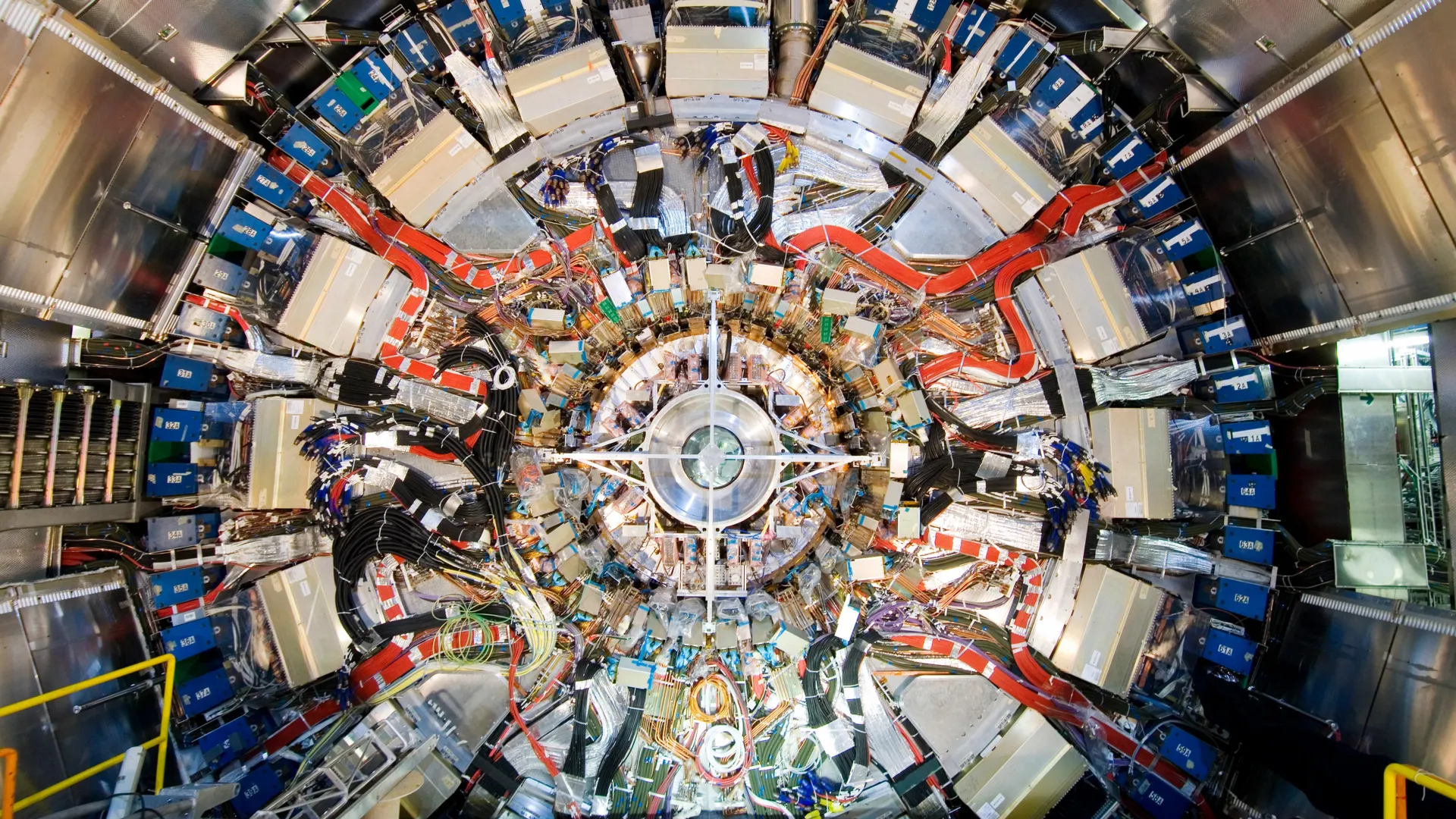
Since then, the mathematical validity of space-time has been confirmed with extraordinary precision. Empirical data from the Global Positioning System (GPS), which must account for relativistic time dilation to maintain accuracy, serves as daily proof of Einstein’s equations. Furthermore, the 2015 detection of gravitational waves by the Laser Interferometer Gravitational-Wave Observatory (LIGO) provided direct evidence of "ripples" in the fabric of space-time, confirming a century-old prediction.
The Block Universe and the Philosophy of Eternalism
Despite these empirical successes, the interpretation of what space-time is remains fractured. One of the most prominent interpretations is "eternalism," which gives rise to the "block universe" model. In this view, the universe is a static, four-dimensional block where all points in time—past, present, and future—exist simultaneously and with equal reality.
Under eternalism, the "flow" of time is dismissed as a persistent human illusion. Just as all points in space exist even if we are not currently occupying them, all points in time exist regardless of our "now." This model suggests a deterministic reality where the future is already "there," cataloged within the geometric structure of the block. While this aligns perfectly with the mathematics of relativity, it creates a significant tension with the human experience of "becoming" and the arrow of time.
The block universe model has profound implications for our understanding of causality and free will. If the future is as real and fixed as the past, the notion of change becomes a subjective artifact of human consciousness rather than a fundamental property of the universe. This leads to the "problem of time" in physics: the difficulty of reconciling the timeless, static equations of general relativity with the dynamic, unpredictable nature of quantum mechanics.
The Linguistic Pitfall: When Language Goes on Holiday
The Austrian-British philosopher Ludwig Wittgenstein famously argued that many philosophical problems are actually "pseudo-problems" that arise when language "goes on holiday"—meaning words are used outside their functional context. In the realm of physics, this linguistic drift is evident in how terms like "exists," "time," and "timeless" are applied to space-time.
In everyday speech, "existence" usually implies an object that endures through time. We say a chair exists because it occupies space and persists from one moment to the next. However, when physicists say the "block universe exists," they are using the word in a way that negates the very duration the word usually implies. If the block universe contains all of time, it cannot exist in time. This logical knot suggests that our current terminology may be insufficient to describe the true nature of the cosmos.
Theoretical physicists have repurposed technical terms without always shedding the metaphysical baggage they carry from common parlance. This has led to a confusion between space-time as a mathematical tool for predicting events and space-time as an objective, physical entity. If space-time is merely a relational structure—a way of mapping the distance between events—then many of our questions about its "substance" may be misplaced.
Existence vs. Occurrence: The Elephant Analogy
A critical distinction often overlooked in popular science is the difference between existence and occurrence. To illustrate this, consider an object like an elephant. In a three-dimensional sense, an elephant "exists" because it has mass and takes up space over a period of duration. Its "world line" in a four-dimensional map would be a long, continuous tube representing its path from birth to death.
Conversely, an "occurrence" is an event—a flash of light or a single collision of particles. It does not endure; it happens. The confusion arises when we ask if space-time itself exists like the elephant or occurs like the flash. If the block universe is a complete map of all events, then the map itself does not "happen." But for the map to "exist" in any meaningful way, we often find ourselves accidentally imagining a "meta-time" in which the block persists.
This has led some theorists to propose radical five-dimensional models. To say that a four-dimensional block "exists," one might need a second dimension of time to allow for that existence. However, there is currently no empirical evidence for a second time dimension, and adding one complicates the laws of physics significantly. This structural dilemma highlights the possibility that our conceptualization of space-time as a "thing" is fundamentally flawed.
Supporting Data and Empirical Challenges
The debate over the nature of space-time is intensified by the ongoing quest for a theory of Quantum Gravity. While general relativity treats space-time as a smooth, continuous fabric, quantum mechanics suggests that at the smallest scales (the Planck scale), reality is "grainy" or quantized.
- The Holographic Principle: Emerging from black hole thermodynamics, this principle suggests that the description of a volume of space can be thought of as encoded on a lower-dimensional boundary to the region. This implies that space-time may not be fundamental but rather an "emergent" property of deeper quantum entanglements.
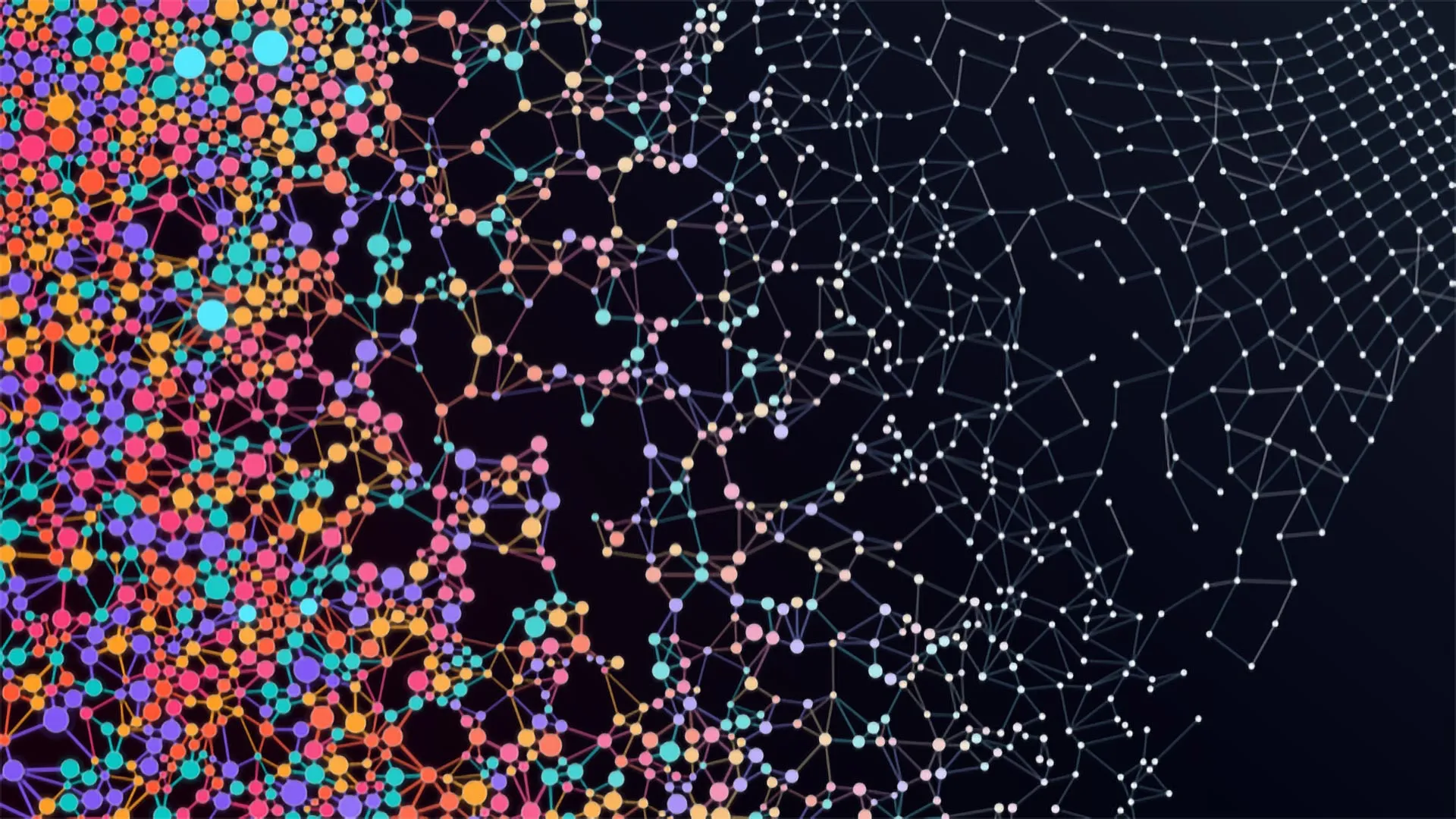
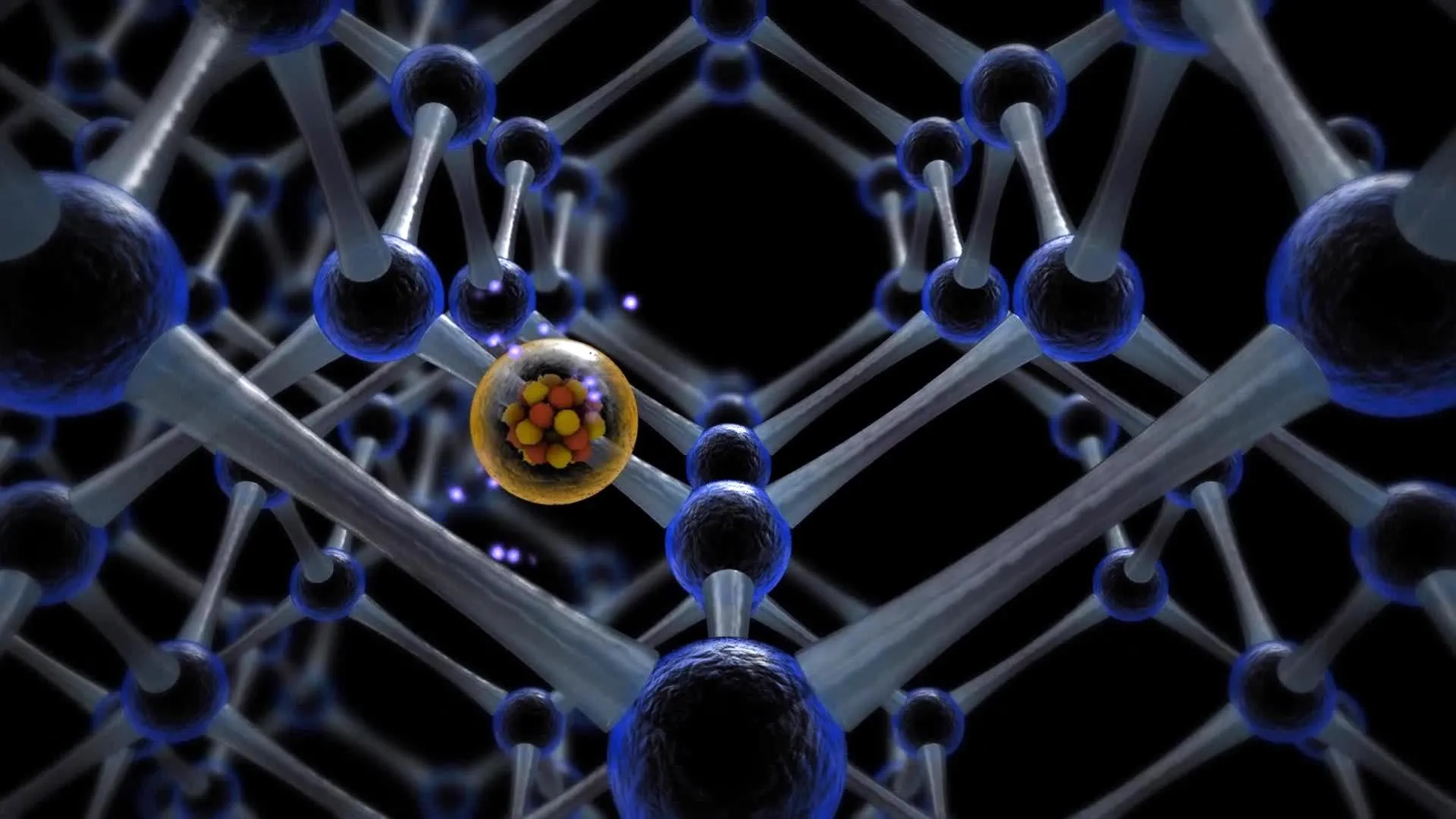
- Loop Quantum Gravity (LQG): This theory proposes that space itself is made of discrete "loops" woven together. In this view, there is no background space-time fabric; instead, the geometry of the universe is a network of quantum states.
- Causal Set Theory: This approach suggests that space-time is a collection of discrete points (events) related by causality. Here, time is not a dimension but a sequence of "becoming," which challenges the static block universe model.
These competing theories highlight the lack of consensus. If space-time is emergent, then asking what it is "made of" is like asking what a circle on a computer screen is made of—the circle is real at the level of the user interface, but at the level of the hardware, it is just a collection of pixels and code.
Cultural Impacts and the Role of Fiction
The ambiguity surrounding space-time has permeated popular culture, shaping how the public perceives reality and the possibilities of technology. Science fiction serves as a testing ground for these philosophical interpretations.
In films like The Terminator (1984), the "fixed timeline" or "closed causal loop" reflects a strict block universe interpretation. The events are set in stone; the attempt to change the past is actually what causes the future. In contrast, films like Avengers: Endgame (2019) utilize a "branching" or "dynamic" model, where the timeline can be altered. This latter view requires space-time to be a substance that can be reshaped, implying an existence that allows for change—a concept that clashes with the "timeless" nature of the traditional block universe.
These narratives reflect the deep-seated human desire to reconcile the rigid laws of physics with the intuitive sense that the future is unwritten. The fact that both interpretations can coexist in the public imagination underscores the lack of a definitive scientific answer.
Broader Implications and Future Research
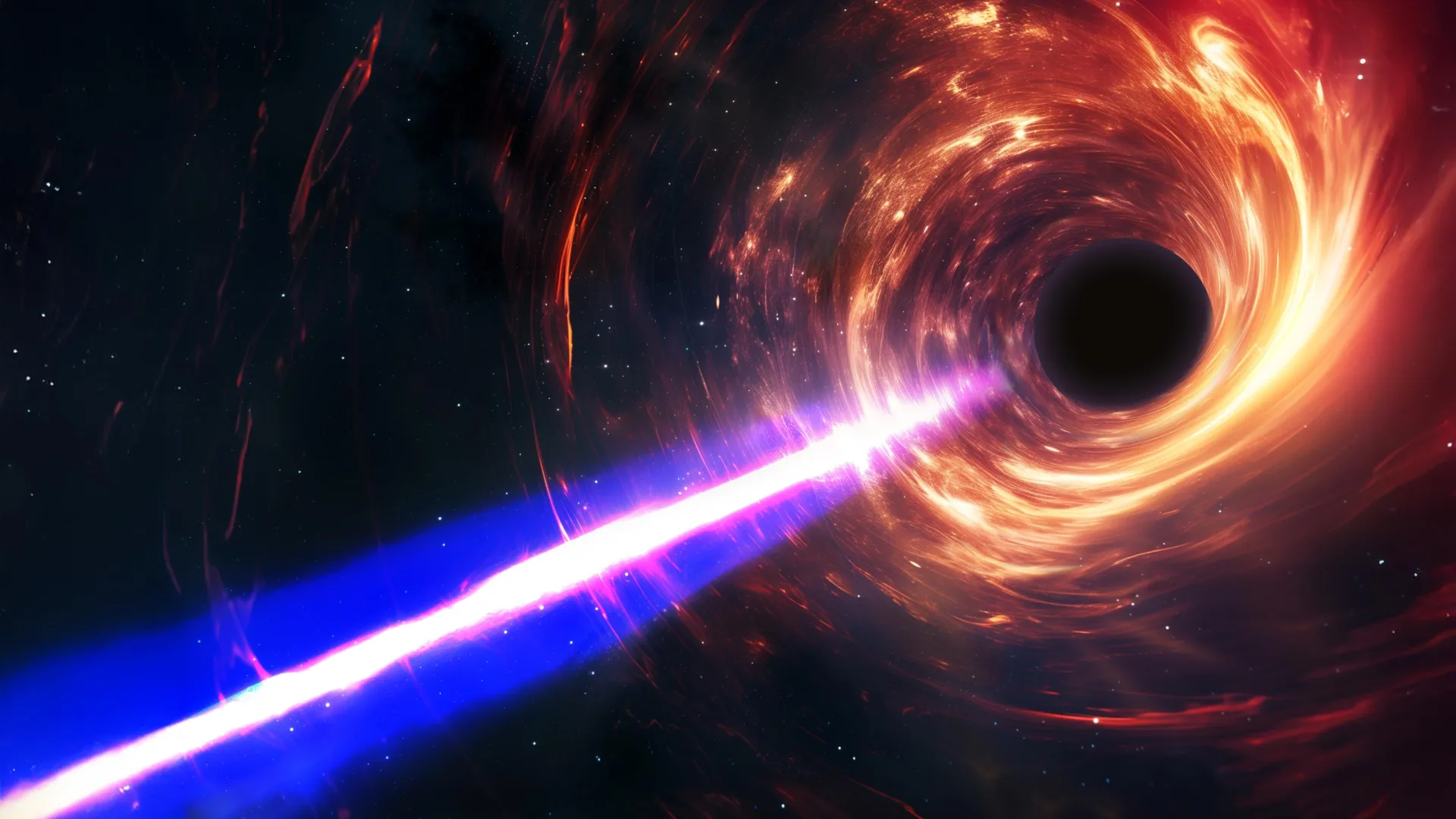
The resolution of the space-time debate has consequences far beyond theoretical physics. It affects our understanding of the origin of the universe. If space-time is a fixed block, the Big Bang is not the "beginning" in a temporal sense, but simply one edge of the block. If space-time is emergent, the Big Bang may represent the moment the "interface" of our reality was formed from a more fundamental state.
Furthermore, the "memory of space-time" is a radical new proposal being explored by some cosmologists. This idea suggests that space-time may retain a permanent record of gravitational changes, a phenomenon known as the "gravitational-wave memory effect." If proven, this would suggest that space-time has properties more akin to a physical medium than a mere geometric abstraction.
Conclusion: The Path Forward
The quest to define space-time is ultimately a quest to define the limits of human knowledge. While Einstein’s equations provide a near-perfect mathematical description of how the universe behaves, they remain silent on what the universe is. The tension between the static block of relativity and the dynamic flow of human experience remains one of the greatest unresolved conflicts in science.
As researchers continue to probe the limits of the Planck scale and the edges of black holes, the language of physics will likely need to evolve. We may find that "space-time" is a useful approximation—a scaffolding that allowed us to climb to a certain height of understanding—but one that must eventually be discarded for a more fundamental description of reality. Until then, the fabric of reality remains a masterpiece of mathematical architecture, waiting for a philosophy that can truly explain its existence.