The pursuit of understanding the most extreme environments in the universe has long been confined to the realms of theoretical mathematics and distant astronomical observation. However, a landmark study published in the journal Nature by researchers at the Advanced Science Research Center at the CUNY Graduate Center (CUNY ASRC) has effectively brought the physics of black hole ergospheres into the controlled environment of a terrestrial laboratory. By utilizing a concept known as "synthetic rotation," the team has successfully demonstrated wave amplification inspired by the Penrose-Zel’dovich effect, a phenomenon previously thought to be nearly impossible to replicate experimentally due to the mechanical limitations of physical matter.
This breakthrough signifies a pivotal shift in how scientists study high-energy astrophysics. Rather than relying on the observation of celestial bodies thousands of light-years away, researchers can now utilize spatiotemporally modulated metamaterials to simulate the conditions of frame-dragging—the process by which a rotating massive object drags the fabric of spacetime along with it. The implications of this work extend far beyond theoretical physics, promising significant advancements in wireless communication, optical computing, and quantum information processing.
The Theoretical Genesis: Penrose and Zel’dovich
The origins of this experiment date back to 1969, when the renowned British physicist Sir Roger Penrose proposed a thought experiment that challenged the prevailing notion that nothing could escape the vicinity of a black hole. Penrose identified a specific region outside the event horizon of a rotating black hole known as the "ergosphere." In this region, the black hole’s immense angular momentum forces spacetime to rotate. Penrose theorized that if a particle entered this region and split into two, one fragment could fall into the event horizon while the other escaped. Due to the rotational energy of the black hole, the escaping fragment could potentially emerge with more energy than the original particle possessed, effectively "mining" the black hole for power.
In 1971, Soviet physicist Yakov Zel’dovich expanded upon Penrose’s particle-based theory by applying it to wave physics. Zel’dovich predicted that electromagnetic or sound waves striking a rotating object could also be amplified, provided the object was spinning faster than the frequency of the incoming waves. While mathematically sound, the Zel’dovich prediction remained largely untested for decades. The primary obstacle was the required rotational speed; to amplify electromagnetic waves, an object would need to rotate at hundreds of millions of revolutions per second—speeds that would cause any known solid material to disintegrate under centrifugal force.
Overcoming Mechanical Limits Through Synthetic Rotation
The CUNY ASRC team, led by Andrea Alù, a Distinguished Professor and founding director of the Photonics Initiative, sought to circumvent the "mechanical barrier" by rethinking what it means for an object to rotate. Instead of physically spinning a disk or a sphere, the researchers developed a system that utilizes "synthetic rotation."
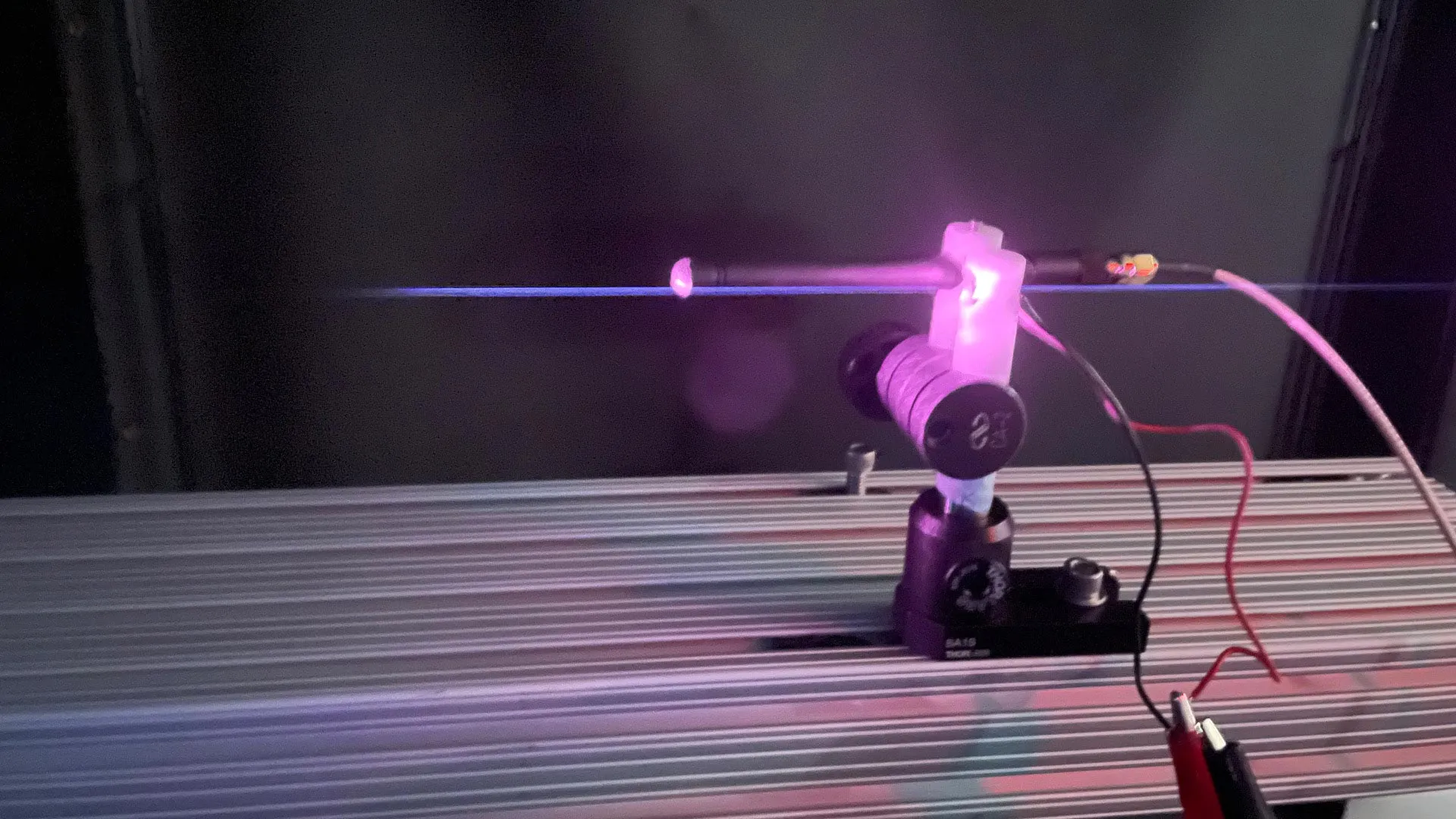
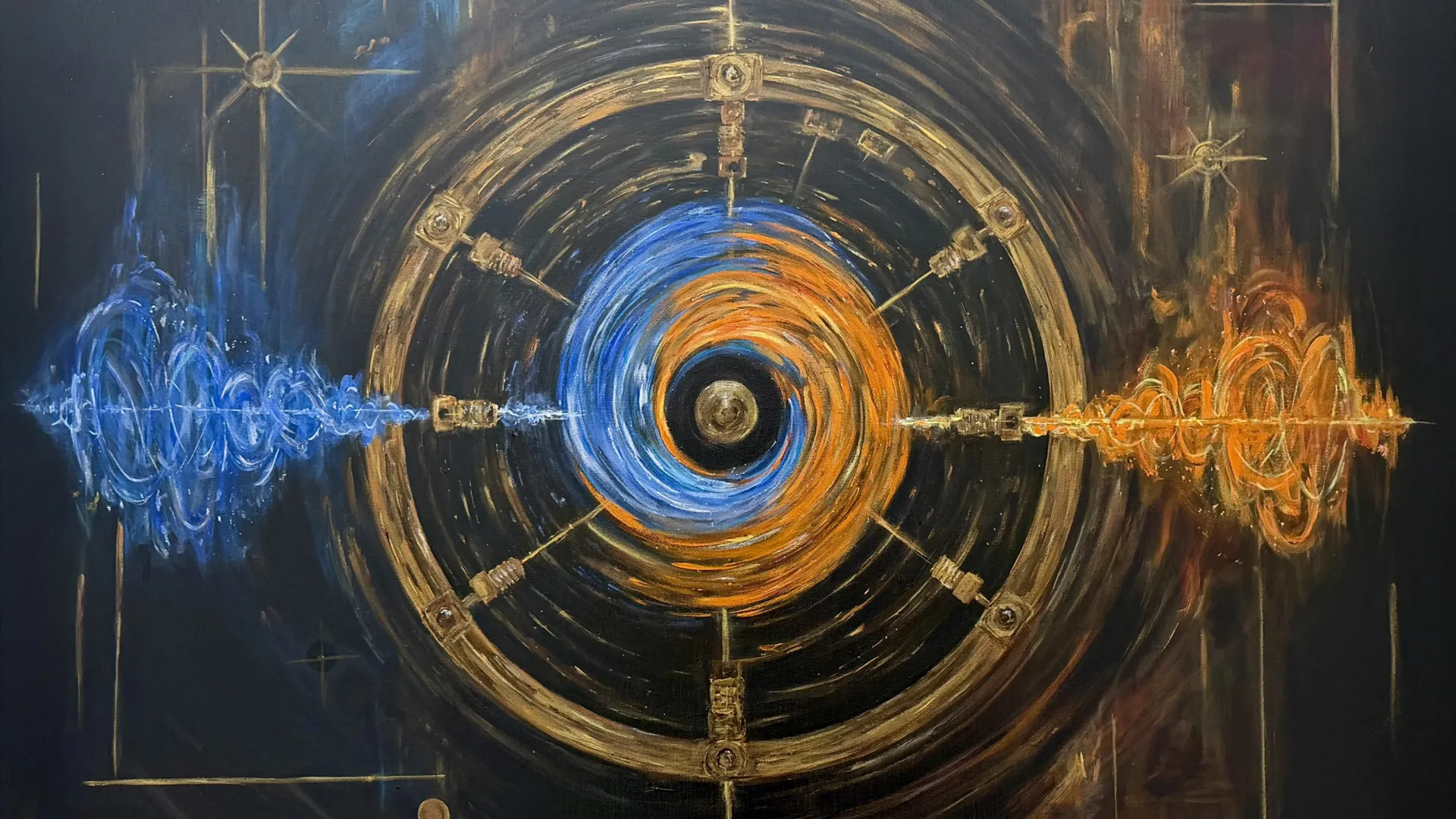
The experimental apparatus consists of a circular array of electronic resonators—complex circuits designed to store and oscillate electromagnetic energy. Rather than moving the hardware, the researchers used a sophisticated control system to rapidly adjust the electrical properties of these resonators in a timed, sequential pattern. This sequential modulation creates a "traveling wave" of property changes that moves around the ring. To an incoming electromagnetic wave, the system behaves exactly as if it were a physical object rotating at extreme, relativistic velocities.
"Our approach facilitates a new method of wave-matter interaction," Professor Alù explained. "By using synthetic time-engineered rotation, we allow waves to extract energy from the system itself. This produces a form of broadband selective amplification that mirrors the physics occurring at the edge of a spinning black hole."
A Chronology of Experimental Verification
The journey from Penrose’s 1969 paper to the 2024 CUNY experiment involves several key milestones in the history of physics:
- 1969: Sir Roger Penrose publishes the theoretical basis for energy extraction from rotating black holes.
- 1971: Yakov Zel’dovich proposes that rotating cylinders could amplify waves, though he acknowledges the impossibility of reaching such speeds mechanically.
- 1980s-90s: Theoretical refinements suggest that "analog gravity" systems—using fluids or sound waves—might be able to test these theories.
- 2020: A team at the University of Glasgow successfully demonstrates the Zel’dovich effect using sound waves. By spinning a foam disk at several thousand RPM, they amplified low-frequency acoustic waves. However, replicating this with light or radio waves remained out of reach.
- 2022-2023: The CUNY ASRC team designs a metamaterial platform capable of "synthetic motion" to bridge the gap between acoustic experiments and electromagnetic reality.
- 2024: The team publishes their findings in Nature, proving that electromagnetic waves can be amplified via synthetic rotation in a stationary device.
Technical Analysis of the Synthetic System
The core of the experiment lies in the manipulation of "spatiotemporal modulation." In traditional materials, properties like refractive index or electrical permittivity are static. In the CUNY device, these properties are functions of both space (where the resonator is in the ring) and time (when the property changes).
When the synthetic rotation speed matches the necessary conditions—specifically, when the angular velocity of the modulation exceeds the frequency of the wave divided by its azimuthal quantum number—the wave enters a regime of "negative resistance." In this state, instead of the material absorbing the wave’s energy, the material’s synthetic motion pumps energy into the wave.
The researchers documented that the amplification was not merely a narrow-band fluke. The system demonstrated "broadband selective amplification," meaning it could boost a wide range of frequencies simultaneously, provided they possessed the correct rotational symmetry. This is a significant departure from traditional amplifiers, which often suffer from narrow bandwidths or high noise profiles.
Expert Reactions and Academic Impact
The scientific community has responded with considerable interest to the CUNY findings. While the experiment was conducted at radio frequencies, the underlying physics is universal across the electromagnetic spectrum.
Lead author Hadiseh Nasari, a post-doctoral researcher at CUNY ASRC, emphasized the versatility of the platform. "This experiment moves ideas about extreme rotational dynamics from theory to practice," Nasari stated. "It creates a platform for exploring phenomena at the intersection of astrophysics and quantum science that were previously considered untouchable in a lab setting."
Independent observers in the field of metamaterials have noted that this work provides a "proof of concept" for non-reciprocal systems. In standard electronics, waves usually travel the same way regardless of direction. By breaking time-reversal symmetry through synthetic rotation, the CUNY team has created a system where waves can be amplified in one direction but not the other—a holy grail for preventing signal interference in complex networks.
Broader Implications: From Astrophysics to 6G
The successful simulation of Penrose-Zel’dovich physics has far-reaching consequences for several technological sectors:
1. Telecommunications and Wireless Technology
As the world moves toward 6G and beyond, the need for efficient, low-noise amplification becomes critical. Synthetic rotation allows for the creation of "non-reciprocal" amplifiers. These devices could allow a cell tower to send and receive signals on the same frequency without the outgoing signal "deafening" the receiver, potentially doubling the capacity of wireless networks.
2. Optical Computing and Photonics
By scaling the synthetic rotation concept down to the nanoscale, researchers could develop photonic chips that control light with unprecedented precision. This could lead to the development of one-way "optical isolators" that protect sensitive laser components from back-reflections, a current bottleneck in high-speed fiber-optic internet hardware.
3. Fundamental Physics and Quantum Simulation
The ability to simulate extreme gravity in a lab allows scientists to test theories about quantum vacuum fluctuations and Hawking radiation. If synthetic rotation can mimic the ergosphere, it might eventually be used to study how quantum particles behave in the presence of curved spacetime, providing a rare experimental bridge between General Relativity and Quantum Mechanics.
4. Energy Harvesting
While the current experiment requires an external power source to modulate the resonators, the principle of extracting energy from a rotating system (even a synthetically rotating one) opens theoretical doors to new methods of energy management in electronic circuits, particularly in scavenging energy from high-frequency electromagnetic environments.
Challenges and the Path Forward
Despite the success of the experiment, the researchers acknowledge that translating these results into consumer-grade technology will take time. Currently, the device operates in the radio frequency (RF) range. Moving the technology to the optical (light) range requires the development of materials that can be modulated at terahertz speeds, a feat that pushes the boundaries of current semiconductor technology.
Furthermore, the complexity of the synchronization required to maintain the "illusion" of rotation is high. The team is now looking into ways to simplify the control circuitry and explore the use of different materials, such as graphene or topological insulators, which might offer more efficient ways to achieve spatiotemporal modulation.
The research, supported by the U.S. Department of Defense, the National Science Foundation, and the Simons Foundation, stands as a testament to the power of interdisciplinary science. By combining the century-old insights of astrophysicists with the cutting-edge capabilities of modern electrical engineering, the CUNY ASRC team has not only validated a legendary theory but has also opened a new frontier in the human mastery of wave physics. As Professor Alù and his colleagues continue to refine this "synthetic universe" in their lab, the line between the mysteries of the deep cosmos and the utility of everyday technology continues to blur.