In a discovery that recalibrates the scientific understanding of one of the periodic table’s most idiosyncratic elements, researchers at the University of Auckland have revealed that gallium possesses atomic properties far more complex than previously assumed. Nearly 150 years after the metal was first identified, the study, published in the journal Materials Horizons, identifies a phenomenon where covalent bonds—initially thought to vanish upon melting—re-emerge at significantly higher temperatures. This revelation not only corrects 30 years of scientific literature but also provides a new theoretical framework for understanding the metal’s remarkably low melting point and its potential applications in the next generation of nanotechnology and semiconductor design.
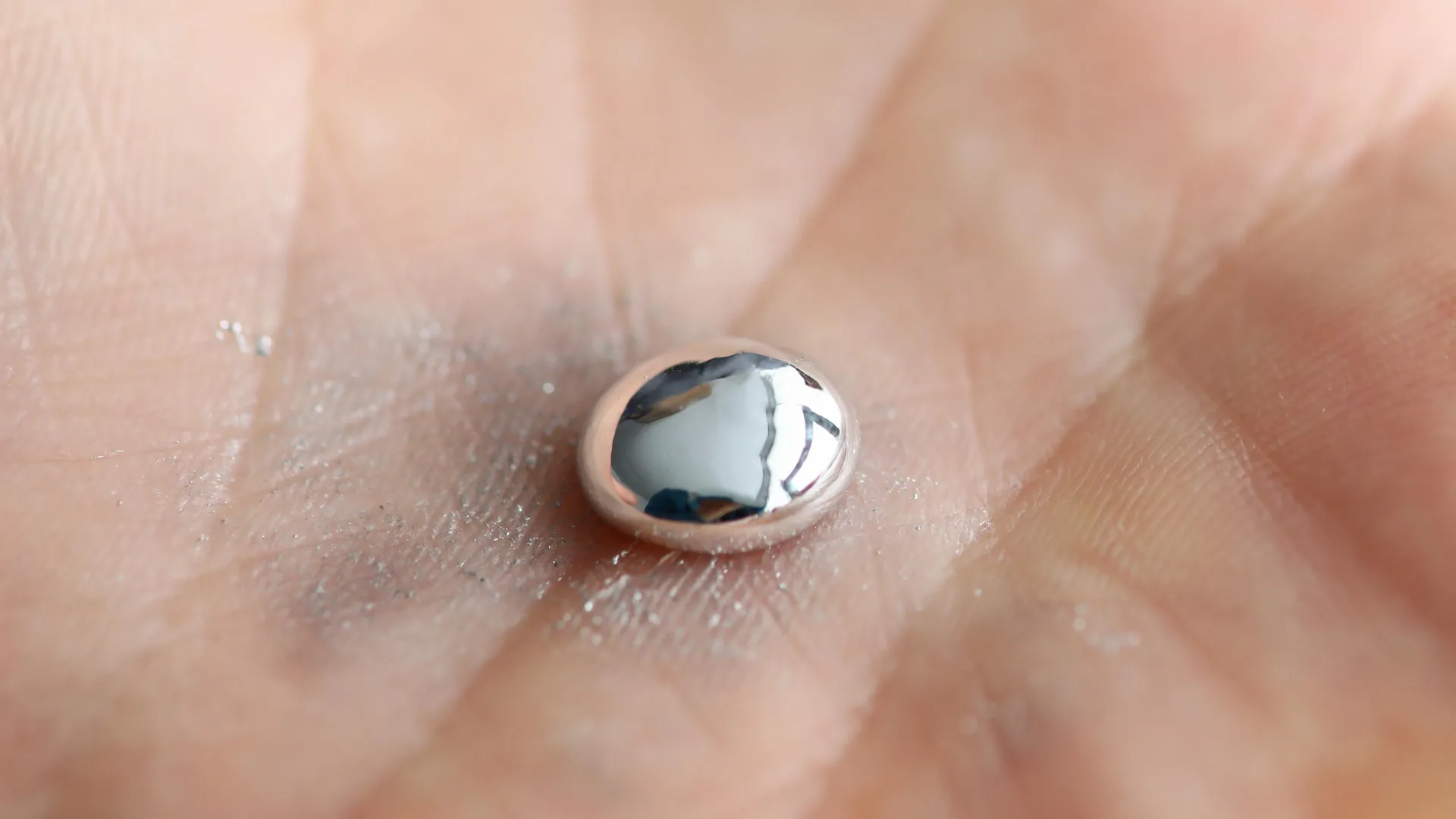
The research team, led by Dr. Steph Lambie, Professor Nicola Gaston, and Dr. Krista Steenbergen, focused on the fundamental behavior of gallium atoms as they transition from solid to liquid and beyond. Gallium has long been a subject of fascination due to its physical contradictions: it is a metal that can melt in a human hand, yet it serves as a backbone for high-temperature electronics. By synthesizing decades of disparate data and applying advanced theoretical models, the team discovered that the "dimers"—pairs of atoms bonded together—which define gallium’s solid state do not simply dissipate into a disordered liquid. Instead, they undergo a structural evolution that defies the standard expectations of metallic behavior.
A Historical Context: From Mendeleev’s Prediction to Modern Electronics
The story of gallium is inextricably linked to the birth of modern chemistry. In 1871, the Russian chemist Dmitri Mendeleev, while constructing the first periodic table, noticed a gap beneath aluminum. He predicted the existence of an element he called "eka-aluminum," even describing its density and melting point with startling accuracy before it had ever been seen. Four years later, in 1875, the French chemist Paul Émile Lecoq de Boisbaudran successfully isolated the metal through electrolysis, naming it "gallium" in honor of his homeland, Gaul (France).
Since its discovery, gallium has become indispensable to the digital age. Unlike silicon, which has dominated the semiconductor industry for decades, gallium-based compounds such as gallium arsenide (GaAs) and gallium nitride (GaN) allow for faster electron movement and better thermal management. These properties make gallium essential for high-frequency telecommunications, including 5G networks, as well as the production of light-emitting diodes (LEDs), laser diodes, and high-efficiency solar panels. Despite this industrial ubiquity, the fundamental "personality" of the gallium atom has remained elusive until now.
The Anomaly of the Gallium Dimer
Most metals follow a predictable structural pattern: their atoms are arranged in a regular, repeating lattice where electrons flow freely in a "sea," providing conductivity and malleability. Gallium, however, is a chemical outlier. In its solid state, its atoms naturally pair up into dimers. These pairs are held together by covalent bonds—the same type of strong electron-sharing bonds found in non-metals like carbon or oxygen.
Furthermore, gallium is one of the few substances on Earth, alongside water and bismuth, that is less dense as a solid than as a liquid. This means that solid gallium, like ice, would float on its liquid counterpart. This density shift is a direct result of the covalent bonds within the dimers, which hold the atoms at specific distances, creating a more open, less-packed structure in the solid phase.
For the last three decades, the prevailing scientific consensus was that these covalent bonds were the "glue" that held the solid together and that the act of melting represented the definitive breaking of these bonds. It was assumed that once gallium reached its liquid state at 29.76 degrees Celsius (85.57 degrees Fahrenheit), the atoms became a disordered, purely metallic fluid.
Overturning Thirty Years of Scientific Assumptions
The breakthrough achieved by the Auckland-based team came through a meticulous meta-analysis of existing research combined with new computational modeling. Dr. Steph Lambie, whose PhD work formed the basis of the study, identified inconsistencies in how the structure of liquid gallium had been recorded across different temperature ranges in various studies.
"Thirty years of literature on the structure of liquid gallium has had a fundamental assumption that is evidently not true," stated Professor Nicola Gaston of Waipapa Taumata Rau, University of Auckland, and the MacDiarmid Institute for Advanced Materials and Nanotechnology.
The study found that while the covalent bonds do indeed disappear at the initial melting point, they unexpectedly reappear when the liquid is heated to higher temperatures. This "re-entrant" covalent behavior suggests that the liquid state of gallium is far more structured than previously believed. The researchers propose that the initial breaking of these bonds at the melting point causes a massive increase in entropy—a thermodynamic measure of disorder. This surge in entropy is so significant that it "pays" for the energy required to melt the metal at such a low temperature, explaining why gallium turns to liquid at a point where most metals remain rock-solid.
Technical Data and Theoretical Implications
The research, titled "Resolving Decades of Debate: The Surprising Role of High-Temperature Covalency in the Structure of Liquid Gallium," provides a detailed look at the temperature-dependent fluctuations of atomic distance. By comparing measurements taken at various thermal stages, the researchers were able to show that the atomic structure of gallium oscillates between metallic and covalent characteristics depending on the energy present in the system.
This discovery has profound implications for thermodynamics. In most materials, heating leads to increased disorder. In gallium, however, the reappearance of covalent bonds at higher temperatures suggests a unique form of self-organization within the liquid. This suggests that gallium does not simply transition from an ordered solid to a disordered liquid, but rather moves through a series of "liquid-liquid" transitions that have been overlooked by scientists for over a century.
Industrial Impact: From Nanotechnology to Green Energy
Understanding the nuances of gallium’s atomic structure is not merely a matter of academic interest; it has significant practical applications for the future of material science.
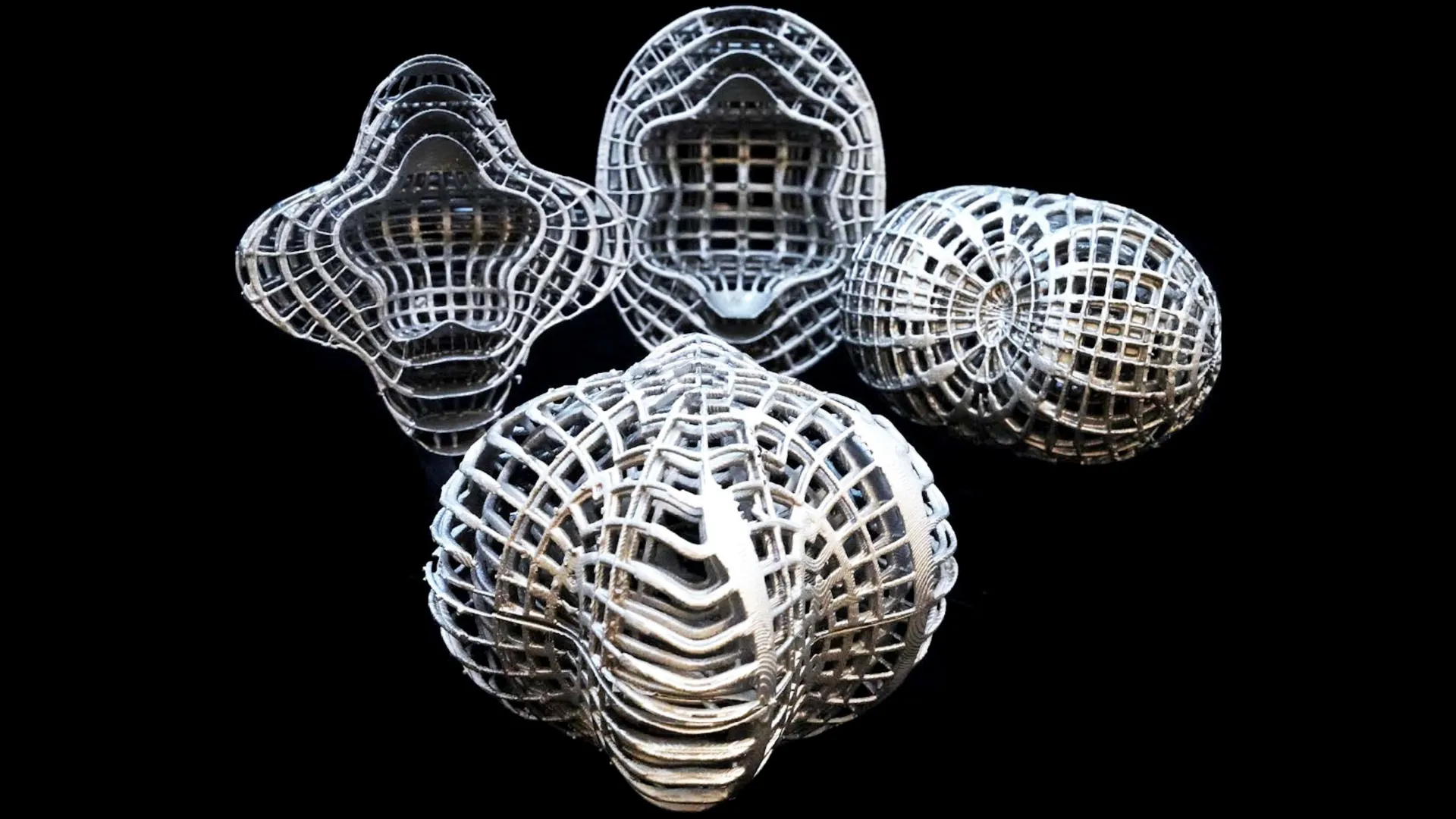
- Nanotechnology and Self-Assembly: Gallium’s ability to exist as a liquid at near-room temperature makes it an ideal medium for nanotechnology. Researchers are currently using liquid gallium to create "self-assembling structures," where materials spontaneously organize themselves into complex forms. In previous projects, the Auckland team used liquid gallium to crystallize zinc into intricate snowflake-like structures. The new understanding of gallium’s internal bonding will allow scientists to more precisely control these crystallization processes.
- Liquid Metal Catalysts: Gallium is increasingly used as a solvent for other metals, acting as a liquid catalyst. This is vital for chemical reactions that require high surface area and mobility. Knowing how gallium atoms interact with one another at different temperatures will enable engineers to optimize these catalysts for industrial chemical production, potentially reducing the energy required for manufacturing.
- Advanced Computing and Aerospace: As the limits of silicon are reached, gallium-based semiconductors are becoming the standard for high-performance computing and defense technology. The ability of gallium to manage heat and maintain structural integrity at high temperatures—now better understood through the lens of re-emerging covalent bonds—will inform the design of more robust electronic components for aerospace and satellite communications.
Astrobiology and the Search for Life on Mars
Beyond the confines of Earth-bound technology, gallium is playing a role in the search for extraterrestrial life. Scientists at the University of Auckland’s School of Environment and Te Ao Mārama – Centre for Fundamental Inquiry are investigating gallium’s potential as a biological "fingerprint."
Because gallium can dissolve other metals and preserve mineral structures, researchers believe it may be able to trap and preserve traces of microbial life. If ancient microbes existed on Mars, their chemical signatures might be preserved within gallium-rich mineral deposits. The new findings regarding how gallium behaves at the atomic level will help astrobiologists distinguish between purely chemical formations and those that may have been influenced by biological processes.
Official Reactions and Future Research
The scientific community has reacted with significant interest to the findings. Dr. Steph Lambie, currently a postdoctoral researcher at the Max Planck Institute for Solid State Research in Germany, noted that the study highlights the importance of revisiting "settled" science with fresh eyes and better data synthesis.
The collaboration between the University of Auckland, the MacDiarmid Institute, and Victoria University of Wellington underscores the strength of the New Zealand materials science sector. Dr. Krista Steenbergen emphasized that the study opens a new door for exploring other "low-melting-point" metals and alloys, which may harbor similar atomic secrets.
As researchers continue to probe the mysteries of the periodic table, the story of gallium serves as a reminder that even the most well-known elements can still surprise the scientific world. The re-evaluation of gallium’s atomic structure ensures that this "strange" metal will remain at the forefront of technological and theoretical innovation for the next 150 years.