Modern physics continues to grapple with a profound and persistent schism at the heart of its understanding of the natural world. For more than a century, the scientific community has relied upon two extraordinarily successful, yet fundamentally incompatible, frameworks to describe reality. On one hand, quantum mechanics reigns supreme at the microscopic scale, governing the bizarre, counterintuitive behaviors of atoms, subatomic particles, and the sub-microscopic realm. On the other hand, Albert Einstein’s theory of general relativity provides the bedrock for understanding gravity, explaining everything from falling bodies on Earth to the large-scale architecture of the expanding universe, including the intricate dynamics of galaxies and black holes.
Despite decades of monumental theoretical and experimental effort, physicists have yet to formulate a comprehensive "theory of everything" that successfully unifies these two pillars into a single, cohesive mathematical and conceptual language. However, a crucial stride toward understanding this elusive intersection has recently been achieved. An international team of researchers—including Nobel Prize-winning physicist Professor Sir Roger Penrose—has announced the first-ever direct observation of a long-predicted gravitational effect acting upon a falling quantum object. Published on September 2 in the journal Science Advances, the landmark study was spearheaded by a collaborative consortium featuring Ben-Gurion University of the Negev, the University of Ulm, the University of Oxford, the University of Southampton, the German Aerospace Center’s Institute of Quantum Technologies, and Texas A&M University.
The breakthrough does not synthesize quantum mechanics and general relativity into a unified framework, nor does it prove that gravity itself possesses quantum properties. Instead, it provides a vital empirical checkpoint in a previously inaccessible experimental regime, demonstrating that a central tenet of Einstein’s theory—the equivalence principle—continues to hold true when applied directly to the complex, wave-like behavior of quantum systems under the tested conditions.
Putting Einstein to the Ultimate Test: The Equivalence Principle
At the core of Einstein’s theory of gravity lies the equivalence principle, a foundational concept positing that the local effects of gravity are indistinguishable from the effects of acceleration. Most famously, the principle dictates that gravity should effectively vanish locally for an observer in a state of free fall. For example, a person enclosed within a freely descending elevator would experience complete weightlessness, floating as though gravitational forces were entirely absent.
While the equivalence principle has been rigorously tested and confirmed with staggering precision using macroscopic objects—ranging from planetary bodies down to heavy laboratory masses—subjecting it to direct scrutiny within the quantum domain has remained a formidable hurdle. Quantum objects present a unique experimental challenge because they do not behave like classical point particles. Instead, they exhibit wave-particle duality, meaning they can spread out like waves and effectively follow multiple distinct spatial trajectories simultaneously through a phenomenon known as superposition.
For decades, bridging this gap was hindered by the sheer delicacy of quantum states. Any external disturbance or environmental interaction is typically sufficient to destroy a delicate superposition, a process known as decoherence. To bypass these limitations and probe how gravity interacts with an object existing in multiple places at once, the collaborative team required an entirely new class of instrumentation capable of manipulating ultracold matter with exquisite precision.
The Chronology of an Experiment: Building the Quantum Galileo Interferometer
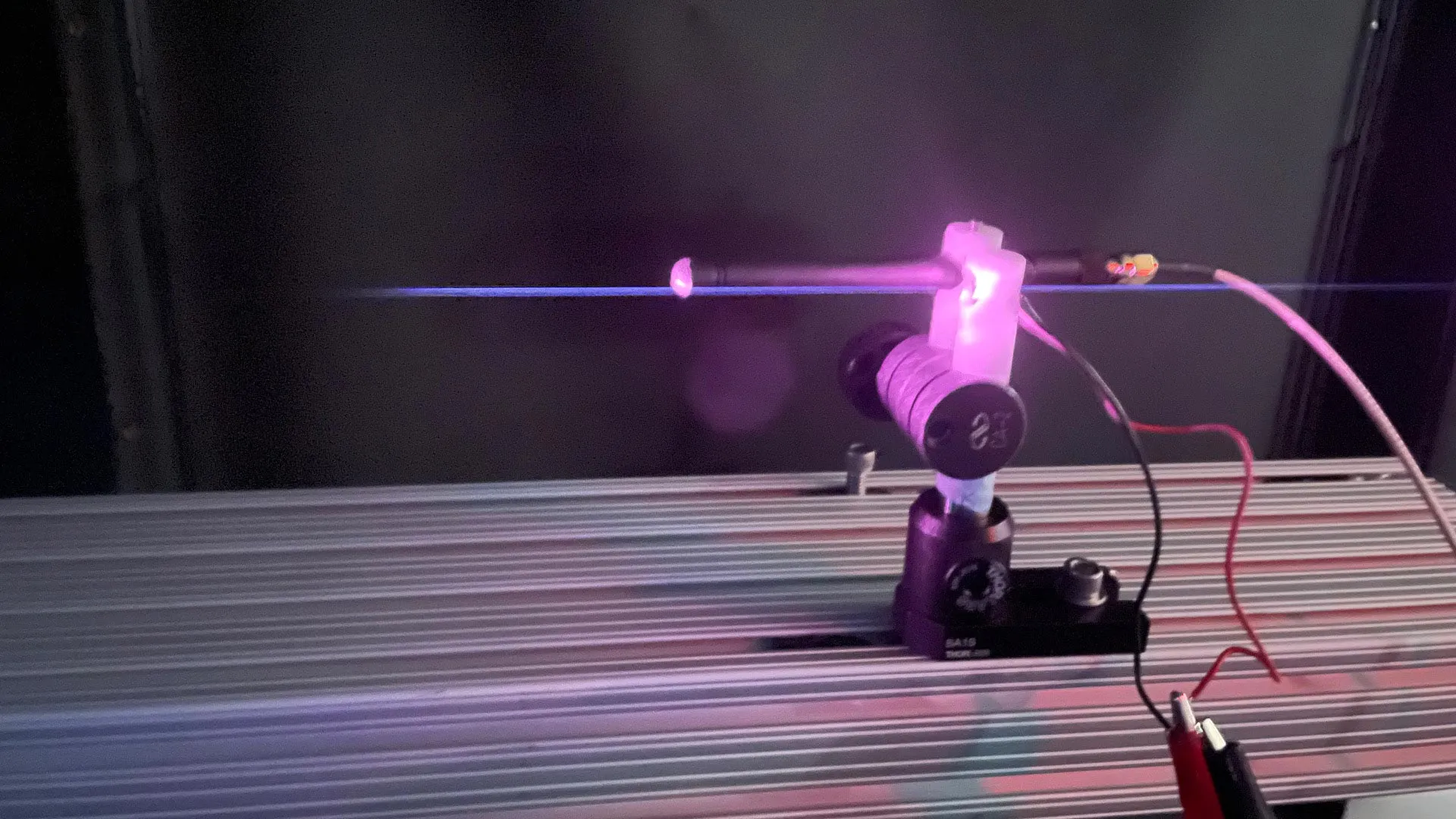
The genesis of the breakthrough traces back years of meticulous theoretical formulation and engineering development, culminating in experimental work executed primarily at Ben-Gurion University of the Negev. To isolate and measure the subtle quantum signatures of gravity, the team designed and constructed an advanced apparatus designated the Quantum Galileo Interferometer.
The experimental sequence began with the preparation of dense clouds of rubidium atoms. Utilizing laser cooling and evaporative cooling techniques, the researchers chilled these atomic clouds to temperatures hovering just a fraction of a degree above absolute zero—the theoretical point of minimum molecular motion. These ultracold atoms were then positioned near the surface of a micro-fabricated atom chip, a specialized device embedded with microscopic electrical wires designed to generate tightly controlled, highly localized magnetic fields.
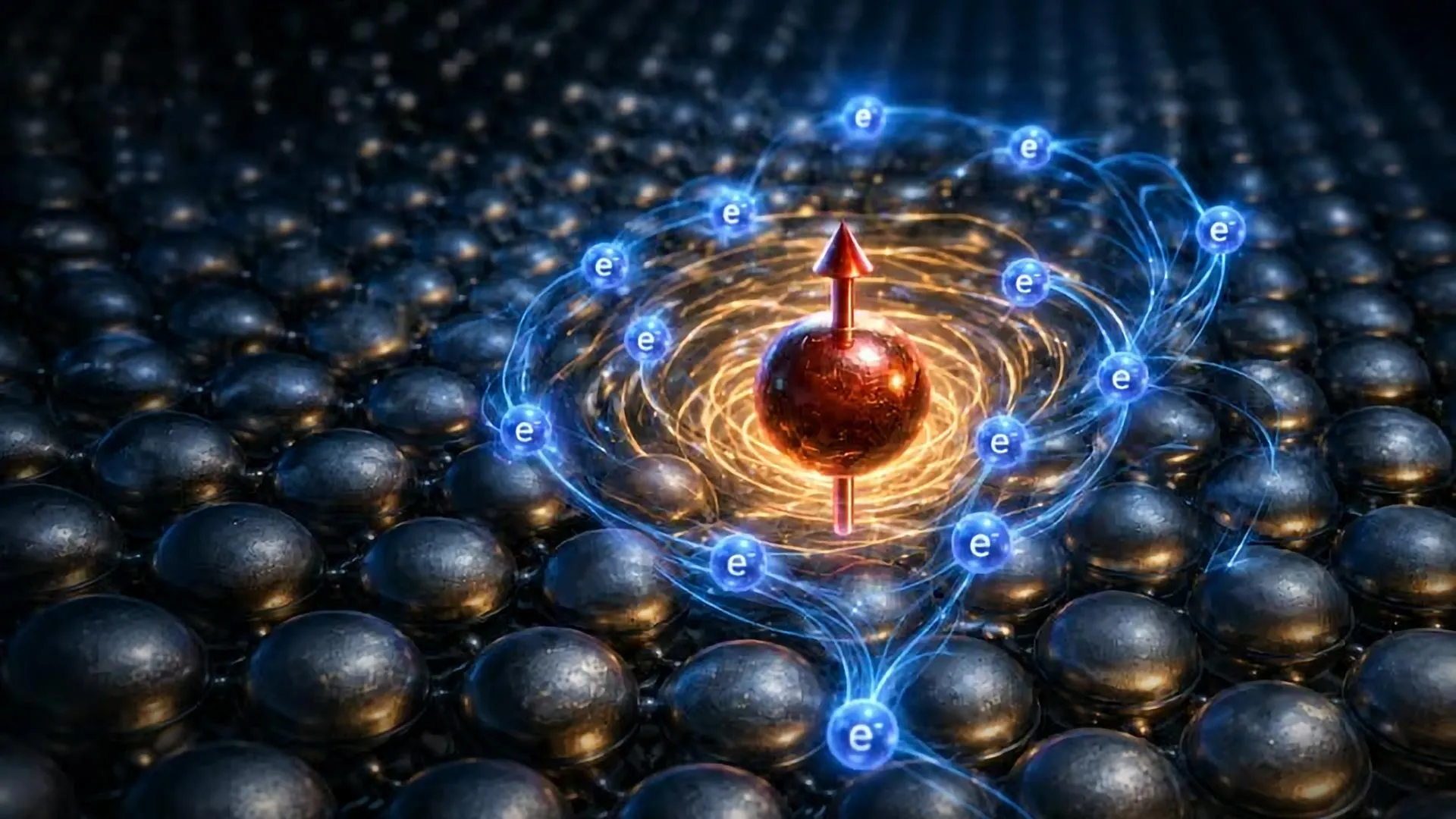
Working with the ultra-cold rubidium, PhD student and research team member Or Dobkowski, alongside fellow investigators, initiated the experimental run by applying carefully timed microwave pulses. This maneuver placed the atoms into a quantum superposition state, effectively forcing each atom to split its matter wave and follow two distinct spatial paths concurrently.
Next, the microscopic electrical wiring on the atom chip generated precisely tailored magnetic gradients. The research team used this magnetic architecture to exert an upward force on one half of the split atomic wave, engineering the force to precisely counterbalance the relentless downward pull of the Earth’s gravity. Consequently, this specific portion of the wave remained entirely stationary relative to the laboratory reference frame and the surface of the Earth.
Simultaneously, the second portion of the atomic wave was gently propelled upward via a controlled magnetic pulse and subsequently transitioned into a magnetic state rendered virtually immune to the surrounding magnetic fields. Freed from magnetic influence, this second portion of the wave was permitted to fall freely under the sole influence of gravity, tracing out a classical ballistic trajectory akin to a ball tossed vertically into the air.
As the falling wave component completed its descent, a final, precisely timed magnetic pulse intervened to steer the two separated components back together. Upon reunification, the two parts of the atomic wave interfered with one another. This interference pattern provided the researchers with a high-precision optical and quantum read-out, allowing them to measure the infinitesimally small difference in quantum phase that had accumulated while one segment of the wave remained stationary and the other experienced free fall.
Quantifying the Signature of Gravity
Upon analyzing the interference data, the researchers discovered that the measured quantum phase shift matched theoretical predictions derived from extending Einstein’s equivalence principle to quantum waves. This alignment provides a direct, verifiable connection in a terrestrial laboratory between the macroscopic world described by relativity and the microscopic rules of quantum mechanics.
While earlier experiments had utilized quantum particles to measure gravitational constants or map local gravitational fields, the authors emphasize that this study marks the first direct observation of the specific, long-theorized quantum phase generated by an object undergoing free fall while maintaining an internal quantum superposition.
Lead author Professor Ron Folman of Ben-Gurion University of the Negev underscored the conceptual weight of the findings. "This is a unique paper, in the sense that it combines a hard experiment with a far-reaching theoretical interpretation, about one of the most fundamental questions in physics: How can gravity (described by Einstein’s theory of relativity) and quantum theory, be unified into one understanding of the universe?" Folman stated. "These two pillars of modern physics have so far eluded all attempts at a unified theoretical framework, but this complex experiment gives more hints as to how such a unification may be achieved."
Echoing this perspective, study co-author Professor Vlatko Vedral from the Department of Physics at the University of Oxford noted the resilience of quantum mechanics when pushed into unfamiliar territory. "We have no consistent theory telling us why quantum physics should fail," Vedral remarked. "This experiment pushes quantum mechanics into one of its most intriguing frontiers, gravity, and shows that, once again, its predictions hold."
Boundaries of the Discovery: What the Data Does and Does Not Prove
In the spirit of rigorous scientific transparency, the research consortium has been careful to delineate the precise boundaries of what the experiment demonstrates. Most notably, the findings do not constitute a unified theory of quantum gravity, nor do they imply that gravity itself possesses a discrete quantum nature—a concept known as graviton exchange or quantum gravitational field fluctuations.
Furthermore, the results leave open—and do not disprove—competing theoretical frameworks, including a prominent hypothesis proposed by study co-author Professor Sir Roger Penrose. Penrose has long argued that quantum mechanics may not be universally applicable at all scales, suggesting instead that quantum superposition could fundamentally break down under specific conditions, particularly when sufficiently massive objects remain in a suspended quantum state for extended periods.
The current experimental setup did not employ particles massive enough, nor maintain superpositions for prolonged durations, to test the thresholds of Penrose’s gravitational decoherence hypothesis. However, the methodology developed for the Quantum Galileo Interferometer opens a viable technological pathway toward addressing those very questions. The research group at Ben-Gurion University and their international partners are already advancing subsequent iterations of the experiment, aiming to scale the technique upward to accommodate significantly heavier masses, including nanodiamonds.
Broader Implications for Future Physics
The successful operation of the Quantum Galileo Interferometer highlights the rapid maturation of atom interferometry as a premier tool for fundamental physics. By marrying ultra-precise magnetic chip manipulation with extreme cryogenic cooling, the scientific community has unlocked a new experimental window into phenomena previously relegated to theoretical speculation.
As researchers prepare to test heavier macroscopic quantum states in the ongoing follow-up trials, the boundary between the quantum micro-world and the gravitational macro-world is steadily shrinking. Whether these forthcoming experiments will continue to validate Einstein’s century-old principles under increasingly extreme conditions, or finally reveal the microscopic cracks where general relativity gives way to a new quantum reality, remains one of the most compelling narratives in contemporary science. What is certain is that the empirical toolkit for exploring the universe’s deepest mysteries has grown substantially sharper.