The burgeoning field of Agentic AI, characterized by systems capable of autonomous planning, tool use, and complex task execution, is rapidly transforming the technological landscape. While an increasing number of developers and organizations are experimenting with building AI agents, a significant knowledge gap persists between deploying a functional agent and deeply understanding its underlying mechanisms, potential pitfalls, and optimal design principles. This critical chasm often manifests in agents exhibiting undesirable behaviors such as infinite loops, tool ignorance, or premature task completion reports. To bridge this divide and empower a new generation of AI practitioners, a curated selection of five comprehensive and entirely free educational resources has emerged, offering a multifaceted approach to mastering Agentic AI. These resources, ranging from practical, hands-on courses to rigorous academic texts and detailed whitepapers, provide a structured pathway for professionals to transcend superficial prompting and cultivate a profound understanding of agent orchestration.
The Evolution and Imperative of Agentic AI
The concept of intelligent agents is not new, tracing its roots back to early artificial intelligence research in the mid-20th century. Initial explorations focused on expert systems and rule-based AI, where agents operated within strictly defined parameters. The 1990s saw the formalization of Multi-Agent Systems (MAS) theory, emphasizing collaboration, negotiation, and distributed problem-solving among autonomous entities. Pioneers like Yoav Shoham and Kevin Leyton-Brown laid the foundational game theory and logical frameworks that underpinned these early systems. However, the practical application of highly autonomous agents was often constrained by computational limitations and the inherent difficulty in encoding complex real-world knowledge.
The dramatic advancements in large language models (LLMs) over the past decade, coupled with significant increases in computational power and the proliferation of open-source AI tools, have ignited a renaissance in Agentic AI. Modern agents, powered by LLMs, can interpret natural language instructions, reason, plan, and interact with external environments through tools, exhibiting a level of autonomy previously confined to science fiction. This paradigm shift has created an urgent demand for skilled professionals who can not only implement these agents but also design, debug, and optimize them effectively and ethically. The current wave of interest is fueled by the promise of AI agents to automate complex workflows, enhance decision-making, and unlock new capabilities across various industries, from customer service and data analysis to scientific discovery and creative content generation.
The market for AI software, including solutions leveraging agentic capabilities, is projected to grow substantially, with estimates placing the global AI market size at hundreds of billions of dollars by the mid-2020s, expanding further into the trillions by the end of the decade. This rapid expansion underscores the strategic importance of developing a workforce proficient in Agentic AI. The availability of high-quality, free resources plays a pivotal role in democratizing access to this critical knowledge, enabling individuals and smaller organizations to participate in and contribute to this transformative technological wave.
Foundational Learning: Microsoft’s AI Agents for Beginners
For those seeking a highly structured and comprehensive entry point into Agentic AI, Microsoft’s "AI Agents for Beginners" stands out as an exemplary resource. Hosted on GitHub under an permissive MIT license, this extensive course offers more than fifteen detailed lessons, each accompanied by video walkthroughs and runnable Python code examples. This format ensures both conceptual understanding and practical application, allowing learners to immediately implement what they learn.
The curriculum meticulously progresses from fundamental concepts—defining what an AI agent is and identifying scenarios where its application is truly warranted—to sophisticated design patterns that are indispensable in contemporary agent development. Key topics include robust tool use, strategic planning, the integration of retrieval-augmented generation (RAG) for enhanced knowledge access, the complexities of multi-agent setups, and the crucial aspects of memory and context engineering. These advanced elements are vital for transitioning an experimental prototype into a production-ready, usable system.
A significant advantage of Microsoft’s offering is its active maintenance, ensuring the content remains current with the rapidly evolving AI landscape. Critically, it incorporates newer interoperability standards like the Model Context Protocol (MCP), a feature often absent in educational materials predating late 2023. MCP facilitates standardized communication between models and tools, streamlining agent development and deployment. Microsoft’s involvement, through its Azure AI services and extensive research divisions, lends considerable weight to this resource, reflecting the company’s commitment to fostering AI literacy and promoting best practices in agent development. This course effectively serves as a dynamic textbook, providing a robust theoretical and practical foundation for aspiring agent developers.
Hands-On Mastery: The Hugging Face AI Agents Course
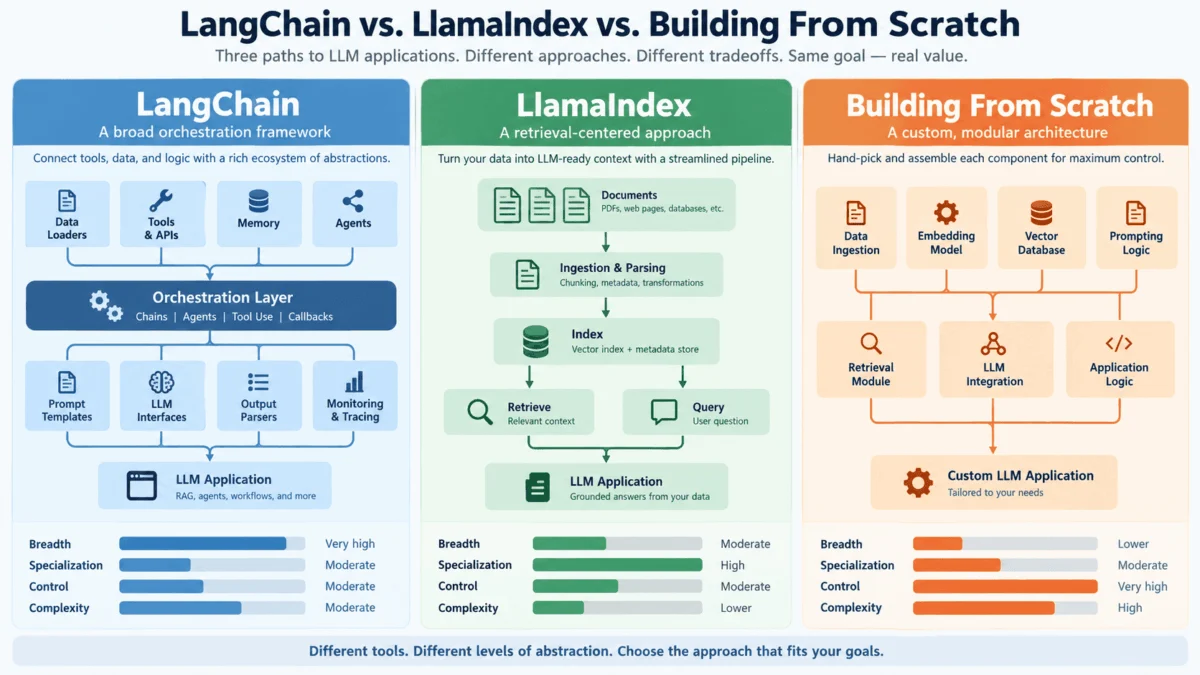
Complementing Microsoft’s structured approach, the "Hugging Face Agents Course" offers an intensely practical and comparative learning experience. Hugging Face, renowned for its contributions to the open-source AI community through its vast repository of models, datasets, and tools, brings its unique ethos to this course. Its primary strength lies in its relentless focus on hands-on development across multiple agent frameworks, including smolagents, LlamaIndex, and LangGraph. This multi-framework perspective is invaluable for developers, preventing premature commitment to a single ecosystem and fostering a broader understanding of different architectural philosophies and implementation strategies.
The course is genuinely free, with no hidden paywalls, aligning with Hugging Face’s mission to democratize AI. Learners engage in building agents from scratch, gaining direct experience with the nuances of each framework. Smolagents, for instance, offers a minimalist approach to agent construction, ideal for understanding core principles without extensive boilerplate. LlamaIndex excels in data ingestion, indexing, and retrieval for LLMs, making it crucial for RAG-enabled agents. LangGraph, built on LangChain, provides powerful tools for defining and orchestrating complex agentic workflows, especially those involving multiple steps or conditional logic.
A distinguishing feature of this course is its tangible conclusion: participants work on a benchmarked project and receive a certificate upon completion. This structured endpoint not only provides a clear goal but also offers verifiable proof of acquired skills, a significant asset in a competitive job market. The course is designed to instill practical "calluses," transforming conceptual knowledge into demonstrable development capabilities, and preparing learners for the real-world challenges of agent implementation.
Strategic Insights: Anthropic’s Building Effective Agents
Anthropic, a leading AI safety and research company known for its Claude models and pioneering work in Constitutional AI, offers a concise yet profoundly insightful engineering guide titled "Building Effective Agents." Its brevity is intentional, distilled to deliver the most critical distinctions and patterns for agent design.
The guide’s most significant contribution is its precise differentiation between "workflows" and "agents." Workflows involve large language models executing predefined, sequential paths, often without significant autonomous decision-making. Agents, conversely, empower LLMs to direct their own processes, making dynamic decisions, selecting tools, and adapting to emergent situations. This distinction is crucial for understanding when and where to apply agentic architectures, preventing unnecessary complexity and resource expenditure.
Anthropic’s guide meticulously catalogs a handful of essential agent patterns, including prompt chaining for sequential reasoning, routing for directing queries to appropriate sub-agents or tools, parallelization for concurrent task execution, orchestrator-worker models for hierarchical task delegation, and evaluator-optimizer loops for iterative refinement of agent performance. Each pattern is presented with an emphasis on its practical utility and potential trade-offs.
Perhaps the most valuable aspect of Anthropic’s resource is its candid warning regarding the inherent challenges of agentic systems: increased operational costs and the potential for compounding errors. Autonomous agents, by their nature, can incur higher token usage and computational expenses due to iterative reasoning and tool interactions. Furthermore, errors can cascade, leading to unpredictable and undesirable outcomes. This critical advice encourages developers to prioritize simplicity, advocating for the adoption of agentic autonomy only when the problem explicitly demands it. Reading this guide after encountering the first set of agent-related bugs often provides a profound "aha!" moment, akin to having an experienced engineer diagnose one’s specific issues. It underscores Anthropic’s commitment not only to advancing AI capabilities but also to promoting responsible and efficient development practices.
Foundational Theory: Shoham & Leyton-Brown’s Multiagent Systems
For those seeking to delve beneath the surface of current AI agent hype and grasp the fundamental principles governing multi-agent interactions, "Multiagent Systems" by Yoav Shoham and Kevin Leyton-Brown remains an indispensable academic text. Uniquely, the authors, with their publisher’s explicit agreement, provide a free electronic copy of this seminal work directly from their website, encouraging direct linking to the source for proper attribution and access.
This comprehensive treatise predates the large language model era, which is precisely what makes it so valuable. It offers a rigorous exploration of game theory, distributed decision-making, and the logical foundations that govern how multiple autonomous entities interact. Topics covered include cooperation, coordination, negotiation, and the dynamics of incentive problems within multi-agent environments. These are not new challenges; they are timeless problems in computer science and artificial intelligence that have been extensively studied.
In the current landscape, where developers are often "rediscovering" issues related to agent coordination and emergent behaviors, consulting this foundational text can save weeks of trial-and-error. It provides a theoretical bedrock for understanding why agents behave in certain ways, how to design robust interaction protocols, and how to anticipate and mitigate conflicts or inefficiencies in multi-agent systems. For anyone serious about moving beyond mere implementation to true mastery of agentic AI, this academic resource offers the deep theoretical grounding necessary to innovate effectively and address complex challenges.
Production-Ready Agents: Google & Kaggle’s Whitepaper Series
Google, a titan in AI research and application, in collaboration with Kaggle, offers a five-part whitepaper series that collectively forms a comprehensive, book-length guide to developing and deploying AI agents. This series is current, free, and designed to cover the entire lifecycle of agent development, from initial architecture to production deployment.
The individual volumes delve into critical aspects: agent architectures, providing insights into various design paradigms; tools and interoperability, with a focus on standards like MCP to ensure seamless integration; context engineering, addressing the complexities of managing agent memory and session states; agent quality and evaluation, a crucial but often overlooked area; and the journey from prototype to production, tackling scalability, reliability, and deployment considerations.
The series’ most significant contribution lies in its fourth volume, dedicated to "agent quality and evaluation." Measuring whether an agent is truly effective is arguably the least taught yet most vital skill in the entire discipline of Agentic AI. Most free resources demonstrate that an agent "works" on a specific example, but Google’s series pushes beyond this, providing frameworks and methodologies for rigorous evaluation. It addresses challenges such as non-determinism in LLM outputs, assessing performance on long-horizon tasks, establishing appropriate metrics, and leveraging techniques like A/B testing and human-in-the-loop validation.
Google’s extensive experience in deploying AI systems at scale across its diverse product portfolio informs this practical guide, emphasizing the transition from experimental success to robust, measurable performance. For developers aiming to build agents that deliver consistent value in real-world scenarios, the insights on evaluation alone make this series an indispensable resource. It underscores a fundamental truth in engineering: making something work is a demonstration; knowing whether it works, and how well, is the actual job.
A Strategic Path to Mastery
The collective power of these five free resources offers a deliberately structured pathway for aspiring and current AI practitioners. Beginning with Microsoft’s foundational course and Hugging Face’s hands-on comparative exercises provides practical skills. Anthropic’s guide sharpens judgment by distinguishing between workflows and true agents and highlighting crucial design patterns and pitfalls. Shoham and Leyton-Brown’s academic text grounds this practical knowledge in timeless theoretical principles, offering a deep understanding of multi-agent dynamics. Finally, Google’s whitepaper series, particularly its focus on evaluation, equips developers with the critical skills needed to measure, refine, and deploy agents effectively in production environments.
In an era where the pace of AI innovation is relentless, continuous learning is not merely an advantage but a necessity. These resources collectively represent an unparalleled opportunity to acquire deep expertise in Agentic AI without financial barriers. The investment required is time and dedication, the only true currencies in the pursuit of mastery. By strategically engaging with these diverse offerings, developers can move beyond rudimentary implementations to design, build, and deploy sophisticated, reliable, and ethically sound AI agents that will shape the future of technology and industries worldwide.