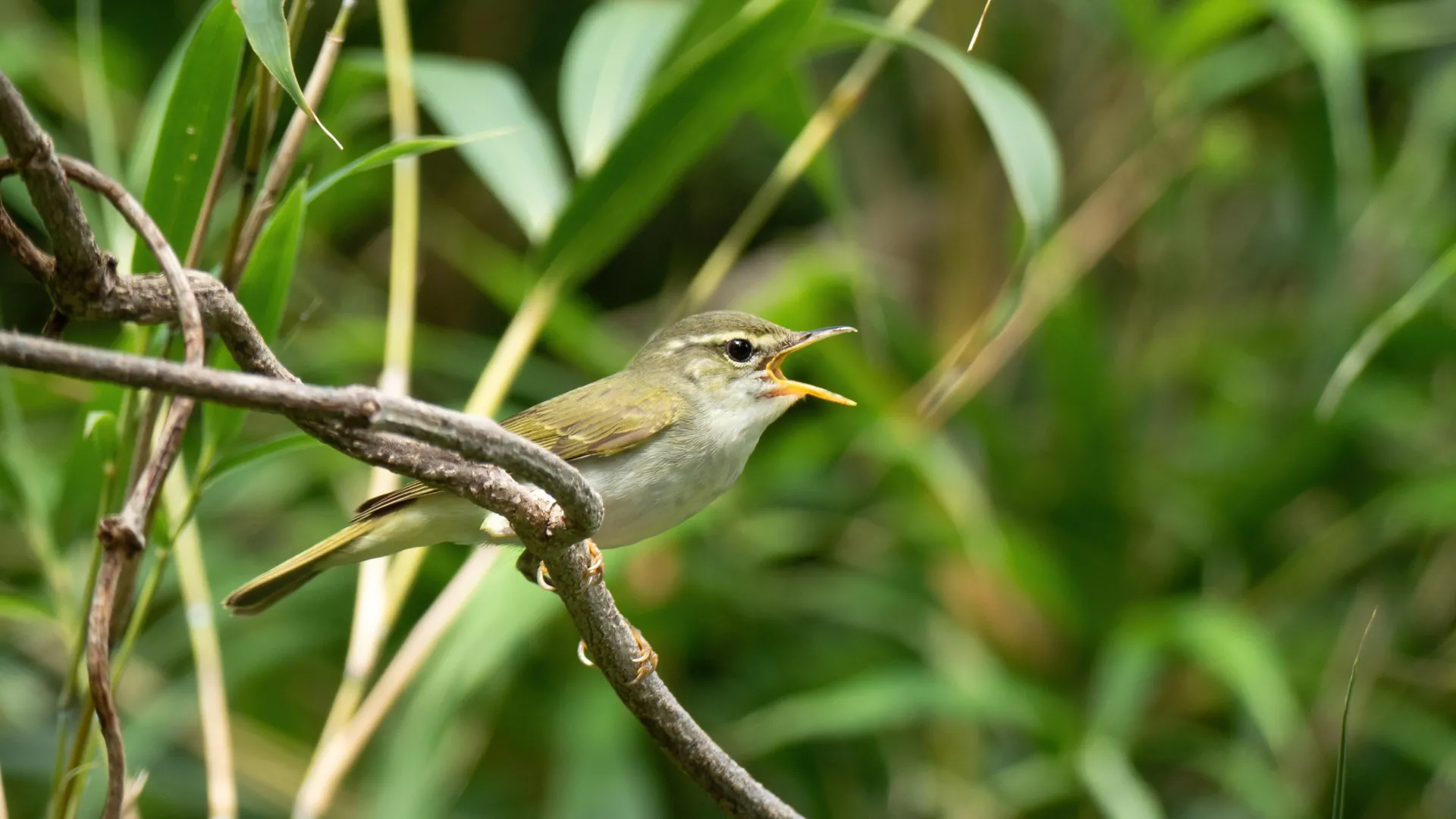
The scientific community is abuzz with the recent confirmation of a previously unrecognized bird species in Japan, a groundbreaking discovery stemming from meticulous genetic research. For years, ornithologists and conservationists believed they were observing a single species, the Ijima’s Leaf Warbler ( Phylloscopus ijimae ). However, advanced DNA analysis has definitively revealed that the populations inhabiting two distinct island groups in Japan represent two genetically separate entities. This revelation not only expands our understanding of avian biodiversity in the region but also underscores the critical role of genetic sequencing in conservation efforts amidst a global biodiversity crisis.
Unveiling the Tokara Leaf Warbler: A Tale of Two Islands
The focus of this significant find is the Ijima’s Leaf Warbler, a migratory bird known for its elusive nature and restricted range. This warbler has historically been documented across two primary island chains: the Izu Islands, situated south of Tokyo, and the Tokara Islands, located approximately 1,000 kilometers southwest of the Izu chain. While the description of new bird species is a regular occurrence in the field of ornithology, the case of the Ijima’s Leaf Warbler is particularly remarkable due to the striking visual similarity between the birds from these two geographically separated island groups. Their plumage, size, and general morphology are so alike that distinguishing them based on physical characteristics alone proved insufficient.
The pivotal evidence that challenged the long-held assumption of a single species emerged over a decade ago. Initial genetic markers detected subtle but consistent differences between the warbler populations on the Izu Islands and those on the Tokara Islands. This anomaly prompted an intensive, multi-year investigation by an international consortium of researchers from Uppsala University and the University of Gothenburg in Sweden, in collaboration with two prominent Japanese scientific institutions.
The research involved a comprehensive approach, combining extensive fieldwork on the islands with detailed analysis of existing museum specimens. Scientists meticulously collected blood samples and feather fragments from living birds, ensuring minimal disturbance to their natural habitats. These samples, along with carefully preserved specimens housed in natural history museums, provided the raw material for advanced genetic sequencing.
The Power of Genomics: DNA as the Decisive Factor
The breakthrough came with the application of whole genome sequencing. This cutting-edge technology allowed researchers to examine the complete genetic blueprint of the birds from both island groups. The results were unequivocal: the population of leaf warblers residing on the Tokara Islands exhibited significant genetic divergence from their counterparts on the Izu Islands. This divergence was not confined to a few isolated genes but was evident across their entire genomes, pointing towards a long history of reproductive isolation and independent evolutionary trajectories.
Complementing the genetic findings, detailed comparative studies of the birds’ vocalizations were also undertaken. Birdsong is a crucial element in avian communication, often playing a vital role in mate recognition and species identification. While the visual similarities between the Ijima’s and Tokara leaf warblers were misleading, their songs, upon rigorous acoustic analysis, revealed distinct patterns and variations. These song differences, though perhaps subtle to the untrained ear, provided further corroborating evidence that the two populations represented distinct evolutionary lineages.
"This shows how important it is to use genetic methods to reveal hidden biodiversity at a time of global biodiversity crisis," stated Dr. Per Alström from Uppsala University, a lead researcher in this discovery and a renowned ornithologist. "These methods can help provide more complete knowledge on which to base future nature conservation efforts." Dr. Alström’s sentiment highlights the broader implications of this finding, emphasizing that many more cryptic species may exist, undetected by traditional observational methods.
A Chronicle of Discovery: From Suspicion to Scientific Recognition
The journey to officially describe the Tokara Leaf Warbler as a new species was a protracted but systematic process.
- Early 2010s: Initial field observations and preliminary genetic analyses suggest potential differences between leaf warblers on the Izu and Tokara Islands.
- Mid-2010s: Researchers from Uppsala University and the University of Gothenburg initiate more extensive genetic studies, collecting new samples and re-examining museum collections.
- Late 2010s: Whole genome sequencing provides definitive proof of significant genetic divergence between the two island populations.
- Early 2020s: Comparative song analysis reinforces the genetic findings.
- 2023-2024: The comprehensive research culminates in the formal scientific description and naming of the Tokara Leaf Warbler (Phylloscopus tokaraensis).
The official description of Phylloscopus tokaraensis marks a significant event in Japanese ornithology. Japan has not seen a newly described bird species since 1982, when the endemic Okinawa Rail (Gallirallus okinawae) was first identified. This rarity underscores the thoroughness of the current discovery and the potential for further hidden biodiversity within the archipelago.
Dr. Alström further elaborated on the elusive nature of the newly identified species: "The new species is a little cryptic and tricky to define. In terms of appearance, it doesn’t differ from the Ijima’s Leaf Warbler. It is DNA analyses and differences in song that show that this is a separate species." This statement reinforces the reliance on molecular and acoustic evidence over purely morphological characteristics in this particular case.
Conservation Imperatives: Small Islands, Big Concerns
The discovery of the Tokara Leaf Warbler immediately raises significant conservation concerns, primarily due to the inherently limited and vulnerable nature of island ecosystems. Both the Ijima’s Leaf Warbler and the newly identified Tokara Leaf Warbler are confined to small island habitats. The Tokara Islands, for instance, encompass a total land area of just over 100 square kilometers, spread across twelve distinct islands. This combined landmass is remarkably small, comparable to the size of a modest-sized town or a small European island like Fårö off the coast of Gotland.
This restricted range means that the total population sizes for both species are naturally limited. Furthermore, the research revealed that both the Ijima’s and Tokara Leaf Warblers exhibit very low genetic diversity within their respective populations. Low genetic diversity is a critical indicator of vulnerability. It can render species more susceptible to environmental changes, habitat degradation, the introduction of diseases, and the impacts of climate change. A limited gene pool means less adaptability, making it harder for a population to cope with new challenges.
However, the research also offered a glimmer of hope. There are indications that the populations of both species may have experienced some recovery following periods of earlier decline. The exact causes of these past declines are still under investigation but likely relate to historical land-use practices, introduced predators, or natural environmental fluctuations. The potential for recovery highlights the importance of ongoing conservation efforts and the possibility of reversing negative population trends.
Protecting Two Fragile Island Avifauna
The conservation status of the Ijima’s Leaf Warbler is already recognized as "Vulnerable" by the International Union for Conservation of Nature (IUCN). In Japan, it is also afforded protection as a "Natural Monument," a designation that signifies its importance as part of the nation’s natural heritage.
Given that the newly described Tokara Leaf Warbler appears to be at least as rare as its Ijima’s counterpart, the research team strongly recommends that Phylloscopus tokaraensis also be granted "Vulnerable" status by conservation bodies. This designation would trigger a more focused conservation response, including habitat protection, research into population dynamics, and the implementation of specific management plans.
The scientists involved in this discovery have emphasized the critical need for continued monitoring of both species. Regular surveys and scientific assessments are essential for tracking population sizes, identifying potential threats, and evaluating the effectiveness of conservation interventions. By maintaining a vigilant watch, researchers and conservationists can ensure the long-term survival of these two unique and fragile island bird species.
The implications of this discovery extend beyond the immediate conservation of these two warblers. It serves as a potent reminder of the vastness of undiscovered biodiversity, even in well-studied regions. In an era where anthropogenic pressures are accelerating biodiversity loss, the application of advanced genetic techniques is no longer a supplementary tool but an indispensable component of ecological research and conservation strategy. The case of the Tokara Leaf Warbler offers a compelling argument for increased investment in genetic research and a broader, more nuanced approach to species identification and conservation planning. The hidden corners of our planet, and even its seemingly familiar inhabitants, continue to hold profound secrets, waiting to be revealed by the persistent pursuit of scientific knowledge.