As concurrent programming evolves within enterprise software development, the challenge of building scalable, resilient systems has shifted from mere speed optimization to rigorous resource management. While executing asynchronous tasks concurrently has long been a standard capability in Python—facilitated by tools like asyncio.gather and basic thread pools—maintaining system stability under heavy, bounded concurrency remains a critical engineering hurdle. Modern production environments demand architectures capable of preventing resource exhaustion, managing unpredictable network latency, and ensuring strict cleanup protocols during unexpected failures. Recent updates in the Python ecosystem, specifically the maturation of free-threading capabilities under PEP 779 in Python 3.14 and structured concurrency enhancements in Python 3.15, underscore the growing industry emphasis on robust concurrency control. To achieve true production-grade reliability, developers are increasingly turning to advanced native techniques that orchestrate finite resources without leaking connections or overwhelming downstream dependencies.
Background Context and Evolution of Python Concurrency
The journey of asynchronous programming in Python has advanced significantly from early third-party libraries to robust, native standard library support. Historically, developers relied heavily on basic event loops and utility functions that, while effective for simple I/O-bound tasks, frequently suffered from silent task leakage and difficult-to-debug failure modes. The introduction of structured concurrency constructs in Python 3.11—most notably asyncio.TaskGroup—marked a fundamental paradigm shift by binding task lifetimes directly to lexical scopes.
Further development in the ecosystem has mirrored the hardware realities of modern multi-core processors. The introduction of the experimental free-threaded build in Python 3.13, followed by its formal stabilization and first-class asyncio thread-safety improvements under PEP 779 in Python 3.14, created an urgent need for more sophisticated resource orchestration frameworks. As development cycles progressed toward the feature-frozen iterations of Python 3.15, the integration of features like TaskGroup.cancel() closed long-standing parity gaps with specialized asynchronous frameworks such as Trio and AnyIO. These infrastructural advancements highlight a broader industry transition: moving away from ad-hoc concurrency hacks toward standardized, mathematically sound models of execution flow and resource allocation.
Core Technical Analysis: Simulating Enterprise Workloads
To evaluate modern resource orchestration techniques under realistic operational constraints, software engineers frequently benchmark patterns against complex microservice architectures. A standard stress-testing scenario involves an internal enterprise dashboard aggregator tasked with simultaneously querying four distinct backend services for potentially dozens of concurrent users. Each target service—comprising a high-capacity pricing API, a moderately scaled positions database, a latency-sensitive news feed, and a strictly constrained risk model—exhibits vastly different latency profiles and real-world capacity thresholds.
Rigorous simulation data derived from such architectures demonstrates that unmanaged concurrency inevitably leads to cascading failures. For instance, when firing dozens of concurrent requests without explicit bounding mechanisms, auxiliary services with low throughput limits quickly become overwhelmed, resulting in dropped connections, elevated error rates, and degraded overall system performance. Addressing these challenges requires a systematic approach to structured execution, capacity throttling, dynamic resource allocation, deadline enforcement, and live runtime introspection.
Structured Concurrency via asyncio.TaskGroup
Traditional concurrency primitives like asyncio.gather present well-documented vulnerabilities in production environments. Specifically, when an exception occurs within a gathered batch of tasks, sibling tasks do not automatically terminate, frequently resulting in orphaned background processes that continue consuming CPU and network bandwidth long after the primary execution block has exited.
The integration of asyncio.TaskGroup rectifies this vulnerability by enforcing strict structured concurrency principles. Every task spawned within a TaskGroup context is guaranteed to either complete successfully or be explicitly cancelled prior to the exit of the enclosing async with block. If any single task within the group encounters an unhandled exception, the remaining active tasks are immediately cancelled. This design eliminates the risk of task leakage, ensuring that application execution cannot proceed past an operational boundary until all constituent sub-tasks have formally resolved their states.
Capacity Management with asyncio.Semaphore
While structured concurrency guarantees operational correctness regarding task lifecycles, it does not inherently regulate backend capacity. Left unconstrained, a batch of user requests can easily overwhelm a resource-limited downstream service—such as a risk model API capped at a strict maximum of three simultaneous connections.
To prevent systemic overload, engineers utilize asyncio.Semaphore implemented at the module scope rather than instantiated dynamically per request. By tying semaphores to specific backend capacities globally across the application process, developers establish reliable flow control. When integrated into asynchronous context managers, semaphores automatically block execution threads until an operational slot becomes available, subsequently releasing the lock upon completion or exception. Empirical testing of this pattern under heavy burst loads—such as thirty simultaneous multi-backend queries—confirms that throughput adheres strictly to predefined backend limits, effectively neutralizing traffic spikes without dropping requests prematurely.
Dynamic Resource Allocation Using contextlib.AsyncExitStack
Static allocation of resources via hardcoded context managers functions adequately in predictable environments, but modern microservice architectures frequently demand dynamic resource provisioning. Factors such as runtime feature flags, tenant-specific configurations, and automated degraded-mode fallbacks mean that the precise number and identity of active backend connections may remain unknown until execution time.
The contextlib.AsyncExitStack utility addresses this operational requirement by permitting the runtime accumulation of an arbitrary number of asynchronous context managers into a unified stack. Using methods such as enter_async_context, developers can programmatically open variable connection sets via concise constructs like dictionary comprehensions. Crucially, AsyncExitStack guarantees that all successfully opened resources are systematically torn down in reverse order upon exiting the stack block. This reverse-order teardown is essential for maintaining referential integrity when downstream resources maintain interdependencies.
Deadline Propagation and Timeout Management
Managing execution timeframes in distributed systems historically relied on functions like asyncio.wait_for, which often introduced complexity when nested across multiple asynchronous calls. Modern Python architectures favor asyncio.timeout, an asynchronous context manager that establishes deadlines as properties of execution scopes rather than isolated functions.
This compositional approach allows engineers to implement multi-layered timekeeping strategies. An overarching timeout can govern an entire TaskGroup to protect the primary client request from hanging indefinitely, while tighter, nested timeouts regulate individual backend queries. Consequently, if a specific service experiences severe latency or fails to respond within its allocated window, the system cancels that isolated operation and gracefully captures the exception. Meanwhile, faster sibling tasks successfully return their payloads, enabling the application to deliver partial results rather than failing catastrophically.
Live Runtime Introspection and Diagnostics
Even the most rigorous preventive design cannot entirely eliminate production anomalies, making live system observability an essential component of modern resource orchestration. Historically, diagnosing a hanging asynchronous Python process required pre-configured debugging attachments or the deployment of extensive logging statements followed by service redeployment.
The introduction of native task introspection tools in recent Python iterations—specifically commands such as python -m asyncio ps and python -m asyncio pstree —has transformed runtime diagnostics. These utilities attach directly to active Python processes to output comprehensive, hierarchical representations of the live task tree, displaying active coroutine call stacks and blocking states without requiring prior code modifications. This capability bridges the gap between theoretical concurrency correctness and practical incident response, empowering systems engineers to rapidly identify bottlenecks in production environments.
Industry Implications and Future Outlook
The continuous refinement of asynchronous orchestration tools within Python reflects a maturing ecosystem tailored to enterprise-grade demands. As organizations scale their microservice architectures to handle millions of daily transactions, the reliance on haphazard concurrency patterns is increasingly replaced by standardized, robust paradigms.
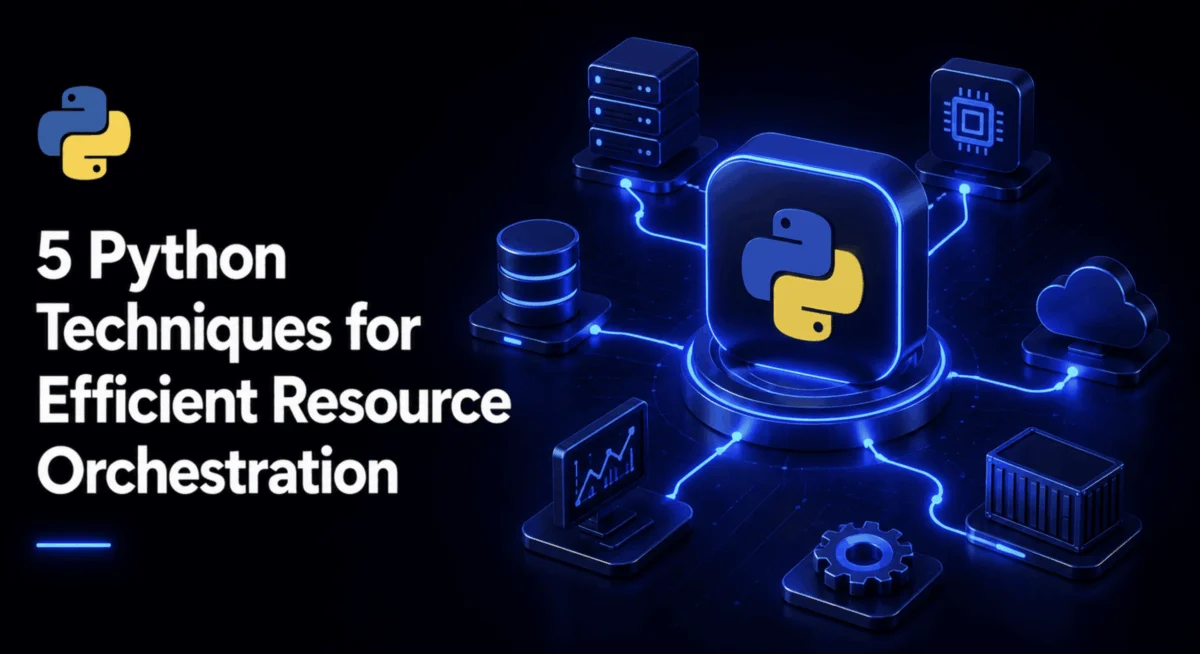
Industry analysts note that these native enhancements reduce the operational overhead associated with third-party concurrency frameworks, lowering the barrier to entry for building high-performance, fault-tolerant Python applications. By combining structured task lifetimes, granular capacity throttling, dynamic resource stacking, precise deadline propagation, and advanced runtime introspection, software engineering teams are better equipped to construct resilient backends capable of withstanding the unpredictability of modern distributed systems. As subsequent Python releases continue to build upon these foundations, the standard library solidifies its position as a comprehensive toolkit for professional software development.