The enterprise technology landscape is undergoing a structural transformation as organizations pivot from basic Retrieval-Augmented Generation (RAG) frameworks to sophisticated Agentic AI systems. While vanilla RAG models introduced a reliable method for grounding large language models (LLMs) in proprietary corporate documentation, enterprise deployments have exposed significant operational limitations. These shortcomings have catalyzed an engineering evolution spanning three distinct architectural generations: from hybrid retrieval mechanisms and knowledge graph integrations to fully autonomous, multi-agent reasoning networks.
Background and the Limitations of Vanilla RAG
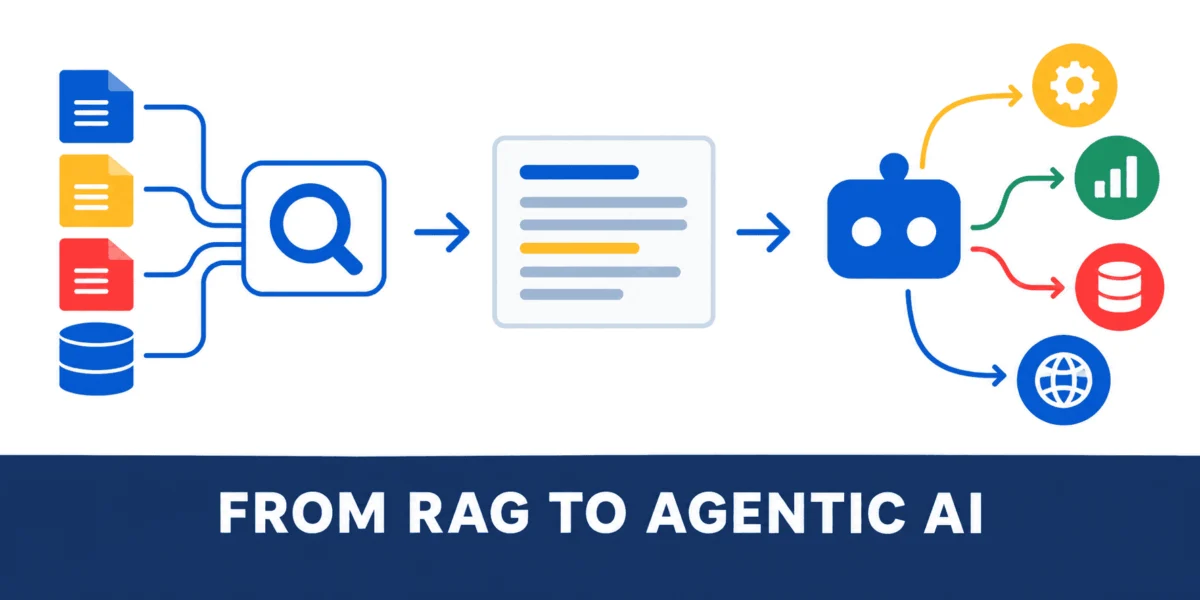
The introduction of Retrieval-Augmented Generation fundamentally changed how enterprises interacted with generative artificial intelligence. By bypassing the necessity for LLMs to memorize vast corporate archives during pre-training, RAG architectures allowed systems to embed user inquiries, retrieve semantically similar text chunks from a vector database, and supply those excerpts to an LLM as contextual input. This methodology proved elegant and effective for straightforward queries across well-maintained document repositories.
However, scaling these implementations within complex corporate environments revealed deep vulnerabilities. Standard RAG pipelines frequently falter when employees submit inquiries containing domain-specific abbreviations with multiple valid interpretations, as basic semantic models lack an intrinsic mechanism to clarify user intent. Furthermore, reliance purely on vector similarity often misses critical documentation that articulates underlying concepts using alternate terminology or lexical variations. Most critically, conventional RAG architectures struggle to communicate algorithmic confidence; hallucinated responses are frequently indistinguishable from thoroughly grounded answers. These failures have prompted artificial intelligence scientists and enterprise architects to systematically overhaul corporate retrieval pipelines over the past several years.
The Evolution of Enterprise Retrieval: Chronology of Three Generations
The progression from simple text-matching systems to autonomous reasoning agents mirrors the growing complexity of enterprise demands. This evolution is delineated across three successive developmental generations.
Generation One: Hybrid Retrieval and the Integration of Lexical Signals
The initial major breakthrough in intelligent retrieval was the recognition that relying on a single search modality is inadequate for large-scale enterprise environments. While dense vector search excels at capturing abstract semantic meaning—successfully linking concepts like "supply gaps" to "zero inventory" despite differing vocabularies—it frequently buries exact keyword matches. In modern corporate settings saturated with strict product codes, legacy acronyms, and specialized technical jargon, missing an exact lexical match can lead to critical business failures.
To mitigate this, enterprise architects adopted hybrid retrieval patterns, executing dense vector search and sparse keyword search (predominantly utilizing the BM25 algorithm) in parallel. Engineering production-grade hybrid systems, however, requires rigorous optimization beyond standard academic models:
- Advanced Deduplication: Naive concatenation of overlapping results from heterogeneous search engines inflates candidate pools with redundant data. Production systems enforce multi-tier deduplication protocols filtering sequentially by unique identifier, source location, and content fingerprint.
- Rank Fusion: Systems implement Reciprocal Rank Fusion (RRF), originally articulated by Cormack, Clarke, and Buettcher in 2009. RRF effectively combines rankings from disparate scoring systems without demanding complex score normalization, favoring documents that achieve high relevance across multiple search channels.
- Asynchronous Execution: By executing vector and keyword searches concurrently rather than sequentially, engineering teams have demonstrated latency reductions exceeding 40 percent, ensuring user retention in time-sensitive operational environments.
- Precision Filtering: Final candidate pools pass through cross-encoder rerankers, achieving significantly higher fidelity rescoring against the original query than individual retrieval methods could accomplish independently.
Generation Two: GraphRAG and Domain Ontology
Despite the efficiency of hybrid retrieval, standard pipelines treat every document chunk as an isolated text fragment devoid of structural awareness. Traditional architectures possess no inherent comprehension of corporate entities, hierarchical product taxonomies, relational ontologies, or cross-document synonyms.
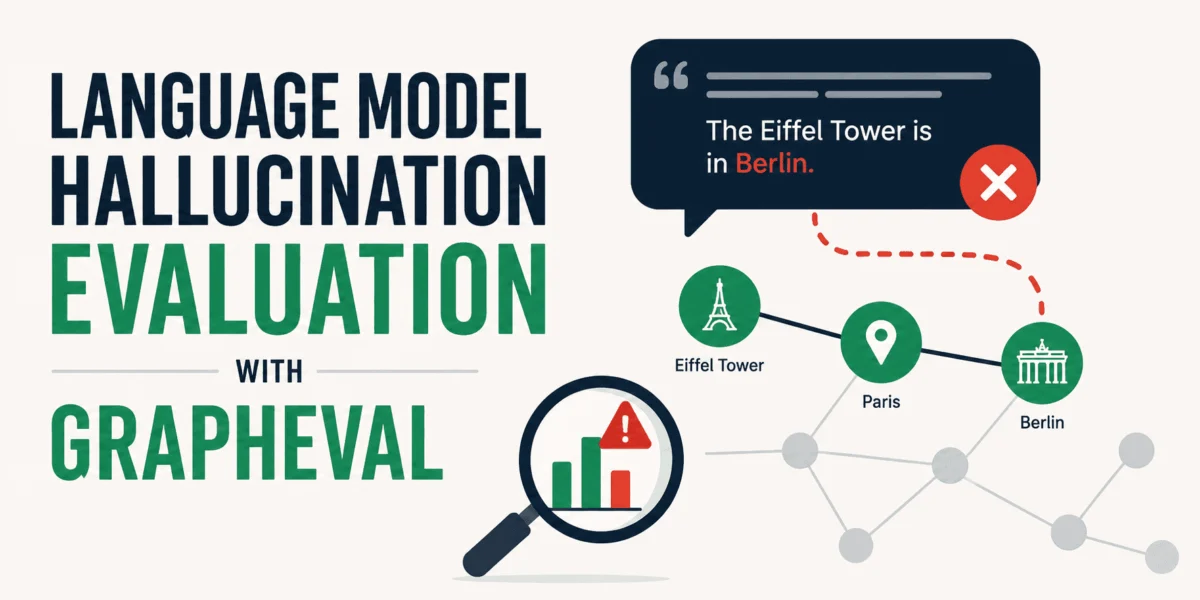
To bridge this gap, organizations integrated knowledge graphs into retrieval pipelines, giving rise to GraphRAG. This paradigm leverages structured representations of enterprise domains to enrich both search and generation workflows. Production implementations of GraphRAG have increasingly moved away from costly, non-deterministic LLM-based Named Entity Recognition (NER) toward deterministic, rule-based multi-pass entity extraction. By utilizing longest-first phrase matching against comprehensive entity indexes, systems achieve consistent, deterministic extraction in microseconds with zero marginal operational cost, avoiding the latency and high API expenditure associated with generative entity parsers.
These entity-tagged chunks are subsequently scored based on relevance and integrated into the overarching RRF ranking mechanism. For continuous enterprise environments, zero-downtime reindexing patterns—incorporating delta processing for incremental modifications and atomic database swaps for full synchronization—ensure continuous operational availability during complex entity remapping procedures.
Generation Three: Agentic AI and Dynamic Reasoning
While hybrid retrieval and knowledge graphs optimize the information-gathering phase, complex corporate inquiries rarely necessitate single-step extraction. Enterprise workflows frequently demand multi-hop reasoning, comparative synthesis, task decomposition, and simultaneous consultation of internal document repositories, structured relational databases, and external application programming interfaces (APIs).
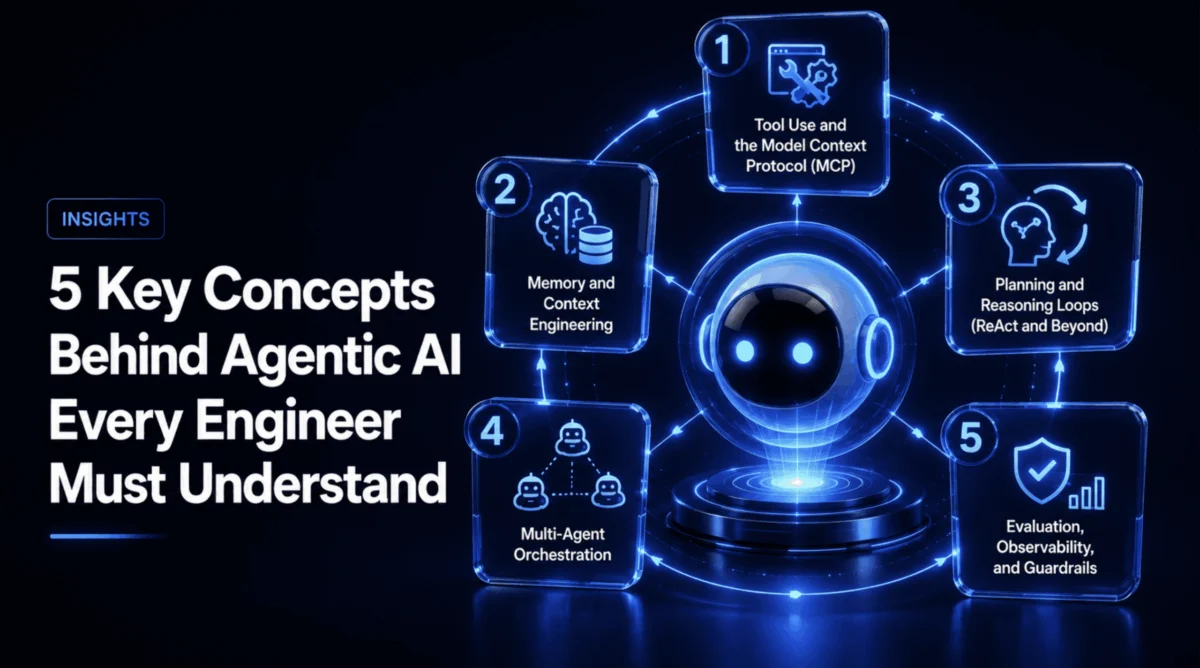
Agentic AI architectures replace rigid retrieve-then-generate pipelines with dynamic reasoning frameworks. Instead of executing predetermined processing paths, agentic systems evaluate intermediate results at runtime, making autonomous decisions regarding subsequent steps. Industry analysis highlights core operational disciplines essential for effective agentic deployment: tool utilization, persistent memory management, structured planning, multi-agent coordination, rigorous evaluation, and strict architectural safety boundaries.
Core Architectural Principles for Enterprise Deployment
As enterprises scale these advanced AI initiatives, industry practitioners have codified several foundational principles necessary for maintaining robust, auditable, and secure deployments.
1. Architectural Safety Boundaries
In heavily regulated corporate settings, user prompts may inadvertently incorporate sensitive customer data, personally identifiable information (PII), or classified intellectual property. Modern enterprise architectures position safety evaluation as the primary, non-negotiable step in the execution pipeline. Rather than serving as a downstream filtration mechanism, hard architectural boundaries immediately reject non-compliant queries prior to engaging retrieval or generation components.
2. Intent Disambiguation
Enterprise terminology is inherently ambiguous, with localized acronyms carrying divergent meanings across corporate departments. Rather than tasking LLMs with unconstrained guessing—a process prone to high latency and non-deterministic failures—production systems utilize database-backed disambiguation. Employing word-frequency heuristics and curated lookup tables allows systems to resolve domain-specific terminology efficiently within strict latency budgets.
3. Multiplicative Confidence Scoring
A primary vulnerability in legacy RAG implementations is the absence of reliable uncertainty quantification. Averaging confidence metrics across disparate pipeline stages obscures localized component failures. Advanced architectures utilize multiplicative scoring frameworks derived from decision theory. Under this model, if planning confidence is high (0.9) but retrieval confidence drops severely (0.1), the composite score plunges to 0.09. This stark mathematical penalty signals system uncertainty, empowering the architecture to autonomously decline answering rather than hallucinating an inaccurate response.
4. Deterministic Logic Over Generative Flexibility
To ensure reproducibility, debuggability, and compliance in enterprise environments, engineering teams prioritize deterministic programming over unconstrained LLM generation. Generative reasoning is strictly reserved for tasks requiring creative synthesis, while entity extraction, data routing, query disambiguation, and confidence calculations are handled via deterministic code logic.
Industry Implications and Future Outlook
The strategic migration from static RAG pipelines to autonomous agentic ecosystems marks a mature phase in enterprise software development. By marrying hybrid retrieval, knowledge graphs, deterministic entity processing, and rigorous confidence-scoring models, organizations are successfully building intelligent systems capable of self-correction, planning, and multi-source data synthesis.
Looking forward, the technological frontier is rapidly expanding toward multi-agent orchestration. Emerging industry standards—such as the Model Context Protocol (MCP) and decentralized agent-to-agent discovery protocols—are laying the groundwork for collaborative agent networks capable of seamlessly traversing organizational boundaries. Organizations that successfully establish these robust architectural foundations today will secure a decisive operational advantage as autonomous enterprise intelligence continues to mature.