The landscape of modern pharmacology has been fundamentally reshaped by the advent of artificial intelligence, most notably by the breakthrough of AlphaFold. By providing researchers with predicted three-dimensional structures for over 200 million proteins, the technology promised to accelerate the identification of druggable targets. However, as the industry transitioned from structural prediction to practical drug discovery, a significant technical bottleneck emerged. Seattle-based biotechnology firm Talus Bio has now unveiled a new approach that bypasses structural modeling entirely, potentially unlocking vast categories of proteins previously deemed inaccessible to traditional small-molecule therapies.
The Challenge of the Undruggable Proteome
The central dogma of structural biology has long held that to design a drug, one must first visualize the "lock"—the specific binding pocket of a protein—to fashion a corresponding "key." While this approach has fueled decades of pharmaceutical innovation, it remains fundamentally limited by the biology of the human body.
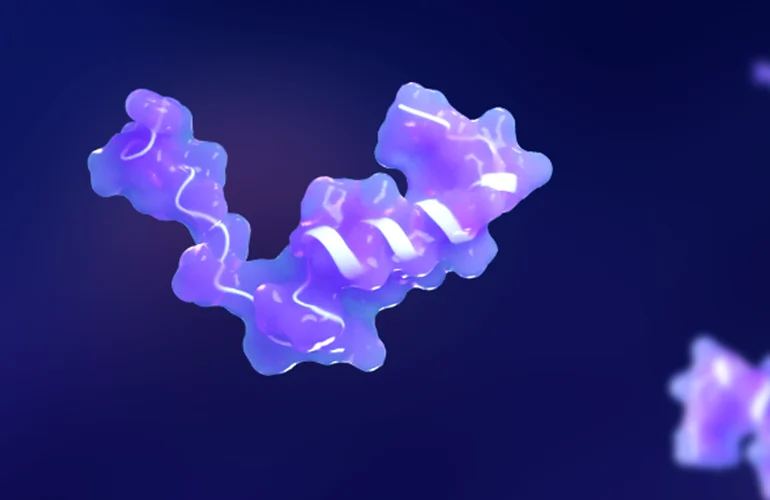
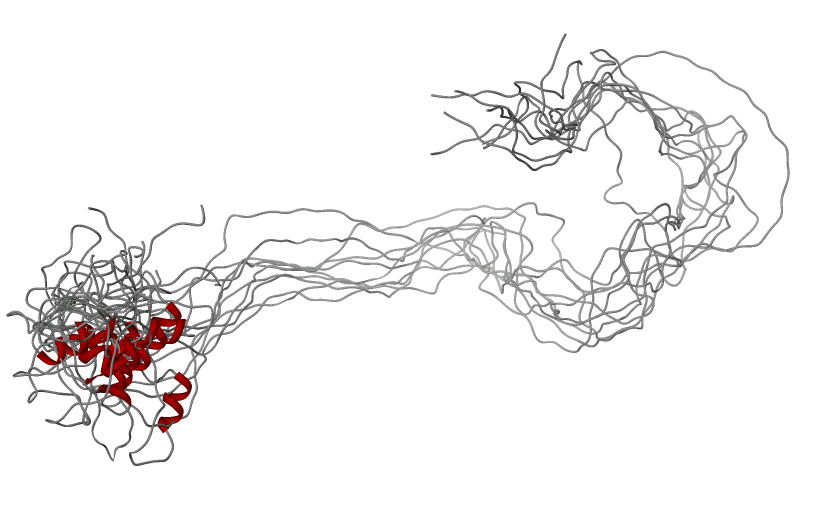
According to Talus Bio, roughly 87% of the 20,431 known human proteins lack an approved drug or a documented potent small-molecule ligand. A significant portion of this gap is occupied by transcription factors, which play critical roles in gene regulation and are frequently implicated in the progression of cancers and other complex diseases. The difficulty lies in their physical nature: many transcription factors are intrinsically disordered. They do not possess a single, static 3-D shape but rather exist in a dynamic, shifting state.
Lindsay Pino, Chief Technology Officer at Talus Bio, characterizes the struggle to model these proteins using standard folding software as akin to analyzing a "plate of spaghetti." Because these proteins lack a defined, rigid binding pocket, conventional structural algorithms—which rely on predictable geometry—fail to provide actionable data. For researchers, these proteins have historically been categorized as "undruggable," effectively removing them from the pipeline of potential therapeutic interventions.
Ptarmigan-1: A Paradigm Shift in Screening
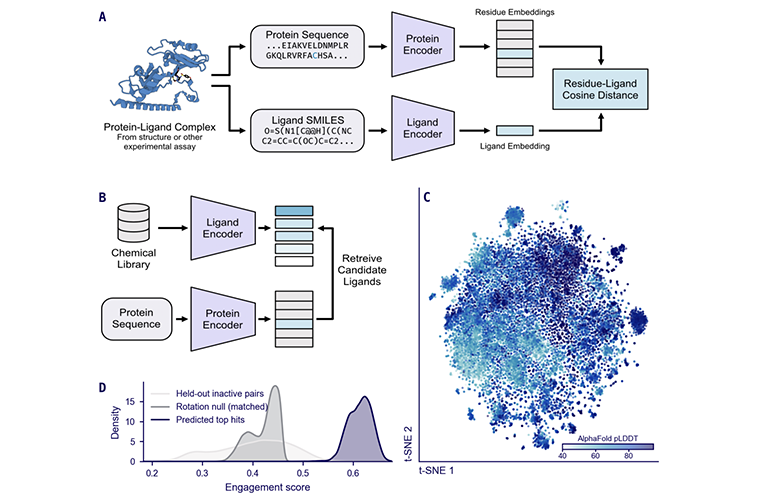
In response to these limitations, Talus Bio has developed an artificial intelligence model dubbed Ptarmigan-1. Rather than attempting to predict the 3-D configuration of a protein, the model is trained on mass spectrometry data that records actual target engagement—the physical interaction between a compound and a protein inside a living cell. By prioritizing functional binding data over geometric prediction, the model eliminates the need for expensive and often inaccurate structure-based simulations.
The technical implications of this shift are profound. Traditional computational drug discovery, which often involves "co-folding" a target protein with potential drug candidates, is computationally intensive. When applied to the millions of compounds found in modern discovery-scale libraries, the costs and time requirements become prohibitive. Alex Federation, CEO of Talus Bio, notes that screening a million-compound library against a single target could historically take months and cost upwards of $100,000 to $1 million, primarily due to the intense GPU power required to simulate folding.
In benchmark testing conducted on a single Nvidia H100 GPU, Ptarmigan-1 demonstrated an average processing time of just 10 milliseconds per compound. In comparison, the open-source structural model Boltz-2 required approximately 54 seconds for the same task. This represents a 5,000-fold increase in efficiency. Consequently, a screen that would have previously required nearly two years of continuous computation can now be completed in less than three hours. In a recent validation, the team successfully processed a 3.4-billion-compound library against the entire human proteome in under 24 hours using only 20 H100 GPU-hours.
Validating the Approach: The STAT6 Retrospective
To demonstrate the efficacy of this structure-free methodology, the Talus Bio team conducted a retrospective study focusing on STAT6, a transcription factor known to be challenging to target. Using Ptarmigan-1, the researchers were able to identify 40 inhibitors from a set of Pfizer patents that had been published after the training cutoff date for the Boltz-2 model.
In this head-to-head comparison, Ptarmigan-1 achieved an area under the curve (AUC) of 0.94, a metric of predictive accuracy. In contrast, both the structural docking baseline and the Boltz-2 model scored 0.58, a performance level that is statistically close to random chance. This result provides a compelling proof-of-concept that for certain classes of targets, data-driven binding records are superior to geometric prediction models.

However, the company does not position Ptarmigan-1 as a wholesale replacement for existing structural biology tools. On targets that are well-folded and possess stable structures, structural models like Boltz-2 remain highly effective. Instead, Talus Bio suggests a hybrid workflow: using Ptarmigan-1 to perform a rapid, cost-effective initial sweep of billions of compounds to narrow the field, and subsequently employing structural models to refine the selection of the most promising candidates.
Implications for the Pharmaceutical Pipeline
The ability to rapidly screen billions of compounds against the entire human proteome—including previously "undruggable" transcription factors—has immediate implications for the pharmaceutical industry. The current reality is that thousands of potential drug targets remain stagnant in academic and commercial pipelines simply because the computational tools to find binding partners have been insufficient.
"We’ve been sitting on these targets we’ve known about for decades, that we know are good targets," Pino stated. "We just haven’t had the tools to find them yet."
By reducing the cost and time barrier to entry, this technology could decentralize drug discovery. If the computational expense of lead optimization is drastically lowered, smaller biotech firms and academic labs may be able to advance targets that were previously the exclusive domain of large pharmaceutical companies with massive high-performance computing budgets.
The Broader Context of AI in Drug Discovery
The development of Ptarmigan-1 arrives at a time of intense scrutiny and rapid evolution for AI in life sciences. Following the 2024 Nobel Prize in Chemistry awarded to the creators of AlphaFold, the scientific community has been focused on the "post-folding" era. The industry is currently moving away from the novelty of predicting protein shapes and toward the practical application of these predictions in medicinal chemistry.
The Talus Bio approach reflects a growing trend toward "data-first" modeling, where models are trained on experimental observations rather than theoretical physics simulations. This aligns with a broader industry shift toward integrating high-throughput mass spectrometry—which provides real-world evidence of drug-protein interaction—directly into machine learning pipelines.
Looking forward, the success of this model could lead to a significant expansion of the druggable genome. If transcription factors can indeed be targeted at scale, it opens the door to new therapies for a wide array of diseases, ranging from autoimmune conditions to aggressive cancers, where gene regulation is key to pathology.
Conclusion and Future Outlook
Talus Bio’s transition from theoretical modeling to empirical data integration marks a significant milestone in the evolution of computational drug discovery. By acknowledging the limitations of structural models when confronted with the inherent disorder of many human proteins, the company has successfully pivoted to a more efficient and, in many cases, more accurate methodology.
As the industry continues to integrate these findings, the focus will likely shift to the scalability of these models and their integration into the wider drug development cycle, including laboratory validation and clinical trials. For now, the 5,000-fold speed increase offered by Ptarmigan-1 provides a glimpse into a future where the constraints of time and computation no longer serve as a barrier to unlocking the complexities of human biology. Whether this approach will become the new industry standard remains to be seen, but the data suggests that for the most difficult targets, skipping the fold might be the most effective way forward.