The integration of artificial intelligence into clinical research has reached a critical inflection point, moving beyond experimental pilot programs to demonstrable financial and operational impact. A landmark study conducted by the Tufts Center for the Study of Drug Development (CSDD) in collaboration with clinical trial platform provider Medable has quantified the fiscal potential of AI-enabled clinical monitoring. The analysis reveals that deploying specialized AI agents in phase 3 oncology trials could generate an 82x return on investment, translating to an estimated $21 million in added financial value per trial. For phase 2 studies, the model projects a 64x return, equating to approximately $7.5 million in value.
This analysis serves as a quantitative benchmark in an industry currently grappling with the "agentic" shift—the transition from generative AI that simply drafts text to "agentic" AI that executes specific, multi-step workflows. As pharmaceutical companies face mounting pressure to accelerate drug development timelines and curb the ballooning costs of clinical trials, the Tufts-Medable data provides a roadmap for shifting capital allocation from administrative overhead to high-value strategic decision-making.
The Evolution of Clinical Trial Complexity
To understand the necessity of this technology, one must consider the sheer volume of data involved in modern drug development. In 2012, a typical phase 3 protocol generated fewer than one million data points. By 2026, that figure has surged to an average of 5.9 million data points per protocol. This exponential growth in data volume has created a "validation bottleneck," where the traditional human-led model of manual data entry, cleaning, and monitoring is no longer sustainable.
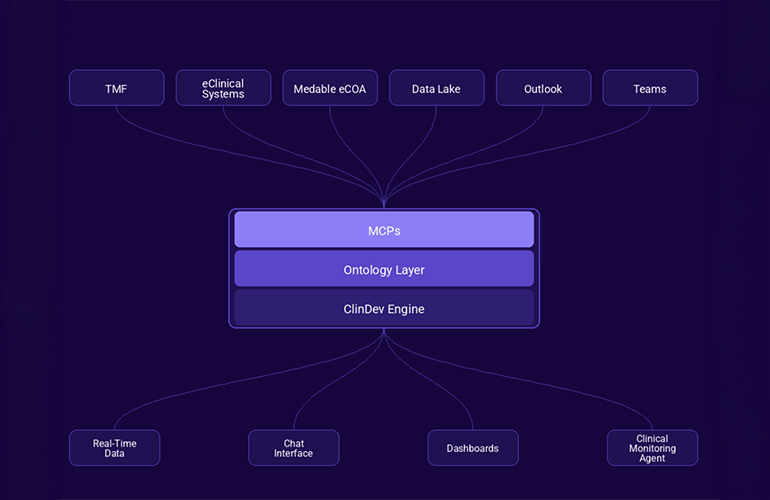
Clinical research associates (CRAs) are currently tasked with "wrangling" information from fragmented, siloed systems including Electronic Data Capture (EDC), Clinical Trial Management Systems (CTMS), and Trial Master Files (TMF). The cognitive load required to synthesize this information—and identify subtle trends in adverse events or site performance—is immense. By utilizing AI agents that can traverse these systems in real-time, organizations are beginning to solve for the latency inherent in manual human oversight.
Chronology of AI Adoption in Clinical Trials
The journey toward this level of automation has been marked by three distinct phases over the past decade:
- 2015–2020: The Digitization Era. The primary focus was the transition from paper-based records to Electronic Clinical Outcome Assessments (eCOA) and digital EDC systems.
- 2021–2024: The Predictive Era. Companies began implementing machine learning models to predict patient dropout rates and identify potential site delays. However, these models were largely passive, providing insights that still required manual intervention.
- 2025–Present: The Agentic Era. The current frontier involves AI agents capable of proactive workflows, such as drafting and issuing queries to trial sites or automatically flagging protocol deviations based on cross-system data analysis.
The Tufts-Medable analysis acts as the first robust attempt to place a definitive "price tag" on this third phase. According to Ken Getz, executive director of Tufts CSDD, the industry has long suffered from a lack of rigorous quantification regarding the value of these tools. "We’ve known for some time that companies have been piloting AI enablement tools, but what they’ve often been lacking is any kind of quantification of the actual ROI," Getz noted. By moving from anecdotal evidence to a data-driven model, the collaboration has provided sponsors with the justification needed to scale these deployments from isolated pilots to enterprise-wide standard operating procedures.
Economic Implications for Oncology Portfolios
The financial implications of these findings are particularly pronounced for large-scale oncology portfolios. Dr. Pamela Tenaerts, Chief Medical Officer at Medable, emphasized that the savings are not merely localized to individual trials but scale significantly across a sponsor’s entire pipeline.
For a pharmaceutical sponsor managing 20 active oncology indications, the model projects an incremental portfolio expected net present value (eNPV) of up to $226 million. For larger entities managing 50 active indications, that value proposition balloons to $565 million. These figures represent the aggregate efficiency gains realized through faster cycle times and reduced administrative burdens, which allow for a more rapid transition of compounds through the critical phase 2 and 3 stages.

While the financial potential is significant, the deployment of these agents is not a "plug-and-play" operation. Medable’s architecture relies on prebuilt agents integrated with roughly 40 core enterprise connectors, including Oracle Argus for safety and Snowflake for data warehousing. However, Dr. Tenaerts clarifies that approximately 20% of the configuration must be customized to account for the unique data structures and regulatory requirements of specific clinical protocols. This "20% rule" highlights that while AI can commoditize routine data tasks, the human element—expert configuration and strategic oversight—remains non-negotiable.
The "Human-in-the-Loop" Reality
Despite the hype surrounding autonomous AI, the clinical sector remains firmly grounded in a "human-in-the-loop" framework. The Medable agent, for instance, focuses primarily on surfacing actionable insights rather than executing irreversible decisions. When an agent identifies a site with low adverse-event reporting, it does not unilaterally penalize the site. Instead, it compiles the necessary documentation, drafts the query, and presents it to a CRA for review.
This workflow serves as a crucial safeguard, particularly in a high-stakes regulatory environment where precision and compliance are paramount. Industry observers, including Venu Mallarapu of eClinical Solutions, note that the current state of the market is "assistive" rather than "autonomous." There is currently no widespread evidence of agents performing fully independent, decision-making tasks without human oversight. The goal is not to replace the clinical researcher, but to eliminate the "data wrangling" that currently prevents them from focusing on the broader, more complex strategic decisions of trial design and patient safety.
Addressing the Systemic Bottleneck
A critical question raised by the increased speed of data monitoring is where the newly created efficiencies will be directed. If AI agents dramatically increase the speed at which queries are generated and sent to clinical sites, there is a risk of simply shifting the bottleneck to the site staff. If sites are overwhelmed by a surge in automated communications, the administrative burden remains unchanged.

"You push the balloon and it goes somewhere else," Dr. Tenaerts observed. "You need to figure out the whole system." This suggests that the next phase of AI development in clinical trials will likely involve "ecosystem" automation—ensuring that the speed of the sponsor-side agent is matched by streamlined communication and response protocols at the clinical site level.
The Path Toward Broader Adoption
The success of the Medable model in oncology suggests that these efficiencies are replicable across other therapeutic areas. Oncology has historically been the testing ground for AI due to its high unmet need, complex protocols, and extensive data requirements. As the cost of implementation decreases and the efficacy of agentic workflows is proven in the oncology space, adoption is expected to broaden into immunology, neurology, and rare disease research.
The broader implications of this shift are profound. If the industry can consistently reduce cycle times by the 18% observed in recent Tufts studies, the cumulative effect on public health could be substantial. By shortening the time it takes for life-saving therapies to reach the market, pharmaceutical companies can recover significant R&D costs while providing patients with earlier access to treatments.
However, the industry must remain cognizant of the limitations. As noted by the 95% failure rate of oncology drug candidates, AI is not a panacea for poor study design or ineffective compounds. An agent can optimize the monitoring of a trial, but it cannot fix a flawed hypothesis. The true value of AI in the coming years will be its ability to provide the clarity required to "fail fast"—allowing sponsors to identify failing trials early and pivot resources toward the most promising candidates.
In conclusion, the Tufts-Medable analysis marks a transition from the era of experimental AI to the era of industrial-scale, value-based automation. As the technology matures and becomes more deeply integrated into the fabric of trial operations, the focus will likely shift from "what can the agent do" to "how does the agent fundamentally reconfigure the clinical trial value chain." For sponsors, the question is no longer whether to invest in AI, but how to deploy it to maximize its compounding financial and scientific returns.