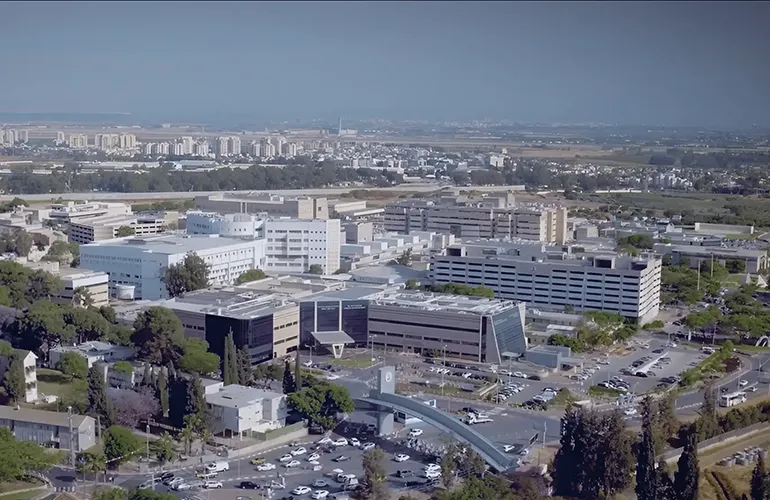
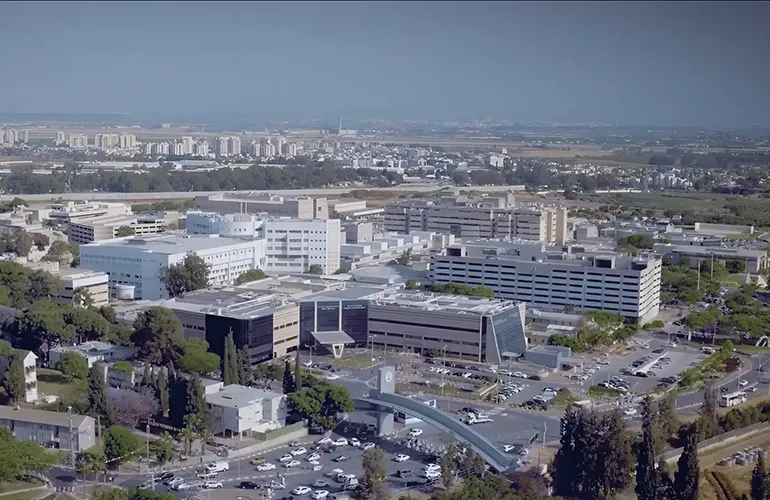
The landscape of global healthcare is undergoing a seismic shift as Sheba Medical Center, Israel’s largest and most prominent healthcare institution, has officially secured a groundbreaking partnership with OpenAI. This collaboration marks the first instance of the technology giant entering into a formal, integrated agreement with an international hospital system, setting a new benchmark for how artificial intelligence is deployed within complex clinical environments. The initiative is not merely a pilot program but a cornerstone of Sheba’s overarching “AI Hospital 2030” strategy, an ambitious roadmap designed to overhaul the operational and clinical foundations of the institution.
The Genesis of the Partnership
The relationship between Sheba Medical Center and OpenAI did not begin as a standard vendor-client transaction. Instead, it was born from the strategic vision of Sheba’s ARC (Accelerate, Redesign, Collaborate) innovation arm. The hospital’s leadership, specifically within its 50-person-strong AI Center, recognized that the next frontier of medical efficiency required more than just localized algorithms—it required a fundamental integration of large-scale generative models into the daily workflow of clinicians.
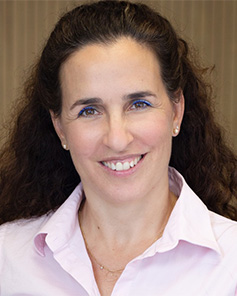
Ayelet Akselrod-Ballin, head and CTO of Sheba’s AI Center, initiated the outreach, reflecting a proactive posture that has become synonymous with the hospital’s brand. The goal was twofold: to bring cutting-edge generative AI to the bedside and to democratize access to these tools for staff ranging from nurses to administrative researchers. By securing early access to OpenAI’s specialized healthcare models, Sheba is positioning itself as a primary testing ground for how ChatGPT-based architectures can function outside the U.S. healthcare ecosystem, particularly in institutions that utilize diverse, non-Epic electronic health record (EHR) systems.
Addressing the Global Healthcare Crisis
The impetus for this technological pivot is rooted in a sobering reality: a worldwide shortage of healthcare professionals. According to data from the OECD’s 2025 health report, Israel currently maintains a ratio of 3.5 practicing doctors per 1,000 residents, a figure that sits below the OECD average of 3.9. This trend is echoed globally, with the World Health Organization projecting a staggering shortfall of nearly one million health workers across the European region by the end of the decade. In the United States, the Association of American Medical Colleges (AAMC) has warned of a potential deficit of up to 86,000 physicians by 2036.
Akselrod-Ballin views this not just as a staffing issue, but as a crisis of efficiency. Clinicians are currently burdened by an unsustainable volume of administrative tasks, documentation, and data synthesis. The Sheba-OpenAI partnership is designed to act as a force multiplier, automating the cognitive load that leads to burnout. By delegating routine clerical and information-gathering tasks to AI, the hospital aims to reclaim the most valuable commodity in medicine: time for direct patient interaction.
Chronology of Innovation at Sheba
Sheba’s path to this partnership is marked by a series of successful, high-impact implementations that validated the hospital’s internal capabilities.
- 2019: Akselrod-Ballin and her team at IBM Research published a landmark study in Radiology, demonstrating that AI models could successfully identify false-negative mammograms that human reviewers missed, establishing a baseline for the hospital’s focus on data-driven diagnostics.
- 2023: The hospital accelerated its deployment of "SmartER," an ambient AI platform developed alongside ScribeMD. This system functions as a digital scribe in the emergency department, transcribing patient-physician interactions and generating structured clinical summaries in real-time.
- 2024: Sheba expanded its reach with "Project K," a collaboration involving Microsoft Israel and KPMG. This initiative introduced AI-driven avatars to handle initial patient intake, further streamlining triage.
- 2025: The implementation of "Beyonder" marked a significant milestone, as the system began autonomously screening admissions to route stable patients toward virtual care, effectively reserving physical capacity for complex, high-acuity cases.
- 2026: The formalizing of the partnership with OpenAI serves as the culmination of these prior efforts, providing the infrastructure to scale these isolated successes into a unified, hospital-wide agentic ecosystem.
Technical Implementation and Governance
The deployment of OpenAI’s models within Sheba is set to unfold over the coming months. Unlike traditional software rollouts, this implementation is characterized by its emphasis on "agentic workflows." In this model, AI is not a passive tool but an active agent capable of performing multi-step tasks.
One of the most significant challenges identified by the team at Sheba is the lack of universal regulatory guidelines for generative AI in clinical settings. Akselrod-Ballin acknowledges that the institution is effectively “building the guardrails as it goes.” This includes developing proprietary monitoring protocols and governance structures that ensure data privacy, clinical accuracy, and ethical alignment. Because the AI Center is embedded directly within the hospital’s physical campus, these governance policies are developed in real-time, involving direct feedback loops between software engineers, cybersecurity experts, and frontline clinicians.
The Vision for Agentic Infrastructure
Sheba’s strategy is built on the concept of modularity. Rather than building a bespoke solution for every department, the AI Center identifies recurring pain points across the hospital—such as patient intake, history taking, and discharge summary generation—and creates "agents" that can be reused across different clinical specialties.
For instance, the processes developed for the general emergency department are being adapted for specialized units, including oncology and pediatric ERs. By creating a reusable, scalable infrastructure, Sheba is not just building tools; it is building an AI operating system for the hospital. This approach also extends to research; the hospital is currently exploring how generative agents can accelerate clinical trial workflows, particularly in the labor-intensive areas of patient selection and regulatory compliance reporting.
Broader Industry Implications
The success of this partnership could serve as a blueprint for other Tier-1 global medical centers. The ability to integrate advanced AI into existing, non-standardized digital infrastructures proves that technological transformation is not reserved solely for hospitals with massive, pre-existing proprietary tech stacks.
Industry analysts observe that the "Sheba Model"—combining internal deep-tech R&D with high-level external partnerships—offers a sustainable pathway for other institutions. By leveraging partnerships with entities like NVIDIA, Mount Sinai, and now OpenAI, Sheba has created a knowledge-sharing ecosystem that mitigates the risks of early adoption.
Furthermore, the focus on generative AI represents a distinct evolution from the previous generation of AI tools. While early radiology AI was limited to identifying anomalies in images, the current generation of generative models is capable of "reasoning" through documentation and administrative logic. This transition from "narrow AI" to "agentic AI" is expected to yield significant gains in efficiency. For example, recent studies in generative AI-assisted reporting have shown a 15.5% improvement in documentation efficiency without any decline in clinical accuracy.
Looking Toward 2030
As Sheba moves toward its 2030 goal of becoming a fully AI-powered medical campus, the focus will increasingly shift toward mobile-first accessibility. The long-term vision is to equip every physician and staff member with a mobile AI assistant capable of pulling data from the EHR, summarizing research literature, and coordinating inter-departmental logistics.
The partnership with OpenAI provides the necessary, high-performance engine to drive this vision. As Akselrod-Ballin noted, the pace of change is accelerating. With the convergence of clinical necessity, robust internal R&D, and the world’s most advanced AI models, Sheba Medical Center is not merely adapting to the future of healthcare—it is actively defining it. The next phase of the partnership will be closely watched by health systems worldwide, serving as a vital case study in the feasibility of scaling generative AI in a high-stakes, life-or-death clinical environment.