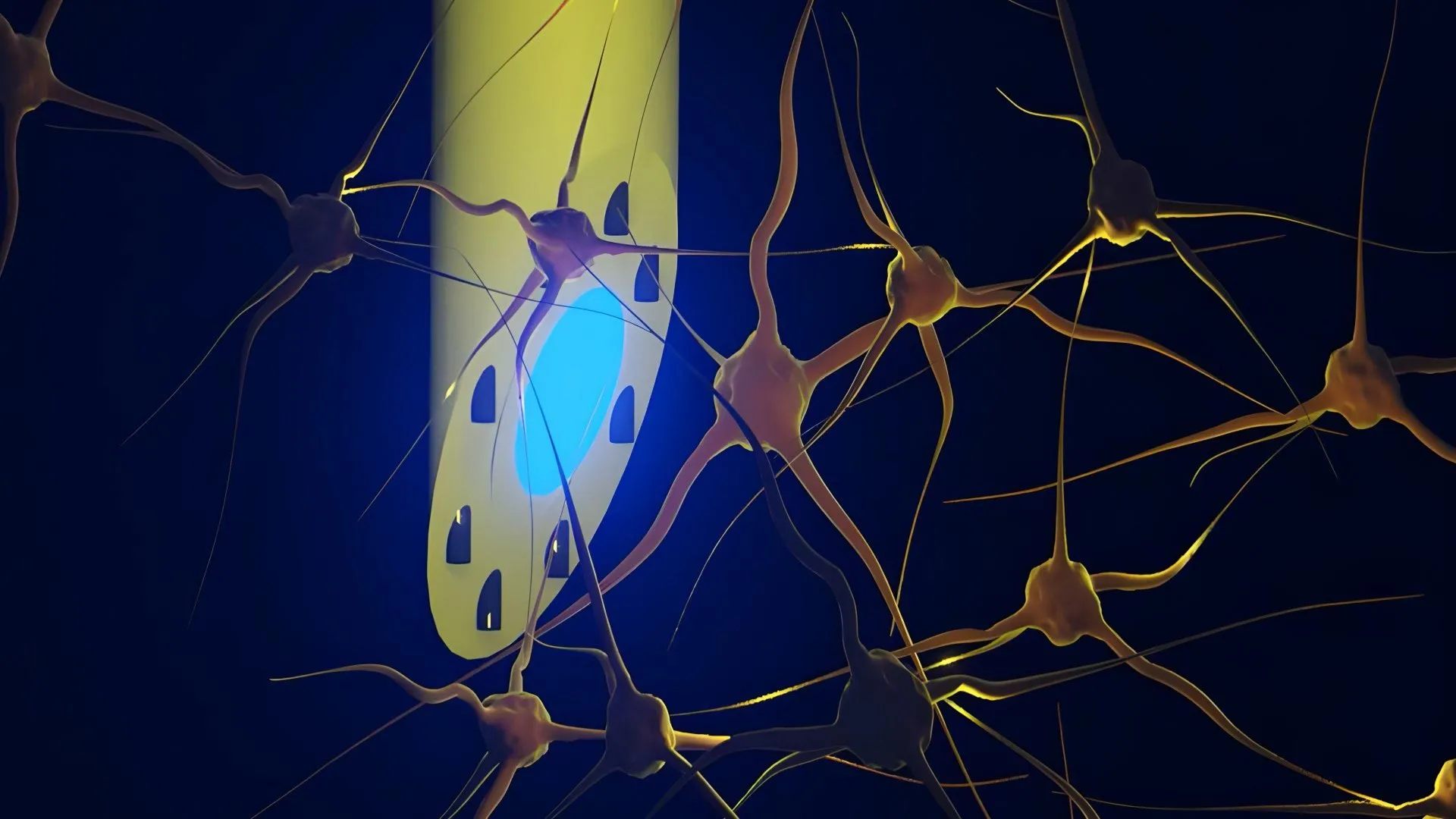
The device, formally known as the microfluidic Axialtrode (mAxialtrode), represents a significant leap in neuro-engineering, bridging the gap between passive observation and active, multi-modal intervention. Developed through a collaborative effort involving the Technical University of Denmark (DTU), the University of Copenhagen, and University College London, the mAxialtrode addresses long-standing limitations in the physical and functional architecture of neural interfaces. Its development, recently published in the peer-reviewed journal Advanced Science, signifies a shift toward less invasive, high-resolution brain-computer interface (BCI) technologies.
The Evolution of Neural Interfacing
To understand the significance of the mAxialtrode, one must examine the history of neural implants. For decades, researchers have relied on silicon-based probes or rigid glass optical fibers to interact with the brain. These traditional devices, while effective for single-point measurements, suffer from significant biological and mechanical drawbacks. Silicon probes are notoriously stiff, which creates a mismatch between the rigid hardware and the soft, pulsatile nature of brain tissue. This mismatch often triggers a "foreign body response," where the brain forms a sheath of scar tissue (gliosis) around the electrode, effectively isolating it from the neurons it is meant to monitor.
The mAxialtrode departs from this paradigm by utilizing a soft, polymer-based architecture. Drawing from fiber-optic fabrication techniques, researchers created a needle-thin, flexible structure that mimics the mechanical properties of brain parenchyma. This flexibility is critical; it allows the device to move in concert with the brain’s micro-movements, thereby minimizing chronic inflammation and enhancing the longevity of the implant.
Chronology of Development
The mAxialtrode is the result of years of interdisciplinary research. The project began with a fundamental question: How can we achieve multi-layered neural modulation without cluttering the brain with a dense array of rigid probes?
- Initial Conceptualization (2020–2021): Postdoc Kunyang Sui and Associate Professor Christos Markos began exploring advanced polymer-drawing techniques to create multi-channel fibers capable of liquid transport.
- Engineering Phase (2022): The team successfully engineered the fiber-drawing process, integrating eight microscopic channels surrounding a light-conducting core into a single strand less than 500 micrometers in diameter.
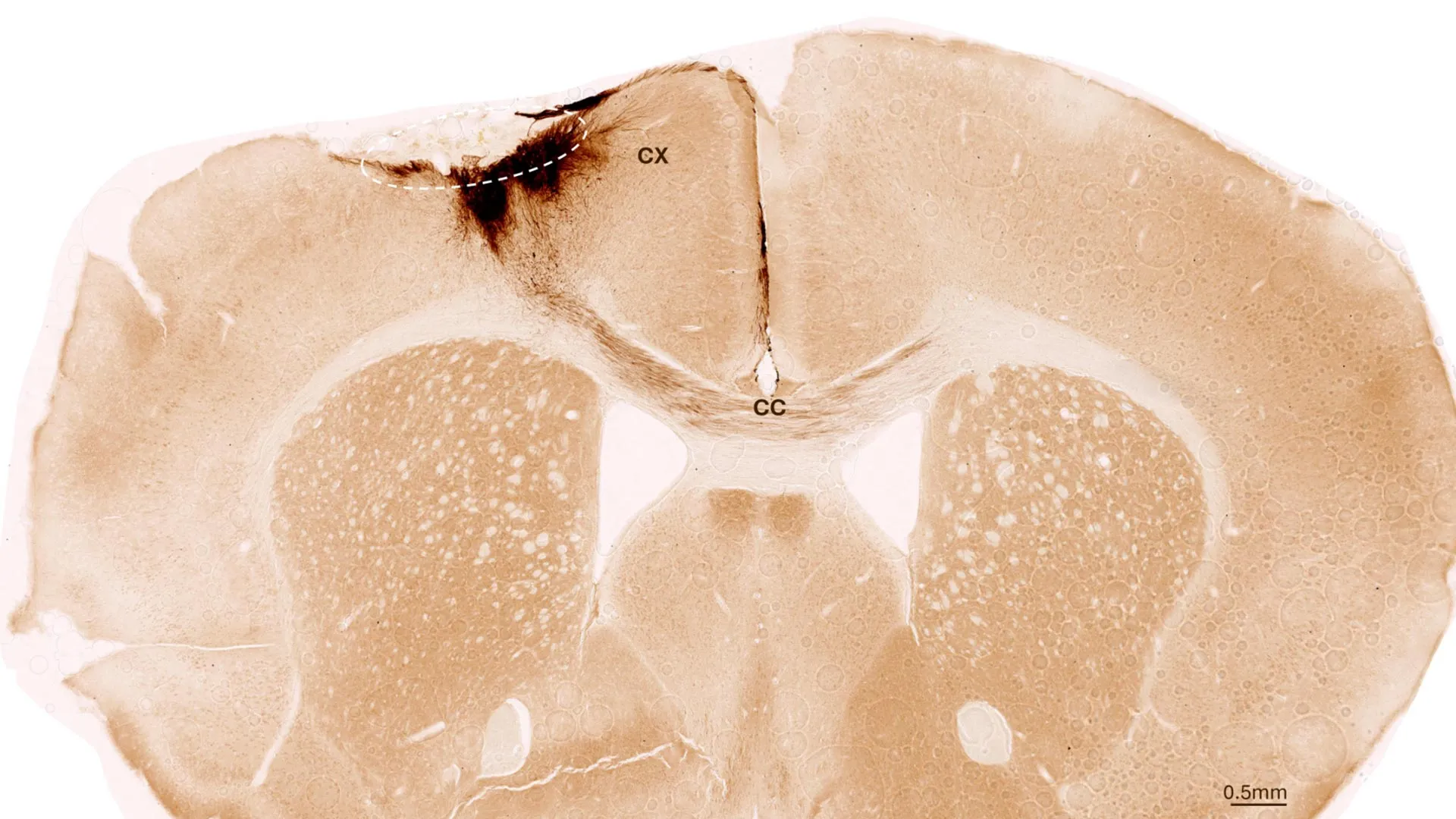
- In Vivo Validation (2023): Working in collaboration with Associate Professors Rune W. Berg (University of Copenhagen) and Rob C. Wykes (University College London), the team performed trials on living mice to confirm that the device could function in a complex biological environment.
- Publication and Intellectual Property (2024): The findings were codified in Advanced Science, and the team moved to secure patents for the design, marking the transition from experimental prototype to potential medical technology.
Technical Specifications and Multifunctionality
The mAxialtrode’s primary innovation lies in its "axial" design. Unlike conventional optical fibers that act like a flashlight—emitting light only from the distal tip—the mAxialtrode is engineered to allow for functional points along its entire length.
The fiber is produced through a precise thermal drawing process, where a large-scale polymer preform is heated and pulled into a fine filament. This process preserves the geometry of the internal structures, which include:
- Optical Core: Dedicated to delivering precise wavelengths of light (blue and red) for optogenetic stimulation of specific neural circuits.
- Microfluidic Channels: Eight distinct pathways that allow for the localized delivery of pharmacological agents or neurotransmitters.
- Electrophysiological Sensors: Extremely thin metal wires integrated within the channels, capable of recording electrical activity at varying depths along the fiber.
By consolidating these three modalities—optical stimulation, chemical delivery, and electrical recording—into a single 0.5 mm probe, researchers can observe how information flows through different layers of the cerebral cortex and hippocampus simultaneously.
Scientific and Clinical Implications
The ability to record and stimulate at multiple depths simultaneously provides a holistic view of brain activity that was previously unattainable. For researchers studying epilepsy, this is particularly transformative. Epilepsy is often characterized by the rapid spread of aberrant electrical activity through multiple neural circuits. Current treatments, such as focal resections or deep brain stimulation (DBS), are often blunt instruments.
The mAxialtrode offers a "closed-loop" potential. In a future clinical scenario, the device could monitor the onset of an epileptic seizure at specific neural nodes, respond by stimulating the inhibitory circuits to dampen the activity, and, if necessary, release an anti-epileptic drug precisely at the focus of the seizure. This localized delivery could drastically reduce the systemic side effects associated with oral epilepsy medications.
Expert Perspectives and Future Challenges
The collaboration between engineering and clinical neuroscience departments has been essential to the project’s success. Associate Professor Rob C. Wykes, whose work at University College London focuses on epilepsy, noted that the device allows for a level of neurophysiological validation that was previously restricted by the physical constraints of traditional hardware.
However, the researchers remain cautious about the timeline for human application. Kunyang Sui has emphasized that while the in vivo mouse models provided successful proof-of-concept, the transition to human clinical trials involves a rigorous regulatory path. This includes long-term biocompatibility studies, assessment of the device’s stability over months or years, and the development of specialized delivery systems to safely insert the fibers into the human brain.
Beyond epilepsy, the mAxialtrode could have implications for memory research and decision-making studies. By manipulating specific layers of the cortex while recording the electrical output of deeper subcortical structures, neuroscientists can map the causal relationships that define human cognition.
Analysis of the Technological Landscape
The current BCI market is dominated by rigid electrode arrays, such as the Utah Array or various CMOS-based silicon probes. While these technologies have yielded significant data, the mAxialtrode offers a more versatile alternative. Its ability to serve as a "chemical-electrical-optical" bridge allows it to address the biological complexity of the brain more accurately than electronic-only sensors.
The primary hurdle for the mAxialtrode will be scaling. Manufacturing thousands of these devices with consistent quality for clinical use will require a transition from laboratory-scale drawing to industrialized fabrication. Furthermore, the integration of external pumps for fluid delivery and light sources for optogenetics will necessitate the development of miniaturized, implantable hardware that can be worn by a patient.
Concluding Outlook
The mAxialtrode stands as a testament to the convergence of materials science and neurobiology. By reimagining the physical form of the brain implant, the research team has moved closer to the goal of "neuro-modulation"—the ability to tune the brain’s activity as precisely as one might adjust the settings on a complex electronic system.
As the team pursues patent protections and begins to outline the requirements for clinical safety trials, the medical community will be watching closely. If the device can demonstrate similar efficacy in human models, it may fundamentally alter the treatment landscape for neurological disorders, moving the field away from systemic, whole-body treatments toward highly localized, precise, and responsive interventions. The path from the lab to the clinic is long and arduous, but the mAxialtrode provides a new, more refined tool to navigate the complexities of the human mind.