For pharmaceutical companies navigating the complex transition from clinical success to commercial launch, the process of selecting service providers—ranging from distribution and pricing strategy to customer relationship management (CRM)—has long been an opaque, fragmented endeavor. While buyers in mainstream enterprise software benefit from rigorous, data-driven evaluation platforms like G2, Gartner Peer Insights, and standardized analyst reports like the Gartner Magic Quadrant, the pharmaceutical commercial services sector has remained stubbornly tethered to legacy networking and anecdotal evidence.
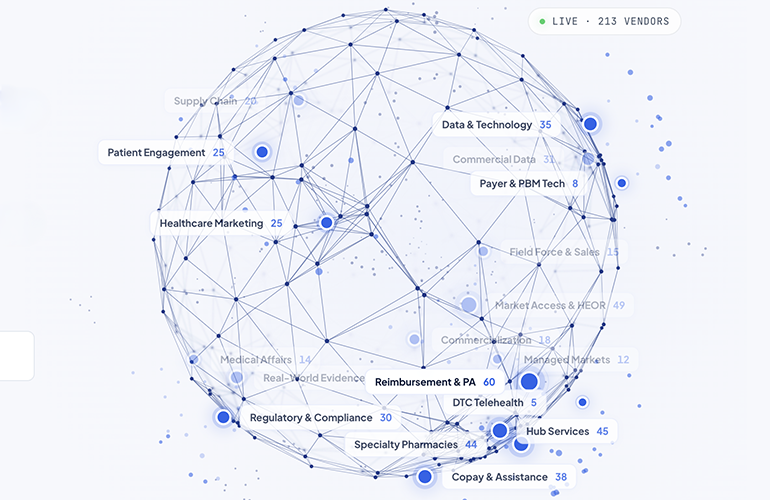
This reliance on informal "word of mouth" represents a significant hurdle for emerging biotech and established pharma firms alike. The lack of standardized, objective performance data increases the risk of costly misalignments during the most critical phase of a product’s lifecycle: the commercial launch. To address this structural inefficiency, Hoyt Gong, an MBA candidate at Harvard Business School, has launched Rx Almanac. The platform functions as an editorial site and directory designed to bring transparency to the commercial services landscape, offering pharma teams a centralized, neutral resource for vendor evaluation.
The Genesis of a Market Disruption
The inspiration for Rx Almanac originated from Gong’s personal experience as a senior product manager at an insulin pump manufacturer. During a period of significant scaling, Gong found himself responsible for the daunting task of vendor selection across multiple critical business functions. He recalls the complexity of the process: “Picking our CRM vendor, thinking through our distribution strategy, choosing our pharmaceutical distribution vendors, our pricing vendors, and our PBM strategy—it was an overwhelming amount of work with very little objective guidance available.”
Gong identified a glaring void in the industry’s professional infrastructure. While extensive literature and consulting services exist for the R&D and clinical development phases of drug development, the “last mile”—the commercialization stage—remains underserved by objective analysis. “There was no Yellow Pages for this industry,” Gong noted. Supported by academic backing from Harvard and technological guidance from Google, he developed Rx Almanac to serve as a bridge between the clinical success of a molecule and its ultimate patient availability.
The Landscape of Commercial Services
The scope of Rx Almanac is strictly defined by the commercial lifecycle, encompassing post-clinical development activities. In the current pharmaceutical market, commercial success is increasingly tied to the ability to effectively navigate complex PBM (Pharmacy Benefit Manager) strategies, pricing, and high-touch patient support programs.

One of the platform’s early initiatives is the creation of a “buyer matrix” that provides a head-to-head comparison of major commercial platforms, such as Veeva Vault CRM and Salesforce Life Sciences Cloud. These evaluations move beyond surface-level marketing claims, scoring vendors on metrics that directly impact operational success: data migration, regulatory validation, commercial workflow integration, the quality of implementation partners, risk profiles, and total cost of ownership.
By focusing on these granular KPIs, Rx Almanac aims to help procurement and commercial leads determine what vendors are “actually capable of versus what they say they can do.” This distinction is increasingly vital as vendors compete to include AI-driven agents in their service offerings. Gong points out that the industry suffers from a lack of clarity regarding AI, noting that vendors often market “AI agents” without defining the specific, value-added tasks those agents perform.
Consolidation and the Private Equity Factor
A critical trend identified by Rx Almanac’s analysis is the rapid consolidation of the commercial services market. Over the past several years, the landscape has been reshaped by aggressive M&A activity, largely fueled by private equity heavyweights such as Carlyle, KKR, and Summit Partners.
This trend of “gobbling up” smaller, specialized service providers has led to a market characterized by mega-vendors offering bundled solutions. While this provides a one-stop-shop appeal, it raises significant questions for pharma launch teams. Are these combined services genuinely integrated, or are they merely disparate, “piecemealed” technologies tethered together to satisfy investors?
This consolidation presents a practical dilemma for executives: when a company integrates five or six different service providers through acquisition, does the resulting platform truly enhance the patient experience? The primary objective for any launch team is to ensure that a drug is not only approved but accessible, affordable, and supported by a robust patient experience. If the underlying infrastructure is a patchwork of incompatible systems, the risk of launch failure increases exponentially.
Supporting Data and Industry Context
The necessity for such a platform is supported by the sheer volume of capital flowing into the commercialization sector. According to recent industry reports, the global pharmaceutical commercialization services market is projected to reach tens of billions of dollars by the end of the decade. As drug pipelines become more specialized—with a higher concentration of orphan drugs, gene therapies, and precision medicine—the commercial requirements for these products have become increasingly bespoke.

The traditional "word of mouth" approach to vendor selection is ill-equipped to handle this level of complexity. In a 2023 industry survey, nearly 65% of commercial operations leads reported that their vendor selection process relied on personal networks or existing relationships rather than a competitive request-for-proposal (RFP) process backed by independent performance benchmarks. This lack of rigorous vetting is a known contributor to implementation delays, which, in the context of a drug launch, can equate to millions of dollars in lost revenue and significant delays in patient access to life-saving therapies.
Implications for the Pharmaceutical Industry
The introduction of Rx Almanac signals a broader shift toward data-driven procurement in life sciences. As the industry faces increasing pressure from payers and regulators to prove the value and accessibility of new drugs, the technology stack behind these efforts must be equally transparent and efficient.
The long-term success of Rx Almanac will depend on its ability to remain an objective third party while navigating the inherent pressures of the pharmaceutical ecosystem. If the platform succeeds in setting a new standard for how vendors are vetted, it could force a higher level of accountability across the industry. Service providers, currently protected by the opacity of the market, may find themselves needing to provide more transparent performance data to compete effectively.
For launch teams, the implications are profound. Moving from a subjective selection process to one guided by objective matrices allows for a more accurate assessment of risk. It allows companies to answer the fundamental questions that define a successful product launch:
- How well do these combined services work together to get a drug to patients?
- How do we ensure the patient experience is seamless despite the complexity of the healthcare system?
- How do we achieve cost-effective, sustainable market access?
As Hoyt Gong continues to build out the platform, the industry will be watching to see if this "Yellow Pages" model can successfully replace the entrenched, informal networks that have dominated the sector for decades. For the biotech startup preparing its first commercial launch, or the established pharmaceutical giant looking to optimize its CRM and distribution strategies, the move toward structured, neutral vendor evaluation is not just a trend—it is a competitive necessity.
The integration of AI-enabled analytics and the shift toward evidence-based vendor selection reflect a maturing industry. While the era of “word of mouth” may not end overnight, the development of Rx Almanac provides a necessary framework for the next generation of commercial leaders, ensuring that the critical decisions made after the lab work is finished are as rigorous as the science that made the product possible.