In a significant expansion of our understanding of cellular biology, researchers have identified that the E-cadherin complex—a protein assembly long recognized for its role in maintaining tissue architecture—performs a secondary, vital function: the engulfment and disposal of dead cells. This discovery, published in the journal Nature Communications, provides a novel perspective on how epithelial tissues, which form the protective barriers of the skin, gut, and airways, manage internal waste without compromising their structural integrity. By repurposing molecular machinery traditionally reserved for intercellular adhesion, these cells act as an innate cleanup crew, a finding that holds profound implications for the study of chronic inflammation and autoimmune disorders.
The Anatomy of the E-Cadherin Complex
To understand the significance of this discovery, one must first look at the role of the E-cadherin complex in standard physiology. For decades, biologists have known that epithelial cells—the building blocks of our protective layers—rely on E-cadherin to "glue" themselves to their neighbors. This connection is not merely passive; it creates a continuous, sealed surface that acts as a primary barrier against pathogens and external environmental stressors.
The E-cadherin complex consists of E-cadherin itself, coupled with three essential auxiliary proteins. This molecular architecture provides the tensile strength necessary for tissues to withstand mechanical stress. Under normal circumstances, these molecules bridge the gap between cells, signaling to the surrounding environment that the tissue is intact. The research team, led by ICREA Research Professor Verena Ruprecht, sought to understand what happens when a cell within that tightly packed environment reaches the end of its life cycle and must be removed to prevent it from decaying in place.
Chronology of the Research Discovery
The investigation into this phenomenon began with the observation of embryonic development in zebrafish and mouse models. These organisms are highly favored in developmental biology because their embryos are transparent, allowing researchers to utilize advanced live-imaging techniques to observe cellular processes in real-time.
The team’s inquiry proceeded through several key stages:
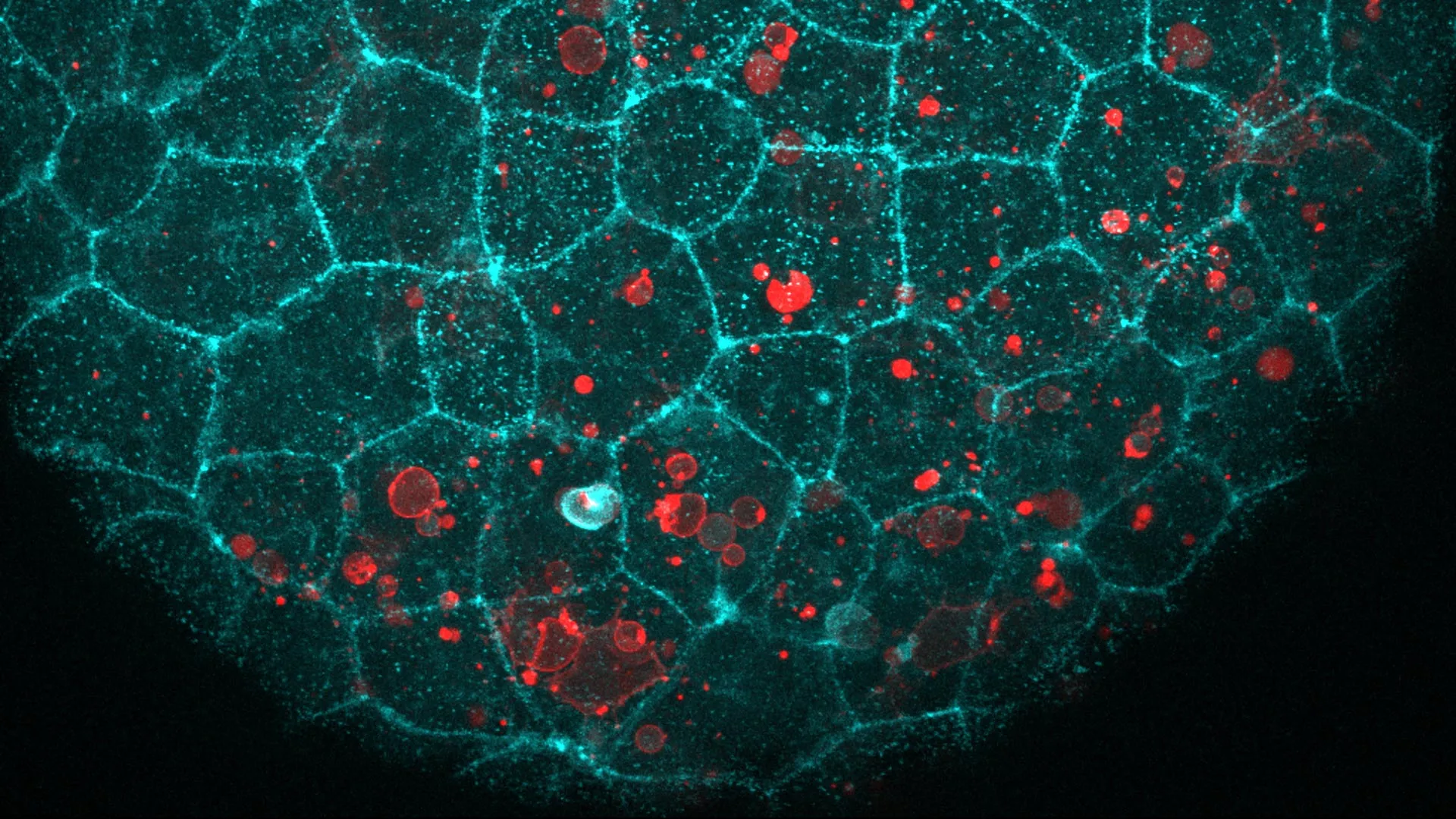
- Identification (Initial Observation): Researchers observed that when a cell initiated apoptosis—programmed cell death—within a healthy epithelial layer, the E-cadherin complex relocated specifically to the contact point between the dying cell and its neighbors.
- Testing Mechanistic Necessity: To determine if E-cadherin was acting as a primary driver, the team introduced dying cells that had been stripped of their own E-cadherin. Surprisingly, the neighboring epithelial cells removed these "naked" dead cells just as efficiently as they removed normal ones.
- Signal Specificity: Further testing involved the introduction of inert fat droplets. Despite these droplets lacking protein, they were tagged with the "eat me" chemical signals normally displayed by dying cells. The epithelial cells engulfed these droplets, confirming that the machinery is triggered by specific chemical cues but relies on the E-cadherin complex to execute the physical removal.
- Verification in Mammals: Finally, the researchers moved from zebrafish to mouse embryos. By blocking E-cadherin function in these models, they successfully halted the cleanup process, confirming that this mechanism is highly conserved across vertebrate species.
Mechanical Challenges and Biological Solutions
Engulfing a cell that is approximately the same size as the consumer presents a formidable mechanical challenge. In a rigid, sealed barrier, the removal of a single cell could theoretically lead to a "leak" in the tissue, compromising its protective function. However, the study reveals a sophisticated, asymmetric approach to this problem.
Using high-resolution live imaging, the team observed that the epithelial cells perform a feat of mechanical gymnastics. The cell membrane facing the external environment (the apical surface) remains largely stationary and tense, ensuring the barrier remains unbroken. Conversely, the basal surface—the side facing the interior of the tissue—undergoes significant deformation, stretching and bending to wrap around the target cell.
Professor Ruprecht uses the metaphor of a "row of dancers with linked arms" to explain this phenomenon. While the upper bodies (the barrier surface) remain steady and linked, the lower limbs (the internal cell structure) are free to perform the complex, localized movements required to ingest the debris. This dual-purpose coordination allows the tissue to maintain its integrity while simultaneously performing essential maintenance.
The Molecular Rope and Brake
The study further clarified the roles of specific components within the E-cadherin complex that facilitate this process. The researchers identified two distinct functional roles for the proteins associated with the complex:
- The Molecular Rope: One component of the complex serves as a tether connecting the assembly to the cell’s internal cytoskeleton. This connection allows the cell to transmit force across the surface of the engulfed material. When this tethering protein was removed, or when the specific anchoring region was genetically deleted, the epithelial cells lost their ability to swallow dead cells entirely.
- The Molecular Brake: Another component of the complex functions as a regulator of the cell’s contractile machinery. Interestingly, the researchers found that removing this "brake" did not accelerate the cleanup process. Instead, it rendered the cells overly stiff, causing them to lose the flexibility required to engulf the target. This suggests that the process requires a precise balance of tension and relaxation rather than raw force.
Implications for Human Health and Inflammation
The broader implications of these findings are substantial, particularly regarding chronic inflammation. When cells die through apoptosis, they must be cleared quickly. If they are left to linger, they may undergo secondary necrosis, in which the cell membrane ruptures and releases internal contents into the surrounding space. This release acts as a trigger for the immune system, often leading to the prolonged, low-grade inflammation associated with various degenerative and autoimmune diseases.
Current medical understanding suggests that the ability of epithelial cells to act as "amateur" phagocytes—cells that consume other cells—is an essential, early-stage innate immune defense. By identifying that E-cadherin is the engine behind this process, researchers have opened a new pathway for potential therapeutic intervention. If, for instance, a patient suffers from a condition characterized by chronic inflammation due to poor cellular debris clearance, targeting the efficiency of the E-cadherin complex could theoretically bolster the tissue’s natural cleanup capacity.
Future Directions and Limitations
While the study provides a breakthrough in understanding embryonic tissue, the research team acknowledges that the transition to adult human physiology remains an area for future investigation. Whether this mechanism is fully active in adult tissues—such as the human retina, gut, or lungs—remains a critical, unanswered question.
However, there is strong reason to be optimistic. E-cadherin is a highly conserved protein, meaning its structure and function have remained remarkably stable throughout evolutionary history. Furthermore, it is already known that adult epithelial tissues in the colon and airways are capable of clearing dead cells. The new findings offer a plausible model for how this occurs, suggesting that the "glue" that keeps us together is also the tool that keeps us clean.
This research, funded by a consortium including the Spanish Ministry of Science and Innovation and the European Union’s Horizon Europe program, marks a significant milestone in cell biology. As the medical community continues to explore the intersection of tissue mechanics and immunology, the role of E-cadherin in tissue homeostasis will likely become a focal point for developing new treatments for inflammatory conditions. By shifting the focus from purely chemical signals to the mechanical realities of cellular cleanup, this study offers a new lens through which to view the fundamental processes that sustain human health.