One of the most persistent enigmas in evolutionary biology concerns the transition from prebiotic chemistry to the first self-replicating cells. This "chicken or egg" dilemma posits a fundamental spatial requirement: for life to begin, RNA molecules—which store genetic information and catalyze reactions—needed to be contained to interact and evolve, yet the biological membranes required for such containment were themselves a product of the very life they were meant to protect. New research from the University at Buffalo, published in Nature Communications, offers a compelling solution to this spatial paradox by highlighting the inherent physical properties of RNA itself.
The study, led by Dr. Priya R. Banerjee and conducted in collaboration with Dr. Jerelle Joseph of Princeton University, demonstrates that RNA molecules can spontaneously self-organize into membrane-less liquid droplets, known as condensates. These droplets act as primitive, non-lipid compartments that concentrate genetic material, thereby facilitating the chemical reactions necessary for the emergence of life.
The RNA World Theory and the Membrane Problem
For decades, the "RNA World" hypothesis has served as the leading framework for understanding early life. It suggests that before the advent of DNA and protein-based metabolism, RNA served as the primary agent of both biological information storage and catalysis. Despite its explanatory power, the theory has long been hampered by the instability of RNA. In the volatile, high-temperature, and acidic environment of the primordial Earth, single-stranded RNA molecules would have been rapidly degraded if they were not protected.
Furthermore, the "dilution problem" remained a significant hurdle. In the vast, open-water environments of the prebiotic planet, molecules would have been dispersed, making the frequent, productive collisions necessary for complex chemical evolution statistically improbable. The new research suggests that RNA’s capacity to phase-separate into dense, liquid-like droplets provided the necessary "reaction vessels" to overcome these limitations long before the first cell membrane evolved.
Chronology of Discovery: From Fluidity to Gel-like Resilience
The path to this discovery has been marked by a series of experimental milestones over the past several years. In 2023, Dr. Banerjee’s laboratory published foundational work indicating that RNA exhibits a natural tendency to condense at elevated temperatures—a finding that was counterintuitive, as many polymers tend to disperse when thermal energy increases.
The current study, which benefited from support by the National Institutes of Health, the National Science Foundation, and the Hypothesis Fund, expanded on these findings through a rigorous comparative analysis between RNA and single-stranded DNA. Using advanced techniques including temperature-controlled microscopy, small-angle X-ray scattering, and molecular dynamics simulations, the team mapped the transition from fluid droplets to more rigid, gel-like structures.
The experimental data revealed a striking divergence in behavior: RNA began forming these protective condensates at temperatures roughly 10 degrees Celsius lower than DNA. This thermal sensitivity suggests that RNA was uniquely "primed" by nature to organize into compartments under the conditions likely prevalent on the early Earth.
The 2’-Hydroxyl Catalyst: A Chemical Tipping Point
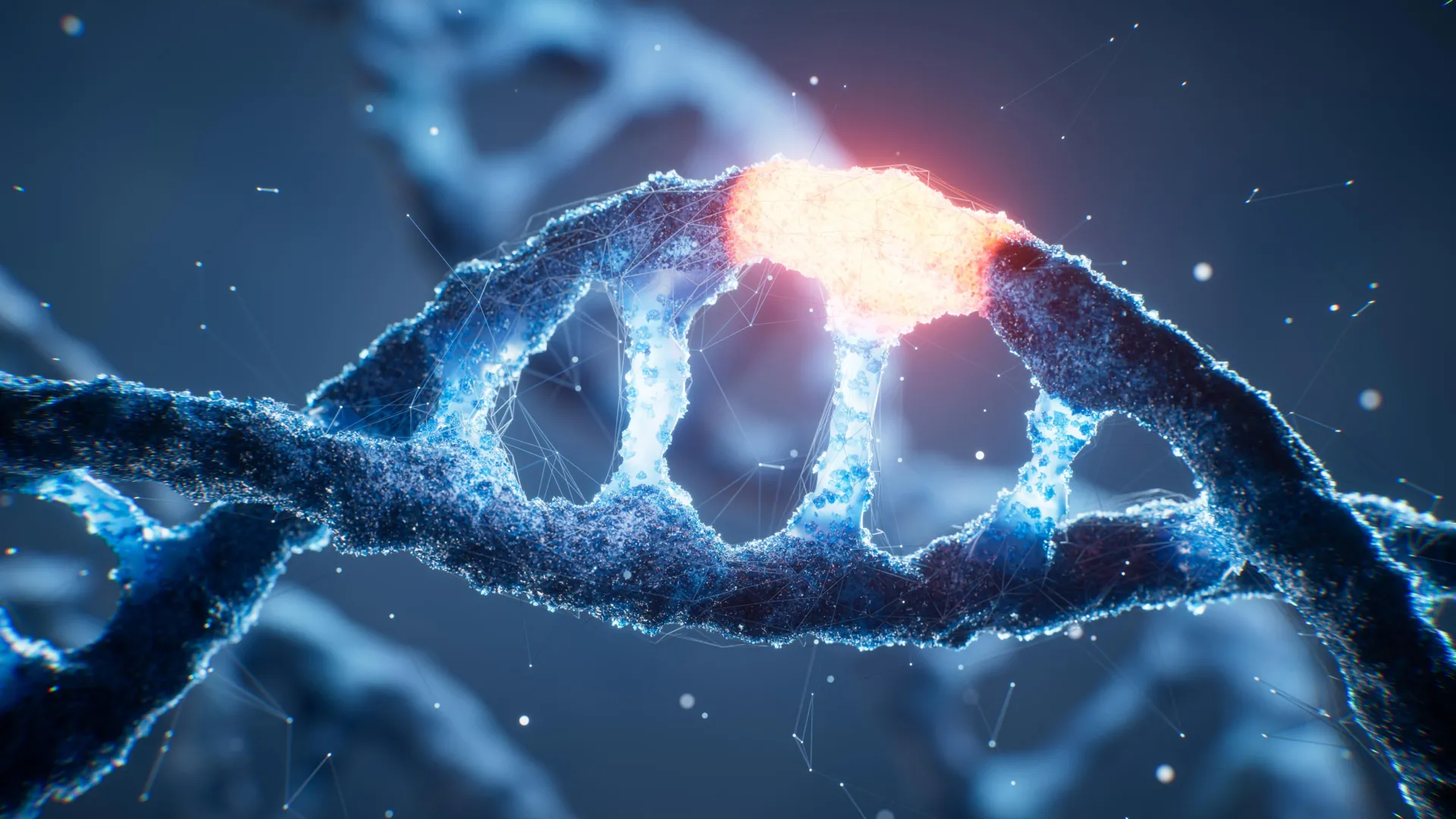
At the heart of this research is a deceptively simple chemical distinction. RNA and DNA are structurally similar, yet they are differentiated by a single oxygen atom in each sugar unit. RNA possesses a 2’-hydroxyl (2’-OH) group, a feature that DNA lacks. By isolating this specific component, the researchers determined that it serves as a master regulator of molecular organization.
The 2’-OH group influences how RNA interacts with its environment, specifically regarding its affinity for magnesium ions—which are abundant in many prebiotic environments—and its interaction with surrounding water molecules. The study found that RNA holds fewer water molecules around its backbone than DNA does. This reduced "hydration shell" allows RNA molecules to approach one another more easily, facilitating the assembly process.
When the researchers chemically modified the 2’-OH group to 2’-Ome (a common modification found in biological systems), they observed a significant decrease in the molecule’s ability to form condensates. This confirmed that the 2’-OH is not merely a bystander in molecular chemistry, but a critical driver of structural self-organization. The transition from a liquid droplet to a more rigid, gel-like state, facilitated by these interconnected networks, could have provided an essential "shield" against environmental degradation, effectively keeping fragile genetic sequences intact during the turbulent early stages of the planet’s history.
Scientific Perspectives and Collaborative Implications
The findings carry significant weight within the scientific community, as they bridge the gap between abstract theoretical physics and tangible evolutionary biology. Dr. Gable Wadsworth, the study’s lead author and a researcher transitioning to the University of Texas at El Paso, emphasized the power of this discovery: "This single oxygen-containing group on RNA’s sugar has a surprisingly powerful effect on whether these molecules come together, remain dynamic or become arrested into a gel-like material."
Dr. Priya R. Banerjee, the Twentieth Century Club Professor in the UB Department of Physics, views this as a foundational step toward understanding the emergence of complexity. "These findings reveal, for the first time, how remarkably small changes in molecular chemistry can control the emergence of much larger, self-organized biomolecular structures like RNA condensates," Banerjee noted. The collaboration with Dr. Jerelle Joseph’s team at Princeton was instrumental in providing the computational simulations that allowed the researchers to visualize these molecular dynamics at a granular level.
Broader Impacts: Toward Synthetic Life
The implications of this research extend far beyond the historical reconstruction of the primordial Earth. By understanding the physical mechanics of RNA condensation, researchers are now positioned to "program" synthetic droplets. The Banerjee laboratory is currently focused on engineering these condensates to perform basic cellular functions, such as enzymatic reactions and signaling.
If scientists can successfully create synthetic cells derived entirely from these self-organizing RNA droplets, it would represent a landmark achievement in synthetic biology. Such an accomplishment would prove that the transition from simple chemistry to complex, autonomous biological systems is not merely a theoretical possibility but a physical inevitability under the right conditions.
This research shifts the focus of the origin-of-life debate from "what molecules were present" to "how those molecules organized themselves." By demonstrating that RNA contains an inherent physical "instruction manual" for creating its own protective housing, the study provides a robust answer to the membrane paradox. It suggests that before the first lipid-based cell wall ever formed, the molecular precursors of life were already constructing their own dynamic, resilient, and compartmentalized environments, setting the stage for the evolution of all life on Earth.
As the field continues to evolve, this research will likely serve as a benchmark for future studies investigating how self-organizing biomolecules could have transitioned into the earliest, most primitive forms of single-cell organisms. The discovery reinforces the notion that the building blocks of life were not just passive participants in a chaotic environment, but were active agents in the emergence of order from disorder.